Saint Elizabeth of the Trinity

A gifted, sociable childhood
Elizabeth Catez was born on July 18, 1880, at a military camp near Bourges, France, the daughter of an army officer who died when she was seven. Her widowed mother raised Elizabeth and her younger sister in Dijon, and by all contemporary accounts, Elizabeth grew into an unusually gifted and outwardly ordinary young woman for her time and social class: she studied piano at the Dijon Conservatory, won prizes there as a teenager, and had what her biographers describe as a full, socially active life among friends and admirers in provincial French society.
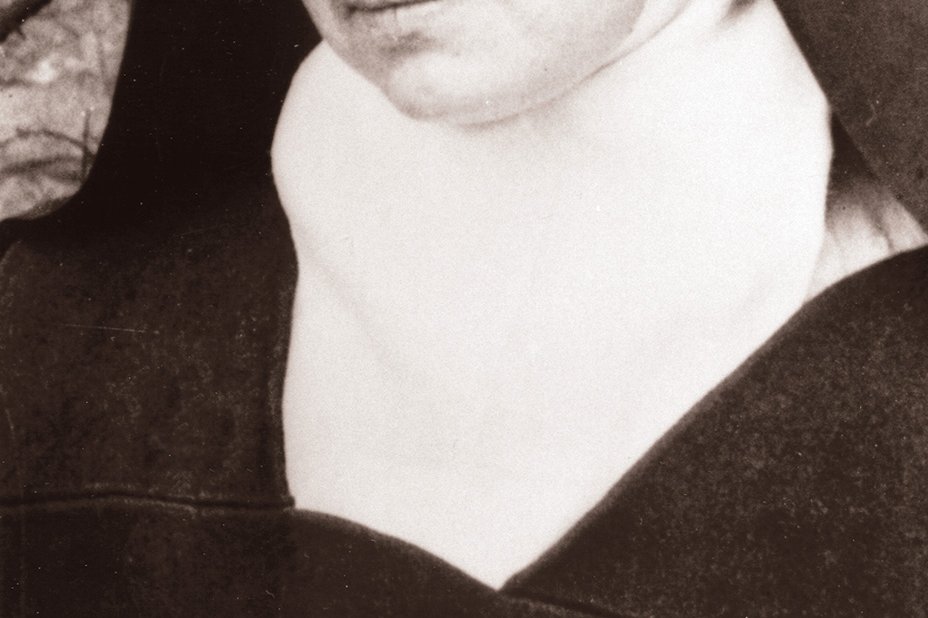
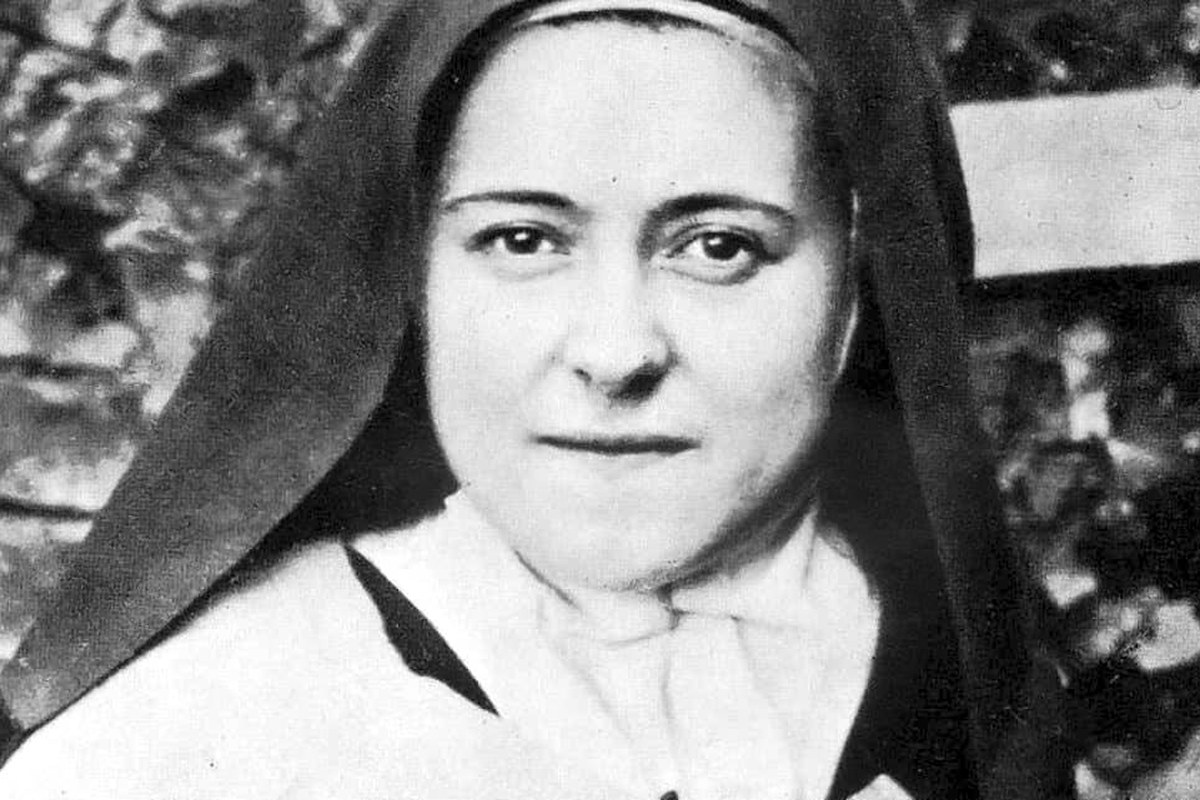
Portrait photograph of Elisabeth Catez at age 20, Carmel of Dijon archives — public domain (CC0, Wikimedia Commons).
She also, from a young age, showed a strong-willed and at times difficult temperament as a child — her own family recalled a strong temper she had to work to master — alongside a deepening, self-directed religious devotion. She reportedly felt drawn to religious life, specifically to the Carmelite order, from as young as fourteen, but her mother, unwilling to lose a second daughter to the convent so soon after facing widowhood alone, asked her to wait. Elizabeth honored that request for years, continuing her music and social life while privately committing herself more and more deeply to a life of prayer.
Entering the Carmel of Dijon
Elizabeth finally entered the Discalced Carmelite convent in Dijon on August 2, 1901, at 21 years old, taking the religious name Sister Elizabeth of the Trinity. The Carmelite life she entered was strictly cloistered and contemplative, built around silence, communal prayer, and a rule of life focused on interior union with God rather than any active or public ministry — a dramatic contrast to the sociable, musically active life she had led up to that point, and one she reportedly embraced with clear relief rather than any sense of loss.
Within the convent, Elizabeth developed under the guidance of experienced Carmelite spiritual directors and became known among her community for the depth and clarity of her interior prayer life, which she began recording in letters, notebooks, and short spiritual reflections at the request of her superiors.
A theology centered on God's presence within the soul
What distinguishes Elizabeth's writing, and what has driven renewed theological interest in her work over the past century, is its sustained focus on a single central theme: the real, active presence of the Holy Trinity dwelling within the individual believer's soul, not as an abstract doctrine but as a lived, continual reality to be consciously inhabited moment to moment. This theme finds its clearest and most quoted expression in a prayer she composed, generally known by its opening words, "O My God, Trinity Whom I Adore," which asks God to help the one praying become fully attentive to and united with that indwelling divine presence. The prayer remains in wide use in Catholic devotional and retreat contexts today, cited frequently alongside the writings of better-known Carmelite spiritual authors such as Saint Teresa of Avila and Saint John of the Cross, whose theology of interior prayer clearly influenced her own.
A short life shadowed by illness
Elizabeth's time in religious life was brief. In the last roughly eighteen months before her death, she developed a serious and progressively debilitating illness marked by digestive failure, extreme fatigue, and wasting, which the medical understanding of the early 1900s had no effective treatment for and only partially understood. Modern retrospective medical assessment, drawing on the symptoms recorded at the time, generally identifies the illness as Addison's disease, a disorder of the adrenal glands that remained essentially untreatable until the development of corticosteroid replacement therapy decades later, in the mid-20th century; it should be noted this modern diagnosis is a retrospective inference rather than a documented contemporary medical finding. She died at the Carmel of Dijon on November 9, 1906, at the age of 26.
Canonization and legacy
Elizabeth of the Trinity was beatified by Pope John Paul II in 1984 and canonized by Pope Francis on October 16, 2016. Her collected letters and spiritual writings, published after her death and translated into numerous languages, have earned her a lasting reputation as one of the more significant Carmelite spiritual writers of the modern era, studied alongside — though with less institutional weight than — the small number of Carmelite saints who hold the formal title of Doctor of the Church.
Feast day
Her feast is celebrated on November 8, shifted one day earlier than her actual date of death to avoid conflicting with the Feast of the Dedication of the Lateran Basilica on November 9.
Related reading
Elizabeth's short, intensely contemplative life invites comparison with other young women religious of the same era who left behind influential spiritual writing despite dying young — see Saint Therese of Lisieux, a French Carmelite contemporary whose own autobiography reshaped modern Catholic spirituality, and Saint Gemma Galgani, an Italian mystic of the same period whose short life was likewise marked by serious unexplained illness.
Trivia
Who was Saint Elizabeth of the Trinity?
Why is she called Elizabeth 'of the Trinity'?
Was Elizabeth of the Trinity a musician before she became a nun?
What did Elizabeth of the Trinity die of?
When is Saint Elizabeth of the Trinity's feast day?
You May Also Like

Related Reading