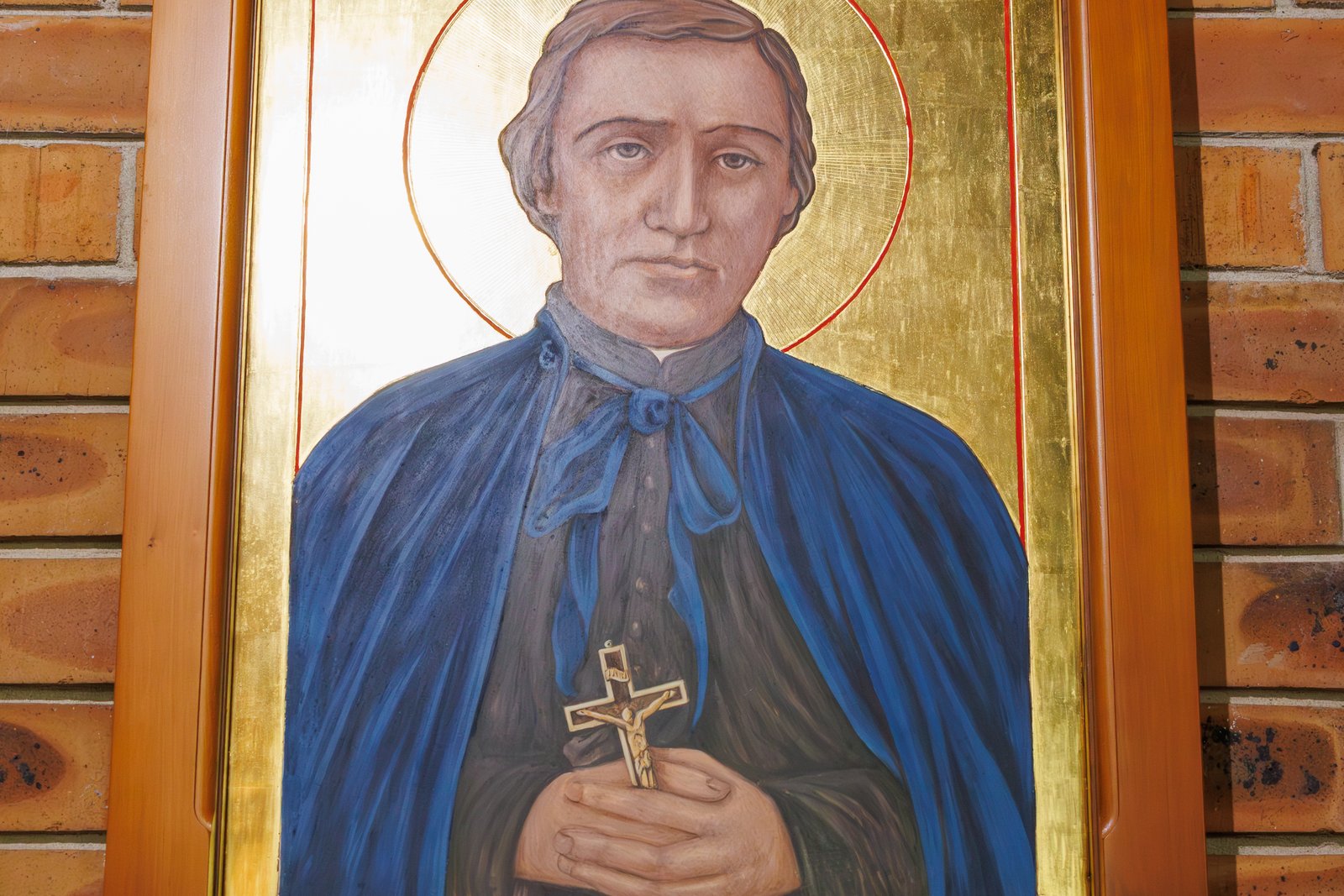
Saint Fidelis of Sigmaringen, Priest and Martyr

From the courtroom to the cloister
Fidelis was born Mark Rey around 1577 in Sigmaringen, in what is now southern Germany, the son of a town official. He trained in law and philosophy, eventually earning a reputation as a capable and unusually principled lawyer — he took on cases for clients who could not pay, and by several accounts grew increasingly disillusioned with how often justice in the courts bent toward whoever had money or influence rather than whoever was actually in the right.
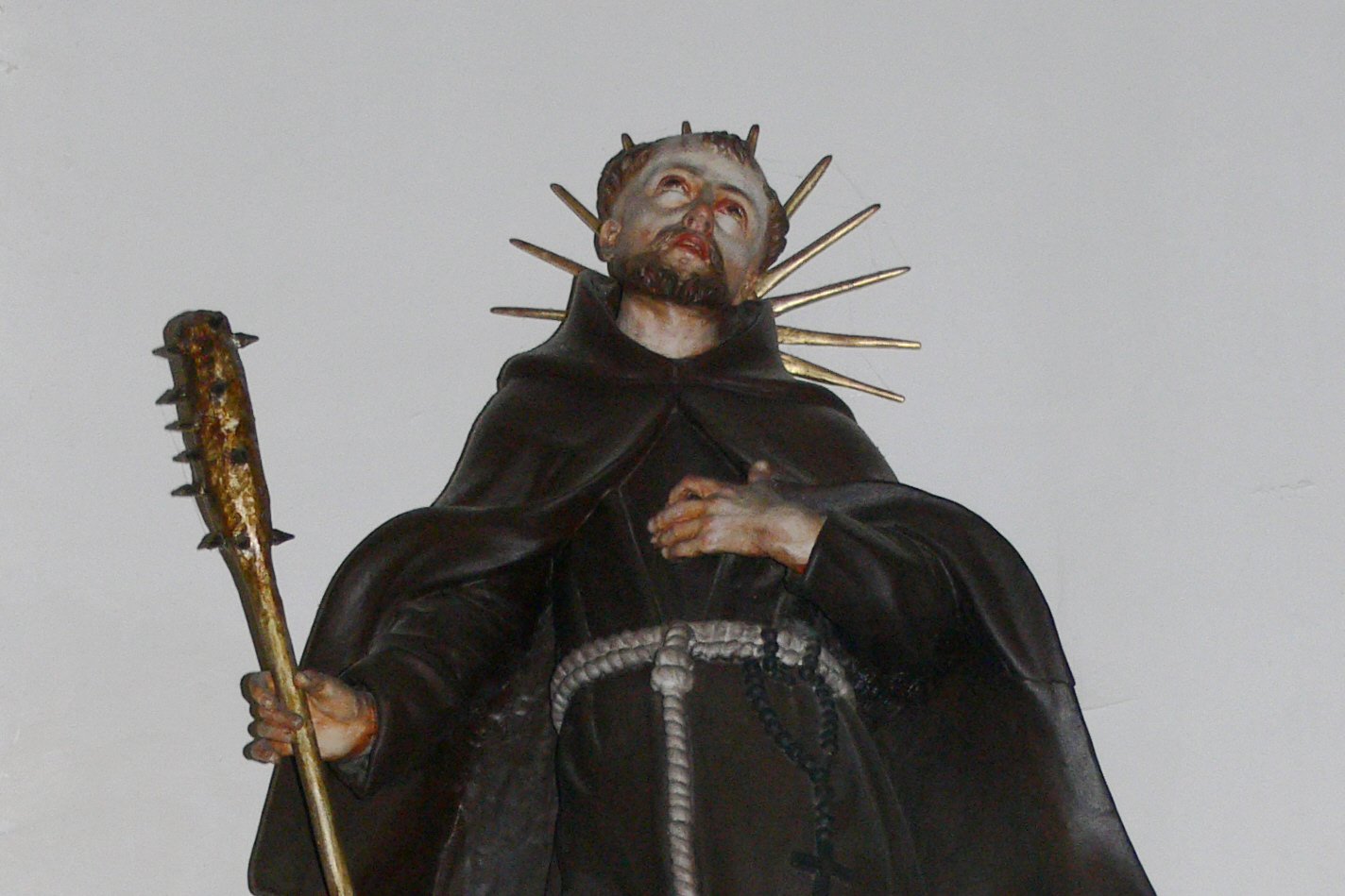
Statue of Saint Fidelis of Sigmaringen, Habsthal, photographed by Andreas Praefcke, 2006 — public domain.
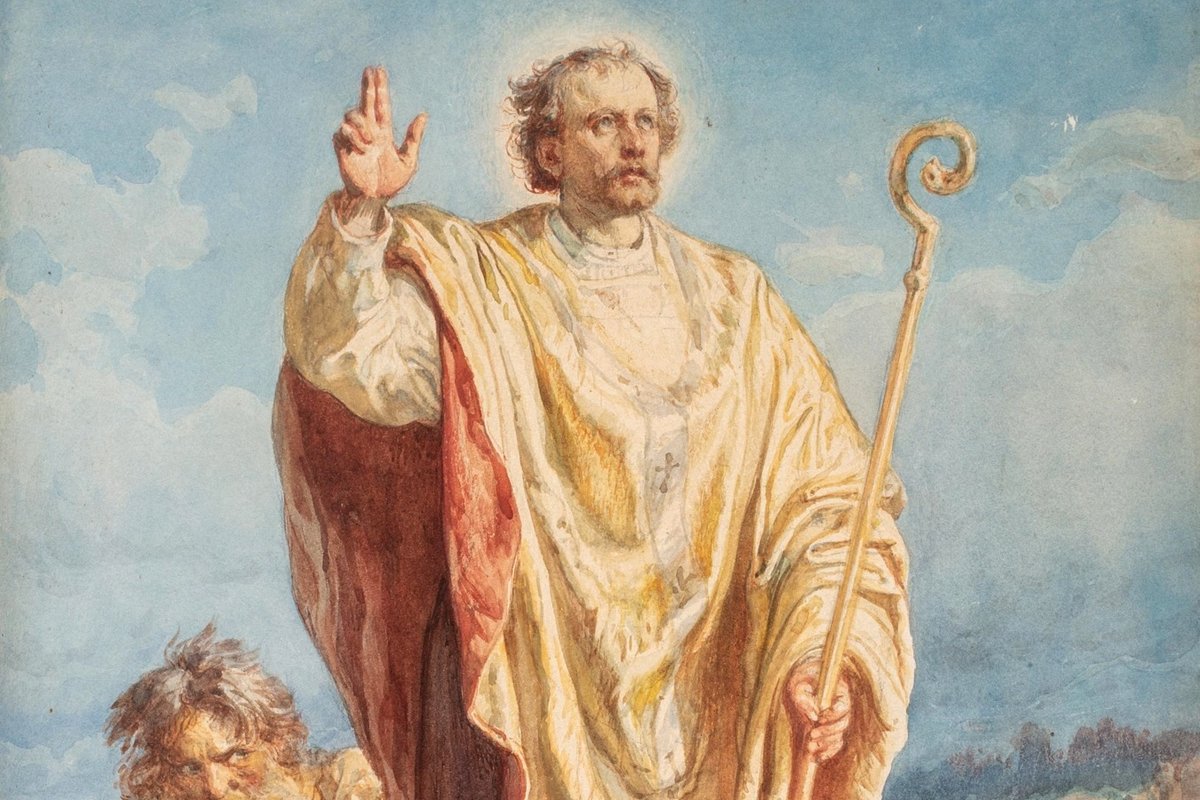
Around 1612, in his mid-thirties, he left his legal career and entered the Capuchins, a reform branch of the Franciscan order dedicated to strict poverty and simplicity, taking the religious name Fidelis — Latin for "faithful." He was ordained a priest not long after and quickly became known within the order for his preaching, his austerity, and his willingness to take on difficult assignments other friars avoided, including extended service to plague victims and to soldiers wounded in the fighting of the Thirty Years' War, a conflict then devastating much of central Europe along both political and religious lines.
A mission into contested territory
By the early 1600s, the Grisons region of what is now eastern Switzerland — a mountainous area of small valleys and independent communes — had become a genuine flashpoint of the Reformation era. Reformed (Calvinist) communities were dominant in much of the region, and earlier attempts to reestablish or strengthen Catholic practice there had already provoked serious, sometimes violent, resistance, entangled with local political rivalries between factions allied with either Catholic Austria or Protestant powers.
In 1622, Fidelis was appointed superior of a small Capuchin mission sent into the Grisons specifically to support Catholics living under this pressure and to preach the Catholic faith openly in communities where doing so carried genuine physical risk. His superiors and companions later testified that Fidelis went into the assignment with a clear sense that his life might be the cost of it, and that he accepted the post anyway, reportedly telling companions he was prepared to give his life for the faith he had come to preach.
The last sermon at Seewis
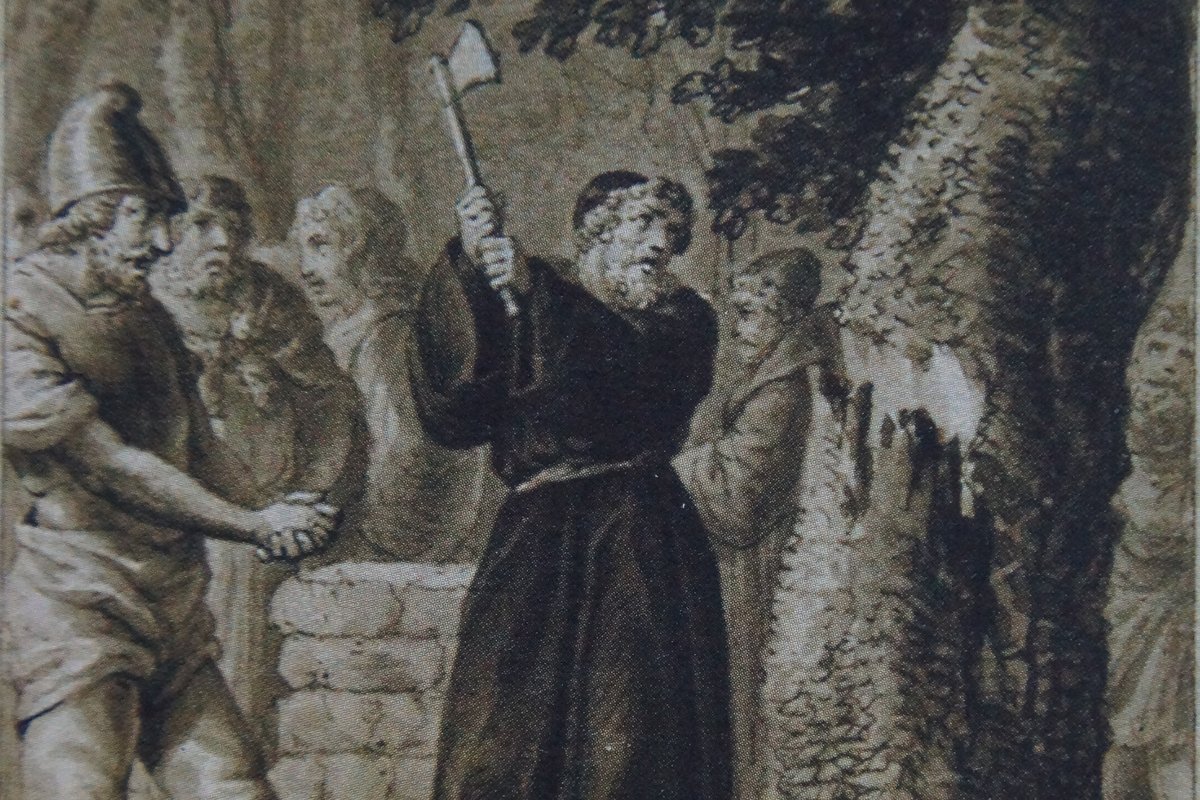
On April 24, 1622, Fidelis was preaching in the village of Seewis when an armed group — described in contemporary accounts as militants opposed to the Catholic mission and tied to the broader political and religious conflict then convulsing the region — confronted him. According to the testimony gathered soon afterward, he was offered the chance to save his life if he would renounce the Catholic faith and align himself with the Reformed position dominant in the area. He refused.
He was struck down with a sword, and the earliest accounts, drawn from witnesses and from his own companions who survived the attack, describe him praying for his killers as he died — a detail that closely mirrors the deaths of earlier Christian martyrs and that became central to how his community remembered him afterward. He died on the spot, the first member of the Capuchin order to be killed as a missionary, a distinction that gave his death particular weight within the young reform movement he belonged to.
Canonization and how his memory was framed
Fidelis was canonized in 1746 by Pope Benedict XIV, following a formal investigation that treated his death as a genuine martyrdom — killed specifically for refusing to abandon the Catholic faith, rather than as an incidental casualty of the era's wider political violence. That distinction mattered to the Church's process: the Grisons conflict involved real political and territorial disputes tangled up with the religious divide, and the canonization inquiry focused on establishing that Fidelis's death came specifically because he would not renounce his faith when directly offered the choice, which is the standard that separates a recognized martyrdom from death in a wider conflict.
He is remembered today as one of relatively few saints who had a full, successful secular career — and a reputation for real integrity within it — before turning to religious life, which is part of why his patronage extended naturally to lawyers, a professional group not otherwise heavily represented among canonized saints. His example is often mentioned alongside other early Capuchin figures such as Saint Lawrence of Brindisi, a contemporary within the same reform movement, though Fidelis's story is distinct for its direct, face-to-face confrontation with the era's religious violence rather than a career built mainly around preaching and diplomacy.
A model still held up within his order
Within the Capuchin order, Fidelis remains one of the most frequently cited examples of the ideal the reform movement was built around: total simplicity of life, direct service to the poor and suffering, and a willingness to go wherever the mission required, even into open danger. His story is also frequently used in discussions of the broader, painful history of Reformation-era religious violence — a period in which both Catholic and Protestant communities suffered real persecution and killing, and in which the Church today generally encourages a measured, historically honest reading rather than a triumphalist one. Fidelis himself, notably, is remembered specifically for going to his death without violence toward his attackers, praying for them rather than resisting — an emphasis that has kept his memory focused on martyrdom and forgiveness rather than on the wider sectarian conflict surrounding it.
Trivia
What was Saint Fidelis of Sigmaringen's career before he became a priest?
Why did Fidelis go to the Grisons region of Switzerland?
How did Saint Fidelis die?
What is Fidelis of Sigmaringen the patron saint of?
What is Saint Fidelis of Sigmaringen's feast day?
You May Also Like
Related Reading