Saint Andrew Kim Taegon, Priest, and Companions, Martyrs

A Church that began without a priest
Korea's encounter with Catholicism began in an unusual way. In the late eighteenth century, Korean scholars traveling with diplomatic missions to Beijing encountered Catholic books and religious articles being circulated by Jesuit missionaries serving the Chinese imperial court. One of these scholars, Yi Sung-hun, was baptized in Beijing in 1784 and carried the faith home, and Korean converts began forming Christian communities, studying scripture, and even baptizing one another — all without a single ordained priest present in the country. It would be nearly a decade before the first missionary priest, a Chinese cleric named Fr. James Zhou Wenmo, managed to enter Korea secretly in 1794, and even then the Church remained fragile and technically illegal under the Joseon dynasty, which viewed Christianity as a threat to the Confucian social order and, at times, to political loyalty itself.
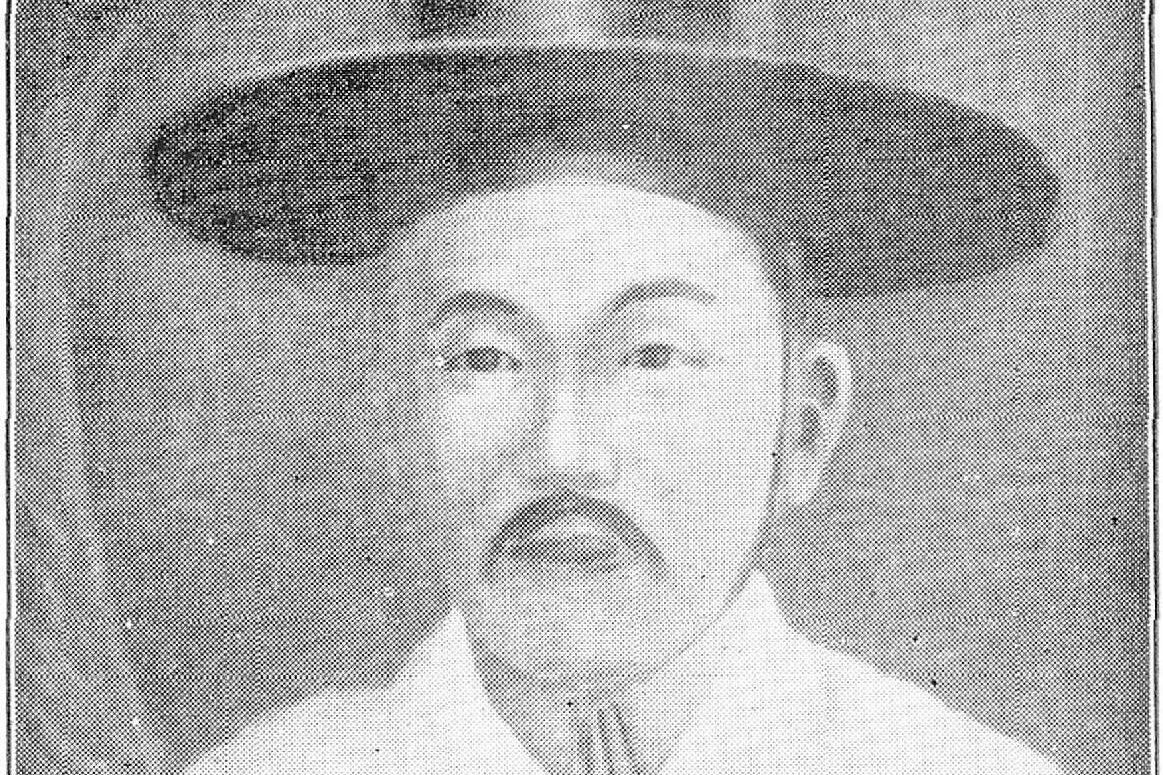
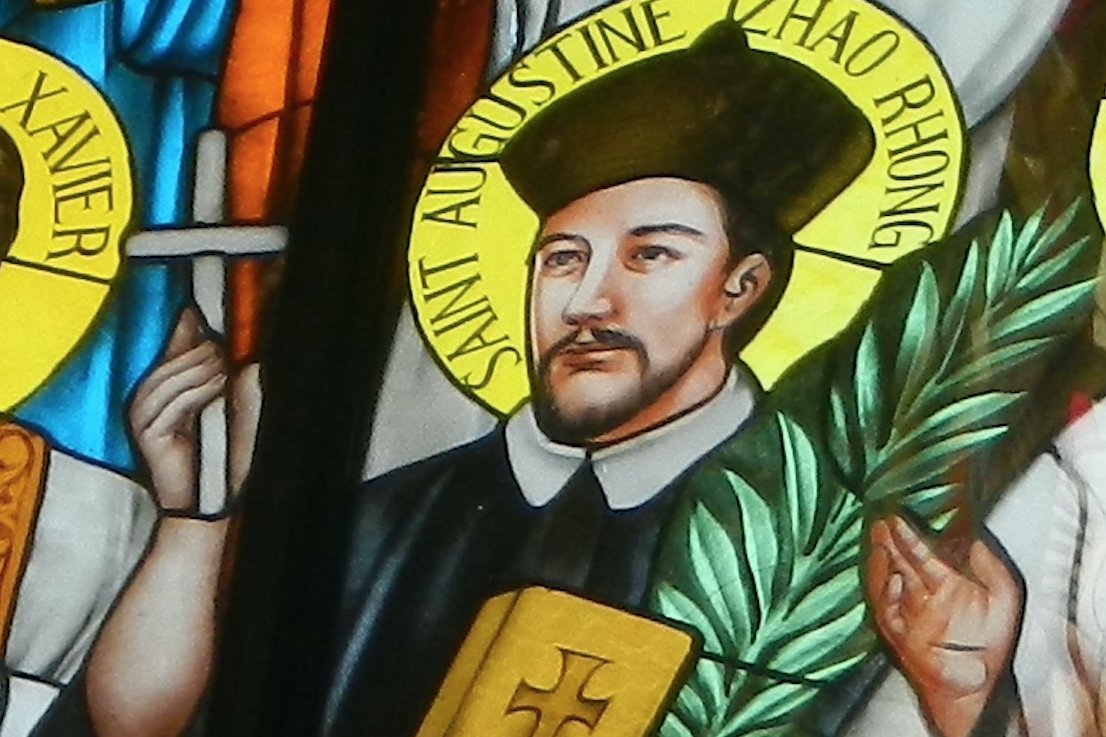
Photograph of an 1920 oil painting portrait of Andrew Kim Taegon by Tjyang Louis, Paris Foreign Missions Society archive — public domain
Persecutions followed in waves throughout the early nineteenth century, executing thousands of believers and driving the Church further underground. It was into this world — a Christian community that was resourceful, resilient, and almost entirely without ordained clergy of its own — that Andrew Kim Taegon was born around 1821, into a family that had already paid a heavy price for its faith: his father, Ignatius Kim Che-jun, was later martyred in 1839 and is himself honored among the Korean martyrs.
A seminary a thousand miles away
Because no seminary existed inside Korea, and because entering or leaving the country without authorization was itself a serious crime, training a native clergy meant first solving a logistical and political problem that had no easy answer. In 1836, French missionaries of the Paris Foreign Missions Society, who had begun secretly ministering in Korea, selected Andrew — then a teenager — along with two other young men to be sent abroad for priestly formation. The journey out of Korea alone required crossing the Yalu River into Manchuria under disguise and traveling enormous distances overland through Chinese territory, eventually reaching Macau, where the missionaries maintained a seminary for exactly this purpose.
Andrew's theological training in Macau was repeatedly interrupted by regional unrest, forcing him and his companions to relocate more than once, and by political instability that made even correspondence with home dangerous. He was ordained a priest in Shanghai in August 1845 by Bishop Jean-Joseph-Jean-Baptiste Ferréol, becoming the first Korean-born Catholic priest in history — the culmination of nearly a decade spent almost entirely outside his own country in pursuit of an ordination Korea itself could not yet offer.
Return to a closed country
Ordination did not mean safety. Andrew's assignment was to return to Korea, both to minister to the underground Church and, urgently, to help establish a reliable sea route by which French missionary bishops could be smuggled into the country, since existing overland routes had become too closely watched. He crossed back into Korea in October 1845, an act that was itself a capital offense for anyone found practicing or promoting Christianity, and began working discreetly to fulfill both tasks.
His ministry as an ordained priest inside Korea lasted barely a year. In June 1846, while attempting to arrange a sea passage for further missionaries and communicate with Christian communities along the coast, he was arrested by Korean authorities. Under interrogation, according to accounts preserved by the Church, Andrew defended the Catholic faith directly to his questioners rather than concealing it, arguing that Christian teaching was not treasonous, as the government claimed, but consistent with proper reverence toward parents and rulers. He was tortured extensively over the following weeks — a standard practice against suspected Christians at the time, intended to force recantation — but he did not renounce his faith. He was beheaded near Seoul on September 16, 1846, at the age of twenty-five, alongside several other Christians.
One feast, 103 martyrs
Andrew Kim Taegon's death was not an isolated event but one moment within a much longer and larger pattern. Between 1839 and 1867, successive waves of persecution killed thousands of Korean Catholics, from bishops and priests down to ordinary laypeople, including many women and children who refused to abandon their faith even under torture and threat of execution. Among the best documented of these martyrs is Paul Chong Hasang, a layman and lay leader instrumental in petitioning Rome for missionary priests and organizing the underground Church's structure, who was executed in 1839 and is commemorated on the same feast day as Andrew.
Pope John Paul II canonized 103 of these Korean martyrs together during a papal visit to Seoul in May 1984 — the first canonization ceremony the Church had ever held outside Rome, and a deliberate honor to a local Church that had, remarkably, sustained and grown its own faith for decades with almost no resident clergy at all. Rather than commemorating each martyr on an individual date, the Church observes them collectively on September 20 as "Saint Andrew Kim Taegon, Priest, and Paul Chong Hasang, and Companions, Martyrs," with Andrew's name placed first in recognition of his role as the first Korean priest.
A patron for Korea's clergy
Because Andrew Kim Taegon represents both the arrival of a truly native Korean priesthood and the price paid for it, he is venerated in a particular way as patron of the clergy of Korea — a title distinct from, though related to, the broader patronage that many missionary saints carry. His story is often paired with that of other missionary and martyr saints from the same period of the Church's expansion in Asia; the martyrs Paul Miki and his companions, executed in Japan two and a half centuries earlier under similarly severe anti-Christian policy, are frequently studied alongside the Korean martyrs as parallel witnesses to the cost of establishing Christianity in East Asia. Korea's Catholic population, which grew from that fragile, priestless beginning in the 1780s into one of the more vibrant Catholic communities in Asia today, still marks Andrew Kim Taegon's feast as a defining moment in its national religious identity — a reminder that the Church there was built first by lay believers acting on their own initiative, and only later strengthened by a native clergy willing to die for what they had been sent so far to learn.
Trivia
Who was Saint Andrew Kim Taegon?
Why is Andrew Kim Taegon's feast celebrated with 102 companions on September 20?
How did Christianity first reach Korea, given how isolated the country was?
What happened to Andrew Kim Taegon after his ordination?
Is Andrew Kim Taegon a patron saint of anything specific?
You May Also Like
Related Reading