Saint Peter Chanel, Priest and Martyr

A country parish revived
Peter Chanel was born in 1803 in a small village near Cluet, in eastern France, to a farming family. He was ordained a priest in 1827 and assigned to a rural parish that had grown spiritually neglected in the years since the disruptions of the French Revolution — a common problem across much of France in that period, where decades of upheaval had badly weakened parish life in many regions. Chanel worked diligently to restore it, building up regular religious practice among parishioners who had drifted away, and his success there earned him a strong local reputation within just a few years.
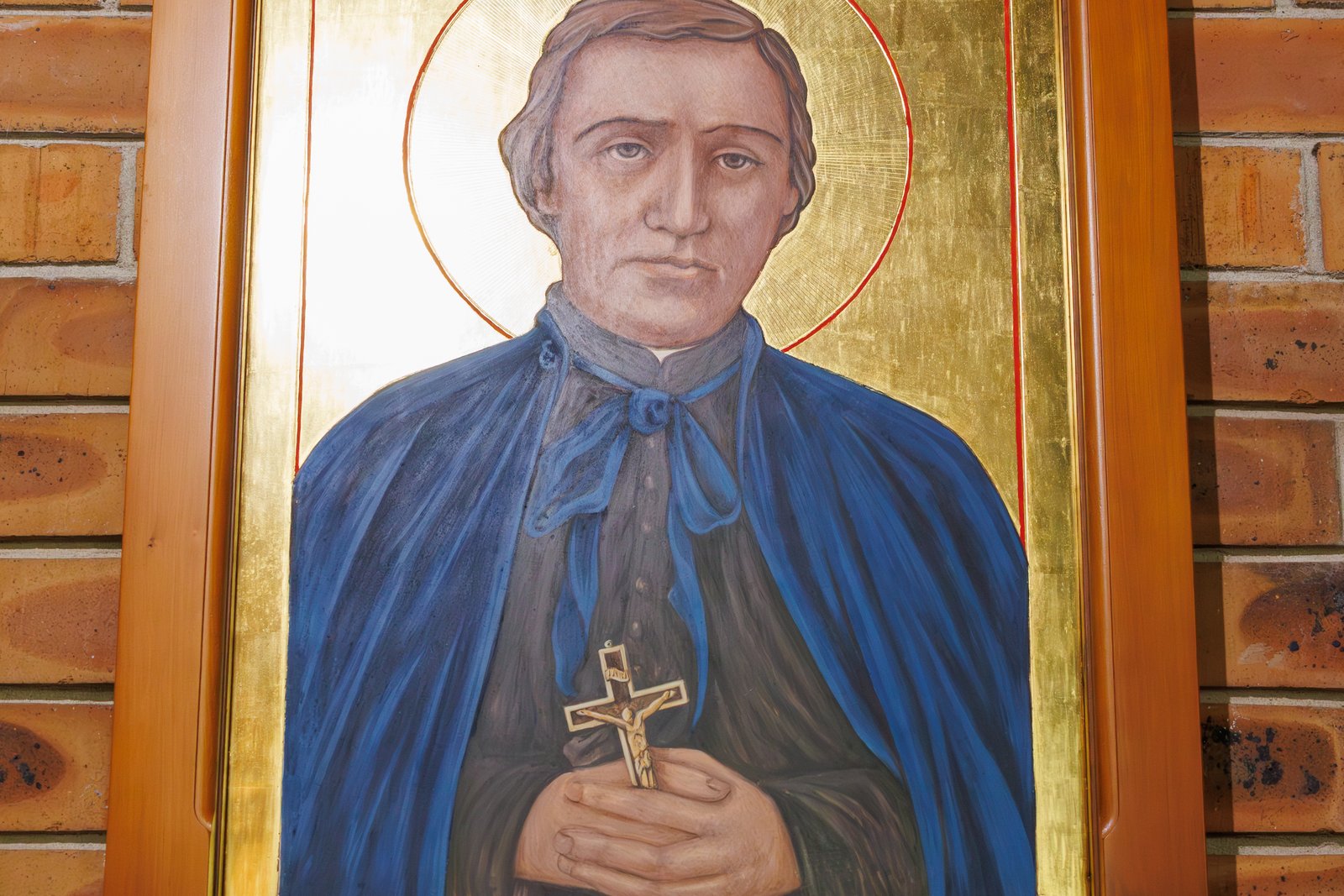
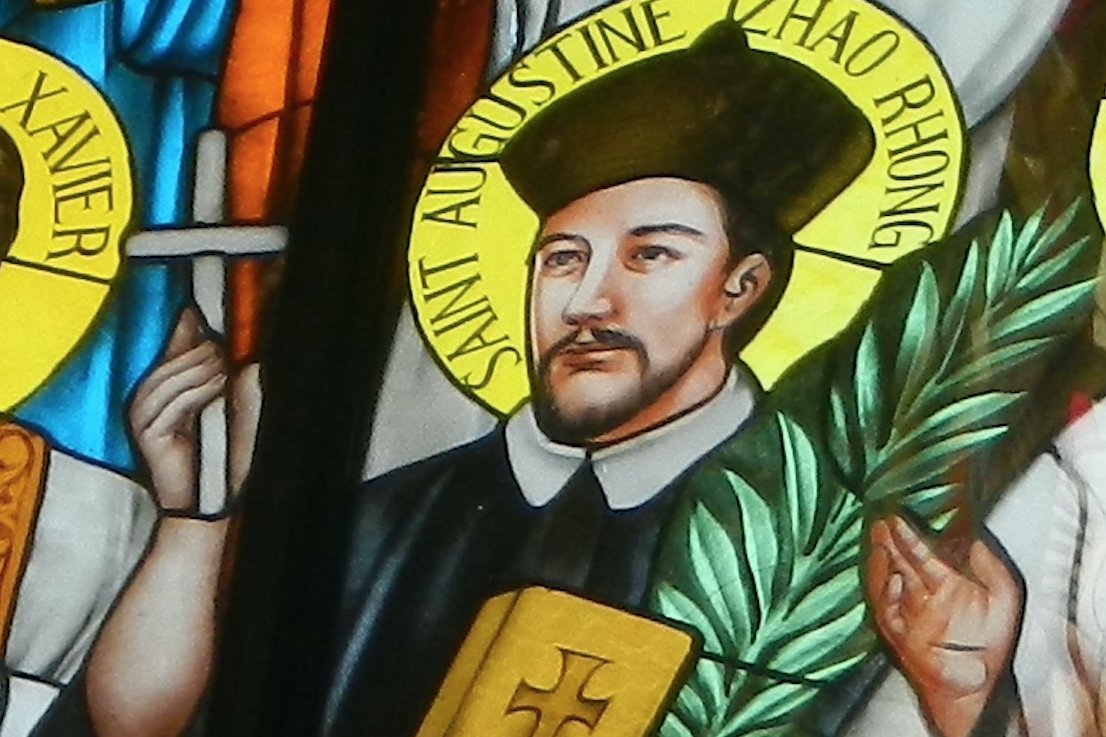
Icon of Saint Peter Chanel, St Mary's Catholic Church, Northcote — photo by Bjankuloski06, CC BY 4.0
Despite that success, Chanel felt drawn to missionary work overseas rather than a comfortable, settled parish career. In 1831 he joined the newly founded Society of Mary — known as the Marist Fathers — a congregation whose members combined ordinary priestly ministry with a strong missionary orientation, and he spent several years teaching at the order's seminary in Belley while requesting an overseas mission assignment, a request that was initially delayed as the young congregation worked out its own structure and priorities.
A voyage to the far side of the world
In 1836, the Marist Fathers received their first mission assignment to the Pacific Islands, and Chanel was among the small group of missionaries sent. The journey itself was an enormous undertaking by the standards of the day — many months at sea before reaching the South Pacific, a region almost entirely unfamiliar to European missionaries at the time, with no established Catholic mission infrastructure to rely on once they arrived.
Chanel was assigned to the small island of Futuna, part of what is today Wallis and Futuna, along with a lay brother, Marie-Nizier Delorme, and initially without a translator, meaning Chanel had to learn the Futunan language essentially from scratch while also adapting to a social and religious system entirely unlike anything in his French parish experience. Futuna at the time was governed by a paramount chief, Niuliki, who also held significant religious authority within the island's traditional belief system — a combination of political and spiritual power that made the chief's personal attitude toward the mission decisive for its survival.
Years of little visible progress
For roughly the first two and a half years, Chanel's mission produced few conversions he could clearly document. He learned the language, provided medical care to islanders using what basic remedies he had brought or could prepare, and built a cautious, respectful relationship with Chief Niuliki, who tolerated the mission's presence without either fully embracing it or expelling it — a fragile arrangement that missionary letters from the period describe as a source of real frustration and uncertainty for Chanel, who wrote to his superiors about the slow, seemingly unproductive pace of the work.
That balance shifted as more islanders, drawn by what they observed of Chanel's character and teaching over time, began quietly asking for instruction and eventually baptism. The turning point came when Niuliki's own son, Meitala, asked to be baptized — a direct challenge to his father's authority and to the chief's own role as guardian of the island's traditional religious system, since a conversion within the ruling family itself signaled that the new faith could not simply be contained at the margins of island life.
Death on Futuna
Alarmed by this shift and by the prospect of more islanders, including members of his own family, embracing the new faith, Niuliki turned decisively against the mission. On April 28, 1841, he sent a group of men, led by a warrior named Musumusu, to Chanel's mission station. According to the testimony gathered afterward from witnesses on the island, Chanel was beaten and then killed with clubs and a hatchet, dying without resisting his attackers. He was thirty-eight years old, and had spent barely three years on the island he died on.
News of his death took many months to reach France, given the distances and the irregular shipping routes of the period, and the small Marist mission on Futuna was left for a period without any priest at all following the killing.
A death that opened what preaching had not
What followed struck missionaries and later Church historians alike as a dramatic reversal. Within a few years of Chanel's death, the great majority of Futuna's population had converted to Catholicism, a transformation that missionary accounts and the Church's own later canonization process directly credit to the impact of his martyrdom rather than to anything achieved during his lifetime of patient, largely unrewarded work. Futuna remains predominantly Catholic today, one of relatively few Pacific Island communities where Catholicism, rather than one of the various Protestant missions active in the region during the same era, became the dominant Christian tradition — a legacy traced directly back to Chanel's death.
He was canonized in 1954 by Pope Pius XII and is venerated as the first martyr of Oceania, a title that reflects both the historical fact of his priority among the region's Catholic martyrs and the outsized influence his death had on the spread of the faith across the Pacific Islands that followed. His story is often discussed alongside that of other missionary martyrs whose deaths reshaped the communities they served, such as Saint Isaac Jogues among the Native peoples of North America, though Chanel's case is distinct for how directly the Church credits his violent death, rather than his years of patient ministry beforehand, with the conversion that ultimately followed. His feast, shared on April 28 with Saint Louis de Montfort, honors a missionary whose greatest success came only after what looked, by every visible measure during his own lifetime, like failure.
Trivia
Why is Peter Chanel called the first martyr of Oceania?
Why did the chief of Futuna order Peter Chanel's death?
How did Peter Chanel's death affect Christianity on Futuna?
What congregation did Peter Chanel belong to?
What is Saint Peter Chanel's feast day?
You May Also Like
Related Reading