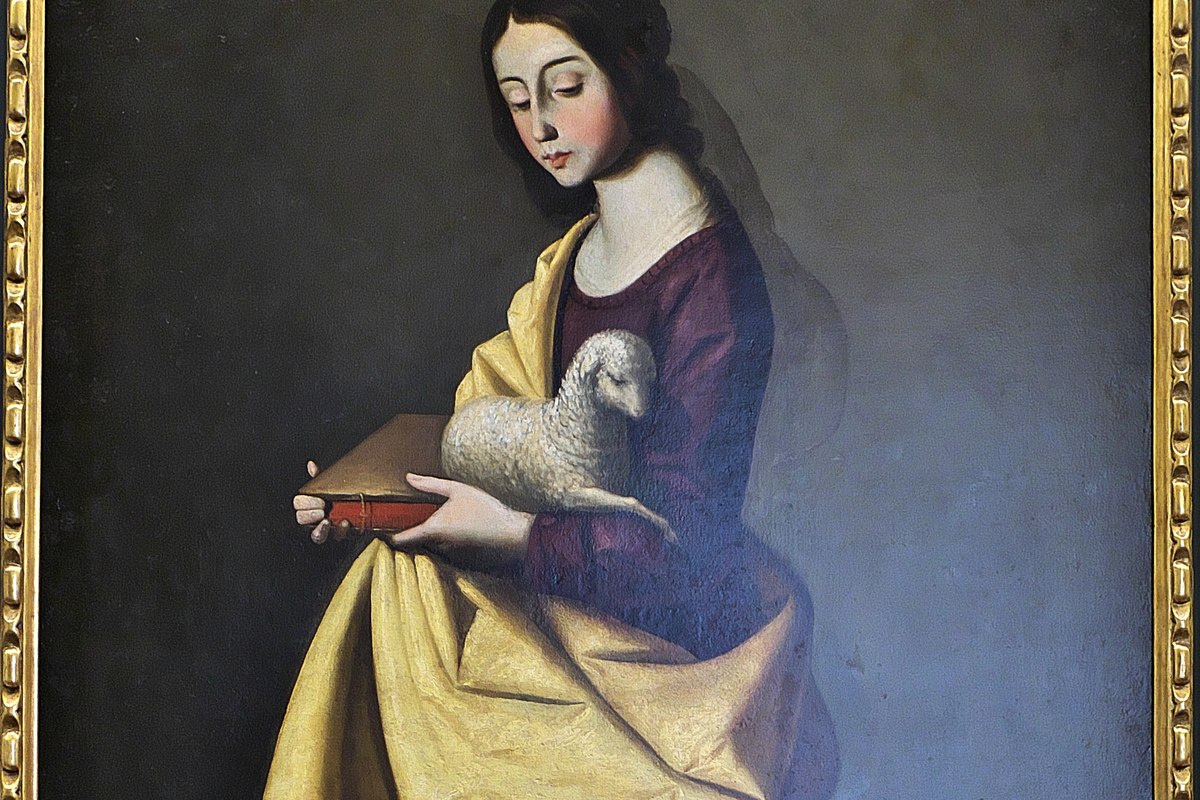
Saint Frances of Rome, Religious

A marriage arranged at eleven, and a life that outgrew it
Frances was born around 1384 into a wealthy Roman family and, following the custom of the Roman nobility, was betrothed while still a child and married at about twelve years old to Lorenzo de' Ponziani, a nobleman from another prominent Roman family. It was not a marriage she chose, and by her own later account she had hoped instead to enter religious life. But she settled into it with a discipline that would define the rest of her life: she ran the Ponziani household efficiently, bore several children, and, according to accounts written by women who lived alongside her, quietly kept a rule of prayer and fasting that she folded into an otherwise ordinary domestic routine rather than setting apart from it.
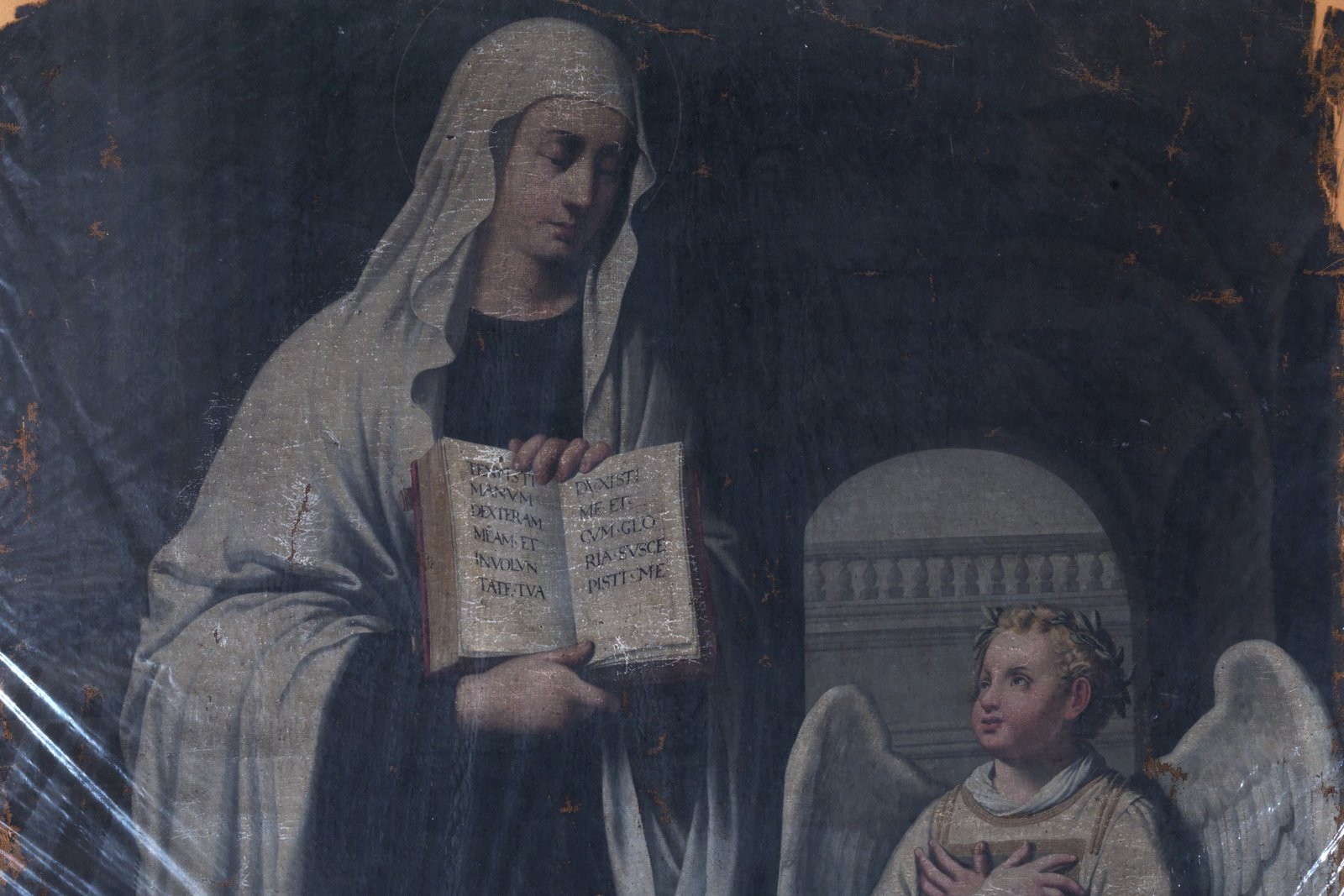
Untitled (Saint Frances of Rome), Italian school, circa 1650 — public domain, CC0.
That balance — full engagement with family duty alongside an intense private spiritual life — became the signature of her sanctity. She is remembered less for withdrawing from the world than for proving that a demanding household could be run without abandoning a serious interior life, an example later cited often for laypeople who wanted a model of holiness that did not require the cloister.
Plague, famine, and a city under siege
Rome in the early fifteenth century was not a peaceful place to raise a family. Frances lived through repeated outbreaks of plague, a severe famine, and political chaos as rival factions and foreign armies fought for control of the city and the papacy itself was in dispute during the Western Schism. Her husband was wounded and the family's property was seized and partly destroyed during one period of unrest tied to these conflicts.
Rather than retreating from the crisis, Frances turned her home into a relief effort. Early biographies, largely written by the women of the community she later founded, describe her converting rooms of the family house into a shelter for the sick, selling her own jewelry and fine clothing to buy food, and going out personally to beg door to door when the family's resources ran out — an extraordinary act for a noblewoman of her rank, who would ordinarily have sent servants rather than gone herself. Two of her three children died during this period, one likely a casualty of the plague, deaths that by all accounts deepened rather than diminished her commitment to serving other suffering families in the city.
A vision that stayed with her for decades
Frances is one of relatively few saints whose visions were said to be sustained and continuous rather than a single dramatic episode. According to the tradition recorded by her community, she reported seeing and communicating with her guardian angel for roughly the last several decades of her life — not as a one-time apparition, but as a companion presence she described in ordinary, almost matter-of-fact terms to those close to her. The Church has never required belief in the specifics of this account as a matter of doctrine; it belongs to pious tradition rather than defined teaching, and is treated that way even within her own community's records. What is verified through independent testimony from contemporaries is the practical result: her reputation for holiness, counsel, and effective charity grew steadily during her own lifetime, well before any formal process of canonization began.
This same tradition holds that a soft light, attributed to her guardian angel, was seen guiding her steps on the city's dark streets during her nighttime visits to the sick — the detail that centuries later led the Church to name her patron of Rome's automobile drivers, extending the old image of a light on a dark road into the modern image of headlights on a city street.
Founding a home for women who wanted both
In 1425, while still married, Frances founded a lay society of women committed to prayer and charitable work under a modified Benedictine rule, without requiring the women to take permanent vows or live in full enclosure. In 1433, after further organizing the group, she established a proper community house at Tor de' Specchi, near the base of the Capitoline Hill in Rome — a foundation still standing and still inhabited by an oblate community today, making it one of the longest continuously occupied religious houses of its type in the city.
Frances herself did not move into the house permanently until 1436, after her husband's death, choosing throughout her married life to prioritize her responsibilities to Lorenzo and their household over even her own religious community. Once free to join fully, she was elected superior of the group she had founded, though contemporaries describe her continuing to live with notable humility, taking on ordinary domestic tasks rather than positioning herself above the women she led.
Canonization and continuing devotion
Frances died on March 9, 1440, and was canonized in 1608 by Pope Paul V, after a formal investigation that drew on testimony collected from people who had known her personally — an unusually well-documented case for the period, partly because her own community had preserved detailed written accounts of her life from very early on. Her body rests beneath the church of Santa Francesca Romana in the Roman Forum, itself built on the site of an earlier church where she had prayed, and her feast remains marked in Rome each March 9 with a traditional blessing of automobiles outside the church, drawing directly on the legend of the light on her nighttime path.
Her example continues to be cited, much as Saint Joseph's is, as a model of ordinary domestic responsibility carried out with an unmistakably serious spiritual life underneath it — proof, for many who look to her, that holiness does not require leaving behind the duties of a household or a marriage.
Trivia
What is Saint Frances of Rome the patron saint of?
Why is Frances of Rome unusual among medieval women saints?
What did Frances of Rome do during the plague and famine in Rome?
What is the Tor de' Specchi community she founded?
What is Saint Frances of Rome's feast day?
You May Also Like

Related Reading