Saint Hedwig of Silesia, the Duchess Who Chose Bare Feet

A Bavarian noblewoman married into Poland's borderlands
Hedwig was born around 1174 into the powerful Andechs family of Bavaria, well connected across the ruling houses of medieval Europe — her sister Gertrude became queen of Hungary, and another relative would later become a queen of France. At around twelve years old, following the political marriage customs typical of medieval nobility, Hedwig was married to Henry I, Duke of Silesia, a region in what is now largely southwestern Poland.
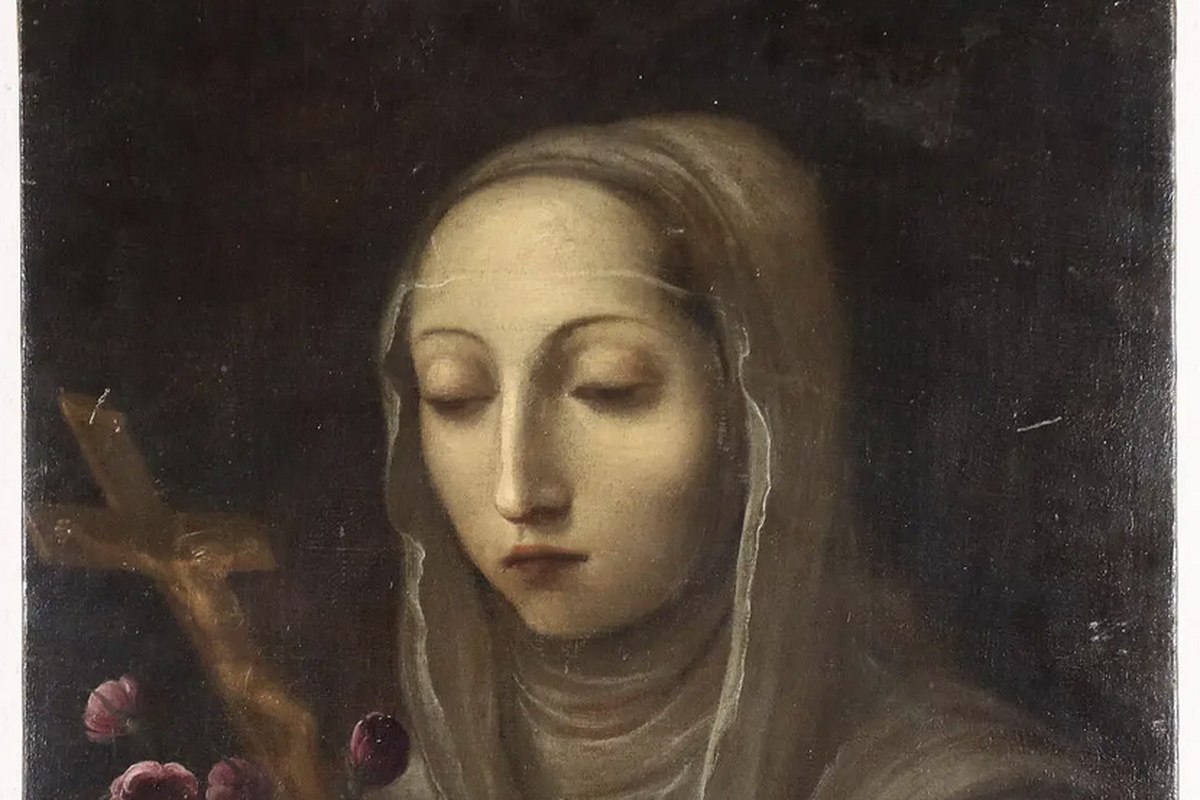
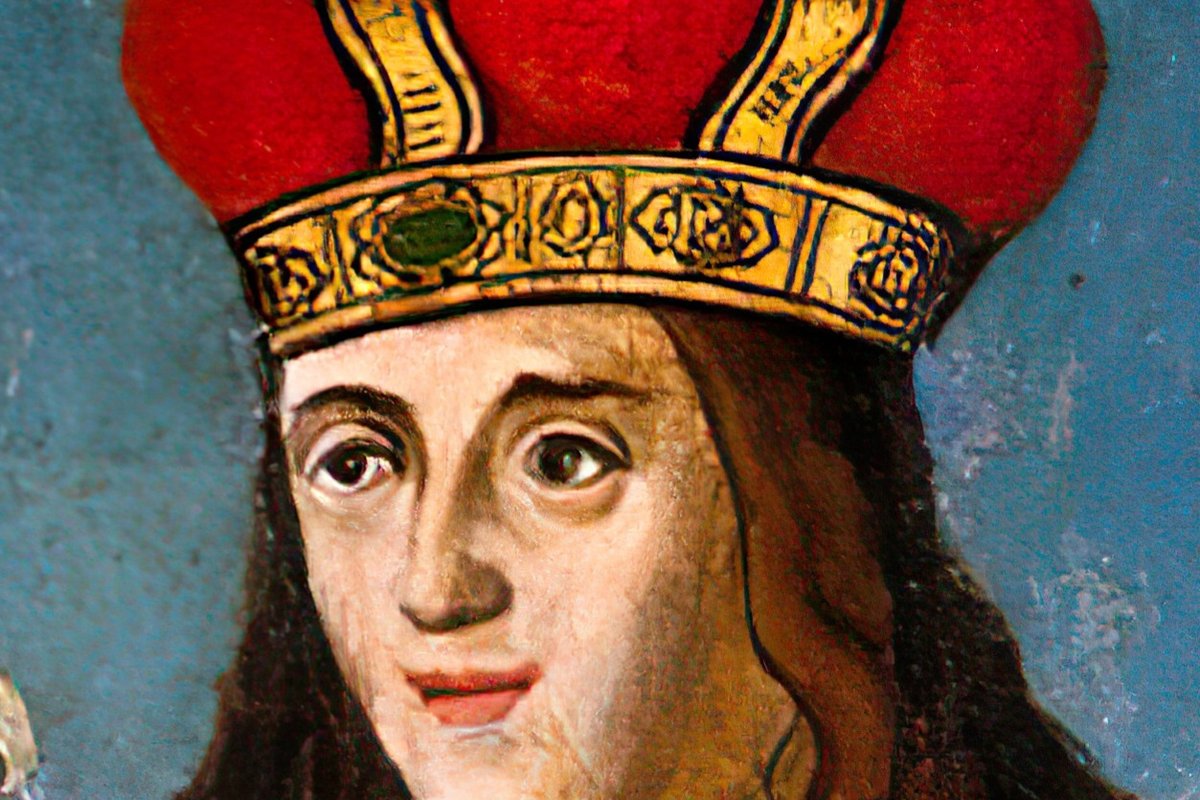
Unknown artist, Saint Hedwig of Silesia, wing of the altar retable from Trzebunia, c. 1400, National Museum in Krakow — public domain.
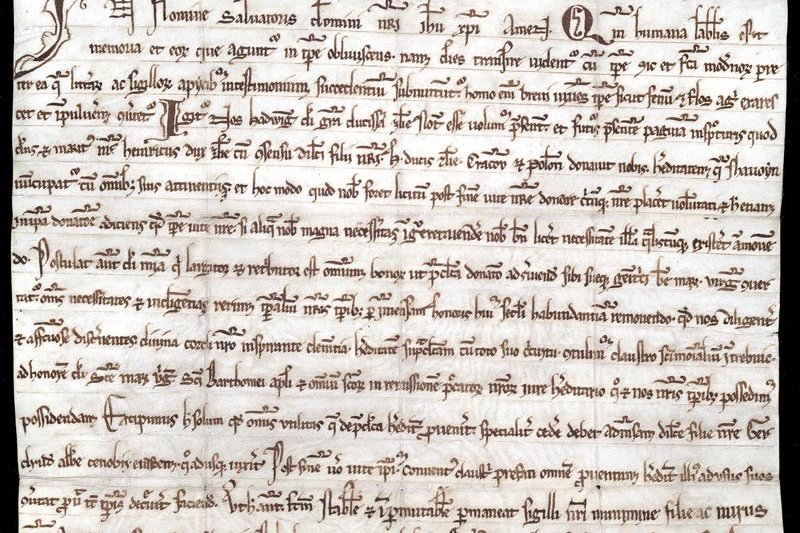
The marriage produced seven children over the following years, and by most accounts of the period, Hedwig took an active and serious role not just in raising her family but in the governance and religious life of the duchy alongside her husband — a partnership rare enough for the time that it's specifically noted in later accounts of her life. Henry and Hedwig together founded a number of monasteries and religious houses, including the Cistercian convent at Trebnitz (Trzebnica), established in 1202, which became a center of both religious life and practical charity in the region.
Grief that kept coming
Hedwig's life was marked by repeated personal loss even as her charitable reach expanded. Several of her children died relatively young, and the most devastating blow came in 1241, when her son Henry II the Pious, who had succeeded his father as duke, was killed at the Battle of Legnica (also known as the Battle of Liegnitz), where Christian forces from Poland and Silesia, along with allied knights, fought a Mongol invasion sweeping through Central Europe. Henry II's forces were defeated and he was killed in the battle.
Contemporary and later accounts describe Hedwig receiving news of her son's death with striking composure, reportedly saying that she had entrusted him entirely to God's will and finding peace in that surrender rather than collapsing into despair — an account that, like many details of medieval hagiography, comes down through devotional biography rather than a contemporary firsthand record, though it fits a broader, well-documented pattern of Hedwig's disciplined faith throughout her life.
A duchess's quiet asceticism
What set Hedwig apart from many wealthy noblewomen of her era, according to the accounts gathered for her canonization, was the gap between her rank and how she actually lived. Despite her position and resources, she reportedly practiced serious personal austerity: fasting well beyond what was expected of laypeople, sleeping on hard surfaces, and — the detail most often repeated — walking barefoot, even through snow and winter cold, carrying a pair of shoes she would only put on briefly out of respect when meeting bishops or civic officials who might have been scandalized to see a duchess walking unshod.
Alongside this personal austerity, Hedwig used her position and wealth actively for charitable purposes: funding hospitals, supporting the poor, and — notably for the region and period — establishing and endowing religious houses that served practical social functions as well as spiritual ones, including care for the sick and support for widows and orphans.
Widowhood at Trebnitz
After Duke Henry I died in 1238, Hedwig, by then in her sixties, retired to live among the Cistercian nuns at Trebnitz, the monastery she and her husband had founded together decades earlier. She did not take formal vows to become a nun herself, choosing instead to live alongside the community in a state of simplicity and prayer while remaining, technically, a laywoman and widow — continuing her charitable work and penitential practices until her death in 1243.
A peacemaker between rival dukes
Hedwig's reputation wasn't built on personal austerity alone; contemporaries also remembered her as a skilled and persistent mediator in the political conflicts of her day. Medieval Silesia and its neighboring duchies were frequently torn by disputes among rival branches of the ruling Piast dynasty, and accounts of Hedwig's life describe her repeatedly stepping in to broker peace between warring relatives, including intervening on behalf of prisoners taken in these conflicts and working to soften her own husband's harsher political instincts. One frequently told episode describes her successfully pleading for the release of a rival duke Henry I had taken captive, at a time when few people at court would have dared contradict the duke directly. Whether every detail of these mediations survives with full historical precision, the broader pattern — a duchess using her position specifically to de-escalate the era's constant cycle of dynastic warfare — is consistent enough across independent sources to be treated as a genuine, defining feature of how she used her influence, not just a pious flourish added later.
An aunt to another sainted widow
Hedwig's family tree connects her to another of medieval Europe's most beloved women saints: her niece was Saint Elizabeth of Hungary, the Hungarian princess who became famous in her own right for charitable works and radical humility after her own husband's early death. The two women's lives ran on parallel tracks in striking ways — both born into powerful, well-connected royal families, both married young into political alliances, both widowed relatively early, and both channeling the resources and authority that came with rank into hospitals, shelters, and care for the poor rather than court comforts. Their shared example helped establish a recognizable pattern of sanctity for medieval noblewomen: rank used as a tool for charity rather than a barrier against it.
Canonization and legacy
Hedwig was canonized remarkably quickly by the standards of the period — just twenty-four years after her death, in 1267, by Pope Clement IV, reflecting both the strength of local devotion to her and the well-documented testimony gathered about her life. Her feast day is celebrated on October 16.
She remains one of the most venerated saints in Polish and Silesian religious history, honored as patron of Silesia, of widows, and of reconciliation within difficult marriages — a patronage tied to the steady, faithful partnership she maintained with Henry I through decades of political duty, family loss, and the demanding responsibilities of ruling a medieval borderland duchy together.
Trivia
Who was Saint Hedwig of Silesia?
How many children did Hedwig and Henry have, and what happened to them?
Why did Hedwig walk barefoot?
What did Hedwig do after her husband Henry I died?
When is Saint Hedwig of Silesia's feast day, and what is she patron of?
You May Also Like
Related Reading