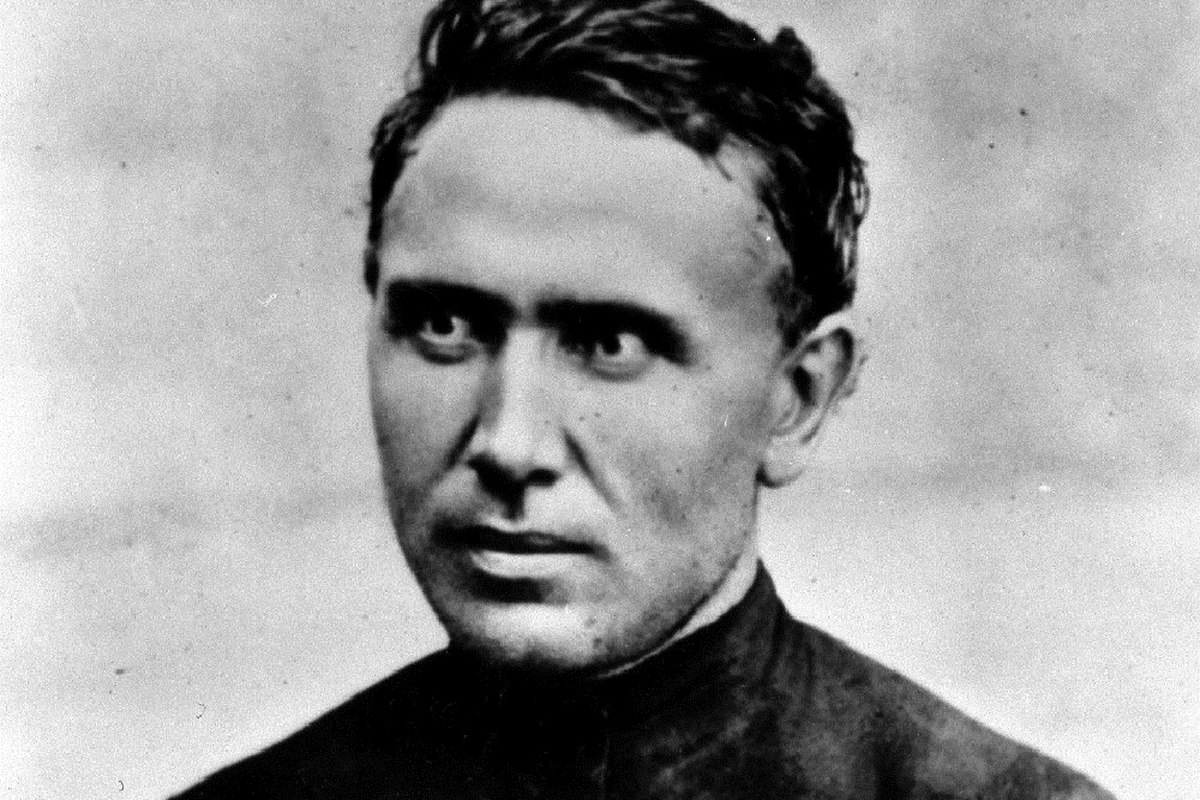
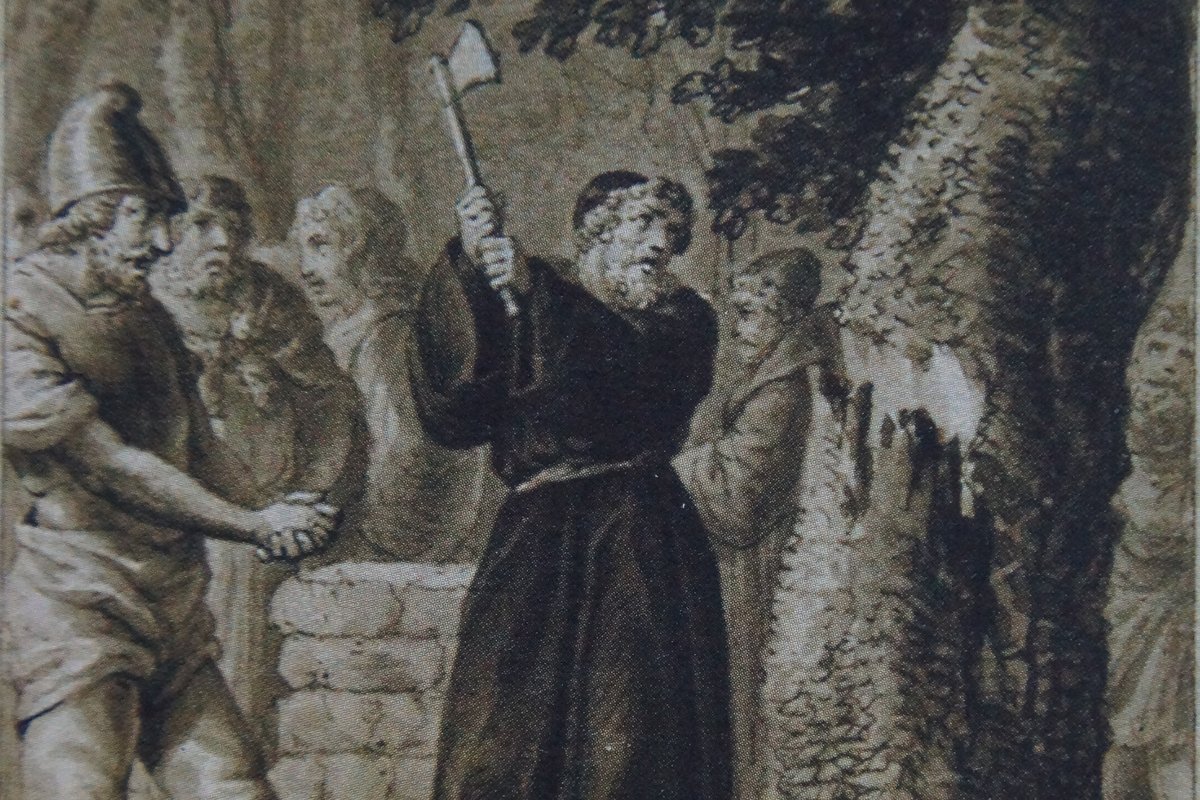
Saint Hyacinth of Poland

A Polish nobleman drawn to a brand-new religious order
Hyacinth was born Jacek Odrowaz around 1185 into a noble Silesian family in what is now southern Poland, part of the Odrowaz clan, one of the region's more prominent families with strong ties to the Church — his uncle, Ivo Odrowaz, served as Bishop of Krakow. Hyacinth received an unusually thorough education for the period, studying in Krakow, then in Prague, and finally earning advanced degrees in law and theology in Bologna and Rome, before returning to Poland and being ordained a priest, quickly rising within his uncle's diocesan administration in Krakow.
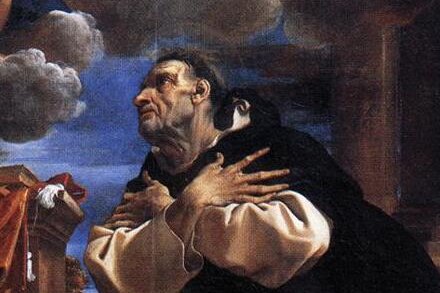
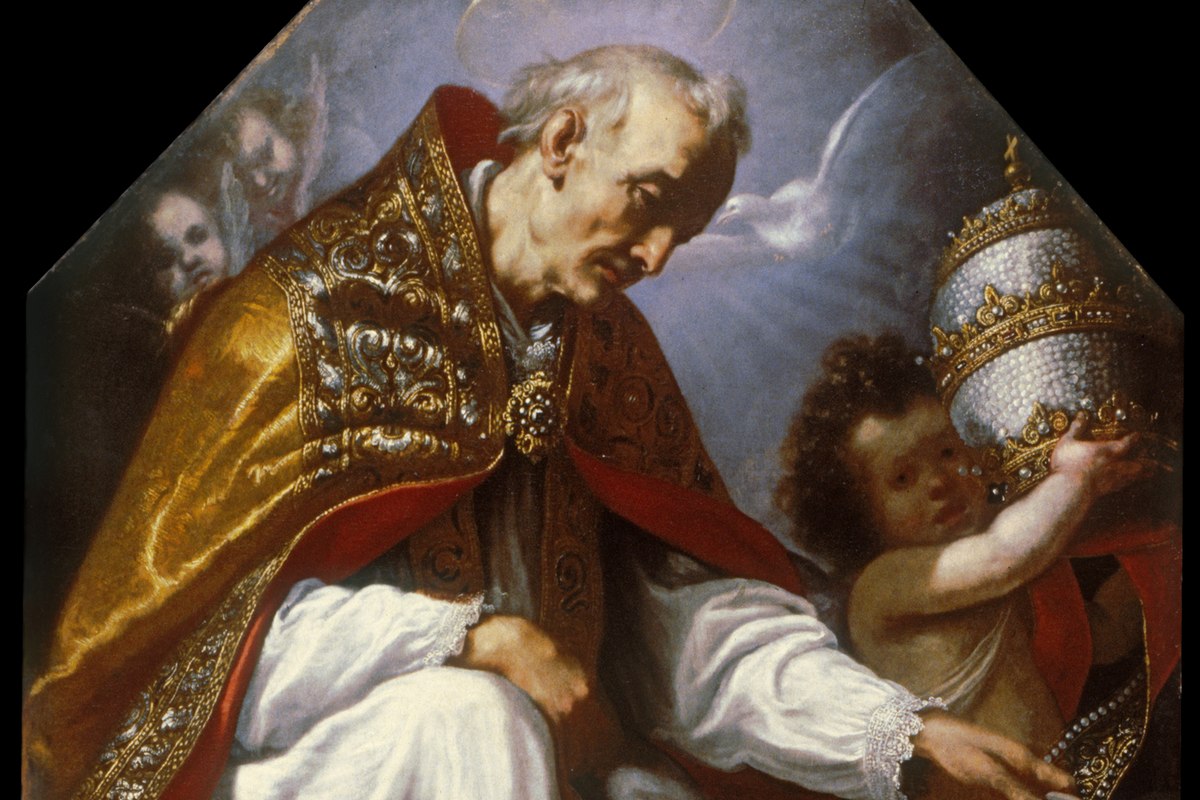
Ludovico Carracci, Saint Hyacinth, 1594, Wikimedia Commons — public domain.
The turning point in Hyacinth's life came in 1220, when he accompanied Bishop Ivo on a journey to Rome. There the two men encountered Dominic de Guzman, the Spanish priest whose Order of Preachers — the Dominicans — had received formal papal approval only four years earlier and was still in its earliest stages of expansion beyond Italy and southern France. Accounts of the meeting describe Hyacinth as deeply struck by Dominic's preaching and by the disciplined, mobile, intellectually serious form of religious life the new order represented — a marked contrast to the more settled monastic communities Hyacinth would already have known well from his upbringing. He asked to join, received the Dominican habit directly from Dominic himself, and made his profession within the order soon after.
Carrying the Dominican mission north
What makes Hyacinth's story unusual, even among the Dominican order's many early missionaries, is the sheer geographic scope of what he accomplished in a relatively short span of years after returning north. Rather than settling into a single community, he set about founding Dominican priories across a wide arc of Central and Eastern Europe — establishing houses in Krakow, in Wroclaw (then known as Breslau), in Gdansk on the Baltic coast, and reportedly reaching as far as Kiev and Halych in what is now Ukraine. He is traditionally credited with missionary journeys into Prussia and Pomerania as well, regions only partially and unevenly Christianized at the time, work that earned him the enduring title "Apostle of the North" among later Dominican historians.
This kind of rapid, wide-ranging institutional expansion mirrors, on a regional scale, the broader pattern of the early Dominican order itself, which grew with remarkable speed across Europe within just a few decades of its 1216 approval — a pattern shared by contemporaries such as the Hungarian Dominican missionary tradition and, in a broadly similar vein of energetic thirteenth-century missionary activity, figures like John of Capistrano, whose own preaching campaigns two centuries later likewise carried a mendicant order's mission far beyond its original heartland.
Legend, tradition, and the harder-to-verify details
As with many medieval saints whose earliest biographies were written well after their deaths and shaped by the devotional needs of the communities that produced them, several of the most memorable stories associated with Hyacinth come down to us as pious tradition rather than independently documented history, and it is worth being honest about that distinction rather than blurring it. The most famous is the account of the 1240 Tatar raid on Kiev, during which Hyacinth is said to have fled the besieged Dominican priory carrying both the Blessed Sacrament and a stone statue of the Virgin Mary — a statue traditionally described as far too heavy to carry, which miraculously became light in his hands so he could bring both to safety. It is a striking and enduring image in Dominican iconography, frequently depicted in art showing Hyacinth carrying a monstrance and a small Marian statue together, but it rests on later hagiographical retelling rather than a contemporary eyewitness record, and the Church's own guidance on such accounts is to treat them explicitly as devotional tradition rather than settled historical fact.
What is much better documented, from institutional records of Dominican house foundations across the period, is the underlying reality the legend dramatizes: Hyacinth genuinely did establish an extensive and lasting Dominican presence across a region of Europe where the order had previously had little or no foothold, work that shaped Polish and Central European Catholic life for centuries afterward.
Death, canonization, and lasting devotion in Poland
Hyacinth died in Krakow on August 17, 1257, having spent nearly four decades as a Dominican friar and missionary after his conversion in Rome. Devotion to him took root quickly and lastingly in Poland, where he remains one of the country's most venerated native saints. Pope Clement VIII canonized him in 1594, formally recognizing a cultus that had already flourished locally for well over three centuries.
His feast is kept on August 17, and he is honored today as one of Poland's patron saints, a status rooted directly in the network of Dominican communities he built across the region during his own lifetime — communities that, in many cases, continued functioning for centuries after the missionary who founded them had died.
Trivia
Who was Saint Hyacinth of Poland?
How did Hyacinth come to join the Dominican Order?
What did Hyacinth actually accomplish as a missionary?
Is Hyacinth associated with the Blessed Sacrament and a Marian icon during an invasion?
When was Hyacinth of Poland canonized?
You May Also Like
Related Reading