Saint Louis Grignion de Montfort, Priest

From Brittany to the streets of Paris
Louis Marie Grignion was born in 1673 in Montfort-sur-Meu, in Brittany, one of many children in a family of modest means. He studied for the priesthood in Paris, where he deliberately chose to live in extreme poverty during his seminary years, giving away what little money he had to those poorer still and reportedly walking miles across the city rather than spending what small funds he had on transportation. He was ordained a priest in 1700, already known among those who trained him for an intensity of devotion — particularly to Mary and to the Eucharist — that some found inspiring and others found difficult to accommodate within ordinary parish life.
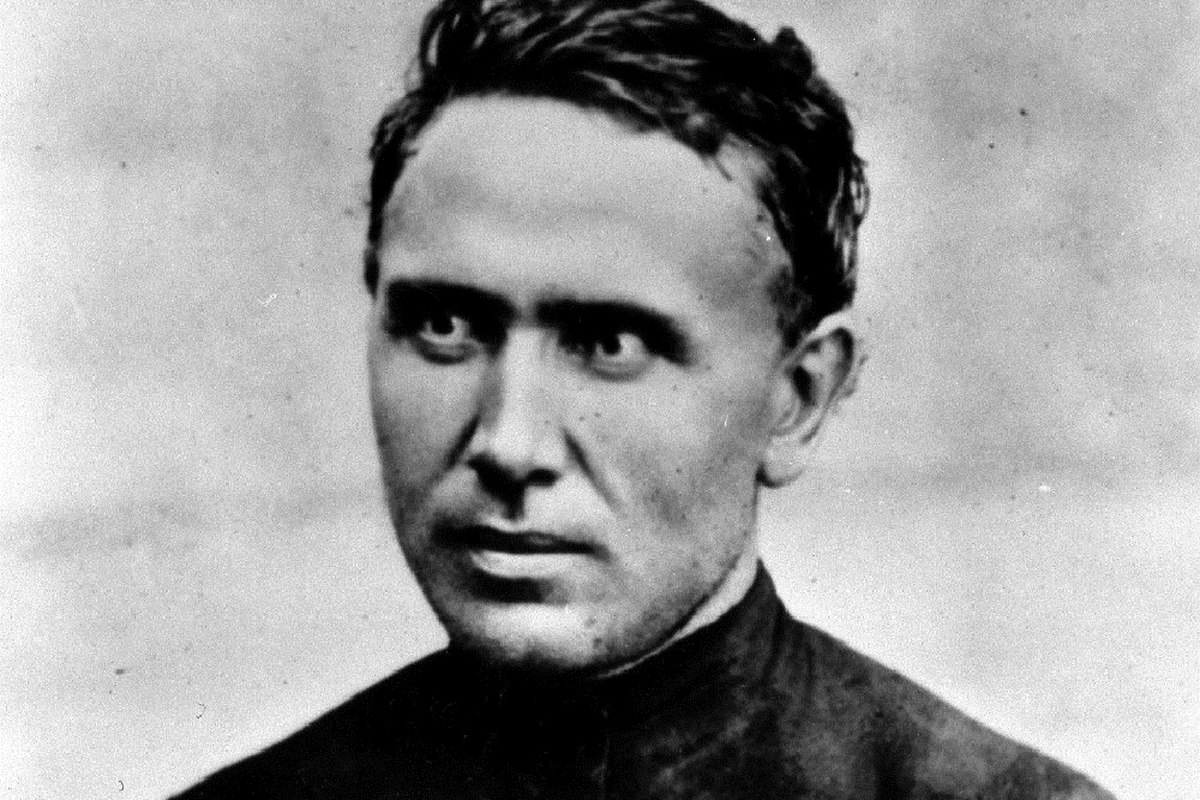
Anonymous 19th-century engraving, 'Le Bienheureux Louis-Marie Grignion de Montfort' (1673-1716) — public domain
That tension would define much of his career. Louis felt called specifically to preach popular parish missions — extended periods of intensive preaching, confession, and catechesis aimed at renewing the faith of ordinary Catholics in rural France, a region where, following decades of religious conflict and inconsistent clergy formation, basic religious instruction had grown thin in many parishes.
A preacher too intense for some bishops
Louis's preaching style was direct, dramatic, and uncompromising, calling listeners to serious conversion rather than offering comfortable reassurance. It drew large crowds in some parishes and considerable suspicion in others. At least one bishop, unsettled by reports and rumors about his methods, formally forbade him from preaching within his diocese — a real professional setback that forced Louis to travel from region to region seeking bishops willing to invite him in, rather than settling into a single stable parish assignment as most priests of his era did.
He eventually traveled to Rome to seek clarity and support directly from Pope Clement XI, who confirmed his calling to itinerant missionary preaching and gave him the title "Apostolic Missionary" — official Church backing that helped Louis continue his work despite ongoing local opposition, though it did not end the friction with individual bishops entirely. Accounts from his own community also describe at least one attempt by opponents of his mission work to poison him, an extreme measure that suggests just how strongly his intense preaching and calls for reform could provoke resistance among people whose comfortable habits he challenged directly.
Two communities built to outlast him
Recognizing that his own preaching mission could not continue indefinitely without support, Louis founded two religious communities during his lifetime. The Company of Mary, known today as the Montfort Missionaries, gathered priests committed to continuing his style of popular parish mission preaching after his death. The Daughters of Wisdom, a congregation of religious sisters, focused especially on education for the poor and care for the sick — practical charitable work that extended his mission beyond preaching alone into direct, sustained service.
Both congregations remained small during his own lifetime but grew substantially in the centuries afterward, and both continue active ministry internationally today, carrying forward the same combination of popular preaching, Marian devotion, and service to the poor that defined Louis's own approach to parish mission work.
A manuscript lost, then rediscovered
Louis's most consequential legacy, however, came from his writing rather than his preaching tours. He composed a manual on Marian consecration — a structured spiritual path for deepening devotion to Mary as a means of drawing closer to Christ, not as any kind of rival or substitute devotion — intended originally for a relatively small circle of those following his spiritual direction. The manuscript, later published as True Devotion to Mary, was lost after his death in 1716 and remained essentially unknown for well over a century.
It was rediscovered in 1842, found among papers preserved by his own religious community, and published for a wider audience for the first time. Its influence grew slowly but significantly over the following century, and its most famous later reader was a young Polish priest, Karol Wojtyła, who credited the book directly with shaping his own Marian spirituality. When Wojtyła was elected pope in 1978, taking the name John Paul II, he chose the papal motto Totus Tuus — Latin for "totally yours" — explicitly citing Louis de Montfort's Marian consecration as its source, bringing an eighteenth-century Breton missionary's private spiritual manual directly into the heart of the modern papacy more than 250 years after it was written.
Distinguishing devotion from doctrine
The Church has always been careful to frame Marian consecration of the kind Louis taught as a form of pious devotion rather than binding doctrine — a spiritual practice available to Catholics who find it helpful, not a required element of the faith itself. The underlying theological principle it rests on, however, is settled Catholic teaching: that devotion to Mary always points toward and strengthens devotion to Christ rather than competing with it, since her role in salvation history is understood as entirely oriented toward bringing believers closer to her Son. This same principle underlies devotion to other Marian figures across the Church's tradition, including Our Lady of Guadalupe, whose apparitions are likewise venerated as pious tradition rather than required belief.
Louis de Montfort died on April 28, 1716, in Saint-Laurent-sur-Sèvre, France, worn out by decades of demanding travel and preaching, and was canonized in 1947 by Pope Pius XII. His feast, kept each April 28, honors a priest whose most lasting influence arrived only long after his own lifetime — through a small book nearly lost to history, that ultimately reached one of the most consequential popes of the twentieth century.
Trivia
Why was Louis de Montfort banned from preaching in some French dioceses?
What is 'True Devotion to Mary,' and why is it significant?
Did Louis de Montfort found any religious congregations?
Was Louis de Montfort ever poisoned for his preaching?
What is Saint Louis de Montfort's feast day?
You May Also Like
Related Reading