Saint Vincent, Deacon and Martyr

A deacon in a dangerous position
Vincent served as a deacon in the church of Saragossa, in Roman Spain, under his bishop, Valerius. In the early Church, the office of deacon carried real public weight — deacons assisted at the liturgy, but they were also closely involved in preaching, teaching, and, perhaps most significantly, the direct distribution of the community's charity to the poor. That last responsibility made deacons highly visible figures within their local congregations, well known to ordinary believers in a way a bishop, often more removed from day-to-day parish life, might not be. When Roman authorities wanted to strike at the visible leadership of a Christian community, a prominent deacon was exactly the kind of target likely to draw attention.
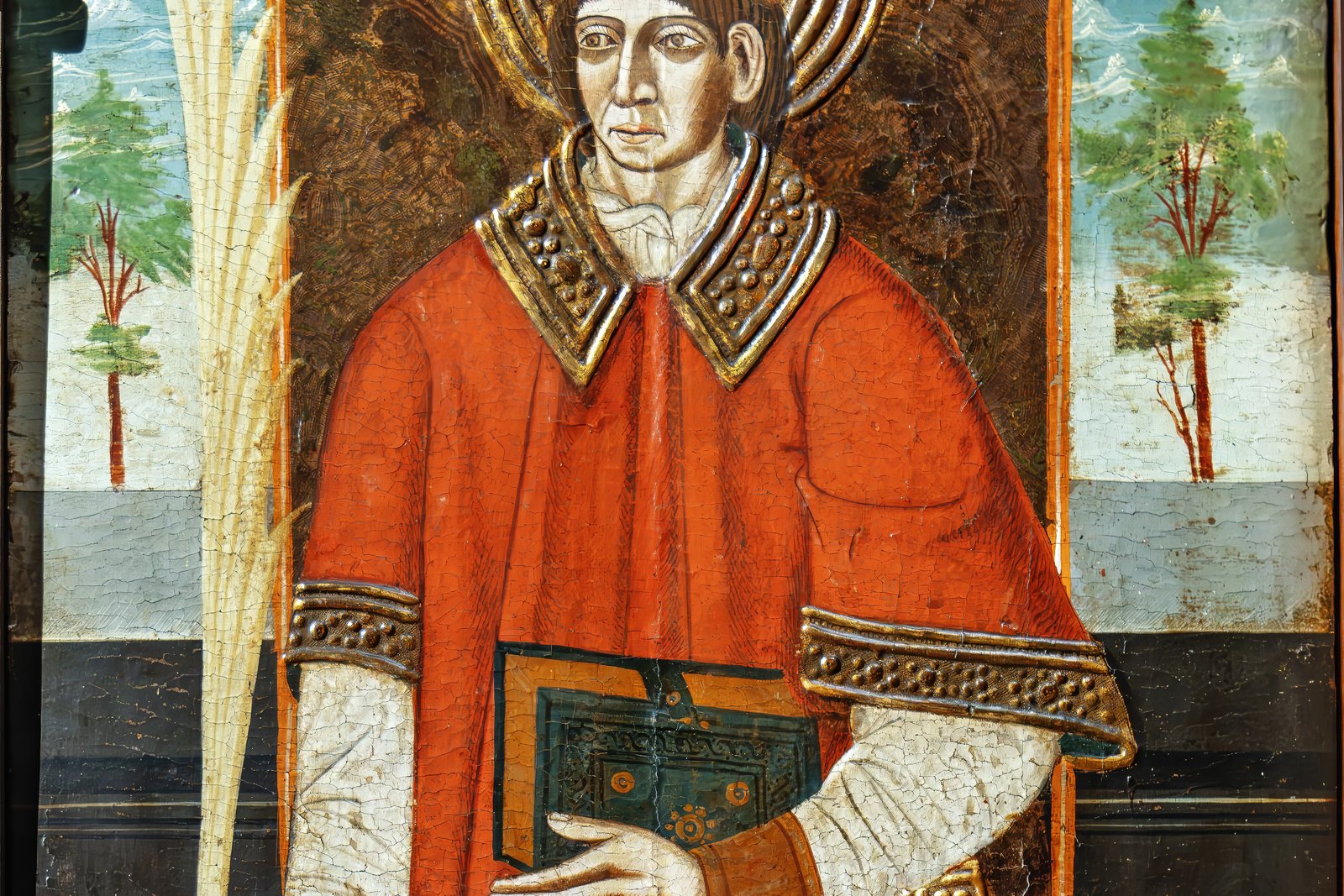
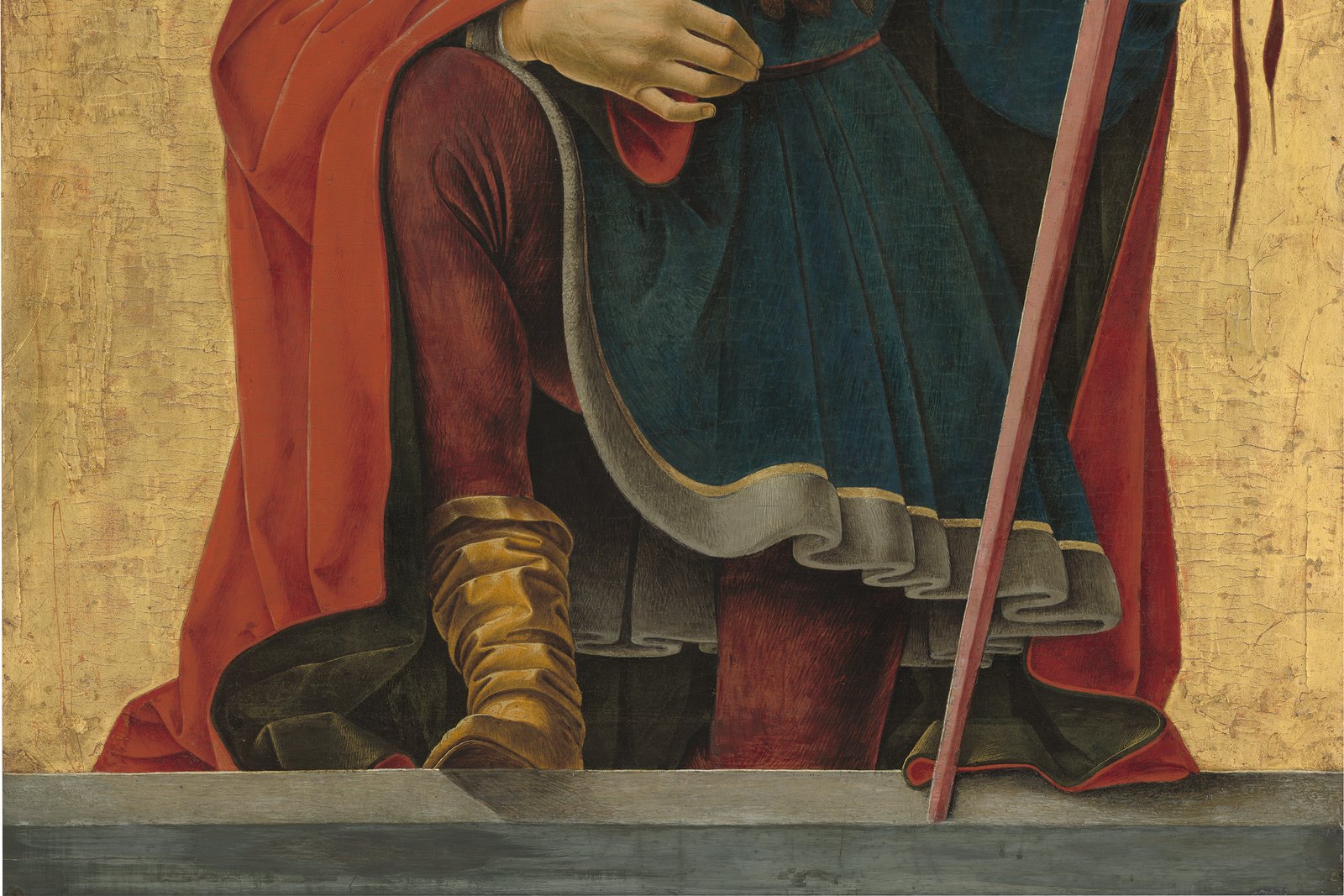
Juan de la Abadía, Saint Vincent of Saragossa, 15th century, Musée Goya, Castres — public domain.
That's roughly what happened to Vincent around the year 304, during the sweeping persecution of Christians ordered under the emperor Diocletian — one of the most severe and systematic persecutions the early Church endured, involving the confiscation and destruction of Christian scriptures, the closure of churches, and the arrest of clergy who refused to comply with orders to hand over sacred texts or offer sacrifice to the Roman gods. Vincent and Bishop Valerius were arrested together and transported to Valencia, brought before Dacian, the Roman governor overseeing the persecution in that province and a figure remembered in the surviving accounts as particularly determined to crush Christian resistance through public, exemplary cruelty.
Composure under torture
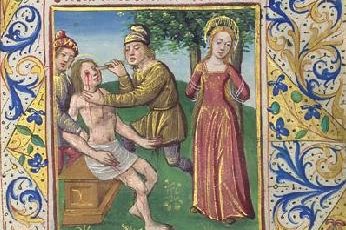
According to the accounts that survive from within a few generations of his death, Valerius, older and reportedly afflicted with a speech impediment, struggled to respond forcefully to the governor's interrogation, so Vincent, as the community's deacon, spoke on his behalf — a decision that appears to have drawn Dacian's fury specifically toward him rather than his bishop. What follows in the traditional accounts is a sequence of escalating torments: Vincent was stretched on a rack, his flesh reportedly torn with iron hooks, and subjected to a gridiron ordeal, all aimed at forcing him either to surrender Christian scriptures for burning or to offer sacrifice to Roman gods.
The specific details of the torments, as they've come down through later hagiographical tradition, should be read with the same caution the Church generally applies to ancient martyr accounts — some elements likely reflect later devotional elaboration rather than verified eyewitness reporting, a pattern common across many early martyrdom narratives written or expanded decades or centuries after the events they describe. What is treated as more historically secure is the core fact the earliest sources agree on: Vincent, a deacon of Saragossa, was tortured and died for refusing to renounce his faith during the Diocletianic persecution, and his death was already being publicly commemorated within a generation.
What made the accounts of his ordeal so widely repeated in the early Church wasn't primarily the severity of the torture — plenty of martyrs endured comparable or worse — but the reported calm with which Vincent faced it. Later preachers returned again and again to the image of a prisoner who seemed, throughout his suffering, less distressed than the men inflicting it, treating that composure as itself a kind of testimony more persuasive than words could have been.
Praised by name across the early Christian world
Vincent's martyrdom left an unusually well-documented mark in early Christian literature for a local Spanish deacon. Saint Augustine of Hippo, preaching in North Africa decades later, delivered at least one surviving sermon specifically honoring Vincent's feast, holding him up to his congregation as a model of Christian courage grounded not in personal toughness but in reliance on God's strength amid weakness — a theme Augustine returned to often in his preaching on martyrs generally. The Christian Latin poet Prudentius, writing in the late 4th century, devoted an entire lengthy hymn to Vincent in his Peristephanon ("On the Crowns"), a collection of poems celebrating the martyrs of the Western Church, praising his endurance in vivid, dramatic verse intended for public recitation and devotion.
That kind of attention — a bishop as prominent as Augustine preaching about him, a major Christian poet dedicating verse to him, all within roughly a hundred years of his death — marks Vincent as one of the more widely and quickly venerated martyrs to emerge from the western provinces of the Roman Empire, on a level of early recognition that many other regional martyrs never achieved.
A cult that spread far beyond Spain
Devotion to Vincent spread widely across the medieval Christian world, particularly through Spain, Portugal, and southern France. In Portugal, tradition holds that his relics were later transported by ship to Lisbon, guarded, according to legend, by ravens — a story that gave rise to the raven imagery still found on Lisbon's civic coat of arms today. The Portuguese city of Vila Nova de Gaia and a number of towns and churches across the Iberian Peninsula trace their patronal devotion directly back to him, and his name remains attached to churches across Western Europe founded or dedicated in the centuries following his death.
His feast is kept on January 22 in the Roman calendar. He's often distinguished in Catholic reference works from a later, similarly named saint, Vincent Ferrer, a 14th-century Dominican preacher — a distinction worth noting for readers researching either figure, since the two are sometimes confused despite living roughly a thousand years apart. Vincent of Saragossa's own story belongs to the much earlier, harder world of the persecuted pre-Constantinian Church, when public Christian leadership — even the relatively modest office of deacon — could carry the risk of exactly the ordeal he endured, and exactly the death he faced with a composure that outlived him by seventeen centuries.
Trivia
Who was Saint Vincent of Saragossa?
What role did a deacon play in the early Church that made Vincent's martyrdom significant?
What happened to Vincent during the Diocletianic persecution?
Which early Church writers praised Vincent by name?
When is the feast day of Saint Vincent of Saragossa?
You May Also Like
Related Reading