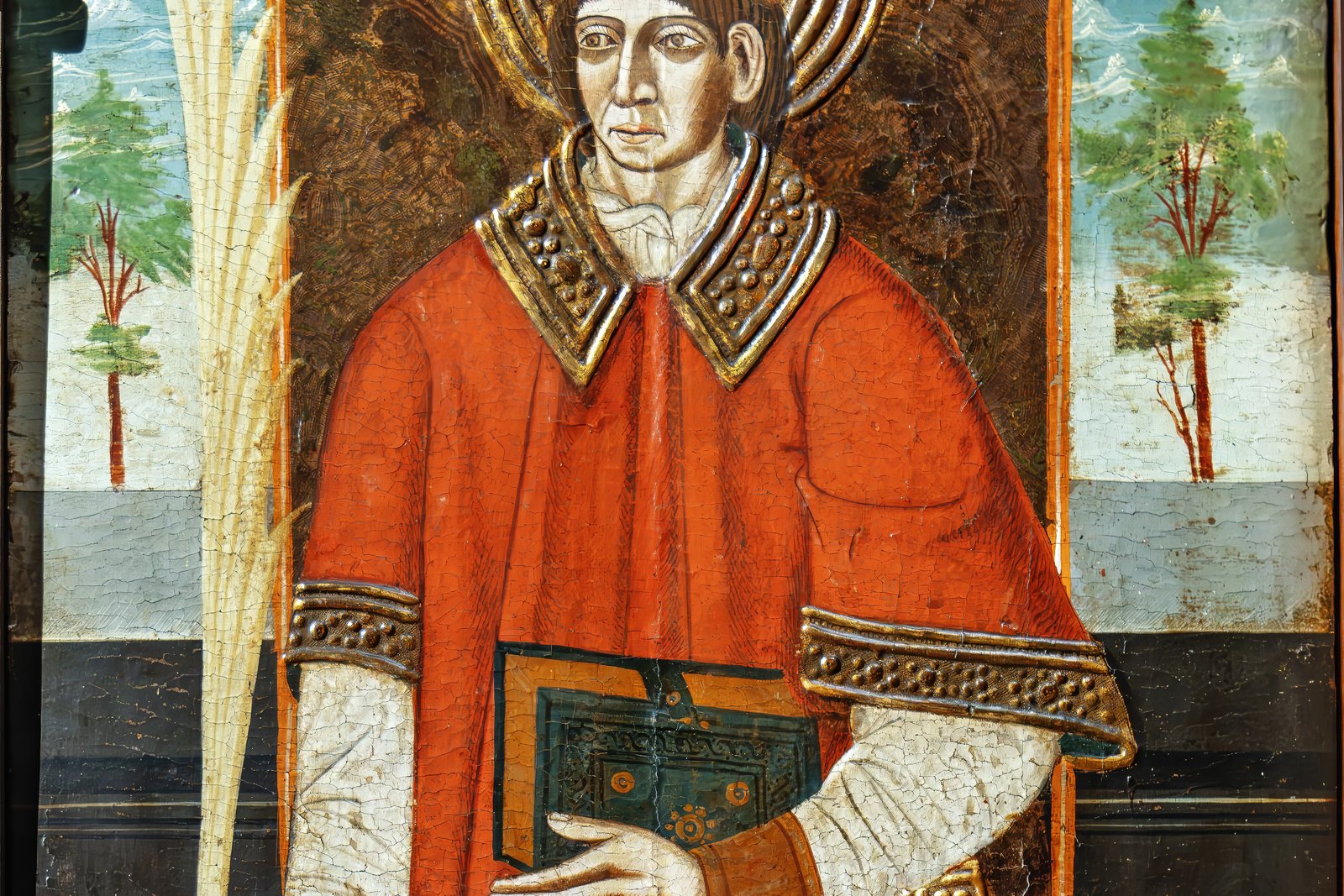
Saint Florian

An officer in Diocletian's Rome
Florian was, according to the traditional account of his life, a senior officer in the Roman army stationed in the province of Noricum, a region along the Danube corresponding roughly to parts of modern Austria. By the time of his death he had reached an advanced position within the Roman administration of the region — some accounts describe him specifically overseeing the local fire brigade, a detail later hagiography leaned on heavily, though the earliest sources are less specific about his exact administrative duties. What the tradition consistently records is that he was a man of some standing and authority within Roman Noricum by the early 300s AD, and that he was a practicing Christian at a time when that faith remained, officially, illegal.
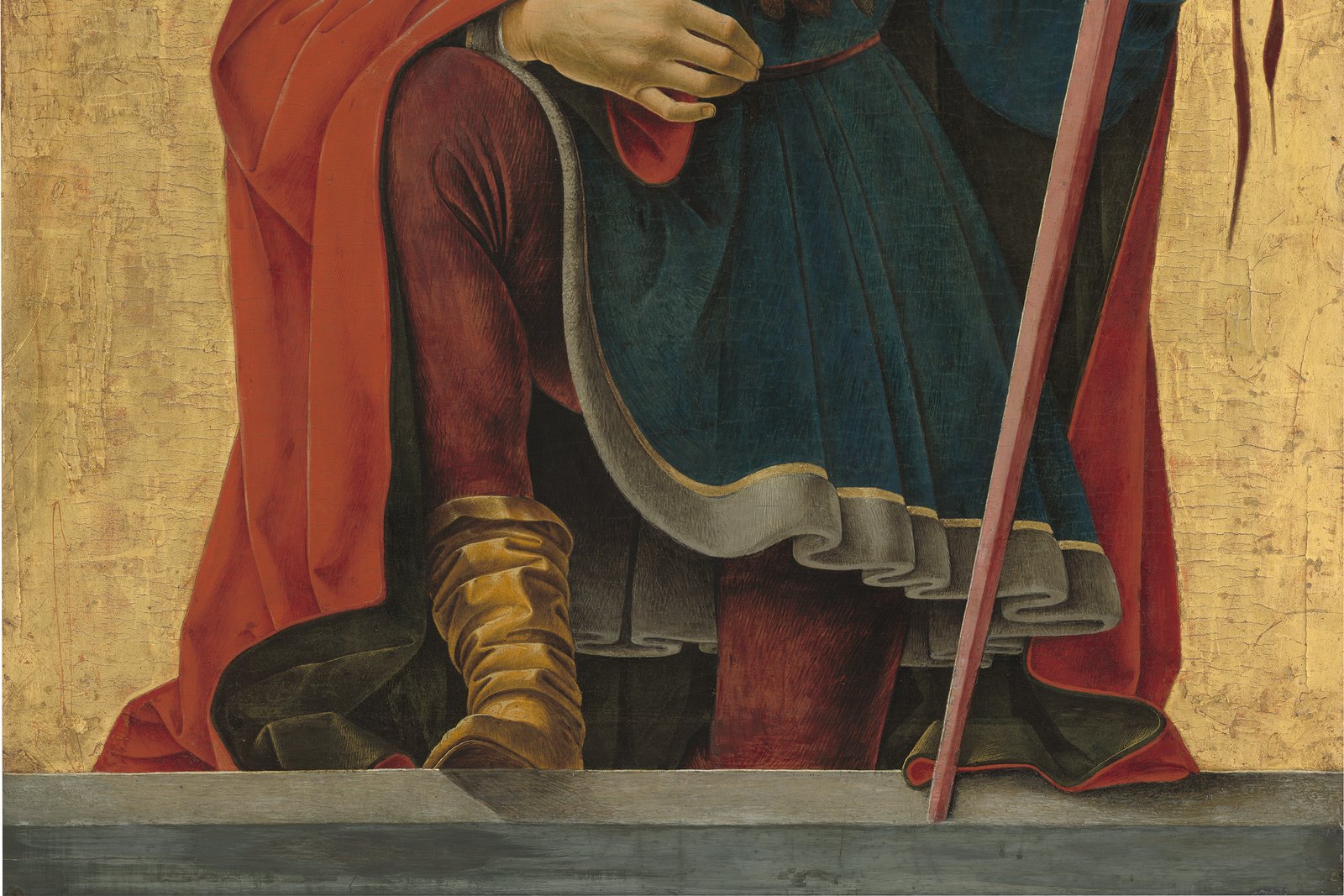
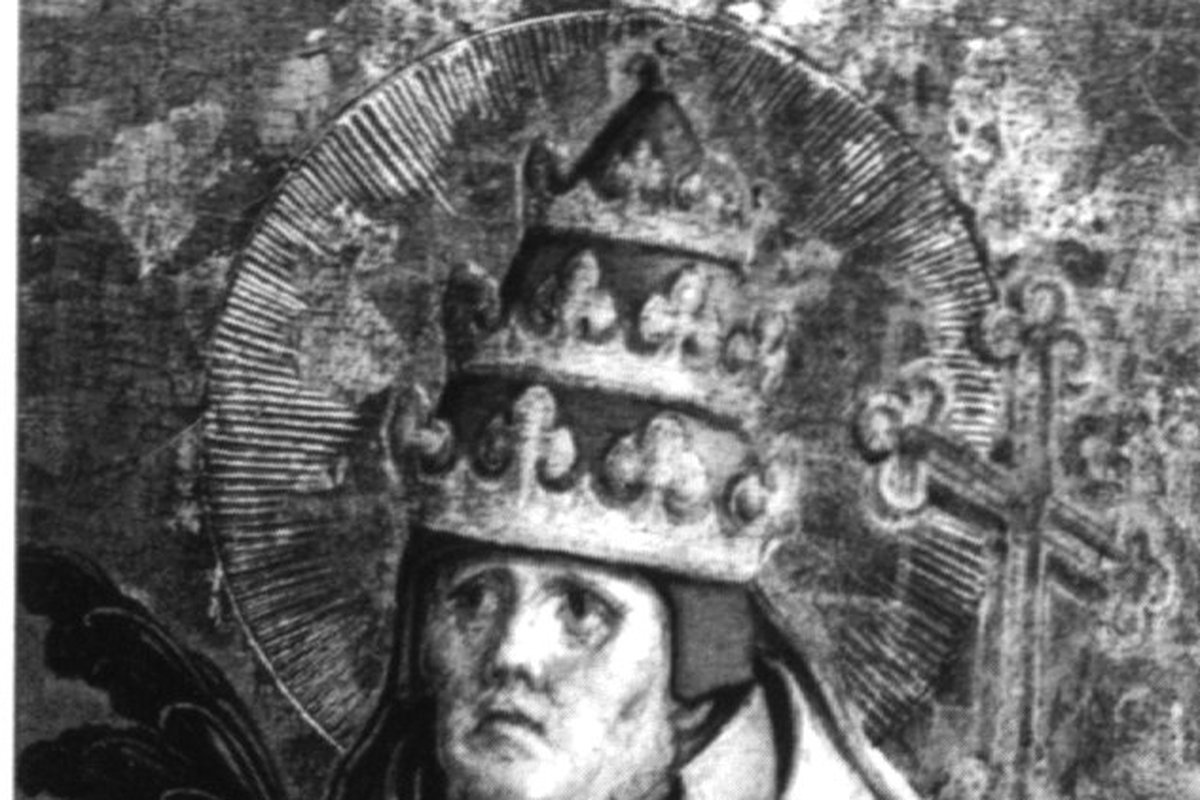
Francesco del Cossa, Saint Florian, c. 1473-1474, National Gallery of Art, Washington, D.C. — public domain.
The Diocletianic persecution reaches Noricum
In 303 AD, the Emperor Diocletian launched what became the last and most severe empire-wide persecution of Christians in Roman history, ordering the destruction of churches and scriptures, the removal of Christians from official positions, and eventually demands that all citizens sacrifice to the traditional Roman gods on pain of imprisonment, torture, or death. The persecution reached Noricum in 304, when the regional governor, Aquilinus, began arresting local Christians, including a group of forty soldiers taken into custody.
According to the traditional account of Florian's martyrdom, when he learned of the arrests, Florian — by then likely retired from active service given his age — set out to encourage and support the imprisoned Christians rather than remain safely uninvolved. He was intercepted en route and, on being questioned, openly declared his own Christian faith to the arresting soldiers, an admission that placed him immediately at the same legal risk as those he had set out to help.
Trial, torture, and death by drowning
Brought before the governor Aquilinus, Florian was ordered to sacrifice to the Roman gods and refused. According to the traditional martyrdom account, he was then scourged, and when he continued to refuse, sentenced to death by drowning in the nearby Enns River, with a millstone tied around his neck to ensure the body would sink and not be recovered for Christian burial — a detail meant, in Roman practice, to deny the victim any dignified burial rite as an additional punishment. It's worth being clear that the details of this narrative come down through later hagiographical tradition rather than a surviving contemporary Roman court record, though the broader historical reality of the Diocletianic persecution in Noricum, and Florian's veneration as an early martyr of that persecution, are well established and considerably older than many other martyr legends of comparable detail.
A later addition to the tradition holds that a Christian woman named Valeria retrieved Florian's body from the river after being warned in a vision, and buried him at the site that later became the Augustinian monastery of St. Florian in present-day Austria, which remains an important pilgrimage site associated with him today.
The legend behind his firefighting patronage
The specific connection between Florian and firefighting rests on a popular legend that developed well after his death and isn't part of the earliest martyrdom accounts: the story that Florian, faced with a house or town engulfed in flames, extinguished the entire fire using only a single bucket of water. Paired with the striking symbolism of his own death by drowning — water overcoming what fire could not — this legend made him a natural and enduring choice as patron of those who fight fires for a living. The devotion took particularly deep root in Austria, Bavaria, and Poland, regions where his relics and cult were most strongly established, and firefighting companies, brigades, and departments across those countries and well beyond continue to invoke him by name today.
Relics, Poland, and lasting devotion
In 1184, at the request of Duke Casimir II of Poland, relics believed to be Florian's were transferred to Krakow, a gift that significantly deepened devotion to him across Polish Catholicism; he remains one of Poland's most prominent patron saints, associated broadly with protection from both fire and flood, and Krakow's Church of St. Florian, built to house his relics, continues to be a significant site of pilgrimage and devotion.
The Augustinian abbey that grew from his tomb
The monastery traditionally said to mark the site of Florian's burial, the Augustinian Canons' abbey of St. Florian in Upper Austria, grew over the centuries that followed into one of the most significant religious institutions in the region — a large Baroque monastic complex, rebuilt extensively in the seventeenth and eighteenth centuries, that today houses an important library and art collection alongside its continuing role as a working religious community. The composer Anton Bruckner served as organist there and is buried in its crypt, a detail with no connection to Florian's own life but one that illustrates how thoroughly the abbey's identity and Florian's own name became fused together over roughly seventeen centuries of continuous local veneration, long after the precise historical details of his martyrdom had passed beyond reliable verification.
A patronage that spread across Central Europe
Florian's status as patron of firefighters is only part of a broader pattern of protective patronage that developed around him across German-speaking and Central European Catholicism. Beyond firefighters specifically, he came to be invoked more generally as a protector against fire, flood, and other sudden catastrophic dangers — a natural extension of the water-versus-fire symbolism built into his own martyrdom and later legend. Statues and images of Florian, typically shown as a Roman soldier in armor pouring water from a vessel onto a burning building, became a common sight on the exterior walls of farmhouses and village buildings across Austria, Bavaria, and other parts of the historically Habsburg and German-speaking lands, placed there in the hope of protecting the structure from fire — a folk devotional practice that in some rural areas persisted into relatively recent times, keeping Florian's image visibly present in everyday village life rather than confined to church art alone.
Feast day
Saint Florian's feast is celebrated on May 4.
Related reading
Florian's story fits within the broader wave of martyrdoms carried out under Diocletian's persecution — readers interested in that period may also want to read about Saint Sebastian, another Roman soldier martyred under the same emperor, or explore the Patron Saints Directory for other saints associated with specific trades and protections.
Trivia
Who was Saint Florian?
How was Saint Florian killed?
Why is Saint Florian the patron saint of firefighters?
Is Saint Florian also connected to Poland?
When is Saint Florian's feast day?
You May Also Like
Related Reading