Saint Vincent Pallotti

A brilliant student who chose the poor over academic honors
Vincent Pallotti was born in Rome in 1795, the son of a well-off grocer, and showed academic promise early enough that he earned a doctorate in theology and philosophy from Rome's Sapienza University while still in his early twenties. He was ordained a priest in 1818 and briefly held a university teaching post, a path that could easily have led to a comfortable career inside Rome's academic and ecclesiastical establishment. He gave it up almost immediately, drawn instead toward direct, hands-on ministry among the sick, the imprisoned, and the poor of the city — work that would define the rest of his life far more than any lecture hall ever could.
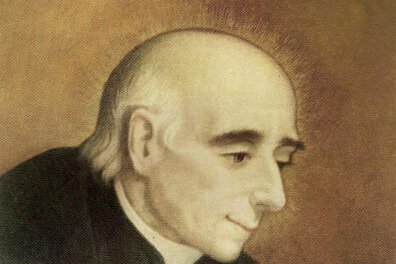
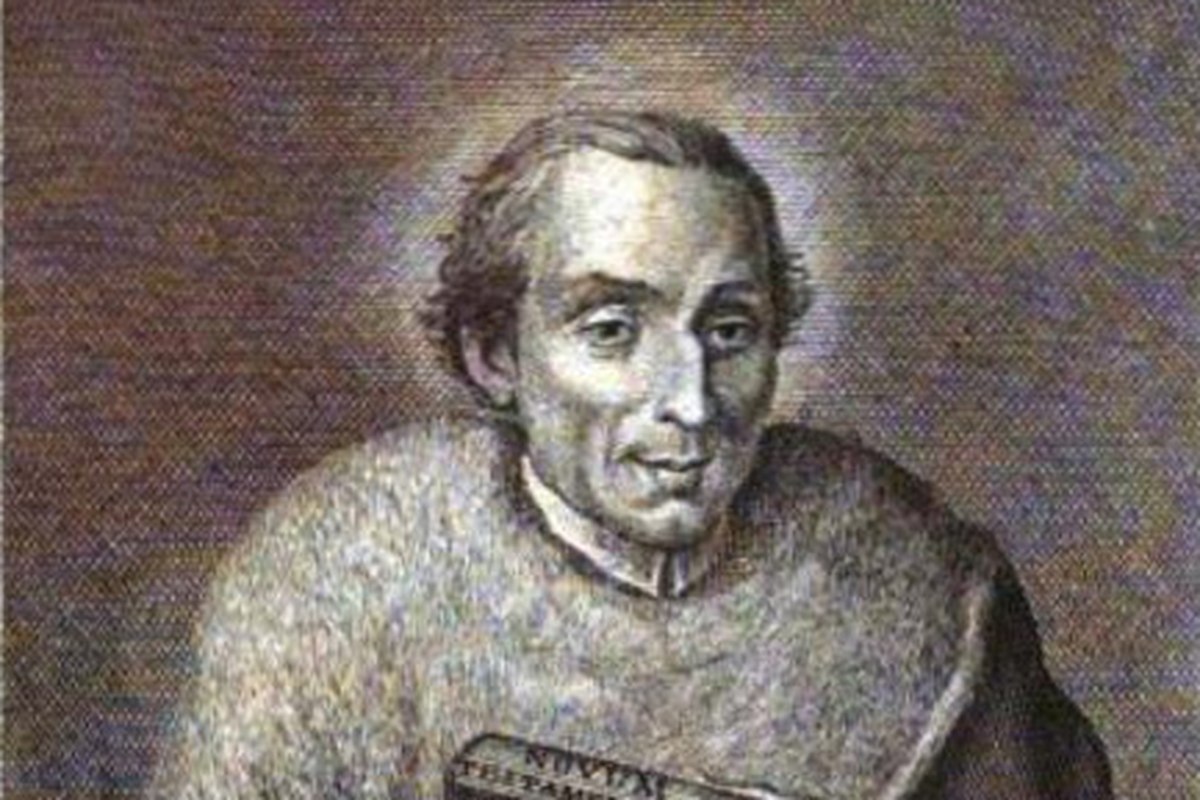
Portrait of Vincent Pallotti, 19th century, Wikimedia Commons — public domain.
Contemporaries described a priest who seemed constitutionally unable to walk past someone in need without doing something about it, often at real personal cost. Stories from the period, some almost certainly embellished with retelling but consistent enough in outline to be broadly credible, describe him repeatedly giving away his own coat, shoes, and even his dinner to beggars he encountered on the street, to the point that fellow clergy occasionally intervened to make sure he kept enough clothing and food for himself. Whatever the precise details of any individual story, the underlying pattern — a priest whose personal generosity ran well past what was comfortable or convenient — is well attested across independent accounts from people who actually knew him.
Building a movement around a simple idea
Pallotti's most lasting contribution to the Church was not any single charitable project but an idea he pushed hard, at a time when it was not widely emphasized: that the Church's missionary and charitable work is not the exclusive responsibility of priests and religious, but a task shared by every baptized Christian. In 1835 he founded the Union of Catholic Apostolate to put that idea into practice, organizing laypeople, priests, and religious together into a single collaborative structure aimed at reviving Catholic life in Rome and, eventually, well beyond it. Out of that union grew the Pallottine Fathers and Brothers, formally recognized as a religious congregation and still active today across dozens of countries.
The theological point Pallotti was making — decades before the Second Vatican Council would later formalize a similar emphasis on the "universal call" of all the baptized to the Church's mission — was genuinely ahead of its time within nineteenth-century Roman Catholicism, a period when clergy-led structures dominated almost every form of organized Catholic activity. Pallotti's insistence that ordinary laypeople had real apostolic responsibility, not merely a supporting role behind clergy, unsettled some of his contemporaries even as it drew increasing numbers of Roman laypeople into active parish and charitable work.
Night schools, prisons, and a feast for the whole city
Pallotti's practical projects in Rome were extensive and remarkably varied for one priest to have organized. He set up evening trade schools where poor young men who worked by day could learn a craft after hours, founded shelters and food programs for the destitute, and made a point of regularly visiting prisons and hospitals, ministries that carried real personal risk during the periodic epidemics that swept through nineteenth-century Rome. He is also credited with reviving and formalizing an annual multilingual celebration of the Feast of the Epiphany at the Roman church of Sant'Andrea della Valle, bringing together the city's many resident foreign communities — a striking, practical expression of the same conviction that animated his charitable work: that the Church's unity had to be lived out concretely, across language and nationality, not just affirmed in theory.
That same instinct for practical, person-to-person charity connects Pallotti to later Roman figures like Frances of Rome, whose own charitable work centuries earlier had likewise focused on meeting the immediate physical needs of the city's poor rather than confining charity to formal institutional channels.
A quiet death and a reputation that grew afterward
Pallotti died in Rome in January 1850 after a chest infection worsened following an incident in which he reportedly gave away his own coat to a beggar during a cold spell — a detail so consistent with everything else known about his life that even biographers who are otherwise cautious about pious embellishment tend to treat it as broadly credible. He was not a famous or widely celebrated figure at the time of his death outside Rome's charitable and clerical circles, and it took over a century for his cause to reach full canonization.
Pope John XXIII canonized Vincent Pallotti on January 20, 1963, holding him up specifically as a model for the kind of lay engagement the Church was about to formally emphasize at the Second Vatican Council, then in its opening sessions. His feast is now kept on January 22, and the Pallottine communities he founded continue his original dual emphasis — practical charity toward the poor, and the conviction that every Catholic, not only the ordained, carries real responsibility for the Church's mission.
Trivia
Who was Saint Vincent Pallotti?
What did Vincent Pallotti found?
What kind of charitable work was Vincent Pallotti known for in Rome?
Is Vincent Pallotti connected to the founding of Epiphany celebrations for immigrants in Rome?
When was Vincent Pallotti canonized?
You May Also Like
Related Reading