Saint Winifred

A noblewoman's refusal
According to the tradition that has come down through medieval Welsh hagiography, Winifred — Gwenfrewi in Welsh — was born in the seventh century into a noble family in North Wales, niece to Beuno, a monk and missionary venerated in his own right across the region. The story that made her famous begins with a local prince or nobleman, Caradog, who sought to marry her; Winifred, having already committed herself to a religious life, refused him. Caradog's response, in the traditional account, was violent: he pursued her as she fled toward her uncle's church and, when he caught her, beheaded her on the spot.
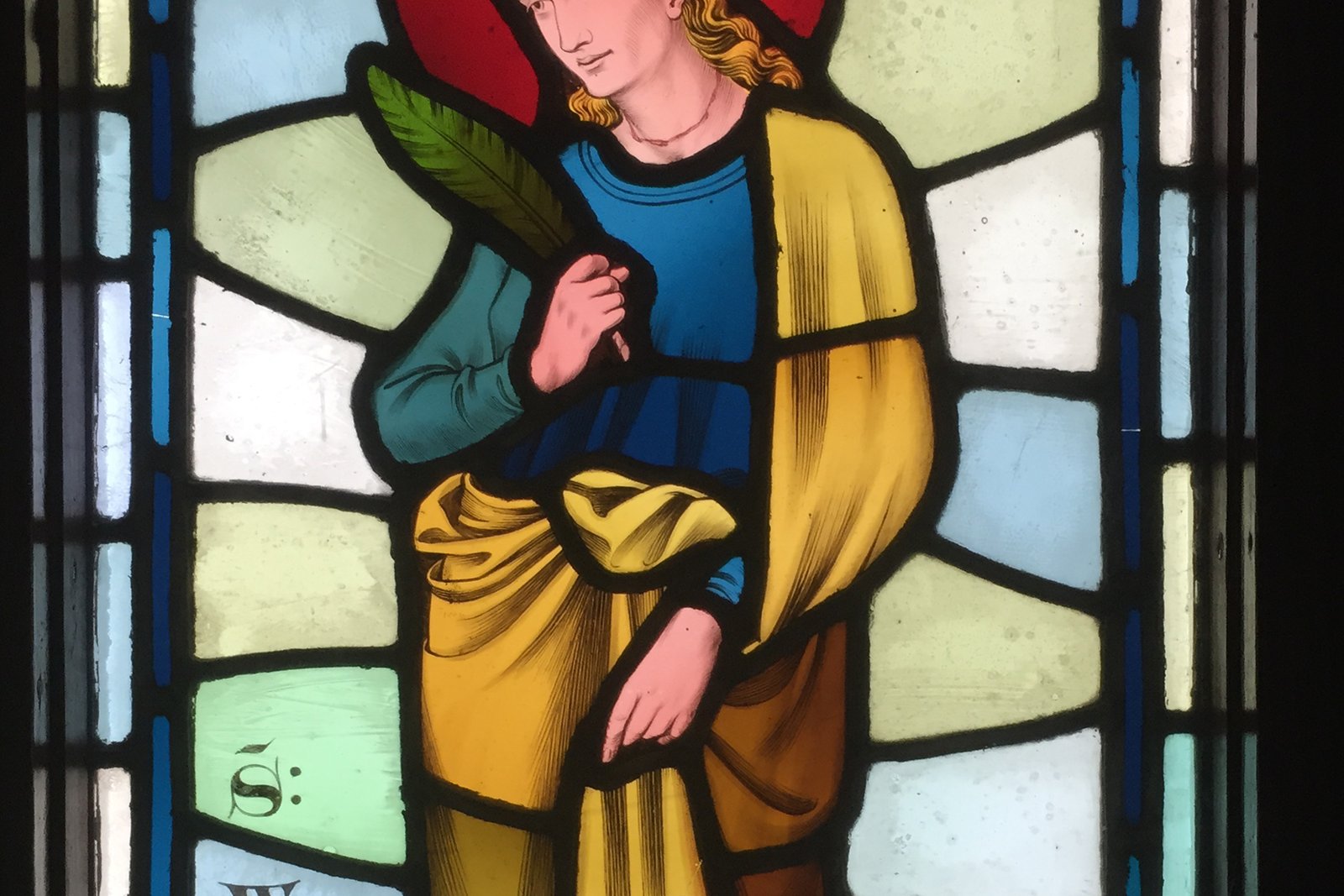
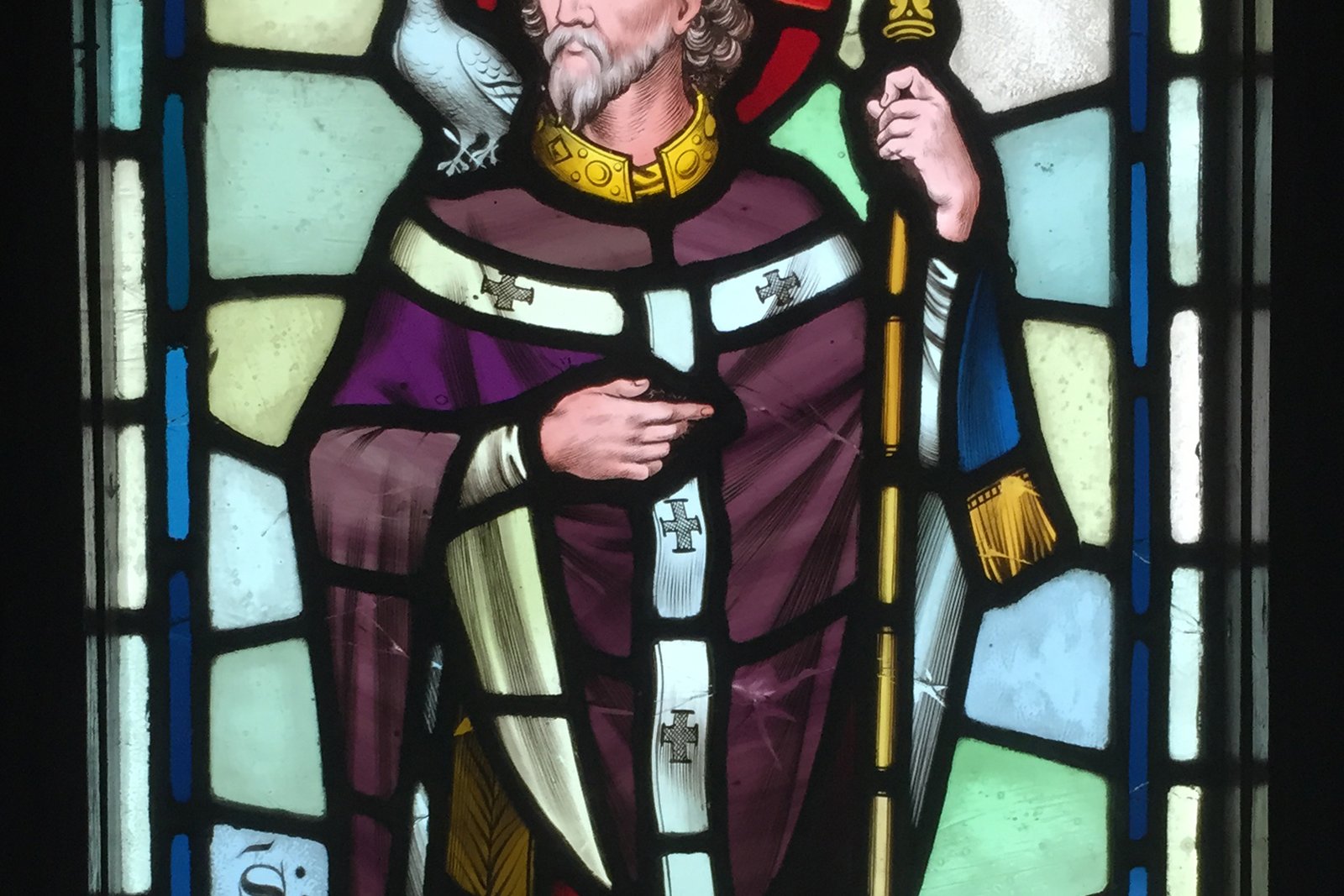
Stained glass panel of Saint Winifred, Castell Coch, Wales — used under CC BY-SA 4.0.
This is where the story turns from a grim but historically plausible account of medieval violence against a woman who refused an unwanted suitor into something the tradition presents as directly miraculous: Beuno, arriving at the scene, is said to have prayed over Winifred's body and restored her to life, rejoining her head so completely that only a thin white scar remained visible around her neck for the rest of her days. Where her severed head had struck the ground, tradition holds, a spring of clear water burst forth immediately — the origin of what became the holy well at Holywell, in Flintshire.
A well that never stopped flowing
Whatever judgment one makes about the miraculous core of the story, the historical fact of Holywell's pilgrimage tradition is genuinely remarkable in its own right. The well has drawn pilgrims seeking healing for well over a thousand years, with a documented continuity of use that survives even through the Reformation period, when most English and Welsh shrines were suppressed and their pilgrimage traditions forcibly ended — Holywell is one of the very few British holy sites where pilgrimage continued, even if quietly and at reduced scale, straight through that disruption into the present day. It remains an active pilgrimage and healing site today, sometimes described as the "Lourdes of Wales," drawing comparison to the more famous French Marian shrine because of its similarly sustained tradition of healing pilgrimage centered on water.
The physical shrine structure at Holywell, built in the late fifteenth century with support from the Stanley family (ancestors of the Tudor dynasty through Margaret Beaufort's second husband), remains one of the finest surviving pieces of late medieval religious architecture in Wales, itself a mark of how seriously the well's healing reputation was taken by the standards of its own time, well before the Reformation tested its survival.
Life after the legend's central miracle
Tradition continues Winifred's story well beyond the beheading and restoration: after being restored to life, she is said to have taken up a religious vocation in earnest, eventually becoming abbess of a community of nuns at Gwytherin, further inland in North Wales, where she is said to have lived out the remainder of her days in a manner the sources describe as marked by real personal holiness rather than simply the aftermath of a single dramatic miracle. Her relics remained at Gwytherin for centuries after her death before being translated, in the twelfth century, to Shrewsbury Abbey in England — a translation significant enough in its own right that it became the subject of later medieval literary treatment, including within English monastic historical writing of the period.
As with other early Welsh and British saints whose biographies rest largely on Lives written well after their traditional lifetimes, careful readers should hold the specific narrative details of Winifred's story — the exact identity and motives of Caradog, the precise mechanics of her restoration — as pious tradition rather than documented fact in the way a contemporary biography would offer. What is more solidly established is the antiquity and remarkable continuity of the cult itself: Holywell's status as a major, continuously used pilgrimage site is a genuine and unusual historical fact, whatever one concludes about the founding miracle it commemorates.
Later patronage and a name carried across centuries
Winifred's story also carried real weight for English Catholics well beyond Wales in later centuries — during the period of Reformation-era persecution, the well remained a quiet point of continuity for a Catholic community otherwise stripped of most of its public shrines and pilgrimage sites, and figures connected to England's later Catholic martyrs, including some associated with the network Saint Robert Southwell and Saint Nicholas Owen operated within, are recorded as having visited or drawn spiritual encouragement from Holywell specifically because of its unbroken tradition. That continuity gave Winifred's cult a significance during the era of persecution that went well beyond her own original local, specifically Welsh context.
A lasting patron of North Wales
Winifred's feast is kept on November 3. She remains one of the most significant patron saints of North Wales specifically, with Holywell continuing to function as an active site of pilgrimage and prayer for healing, much as it has, with only the Reformation-era interruption to full public observance, for well over a millennium. Among British holy wells associated with virgin martyrs, hers is among the best known and most continuously venerated — a devotion that has outlasted nearly every other comparable medieval British pilgrimage tradition still functioning today.
Trivia
Who was Saint Winifred?
What is the story behind Holywell?
Is the beheading-and-restoration story historically documented?
What happened to Winifred after her restoration, according to tradition?
When is Saint Winifred's feast day?
You May Also Like
Related Reading