Doubting Thomas

The apostle who wasn't in the room
John's account of the resurrection includes a detail easy to skip past: on the evening Jesus first appears to the gathered disciples behind locked doors, "Thomas, called Didymus, one of the Twelve, was not with them" (John 20:24, NABRE). "Didymus" is Greek for "twin," a nickname attached to Thomas elsewhere in John's Gospel, though Scripture never says who his twin was. No explanation is given for his absence — he simply missed the single most important moment of the apostles' lives, and walked back in afterward to ten men insisting they'd seen the Lord.
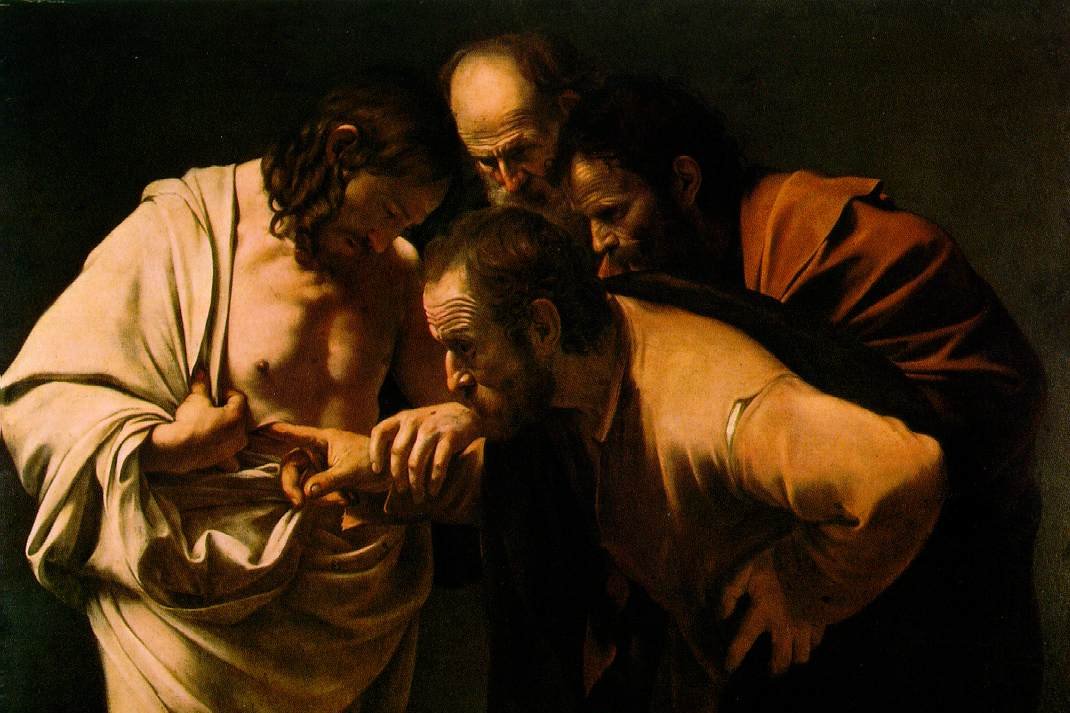
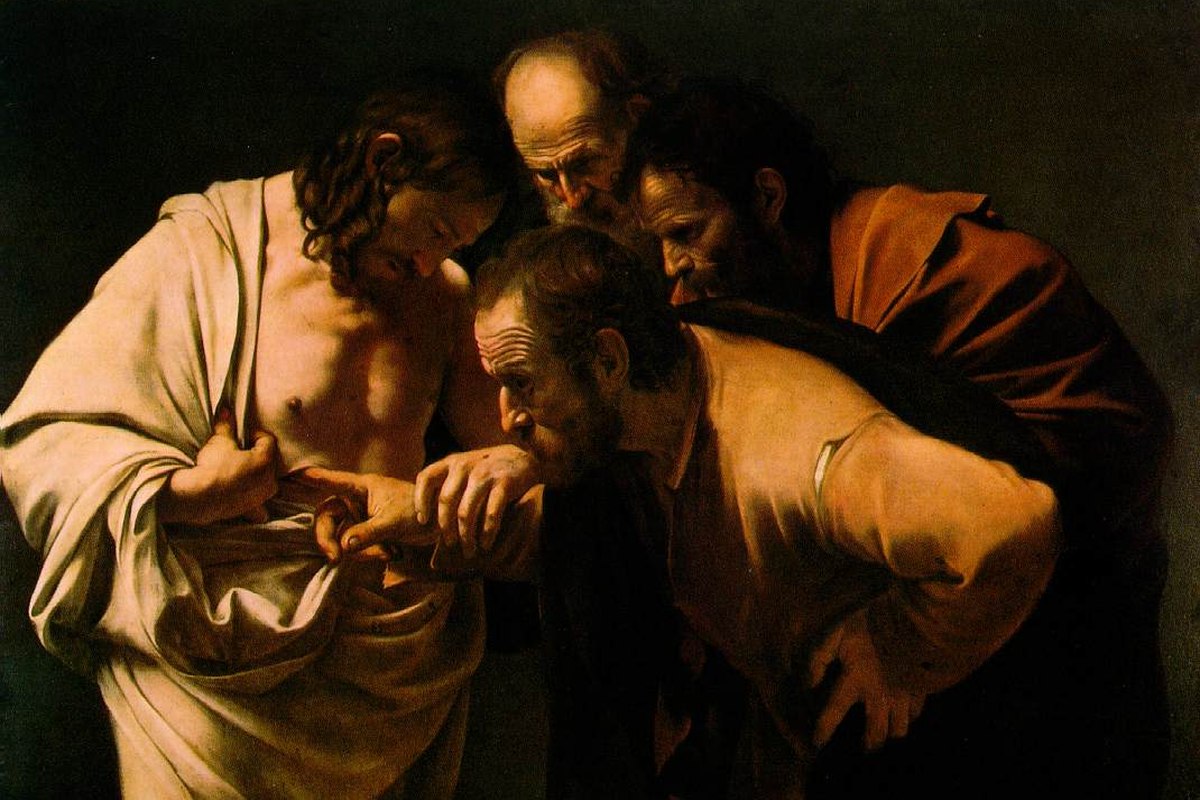
Michelangelo Merisi da Caravaggio, "The Incredulity of Saint Thomas," c. 1601-02, Sanssouci Picture Gallery. Public domain.
A condition that sounds almost defiant
Thomas's response to their report isn't polite skepticism. It's a specific, almost confrontational demand: "Unless I see the mark of the nails in his hands and put my finger into the nailmarks and put my hand into his side, I will not believe" (John 20:25, NABRE). He isn't asking for a second witness or more testimony — he's asking to physically touch the wounds himself. It's this demand that gave rise to the nickname history remembers him by, though nowhere does the Gospel call him "doubting" — that label came later, attached by readers rather than by the text itself.
A week of silence, then a door that opens anyway
John doesn't record what Thomas does or says during the week that follows — only that "a week later his disciples were again inside and Thomas was with them" when Jesus appears again, exactly as before, through locked doors (John 20:26, NABRE). What Jesus says next addresses Thomas directly and specifically, using almost the same wording Thomas had used to the other apostles: "Put your finger here and see my hands, and bring your hand and put it into my side, and do not be unbelieving, but believe" (John 20:27, NABRE). Jesus doesn't rebuke the demand before meeting it. He simply answers it, point for point.
A declaration, not just a concession
John never actually records Thomas touching the wounds — the text moves directly from Jesus's invitation to Thomas's response: "My Lord and my God!" (John 20:28, NABRE). It's one of the clearest, most unambiguous confessions of Jesus's divinity spoken by anyone in the Gospels, and it comes from the apostle who, a week earlier, had refused to take anyone's word for the resurrection at all. The man remembered for his doubt ends up delivering one of Scripture's sharpest statements of faith.
Words meant for readers who would never get Thomas's proof
Jesus's reply to Thomas reaches beyond the room they're standing in: "Have you come to believe because you have seen me? Blessed are those who have not seen and have believed" (John 20:29, NABRE). John places this line immediately before explaining, in the next verses, that he has written his Gospel specifically "that you may [come to] believe that Jesus is the Messiah, the Son of God" (John 20:31, NABRE) — a direct address to every reader who would come to this account without Thomas's chance to touch the wounds themselves. Catholic tradition holds that Thomas went on to become a missionary to India, where an ancient community of Christians — the Saint Thomas Christians of Kerala — still traces its founding to his preaching, though the historical details of that journey rest on tradition rather than New Testament record.
What John's Gospel had already said about Thomas
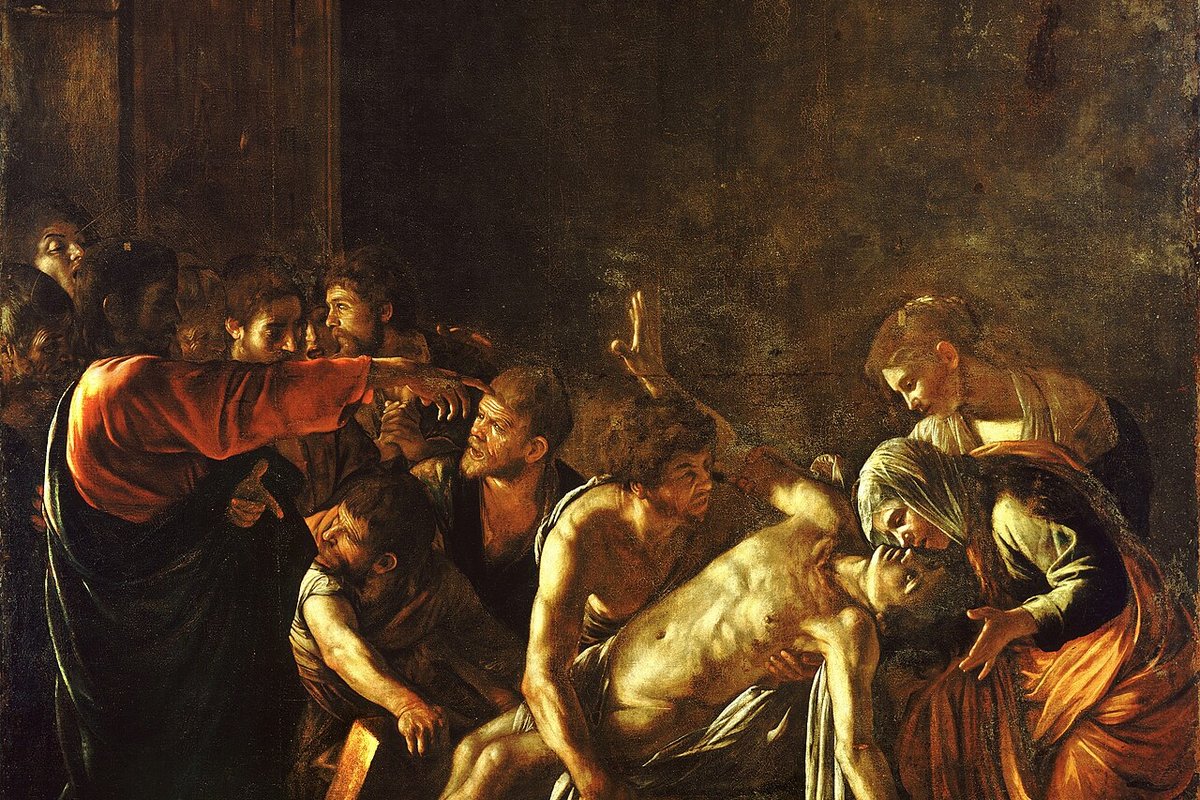
This isn't the only glimpse John's Gospel gives of Thomas's character, and the earlier moments make his skepticism after the resurrection feel less like an isolated lapse and more like a consistent personality. When Jesus insists on returning to Judea to raise Lazarus, despite the danger of hostile crowds there, it's Thomas who says to the other disciples, "Let us also go to die with him" (John 11:16, NABRE) — blunt, a little fatalistic, but genuinely loyal. Later, during the Last Supper, when Jesus tells the disciples they know the way to where he is going, it's Thomas again who pushes back plainly: "Master, we do not know where you are going; how can we know the way?" (John 14:5, NABRE), prompting Jesus's famous answer, "I am the way and the truth and the life" (John 14:6, NABRE). Both moments show the same instinct that later produces his demand to touch the wounds: Thomas doesn't accept comfortable generalities, and he says so out loud rather than nodding along in silence.
A single label that outran a fuller portrait
The nickname "Doubting Thomas" has become so widespread in everyday English — used for any skeptic demanding proof — that it has largely detached from the biblical account itself, where Thomas's doubt lasts exactly one scene before turning into one of the Gospels' clearest professions of faith. Early Christian writers and later theologians, including Pope Gregory the Great, actually read the episode more generously than the popular nickname suggests: Gregory argued that Thomas's insistence on physical proof, and Christ's willingness to meet it, served the Church's future readers better than an easy, uncontested belief would have — since it gave firsthand, tangible confirmation of the resurrection precisely at the moment doubt might otherwise have crept into the Gospel account. Read that way, Thomas's hesitation isn't a character flaw the story exists to criticize, but part of how the resurrection came to be so thoroughly and physically attested in the first place.
Caravaggio's unflinching version of the scene
Caravaggio's painting of this encounter, which illustrates this article, is famous for how far it pushes the physical reality of the moment: Thomas's finger actually pressed into the wound, Christ's own hand guiding it there, the other apostles crowding close to watch. It's a deliberately uncomfortable image, and that discomfort is the point — Caravaggio, working in the early 1600s during a period when the Church was emphasizing vivid, physically immediate religious art, wanted viewers to feel the same confrontation with tangible, bodily proof that Thomas himself experienced, rather than a softened or symbolic version of the scene. It remains one of the most reproduced depictions of any Gospel episode precisely because it refuses to let the viewer look away from what Thomas actually asked for, and what Christ actually gave him.
Trivia
What exactly did Thomas demand before he would believe Jesus had risen?
Why wasn't Thomas present for the first appearance of the risen Jesus?
What did Jesus say to Thomas when he appeared a week later?
What did Thomas say once he saw Jesus?
What did Jesus say about people who believe without seeing?
Related Reading