Elisha's Miracles — The Prophet Who Asked for a Double Portion

An apprentice who wouldn't let go
Before he performed a single miracle of his own, Elisha appears in Scripture as the man who wouldn't leave Elijah's side. When Elijah's time on earth was drawing to a close, he tried three separate times to continue his final journey alone, and three times Elisha refused to be sent away, telling him, "As the Lord lives and as you live, I will not leave you" (2 Kings 2:2, NABRE, paraphrased in sense across the chapter's repeated exchanges). That loyalty is the hinge the rest of the story turns on — Elisha's inheritance wasn't handed to him casually. It was earned by simply staying close enough to watch.
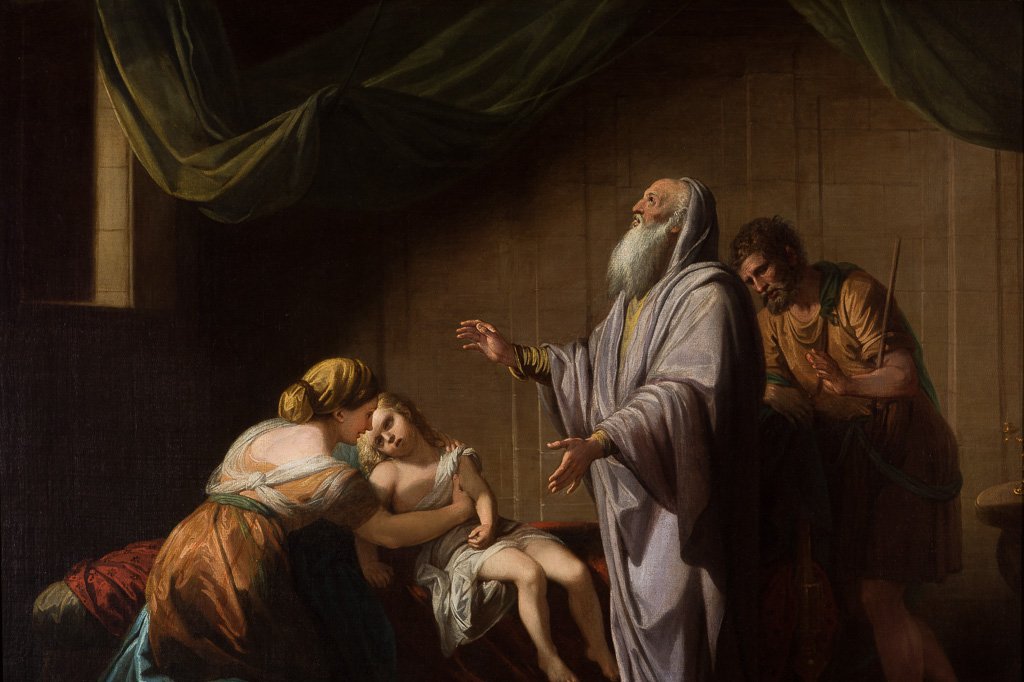
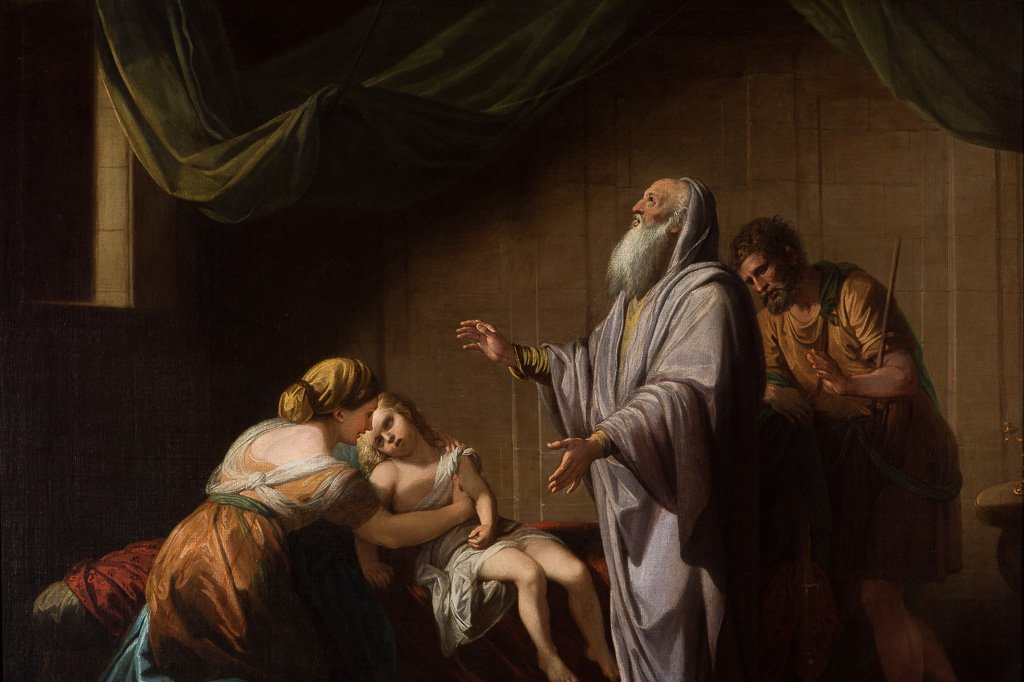
Benjamin West, "Elisha Raising the Shunammite's Son," 1766. Public domain.
The double portion
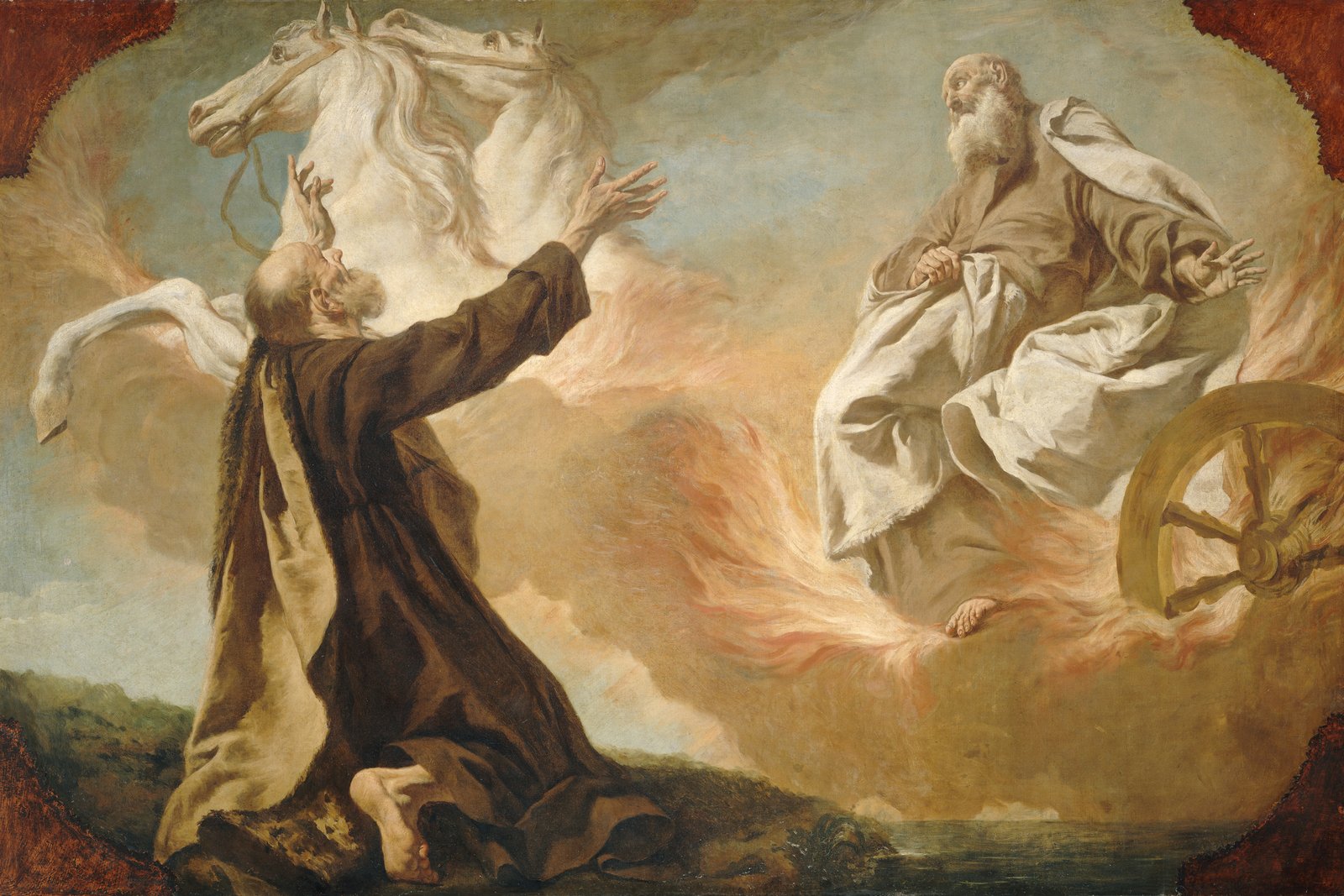
At the Jordan River, Elijah finally asked his attendant directly what he wanted before being taken. Elisha's answer was not modest: "May I receive a double portion of your spirit" (2 Kings 2:9, NABRE). In the ancient world, a double portion was the inheritance right of a firstborn son — by asking for it, Elisha wasn't asking to be Elijah's equal, but his primary spiritual heir, the one who would carry the prophetic office forward. Elijah's response makes clear this wasn't his to simply grant: "You have asked something that is not easy. Still, if you see me taken up from you, your wish will be granted; otherwise not" (2 Kings 2:10, NABRE). It would depend entirely on whether Elisha witnessed what happened next.
He did. A fiery chariot and fiery horses appeared, Elijah went up in a whirlwind, and Elisha — watching to the very end — cried out, "My father! my father! Israel's chariot and steeds!" (2 Kings 2:12, NABRE). He picked up the mantle that fell from Elijah, struck the water of the Jordan with it exactly as Elijah had done earlier that day, and the river parted for him too (2 Kings 2:14). The sign was unmistakable: the prophetic mantle, literally and figuratively, had passed to him. For readers exploring more of these formative accounts, our guide to Old Testament stories every Catholic should know places Elisha's ministry in the wider sweep of Israel's prophetic history.
Oil that outlasted the vessels
The miracles that follow are strikingly domestic compared to Elijah's confrontations with kings and false prophets — which is part of what makes them memorable. A widow of one of the "guild prophets" (a term for the communities of prophets who trained and lived together under a senior prophet's guidance) comes to Elisha in desperation: her husband is dead, and a creditor is about to take her two sons into servitude to settle the debt, a legal practice permitted under ancient Near Eastern law. Elisha asks what she has left in the house. Her answer is almost nothing — "a jug of oil" (2 Kings 4:2, NABRE).
He tells her to borrow every empty vessel she can find from her neighbors, shut herself and her sons inside, and start pouring. She pours the oil from her single jug into vessel after vessel, and it doesn't run dry until the very last container is filled — "he answered, 'There is none left.' And then the oil stopped" (2 Kings 4:6, NABRE). The multiplied oil wasn't a display for onlookers; it happened behind a closed door, seen only by a widow and her sons. Elisha's instruction afterward is practical, not triumphant: sell the oil, pay the debt, and live on what remains (2 Kings 4:7).
A room, a locked door, and a boy who stops breathing
The most striking of Elisha's miracles involves a wealthy woman from Shunem who had shown him regular hospitality, even building him a small room on her roof so he'd have somewhere to stay whenever he passed through. In gratitude, Elisha promised her a son, born a year later exactly as foretold. Years afterward, the boy collapses in the field with what sounds like a sudden, severe headache, and dies in his mother's lap by midday.
She doesn't tell her husband what's happened. She simply saddles a donkey and rides to find Elisha, and when she reaches him, she says only, "Did I ask my lord for a son? Did I not tell you, do not deceive me?" (2 Kings 4:28, NABRE) — grief sharpened into something close to accusation. Elisha goes to the house, shuts himself alone in the room with the dead child, and prays. Then, in one of Scripture's most physically intimate healing accounts, he "lay upon the child... placing his mouth upon the child's mouth, his eyes upon the eyes, and his hands upon the hands" (2 Kings 4:34, NABRE). He gets up, paces the room, and does it again. The boy sneezes seven times and opens his eyes. Elisha's instruction to his servant is simple: "Call the Shunammite" — and hands the living child back to his mother (2 Kings 4:36, NABRE).
An army that couldn't see what mattered
Not every Elisha story is about restoring life or provision — some show him protecting Israel from military threat. When the king of Aram sent troops to capture him, surrounding the city of Dothan by night, Elisha's servant woke at dawn to see the enemy force ringing the city and panicked: "Alas! What shall we do, my lord?" (2 Kings 6:15, NABRE). Elisha's answer is calm to the point of strange: "Do not be afraid. Our side outnumbers theirs" (2 Kings 6:16) — a claim that made no visible sense, since by any ordinary count Elisha and his servant were alone against an army.
Then Elisha prays not for rescue, but for sight: "O Lord, open his eyes, that he may see" (2 Kings 6:17, NABRE). The servant's eyes are opened, and he sees the mountainside "filled with fiery chariots and horses around Elisha" — the same kind of fiery chariot that had carried Elijah to heaven, now revealed as protection that had been there the entire time, simply invisible. The lesson embedded in the story is less about the enemy army (whom Elisha strikes with a temporary blindness and leads, disoriented, straight into the hands of the king of Israel) than about what the servant couldn't see until his eyes were opened: the danger was real, but so was the defense.
A prophetic ministry built on ordinary need
What sets Elisha's miracles apart from the more public, confrontational signs of Elijah's ministry is how domestic most of them are — a widow's unpaid debt, a childless woman's grief, a servant's fear. Elisha's prophetic power shows up less often in contests with kings and more often in the ordinary desperation of people with nowhere else to turn. Later Jewish and Christian tradition would remember him as the prophet who performed roughly twice as many recorded miracles as Elijah — a detail often read as the literal fulfillment of that first request at the Jordan, the double portion asked for and, in the accounts that follow, visibly received.
Trivia
What did Elisha ask for before Elijah was taken up to heaven?
How did Elisha help the prophet's widow who owed a debt she couldn't pay?
Did Elisha really bring a dead child back to life?
What happened when Elisha's servant panicked at the sight of an enemy army?
Is Elisha the same person as Elijah?
Related Reading