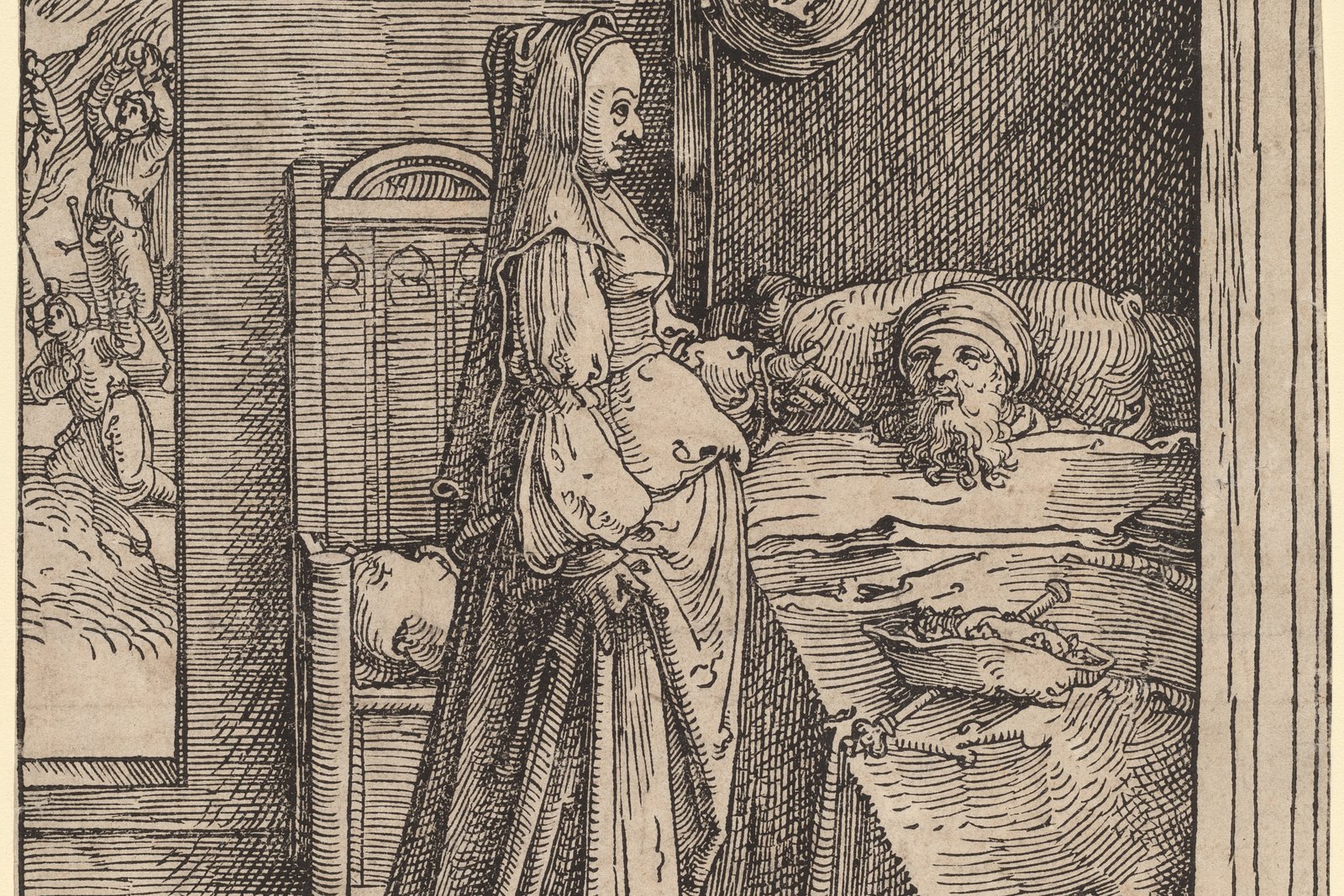
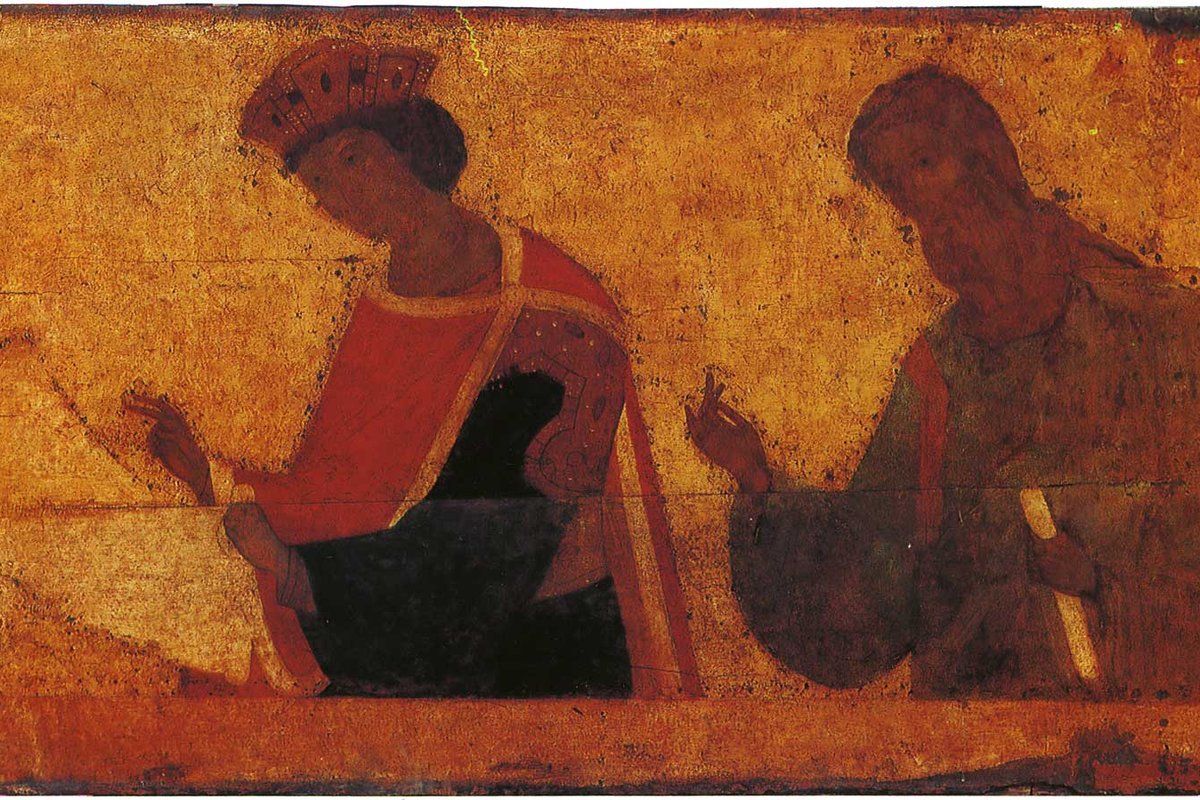
Elijah and the Priests of Baal

A nation caught between two gods
By the time Elijah calls this contest, Israel's spiritual loyalty had become dangerously divided. King Ahab, married to the Phoenician princess Jezebel, had allowed — and by most accounts actively promoted — the worship of Baal, a Canaanite storm and fertility god, alongside worship of the Lord, blurring a line Israel's covenant with God had always demanded stay sharp. Elijah, a prophet who appears in Scripture with almost no introduction beyond his origin in Tishbe, had already confronted Ahab directly over this, and a devastating drought — which Elijah himself had announced as a consequence — had gripped the land for roughly three years by the time this showdown takes place. Mount Carmel, where the contest unfolds, wasn't chosen randomly either: it was a site closely associated with Baal worship, making Elijah's challenge a direct confrontation on what many in Israel might have considered Baal's own territory.
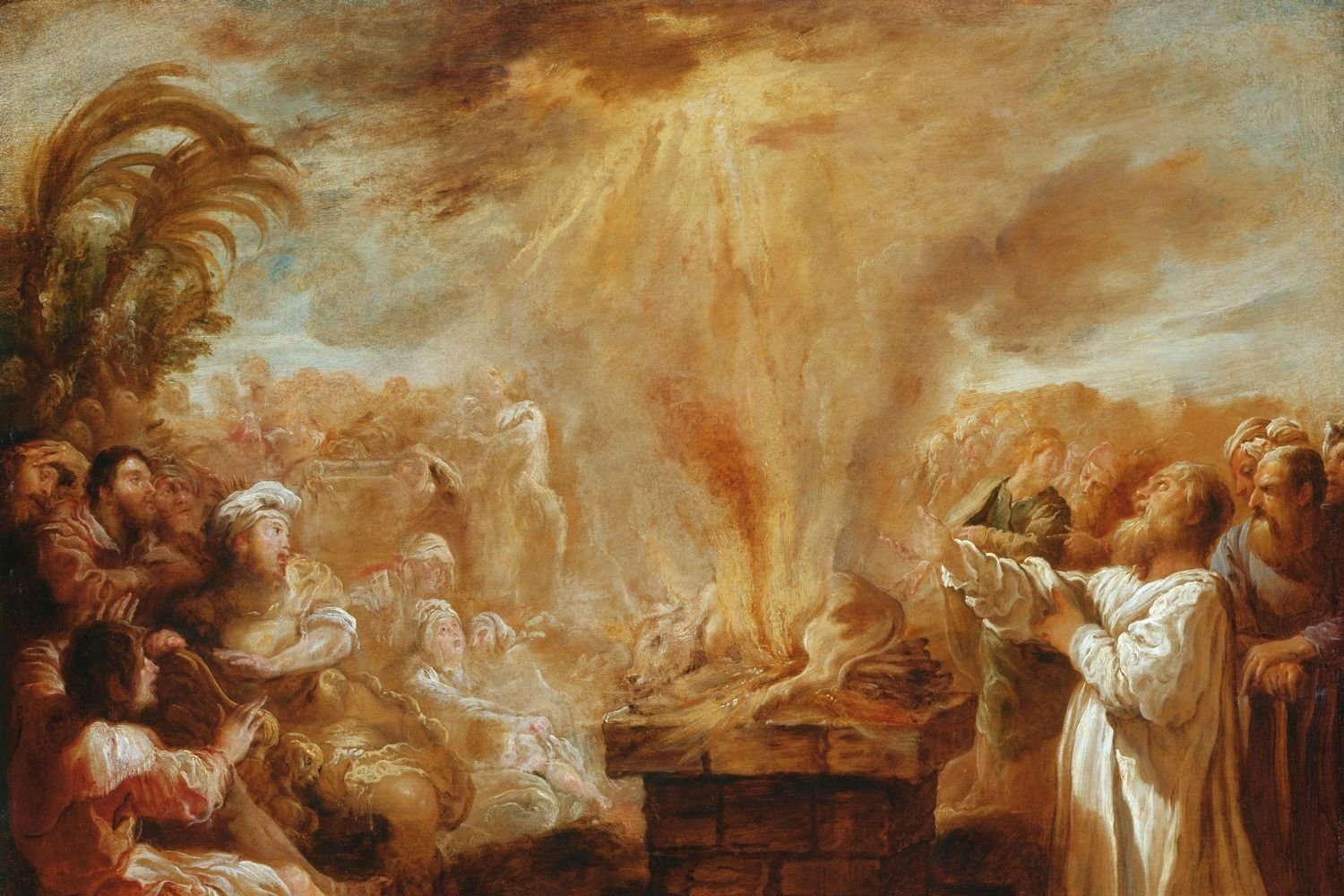
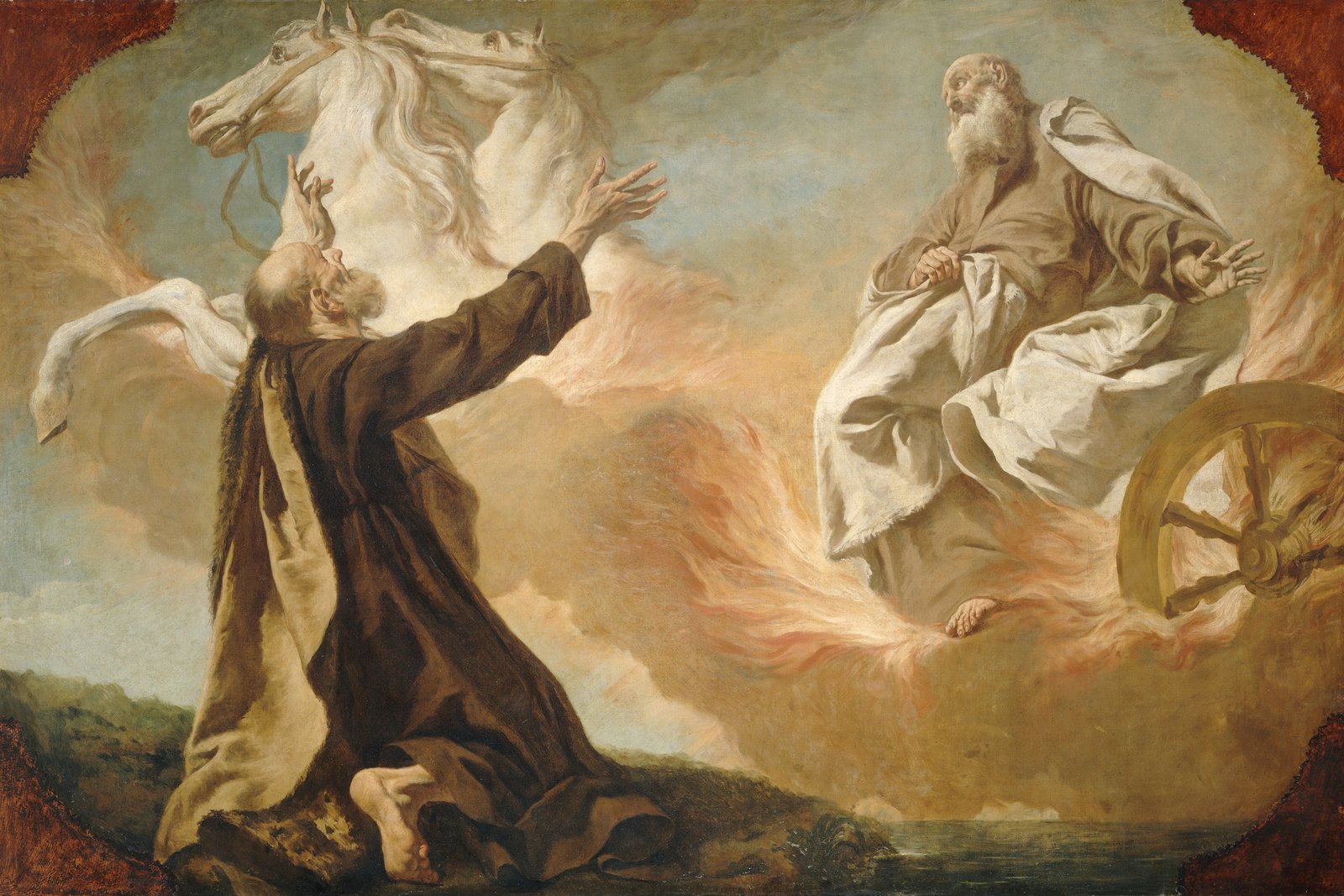
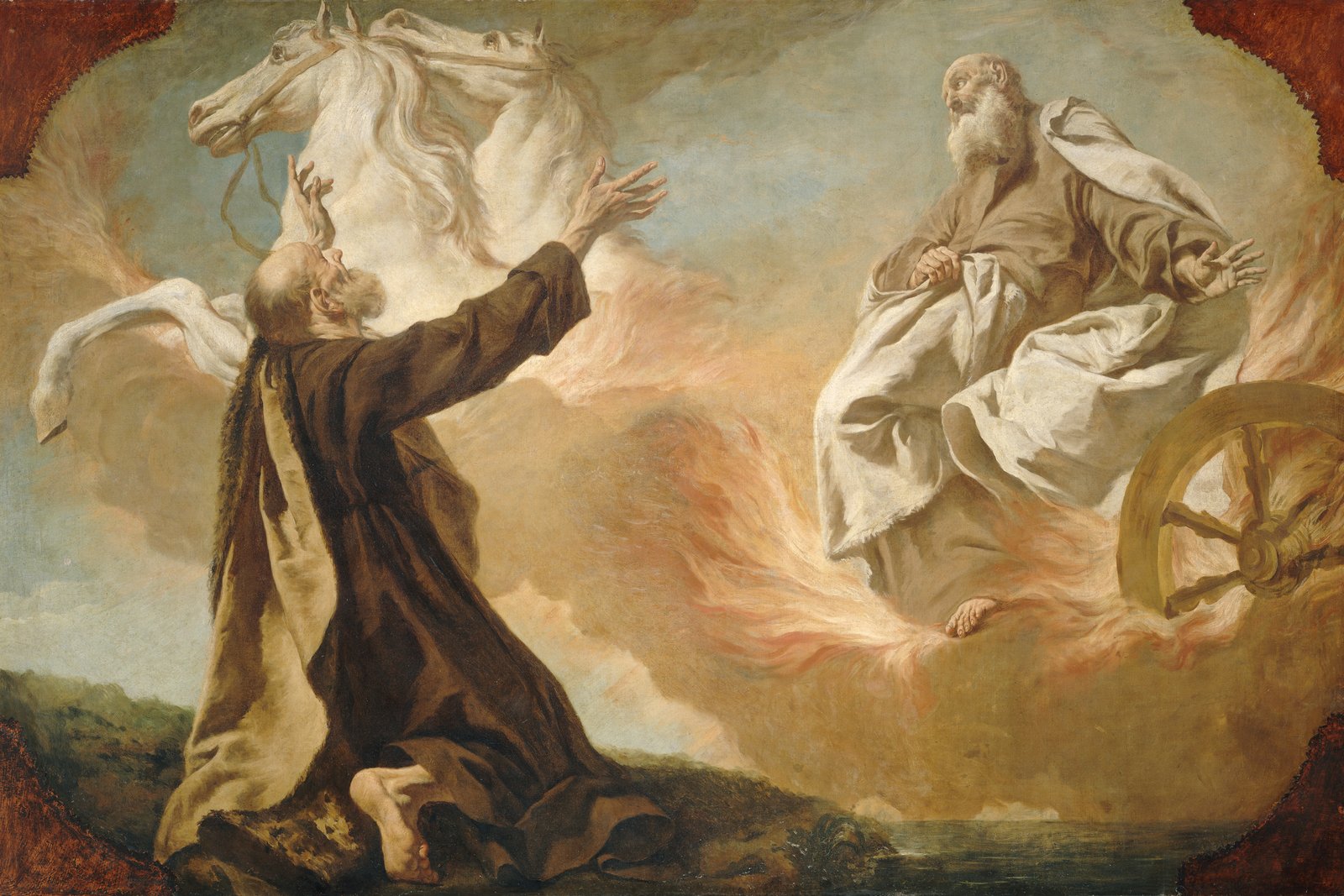
Domenico Fetti, "The Sacrifice of Elijah Before the Priests of Baal," c. 1621-1622, Royal Collection. Public domain.
An ultimatum with no room to hide
Elijah gathers the people, along with 450 prophets of Baal, at Carmel and opens with a question that leaves no space for continued indecision: "How long will you straddle the issue? If the Lord is God, follow him; if Baal, follow him" (1 Kings 18:21, NABRE). The people's silence in response — Scripture notes plainly that "the people did not answer him" — says as much as any words could have. They weren't ready to commit either way, which is precisely the paralysis Elijah is determined to break.
Terms both sides agreed to
The test Elijah proposes is strikingly fair on its face, giving the prophets of Baal every advantage of numbers and home terrain. Two bulls would be prepared identically, laid on wood, with no fire lit beneath either one. "You shall call upon the name of your gods, and I will call upon the name of the Lord. The God who answers with fire is God" (1 Kings 18:24, NABRE). The people agree to the terms immediately — "We agree!" — and Elijah, notably, lets the prophets of Baal go first, with the entire day to make their case.
Hours of desperate, unanswered pleading
What follows is one of Scripture's more vivid, almost darkly comic passages. The prophets of Baal call on their god from morning until noon with nothing happening — no fire, no sign, no response of any kind. Elijah, watching this unfold, doesn't offer sympathy; he taunts them outright: "Call louder, for he is a god; he may be busy doing his business, or may be on a journey. Perhaps he is asleep and must be awakened" (1 Kings 18:27, NABRE). The mockery only intensifies their desperation. "They called out louder and slashed themselves with swords and spears according to their ritual until blood gushed over them" (1 Kings 18:28), continuing this self-harming frenzy for hours. The result is unchanged: "there was no sound, no one answering, no one listening" (1 Kings 18:29, NABRE).
An offering soaked before it was ever lit
When it's finally Elijah's turn, he doesn't merely prepare his sacrifice — he makes success as improbable as possible first. He repairs a broken-down altar of the Lord using twelve stones, one for each of the tribes of Israel, lays the wood and the bull, then orders the entire offering drenched in water, not once but three times, until water fills the trench dug around the altar. It's a deliberate move that eliminates any possibility of a hidden spark or natural explanation — nothing about what happens next could be mistaken for a trick.
Fire that left nothing behind
Elijah's prayer, when it finally comes, is brief and direct — not a lengthy ritual like the hours the prophets of Baal had spent, but a short plea asking God to make his identity unmistakable to the watching nation: "Lord, God of Abraham, Isaac, and Israel, let it be known this day that you are God in Israel... Answer me, Lord! Answer me, that this people may know that you, Lord, are God and that you have turned their hearts back to you" (1 Kings 18:36-37, NABRE). The response is immediate and total: "The Lord's fire came down and devoured the burnt offering, wood, stones, and dust, and lapped up the water in the trench" (1 Kings 18:38, NABRE). It isn't simply that the offering burned — the fire consumed the stones of the altar itself and every drop of water Elijah had poured over it, leaving no room to argue the outcome was anything less than extraordinary.
A people who finally chose
The crowd's reaction settles the question Elijah had opened the whole contest with. "Seeing this, all the people fell prostrate and said, 'The Lord is God! The Lord is God!'" (1 Kings 18:39, NABRE) — the exact declaration Elijah had been trying to draw out of them from the start. What follows in the rest of the chapter is swift and severe: the prophets of Baal are seized and put to death at the Kishon Valley, and rain finally returns to end the long drought, closing the episode with both a spiritual and a physical restoration for the nation. Readers interested in more of Israel's prophetic history can explore our guide to Old Testament stories every Catholic should know, which places this contest within the wider arc of Elijah's ministry.
A contest still remembered for its clarity
What makes the Mount Carmel showdown endure in memory, across both Jewish and Christian tradition, is its refusal to leave anything ambiguous. Elijah didn't argue theology in the abstract or rely on persuasion alone — he staged a public test that any onlooker could judge for themselves, and let the outcome speak for itself. It remains one of the sharpest Old Testament illustrations of a single person standing firm against overwhelming numbers, not through force, but through confidence that the truth, given a fair test, would not need defending — only revealing.
Trivia
What challenge did Elijah put to the people of Israel on Mount Carmel?
What was the actual test Elijah proposed to settle whose god was real?
How did the prophets of Baal respond when their god didn't answer?
What happened when Elijah prayed over his own sacrifice?
How did the people react after seeing the fire fall on Elijah's sacrifice?
Related Reading