The Passion of Christ — A Complete Walkthrough

Why the sequence matters
Christians have retold the Passion so many times, in so many art forms, that it's easy to experience it as a mood rather than a timeline — grief, betrayal, suffering, triumph, in whatever order a given painting or hymn happens to evoke them. But the Gospel writers were careful about sequence. Each stage of the Passion sets up the next: the meal explains the betrayal, the prayer in the garden explains the composure at trial, the trial explains the road, and the road explains why the empty tomb landed with such force on people who had just watched a body carried away. Walking through the events in order restores that logic.
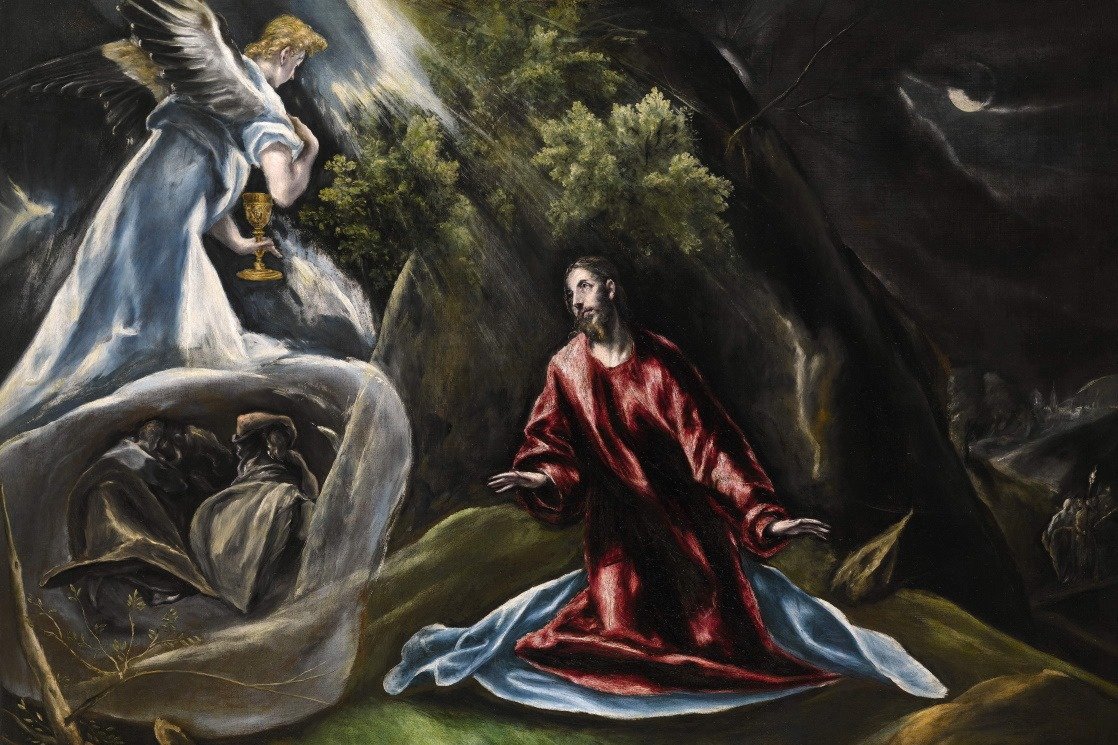
El Greco, Agony in the Garden, circa 1610, Museo de Bellas Artes de Bilbao — public domain.
The Last Supper: a meal that became a sacrament
The sequence opens on Holy Thursday evening, when Jesus gathers his twelve apostles for a Passover meal in an upper room in Jerusalem. The Last Supper — Institution of the Eucharist covers what happened there in detail: Jesus took bread and wine and, according to Luke, told the apostles "This is my body, which will be given for you; do this in memory of me." (Luke 22:19, NABRE), words the Catholic Church holds instituted the sacrament of the Eucharist. Before the meal itself, according to John's Gospel, Jesus knelt and washed each apostle's feet, an act of servant leadership The Washing of the Feet covers in full. It was at this same meal that Jesus predicted one of the Twelve would betray him — a prediction that would be fulfilled within hours by Judas Iscariot, whose deal with the chief priests had already been struck before the meal even began.
Gethsemane: agony before arrest
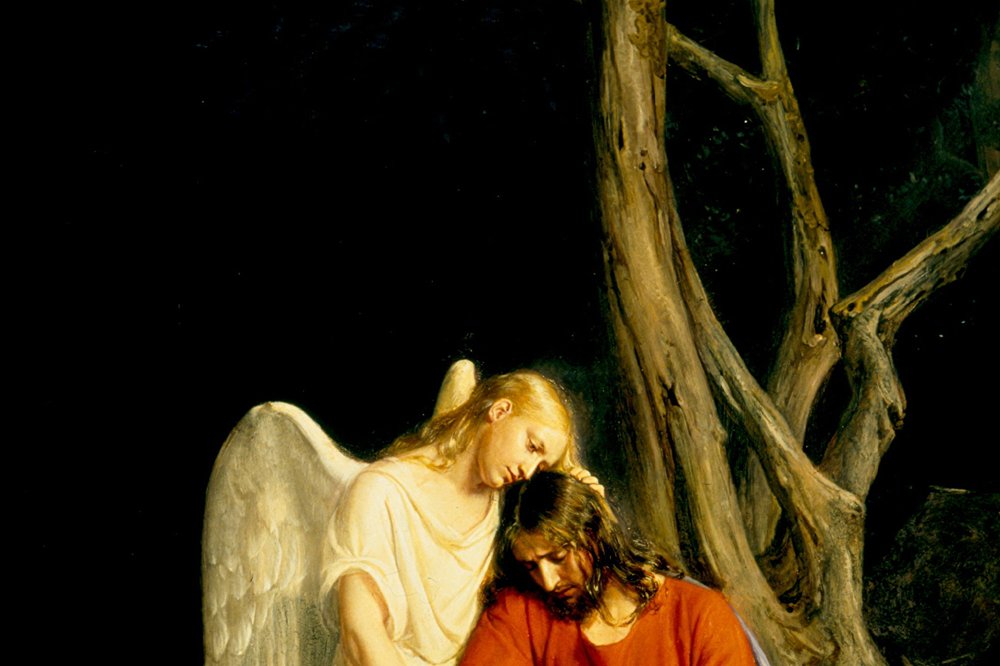
From the upper room, Jesus led his remaining apostles across the Kidron Valley to an olive grove called Gethsemane. The Agony in the Garden describes the prayer that followed — Jesus asking the Father, if possible, to "take this cup away from me," but adding immediately, "still, not my will but yours be done" (Luke 22:42, NABRE). Luke records the intensity of the moment starkly: Jesus's "sweat became like drops of blood falling on the ground" (Luke 22:44, NABRE), while three times he returned to find Peter, James, and John asleep, unable to keep watch with him even for an hour.
It was into this same garden that Judas led an armed crowd sent by the chief priests, identifying Jesus with a kiss — the betrayal set in motion at the supper table now completed in the dark among the olive trees. Jesus was arrested on the spot and led away, while his closest followers scattered into the night.
Trial and denial
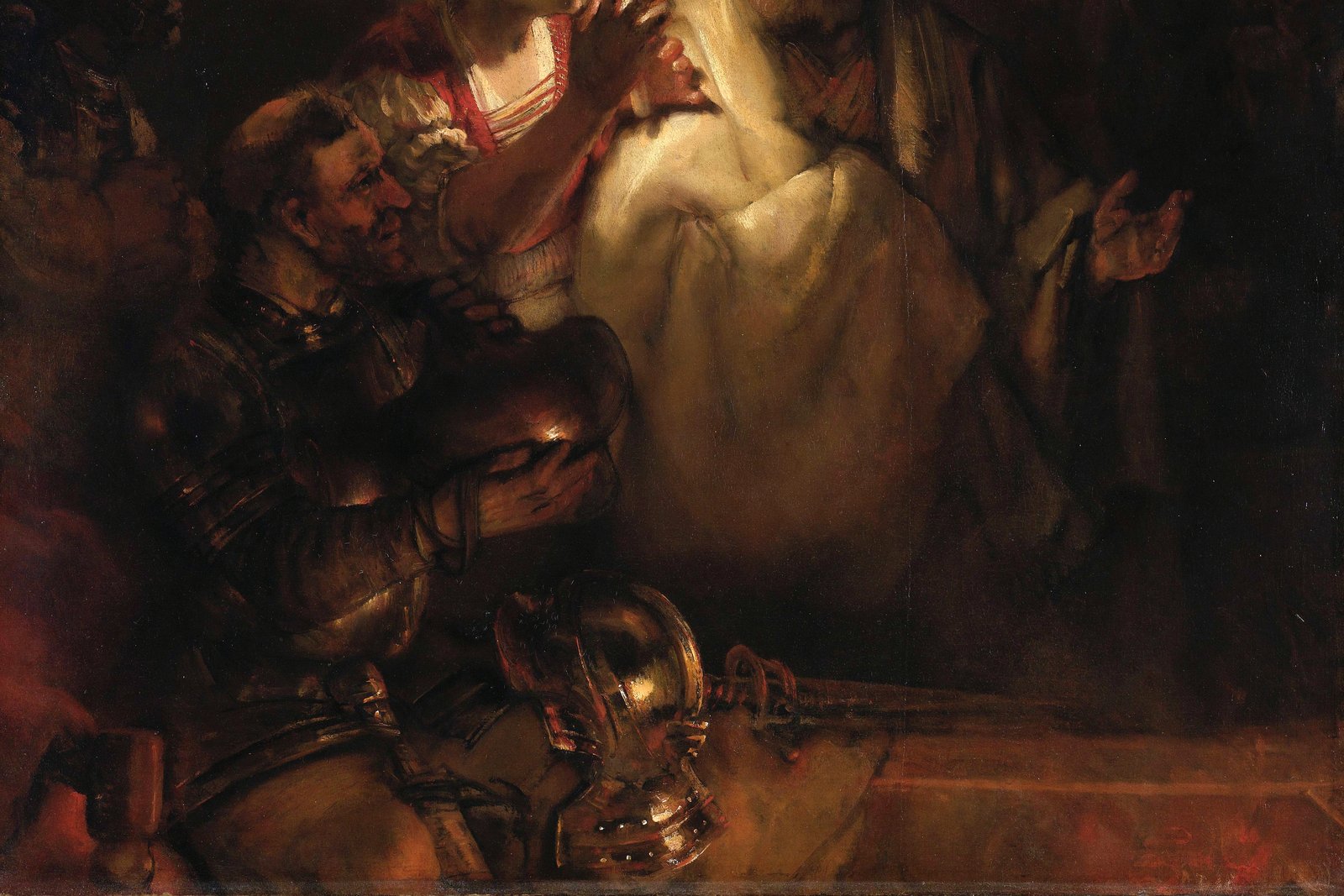
What followed was a night of hearings that broke with ordinary Jewish legal procedure in their speed and irregularity: a hearing before the high priest Caiaphas and the Sanhedrin, followed at daybreak by a formal session that referred the case to the Roman governor, Pontius Pilate, since the death penalty required Roman authorization. Pilate, according to all four Gospels, found no legal basis for execution but ultimately yielded to pressure from the crowd, releasing the prisoner Barabbas instead and handing Jesus over to be scourged and crucified.
It was during this same stretch of hours, in the high priest's courtyard, that Peter — who had sworn hours earlier at the Supper that he would never abandon Jesus — denied three times even knowing him, just as Jesus had predicted he would before the night was over. It's one of the most human moments in the entire narrative: not a villain's betrayal but a frightened friend's failure of nerve, and it becomes essential to understanding Peter's later transformation into the leader of the early Church.
The road to Golgotha
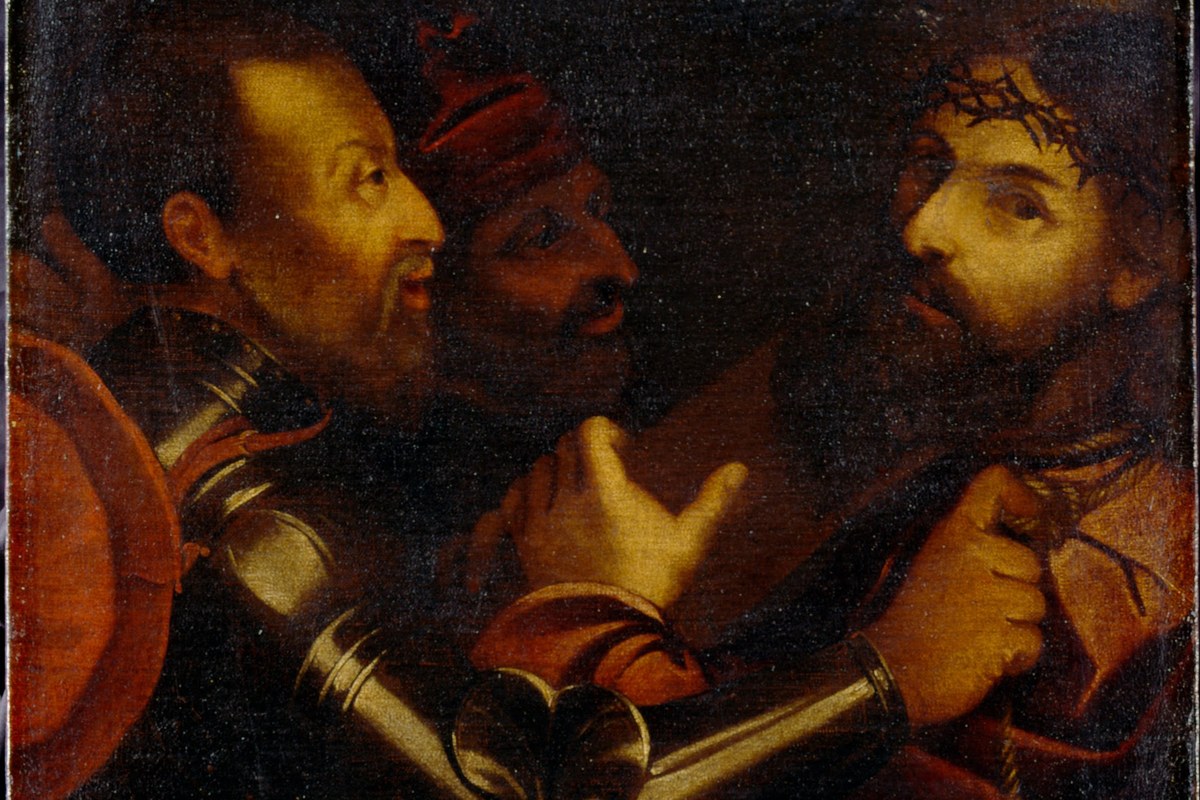
Beaten and mocked by the Roman soldiers, who dressed him in a purple cloak and pressed a crown of thorns onto his head, Jesus was made to carry the crossbeam of his own execution through the streets of Jerusalem toward Golgotha, the "place of the skull" outside the city walls. The Carrying of the Cross traces this final walk, including the moment recorded in the Synoptic Gospels when the soldiers press a passerby, Simon of Cyrene, into carrying the cross alongside him — a detail tradition has long read as an image of shared suffering, the burden of the cross taken up by someone else.
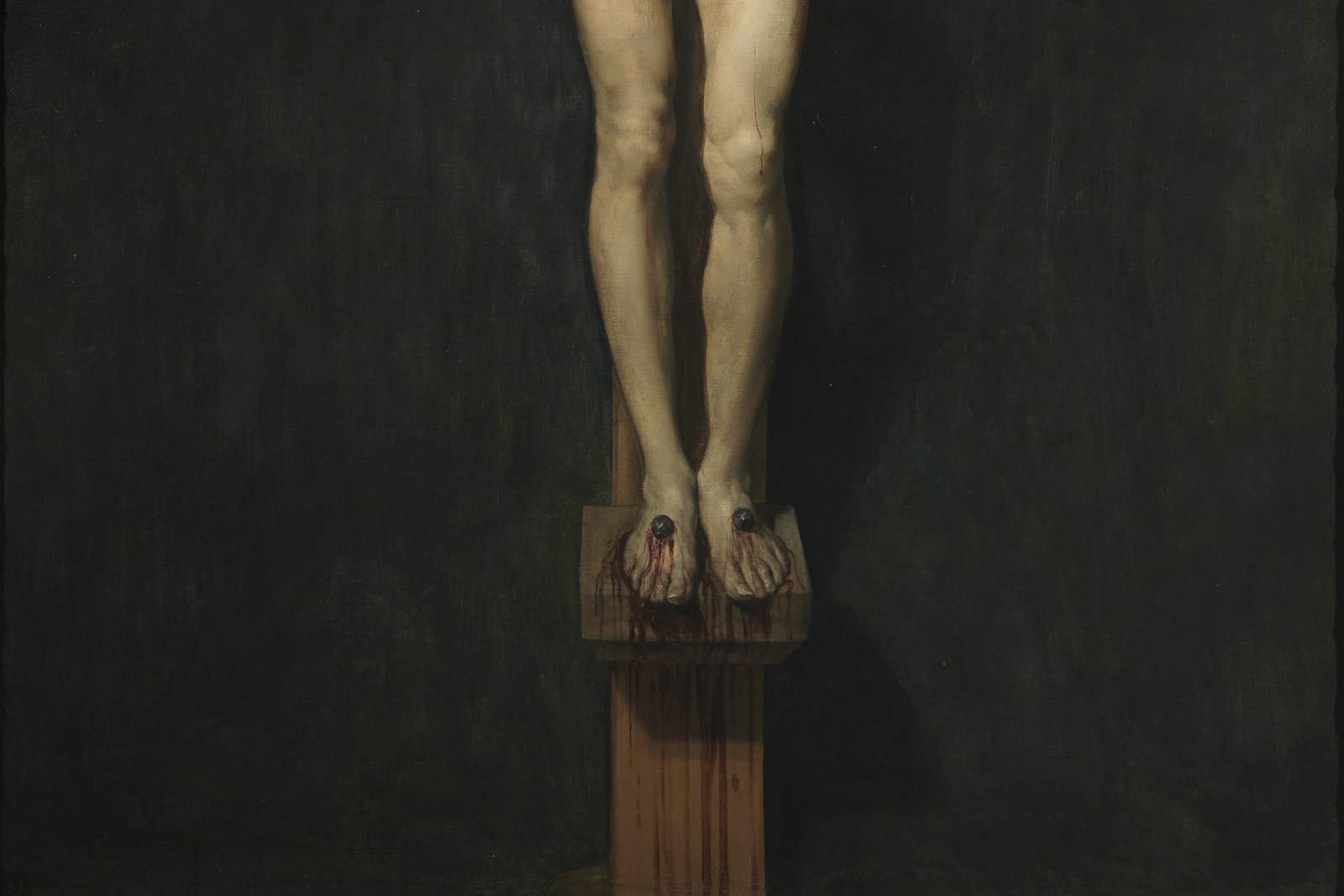
At Golgotha, Jesus was crucified between two convicted criminals, and the Gospels record his final words from the cross, the darkness that fell over the land, and the tearing of the Temple veil at the moment of his death. Joseph of Arimathea then obtained permission to bury the body in a nearby rock-cut tomb, sealed with a large stone, before the Sabbath began at sundown.
The empty tomb and the road to Emmaus
The narrative's turning point comes on the third day, when the women who came to the tomb to anoint the body found it empty. The Risen Christ covers the Resurrection appearances that follow — Jesus appearing first to Mary Magdalene, then to the apostles gathered behind locked doors, showing them his wounded hands and side as proof it was truly him and not a ghost.
Among the earliest and most vivid of these appearances is the one covered in The Road to Emmaus, where two disciples walking away from Jerusalem toward the village of Emmaus are joined by a stranger who explains the Scriptures to them without their recognizing him — until, sitting down to a meal, "their eyes were opened and they recognized him" in the breaking of the bread (Luke 24:31, NABRE), at which point he vanished from their sight. It's a scene the Church has long read as a model for how Christ continues to be recognized in Scripture and sacrament alike, and it closes the Passion narrative on the same note it opened on at the Last Supper: a meal, shared, that reveals more than it first appears to.
The Catechism sums up the whole arc this way: "The Paschal mystery has two aspects: by his death, Christ liberates us from sin; by his Resurrection, he opens for us the way to a new life" (CCC 654). Read start to finish — supper, garden, trial, road, tomb — the Passion isn't simply a story of suffering ending in relief. It's a single, continuous sequence in which each stage makes the next one legible.
Trivia
What is the correct order of events in the Passion of Christ?
How long did the events of the Passion take?
What did Jesus institute at the Last Supper?
Why did Jesus pray so intensely in the garden of Gethsemane?
What happened between the arrest of Jesus and the crucifixion?
Related Reading