The Baptism of the Lord (Feast)

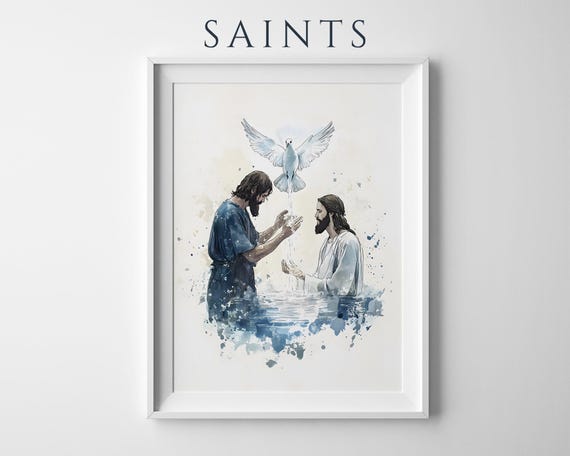
A feast about the event, not a retelling of it
It's easy to assume the Feast of the Baptism of the Lord is simply the day the Church reads the Gospel story of Jesus's baptism aloud. It is that, in part — the Gospel narrative is proclaimed at Mass on this day — but the feast itself is doing something more than repeating a story already familiar to most churchgoers. It's marking a liturgical turning point, closing one season and opening another, and drawing out a theological meaning from the Jordan River scene that goes beyond the narrative details of what happened that day. For the story itself — John's initial refusal to baptize Jesus, the heavens opening, the voice from heaven — The Baptism of Jesus tells that scene in full. This article stays with a different question: what is the Church actually celebrating when it keeps this feast, and why here, on the calendar, and not somewhere else?
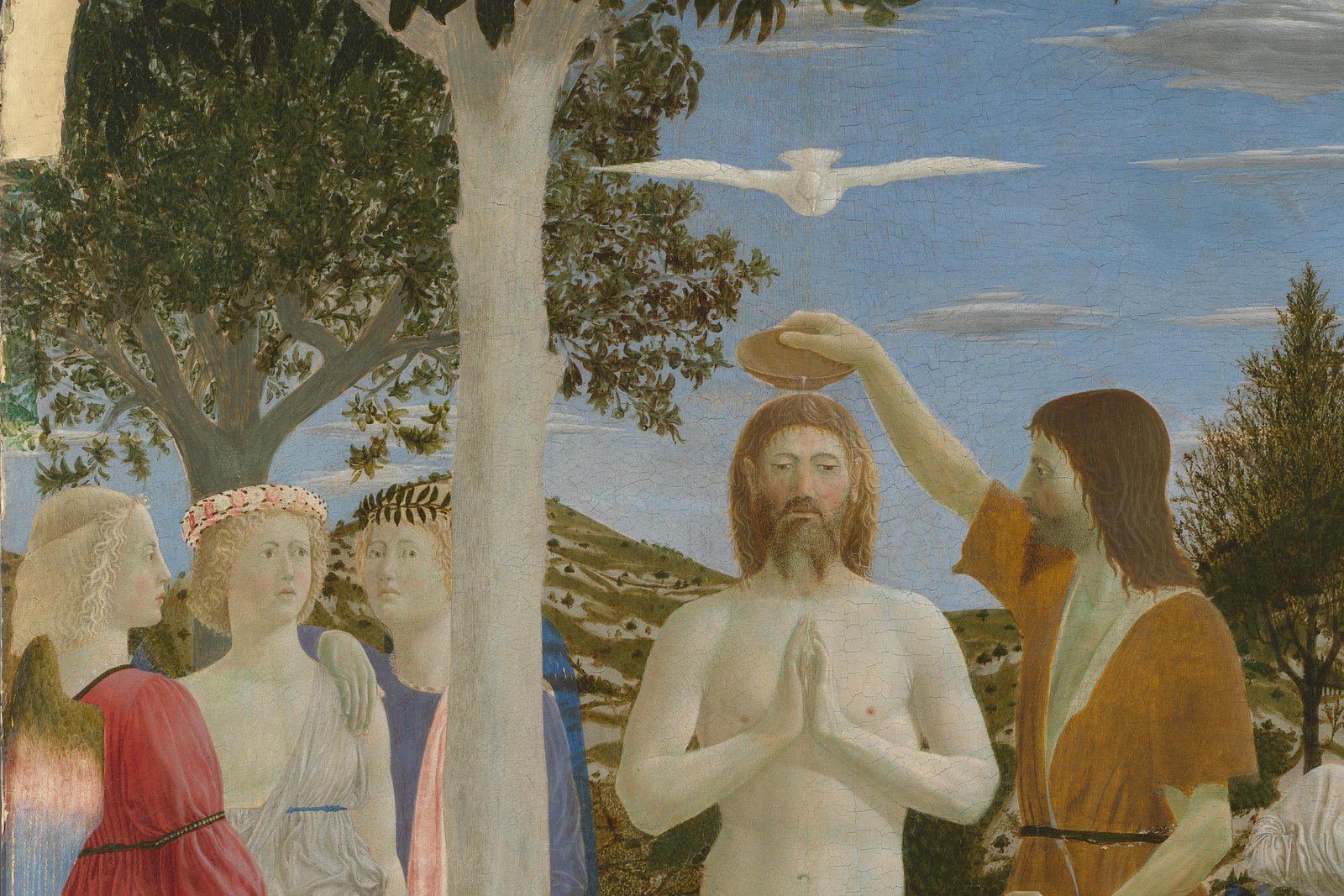
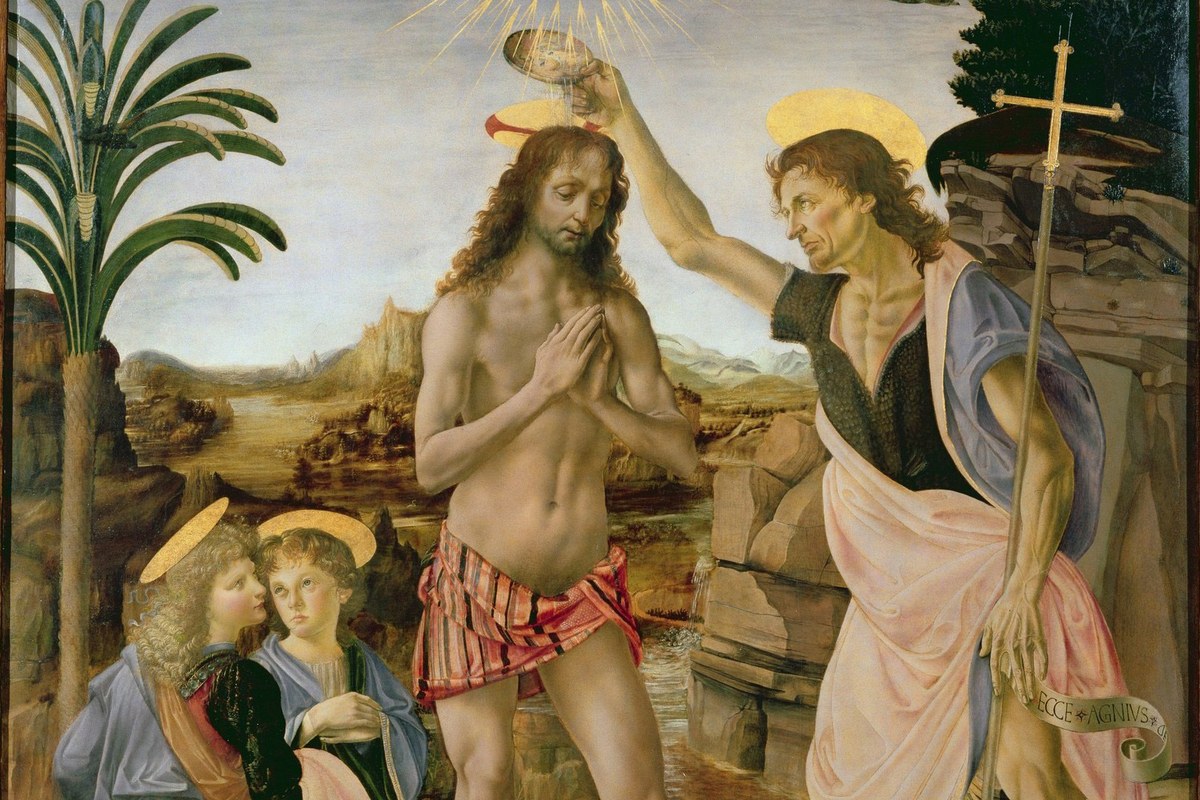
Piero della Francesca, The Baptism of Christ, c. 1448–1450, National Gallery, London — public domain.
The hinge that closes the Christmas season
On the current Roman calendar, the Feast of the Baptism of the Lord falls on the Sunday following the Solemnity of the Epiphany, and it serves a specific structural function: it's the last day of the Christmas season. The next day, the Church shifts into Ordinary Time, and the readings, vestment colors, and overall liturgical mood change accordingly. That placement is not incidental. The Christmas season opens by celebrating a birth in Bethlehem and closes, roughly thirty years later in the Gospel timeline, by celebrating the same person's appearance as a grown man beginning his public work. The season, in effect, tells the story of the Incarnation from its most vulnerable beginning to the moment Christ steps fully into his mission.
This wasn't always how the calendar was organized. In the earliest centuries of the Church, before Christmas had developed into the elaborate season it later became, three distinct events — the visit of the Magi, the Baptism, and the miracle at the Wedding at Cana — were grouped together under the single feast of Epiphany, each understood as a separate "manifestation" (from the Greek root behind "epiphany," meaning a showing-forth or revealing) of who Christ truly was to different audiences: the Magi representing the Gentile nations, the Baptism revealing him to Israel through John's ministry, and Cana revealing his power to his own disciples. As the liturgical calendar developed over subsequent centuries, these three moments were gradually separated into distinct observances, but the Baptism's placement immediately after Epiphany still preserves an echo of that older, unified logic.
What the feast declares about the sacrament
The most theologically important thing the feast accomplishes is connecting Christ's own baptism to the sacrament the Church still administers today. The Catechism addresses this directly, teaching that Jesus "went down into the waters of the Jordan," not because he had any sin to be cleansed of, but "to accomplish this descent into the waters" as an act that would sanctify the water itself, making it "the fitting instrument for the sacrament to come" (CCC 1223-1224, paraphrased from the Catechism's fuller treatment). In other words, the feast isn't only commemorating a historical event that happened once; it's drawing a direct theological line from that one Jordan riverbank to every baptismal font in every parish church since — the ordinary water used at an infant's baptism today is understood, in Catholic teaching, to carry a connection back to this specific moment.
This is also why the feast is frequently used, in parishes that practice infant baptism on a regular schedule, as an occasion to celebrate baptisms or to renew baptismal promises among the congregation. The liturgical calendar isn't simply commemorating a past event abstractly — it's inviting the assembled community to reflect on their own baptism through the lens of Christ's, treating his descent into the Jordan as the template their own sacramental identity is built on.
A quiet but decisive moment in the Gospel timeline
Structurally, within the Gospel narratives themselves, the Baptism functions as the clear starting gun for Jesus's public ministry. Before this scene, the Gospels offer only scattered episodes from his early life — his infancy, the flight into Egypt, one account of him as a twelve-year-old in the Temple — and then a long, largely undocumented stretch of adulthood. After the Baptism, the ministry begins in earnest: the temptation in the wilderness immediately follows in Matthew's account, and then the calling of the first disciples, the early miracles, and the public preaching that fills the rest of the Gospels. The feast, sitting at exactly this hinge point in the liturgical year, mirrors the hinge point it commemorates in the Gospel's own internal structure.
That symmetry is worth appreciating on its own terms. The liturgical calendar doesn't merely schedule commemorations of past events in roughly chronological order out of tidiness — it's frequently structured so that the shape of the calendar itself echoes the shape of the story being told. Christmas moves from a vulnerable infant to a ministry-ready adult across a matter of weeks in the Church's yearly rhythm, compressing thirty hidden years of Jesus's life into a season short enough that congregations can feel the momentum of that transition rather than simply being told about it.
Closing one season, opening another
When the Feast of the Baptism of the Lord ends, so does the entire Christmas cycle. The following Monday, the Church moves into the first week of Ordinary Time, and the liturgical color shifts from white back to green. For a season that began with shepherds, angels, and a newborn child, it's a notably understated close — no elaborate final celebration, just a quiet scene at a riverbank, and then the ordinary rhythm of the Church year resumes. That understatement fits the moment being commemorated: the Gospel accounts themselves stage the Baptism with remarkably little outward drama, a man standing in water while something enormous happens, almost invisibly, in the heavens above him.
Trivia
What is the Feast of the Baptism of the Lord?
How is this feast different from just reading the Baptism story in the Gospels?
Why does the Church place this feast right after Epiphany?
Why does Catholic teaching connect this feast to the sacrament of baptism?
Does the feast replace the need to read the Baptism narrative in the Gospels?
Related Reading