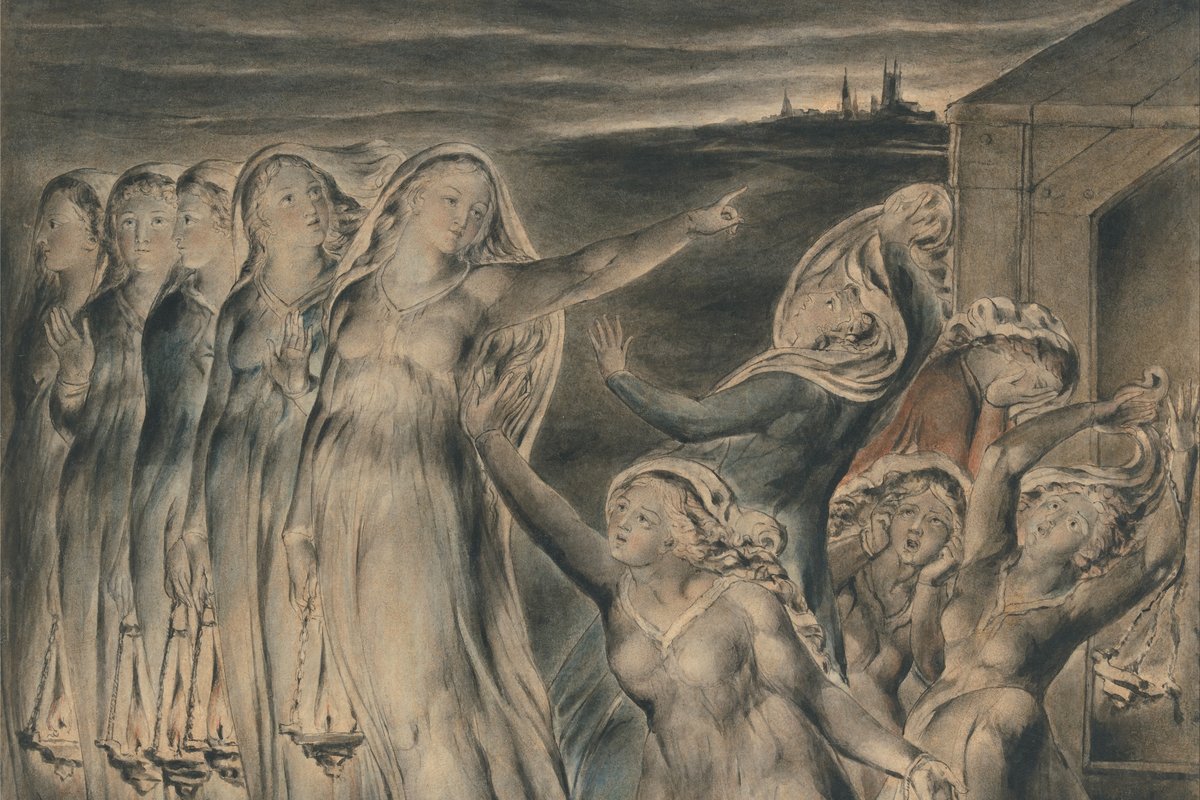
The Good Samaritan

A question meant to narrow, not to learn
The parable begins with a trap, not an honest inquiry. A scholar of Jewish law stands up "to test" Jesus and asks what's required to inherit eternal life. When Jesus turns the question back on him, the scholar answers correctly — love God completely, and love your neighbor as yourself — and Jesus tells him he's right. That should have ended the exchange. Instead, Luke notes the man pressed further "because he wished to justify himself," asking, "And who is my neighbor?" (Luke 10:25-29, NABRE). It's a lawyer's question in the worst sense: not a search for truth, but a search for the boundary where his obligation to love could reasonably stop.
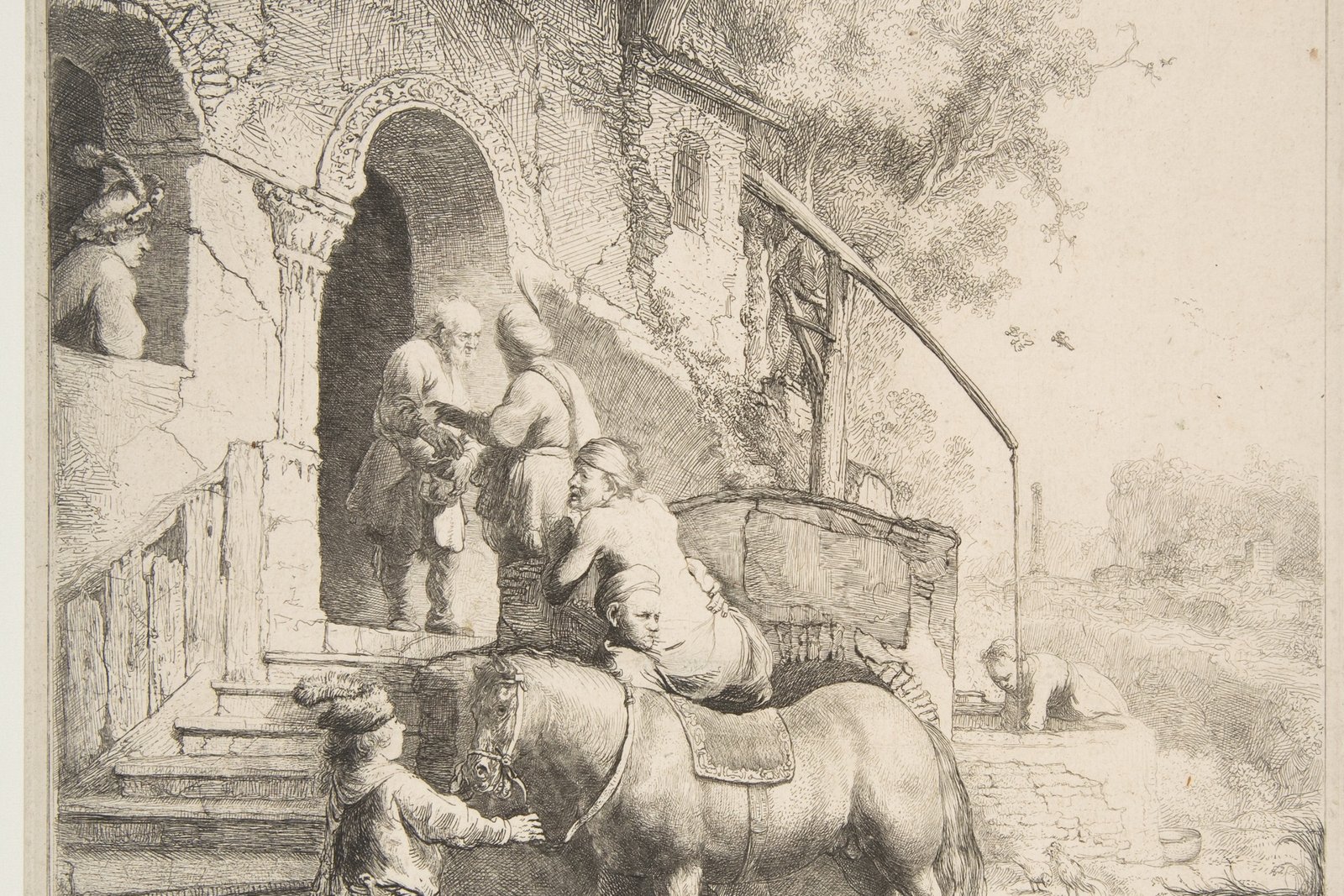
Rembrandt van Rijn, "The Good Samaritan," 1633, The Metropolitan Museum of Art. Public domain.
The road where the story is set
Jesus answers with a parable set on a real and genuinely dangerous stretch of road, the descent from Jerusalem to Jericho — a route that drops roughly 3,300 feet over about seventeen miles through isolated, rocky terrain long associated with bandits. Ancient writers, including the Jewish historian Josephus, mention the same road's reputation for ambushes and robbery, which is likely why later Christian tradition nicknamed a stretch of it the "Way of Blood." A man traveling it is attacked, stripped, beaten, and left half-dead (Luke 10:30, NABRE). Jesus doesn't linger on the attackers. The whole weight of the story falls on who comes down that road next, and what each of them chooses to do.
Two men who had every reason to stop, and didn't
A priest passes first, then a Levite — both men connected to temple service, both trained in the very law the lawyer had just recited correctly. Priests performed the sacrifices and rites at the Jerusalem Temple, while Levites, members of the tribe of Levi, assisted them in various supporting roles; both groups observed strict purity laws that made contact with a corpse ritually defiling, and a badly wounded, half-dead man on the roadside might easily have looked dead from a distance. Whether that concern actually explains their choice is something the text pointedly refuses to say. Each of them, on seeing the wounded man, "passed by on the opposite side" (Luke 10:31-32, NABRE). Jesus offers no excuse for either of them, and that silence is deliberate. He isn't interested in explaining why they didn't stop. He's interested in the fact that they didn't, despite being exactly the kind of men his audience would have expected to.
The traveler nobody in the crowd wanted as the hero
Then comes the detail that would have landed hardest on Jesus's listeners: the one who stops is a Samaritan. Samaritans were a distinct religious and ethnic community centered on Mount Gerizim in central Palestine, who worshipped the God of Israel but rejected the Jerusalem Temple as the proper place of worship and used their own version of the Torah — differences sharp enough that centuries of mutual hostility, dating back at least to the return from Babylonian exile, had left Jews and Samaritans avoiding contact with one another entirely. A first-century Jewish audience would not have expected mercy from a Samaritan, and likely wouldn't have wanted it modeled by one. Jesus doesn't soften the reversal. He builds the entire emotional weight of the parable on it.
What mercy actually looked like
The Samaritan's response is described in careful, physical detail: he tends the man's wounds with oil and wine, puts him on his own animal, brings him to an inn, and pays for his ongoing care out of his own pocket, promising to cover whatever more it costs (Luke 10:34-35, NABRE). Oil and wine were standard first-century remedies — wine to disinfect a wound, oil to soothe it — the kind of basic medical care any traveler might carry, but rarely used on a stranger at personal risk and expense. This isn't a gesture of sympathy from a distance. It costs him his supplies, his own means of travel, and his money, with no guarantee of repayment.
Turning the question back on the man who asked it
Jesus closes not by answering the lawyer's original question but by reversing it entirely. Instead of "who counts as my neighbor" — a question built to draw a line around obligation — Jesus asks which of the three travelers "was neighbor to the robbers' victim." The lawyer, apparently unable to even say the word "Samaritan," answers, "The one who treated him with mercy." Jesus's reply leaves no room to negotiate further: "Go and do likewise" (Luke 10:36-37, NABRE).
A parable that reshaped the word "neighbor"
Few of Jesus's parables have left as deep a mark on ordinary language as this one. "Good Samaritan" entered everyday English, and equivalents exist in many other languages, as shorthand for anyone who stops to help a stranger in distress, largely stripped of its original religious sting. Countries around the world have passed so-called "Good Samaritan laws," which protect people who render emergency aid from certain kinds of legal liability — a direct legacy of a parable told to answer one lawyer's attempt to narrow the definition of "neighbor." Hospitals, shelters, and charities carrying the Samaritan's name are common well beyond Christian circles, evidence of how far the story traveled from its first-century setting.
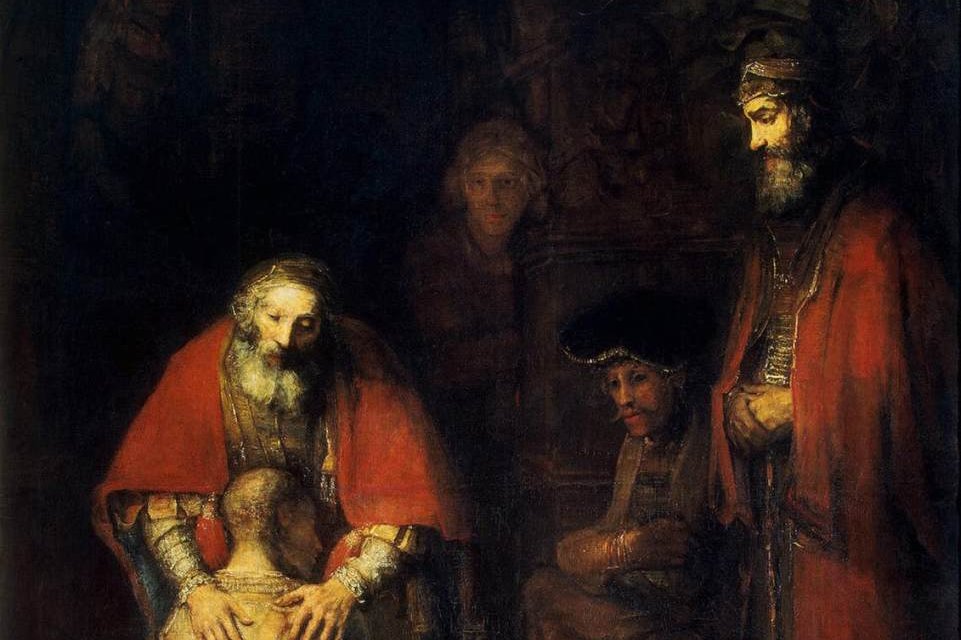
Catholic tradition has also long read the parable on a second, more theological level, alongside its plain moral meaning. Some early Church writers, including Origen and Augustine, interpreted the wounded traveler as representing fallen humanity, the priest and Levite as the Old Law unable on its own to save, and the Samaritan as a figure of Christ, who binds up humanity's wounds and pays the price for its care. The Catechism of the Catholic Church does not insist on that allegorical reading, but it does draw on the parable directly when describing the Church's call to care for the sick and suffering, treating Christ's own instruction — "Go and do likewise" — as a standing command rather than a nice sentiment. The parable pairs naturally with other Gospel teachings on mercy toward the vulnerable, including the Prodigal Son and its portrait of a father's unearned forgiveness, and with the wider biblical theme explored in Divine Mercy.
Trivia
What question prompted Jesus to tell this parable?
Why would a Samaritan stopping to help have shocked Jesus's original audience?
What exactly did the priest and the Levite do when they saw the injured man?
What did the Samaritan actually do for the wounded man?
How did Jesus turn the lawyer's original question back on him?
Related Reading