Papal Infallibility Explained: What It Does and Doesn't Mean

The doctrine, stated precisely
The Catechism gives the exact conditions in careful, deliberately narrow language, quoting the First Vatican Council: "The Roman Pontiff, head of the college of bishops, enjoys this infallibility in virtue of his office, when, as supreme pastor and teacher of all the faithful... he proclaims by a definitive act a doctrine pertaining to faith or morals" (CCC 891). Notice how many qualifying conditions are packed into that single sentence: the Pope must be acting in his official teaching capacity, addressing the whole Church, and issuing a definitive — not tentative or exploratory — statement on a matter of faith or morals specifically. Remove any one of those conditions, and the statement in question falls outside the scope of infallibility altogether.
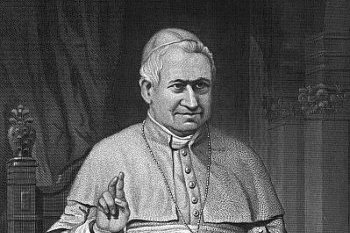
Portrait of Pope Pius IX, 19th century — public domain.
The technical term for this formal exercise of the charism is speaking ex cathedra — Latin for "from the chair," referring to the Pope's teaching authority symbolized by the Chair of Peter (see The Chair of Saint Peter for the history behind that symbol). Outside of that specific formal act, a pope's opinions, homilies, private theological views, and even most of his official writing are not covered by the guarantee of infallibility at all.
What infallibility does not claim
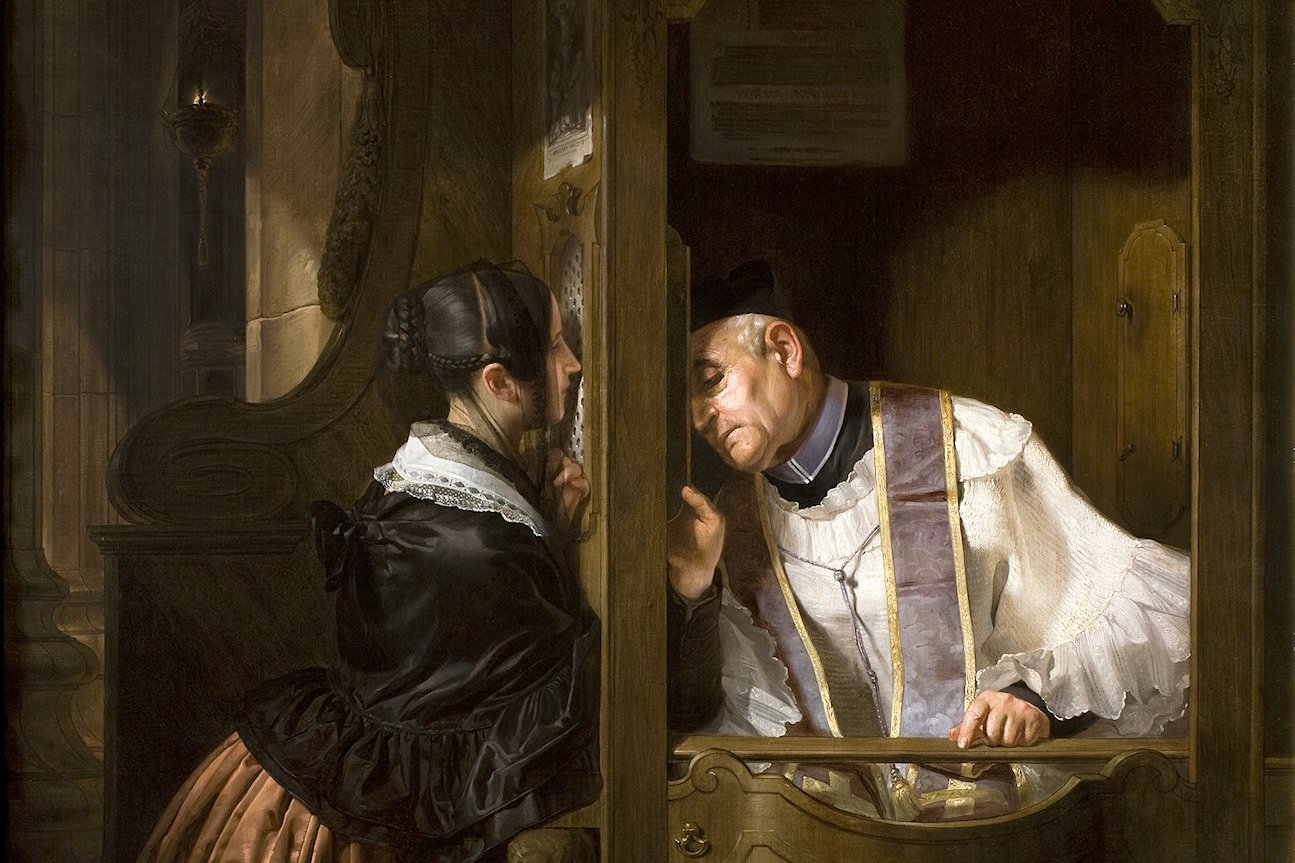
It's worth listing the misconceptions directly, because they're so common and so consequential. Papal infallibility does not mean the Pope is sinless — Catholic teaching has always held popes are capable of personal sin and are expected to confess like any other Catholic. It does not mean everything a Pope says or writes is guaranteed error-free — popular addresses, interviews, and even most encyclicals fall outside the narrow scope defined above, and history includes real examples of popes holding personal theological opinions later judged mistaken by the Church, entirely apart from any exercise of the formal charism. And it does not mean the Pope can invent new doctrine at will — the Catechism specifies that infallibility "extends as far as the deposit of divine Revelation itself" (CCC 891): the Pope can authoritatively define and clarify what has been revealed, but cannot introduce genuinely new content unconnected to that deposit of faith.
Where the doctrine comes from theologically
The theological basis rests on the promise Christ makes to Peter and the wider apostolic office: that the Church, guided by the Holy Spirit, would be preserved from teaching fundamental error in matters essential to salvation. Catholic teaching connects this to Christ's words to Peter — "but I have prayed that your own faith may not fail; and once you have turned back, you must strengthen your brothers." (Douay-Rheims, Luke 22:32) — read as a specific commission to Peter, and by extension his successors, to be a reliable anchor of faith for the whole Church. This connects directly to the wider claim of apostolic succession: infallibility is presented not as a personal gift to any individual man, but as a charism attached to the Petrine office itself, exercised under strict conditions for the good of the whole Church rather than for the Pope's own benefit.
When it was formally defined — and why then
The doctrine was formally defined as dogma at the First Vatican Council in 1870, in the document Pastor Aeternus, under Pope Pius IX. The nineteenth century was a period of significant upheaval for the papacy — the Papal States were collapsing under the pressure of Italian unification, and the Council itself was interrupted and never formally closed after Rome fell to Italian forces later that same year. Some historians note this context when explaining why the Council prioritized clarifying papal authority precisely then, though the theological content of the doctrine itself draws on much older claims about Petrine authority stretching back centuries, not an invention of the 1870 political moment.
How rarely it has actually been used
Given how narrow the conditions are, it should be unsurprising that the charism has been exercised, unambiguously, only once since its formal 1870 definition: Pope Pius XII's 1950 declaration in Munificentissimus Deus that the Assumption of Mary — her being taken body and soul into heaven at the end of her earthly life — is divinely revealed dogma. Some theologians also count Pope Pius IX's 1854 definition of the Immaculate Conception as an exercise of the same underlying authority, even though it preceded the doctrine's own formal 1870 definition. Beyond these examples, the vast body of Catholic doctrine — including teachings Catholics are expected to hold with real conviction — rests on other forms of Church authority (councils, the ordinary and universal Magisterium of bishops in union with the Pope) rather than this specific, rarely-invoked papal charism.
A narrow tool, not a blank check
Understood this way, papal infallibility is less like a Pope having a permanent hotline to guaranteed truth on every subject, and more like an emergency mechanism — reserved, deliberately, for the rare moments when the whole Church needs a definitive, settled answer on a question of faith or morals, and used with corresponding restraint. Popes have gone their entire pontificates, including figures as consequential as Pope John Paul II, without invoking it even once — governing, teaching, and guiding the Church through other, more ordinary exercises of papal authority instead.
Trivia
What does papal infallibility actually claim?
Does papal infallibility mean the Pope is sinless?
How often has papal infallibility actually been invoked?
Are all papal statements considered infallible?
When was papal infallibility formally defined as dogma?
Related Reading