What Happens at a Catholic Baptism? The Rite Explained

Why the Church calls it a gateway
The Catechism opens its treatment of Baptism with a striking claim: it is "the basis of the whole Christian life," the door through which a person enters not only the Church but access to every other sacrament (CCC 1213). Nothing else in Catholic sacramental life happens before it — a person can't validly receive Confirmation, the Eucharist, or any other sacrament without first having been baptized. That's the weight the ceremony carries, even when — as is most common — it's celebrated over an infant too young to remember any of it.
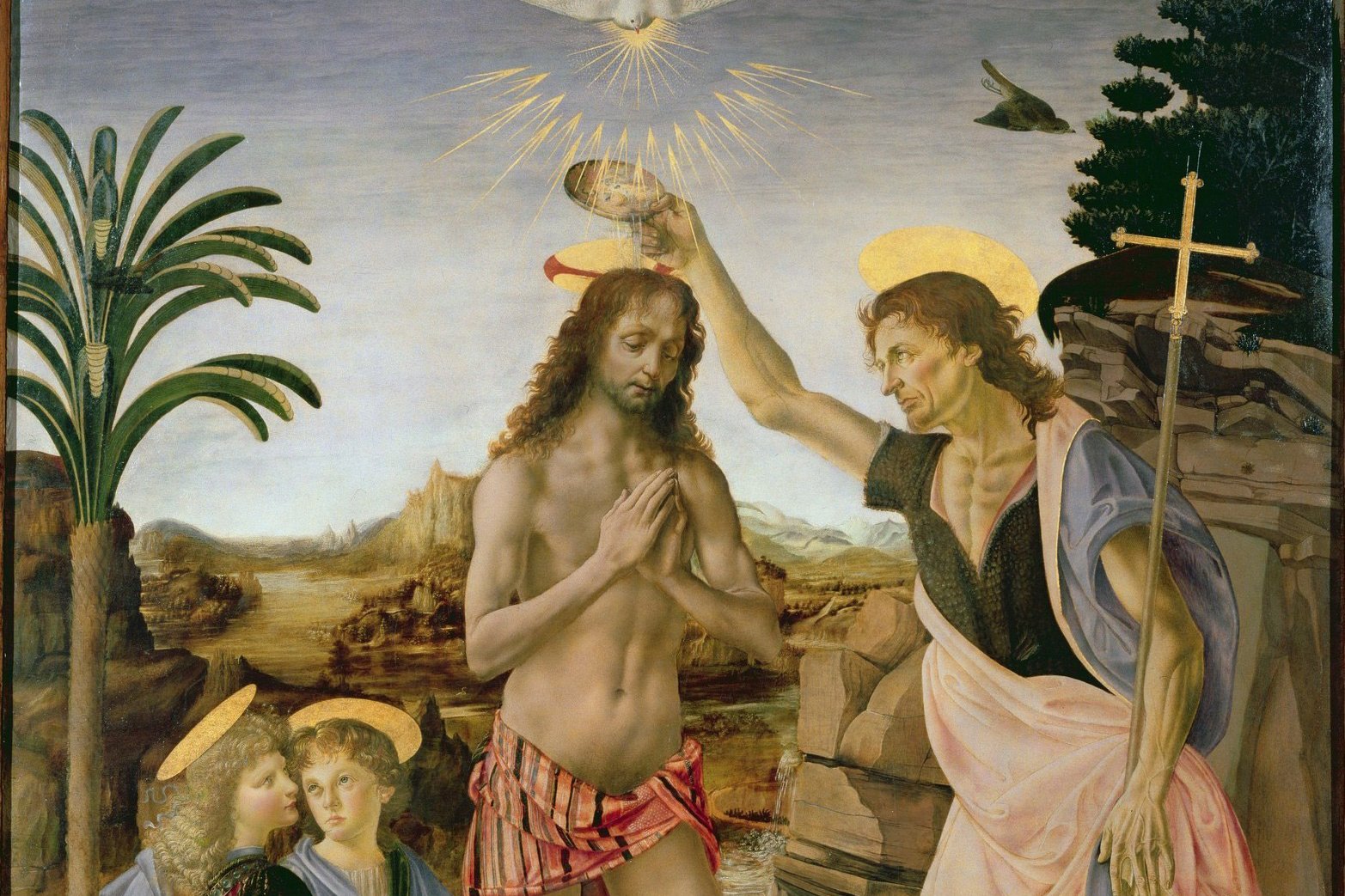
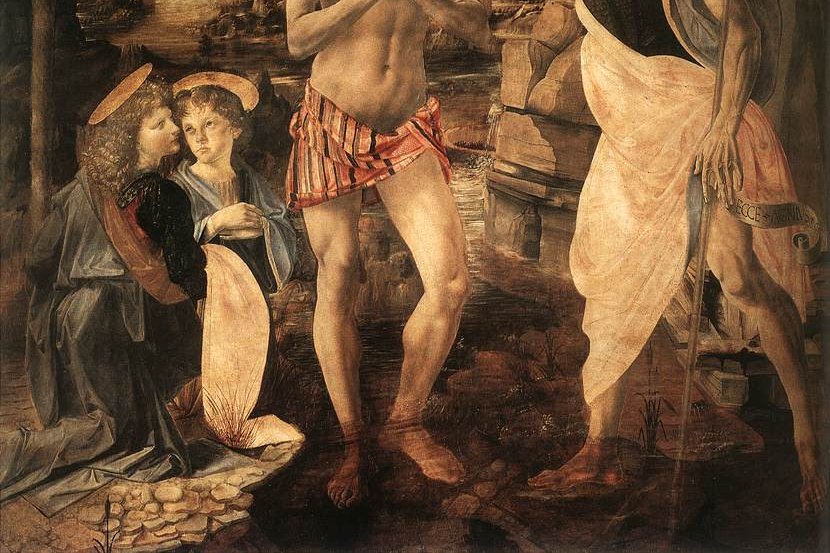
Andrea del Verrocchio and Leonardo da Vinci, The Baptism of Christ, c. 1475, Uffizi Gallery, Florence — public domain.
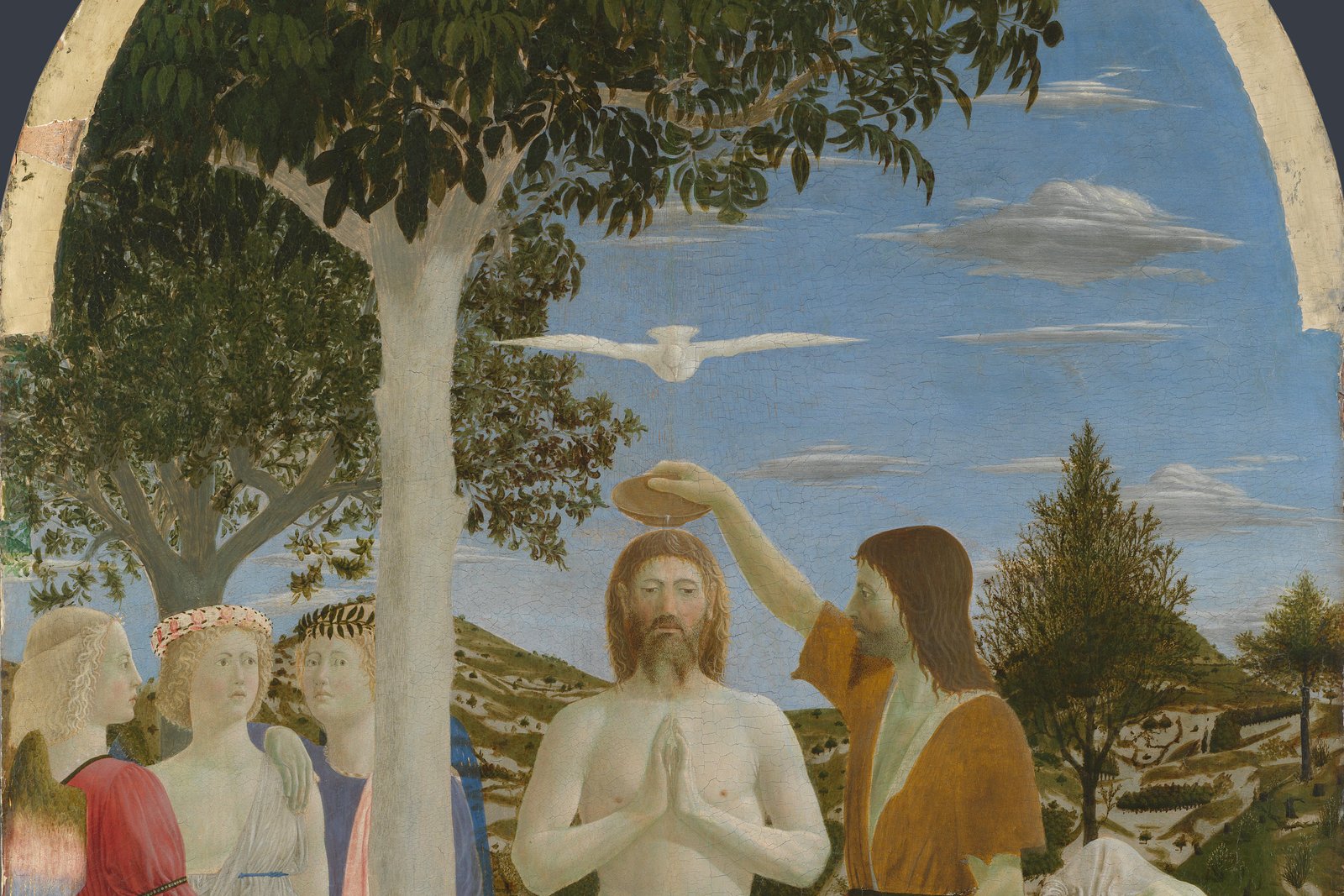
The word itself carries the meaning forward: "baptize" comes from the Greek baptizein, "to plunge" or "immerse." The Catechism explains that this plunging is symbolic of burial — the person going down into the water is understood to be buried, spiritually, into Christ's own death, and rising back up as "a new creature" through his resurrection (CCC 1214). Whether the water is poured over the head, as is most common in Western practice, or the person is fully immersed, that symbolism of death and rebirth is the theological core of the gesture, not an incidental detail.
Before the water: the rite of welcome
A Catholic baptism, whether for an infant or an adult, typically begins at the church doors rather than the altar — a deliberate symbol of someone standing outside the community being welcomed in. The priest or deacon asks the parents (for an infant) or the candidate (for an adult) what name has been chosen and what is being asked of God's Church, and traces the sign of the cross on the forehead, inviting the parents and godparents to do the same. This opening marks the person as belonging to Christ even before the water is poured, and it sets the tone for everything that follows: a person being claimed, not merely processed through a ritual.
The Liturgy of the Word and the promises
The community then hears Scripture readings appropriate to Baptism, followed by prayers and a litany of the saints, invoking their intercession for the person about to be baptized — see Why Do Catholics Pray to Saints? for more on why that practice exists. The priest then blesses the baptismal water, and asks the parents and godparents (or the adult candidate) to renounce sin and profess the Catholic faith — the same profession, in slightly adapted wording, that Catholics recite every Sunday at Mass in the form of the Creed.
For an infant, parents and godparents answer these questions on the child's behalf, a practice grounded in the Church's understanding that Baptism is fundamentally a gift of grace, not a reward for belief the person has already reasoned their way into. Adults being baptized profess the faith directly and personally, often after a lengthy period of preparation known as the catechumenate.
The water, and the words that make it a sacrament
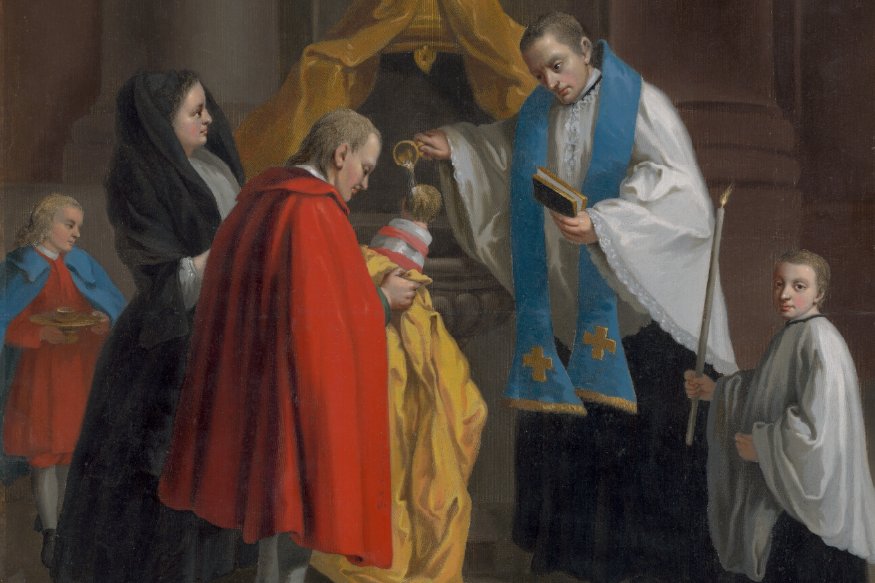
This is the essential moment. The priest or deacon pours water three times over the person's head — or immerses them fully — while saying: "I baptize you in the name of the Father, and of the Son, and of the Holy Spirit," echoing Christ's own command in Matthew's Gospel to baptize "Go, therefore, and make disciples of all nations, baptizing them in the name of the Father, and of the Son, and of the holy Spirit," (Douay-Rheims, Matthew 28:19). Water combined with these specific Trinitarian words is what the Church holds makes the sacrament valid; without both together, the rite does not confer Baptism, regardless of how solemn or sincere the ceremony otherwise is. It's the reason Catholic teaching holds that even an emergency baptism, performed by any person pouring water while saying these words out of genuine necessity, is fully valid.
After the water: anointing, white garment, candle
Several smaller rites follow, each carrying its own symbolism. The newly baptized is anointed with sacred chrism, a fragrant oil, marking them as a member of Christ's priestly, prophetic, and royal people. A white garment is placed on the person as a sign of having "put on Christ" and risen with him to new life. Finally, a candle is lit from the large Paschal candle — the symbol of the risen Christ present throughout the Easter season and at every baptism — and handed to the parents or the newly baptized, with the instruction to keep the flame of faith burning throughout their life.
The role of godparents
Godparents aren't ceremonial figureheads. The Church requires that at least one godparent be a confirmed, practicing Catholic in good standing, precisely because the role carries a real, ongoing responsibility: helping to form the child in the faith alongside the parents, standing as a witness to the promises made at the font, and — should anything happen to the parents — being prepared to take up that formation directly. Choosing a godparent is meant to be a serious decision about who will help carry a specific spiritual responsibility forward, not simply an honor extended to a favorite relative or friend.
What the Church teaches Baptism actually does
Beyond the visible ceremony, Catholic teaching holds that Baptism accomplishes something real and permanent: it frees the person from original sin and all personal sin committed before that moment, makes them a new creation and a member of Christ's Body the Church, and imprints an indelible spiritual mark that can never be repeated or undone — which is why Catholics are baptized only once, no matter how far they may later drift from practicing the faith. The infant carried through the doors at the start of the rite, and the newly lit candle handed back at its close, bookend a ceremony the Church holds to be genuinely transformative, not merely symbolic — the first and, in Catholic teaching, the most foundational of all the sacraments.
Trivia
What are the essential elements that make a baptism valid?
Why does the Church baptize infants who can't yet believe for themselves?
What is the role of a godparent?
Does the word "baptize" actually mean anything specific?
What if someone is in danger of death before a full baptism can be arranged?
Related Reading