What Happens at a Catholic Ordination

A sacrament built on a chain of hands
Catholic teaching holds that the authority conferred at ordination traces back, bishop to bishop, in an unbroken chain to the apostles themselves — a doctrine called apostolic succession. Every validly ordained bishop today can, in principle, trace his ordination back through a line of bishops laying hands on bishops, generation after generation, to the apostolic Church. That claim is the theological backbone of everything that happens during an ordination Mass: the rite isn't understood as the Church simply appointing someone to a job, but as passing along something received, hand to hand, since the first century.
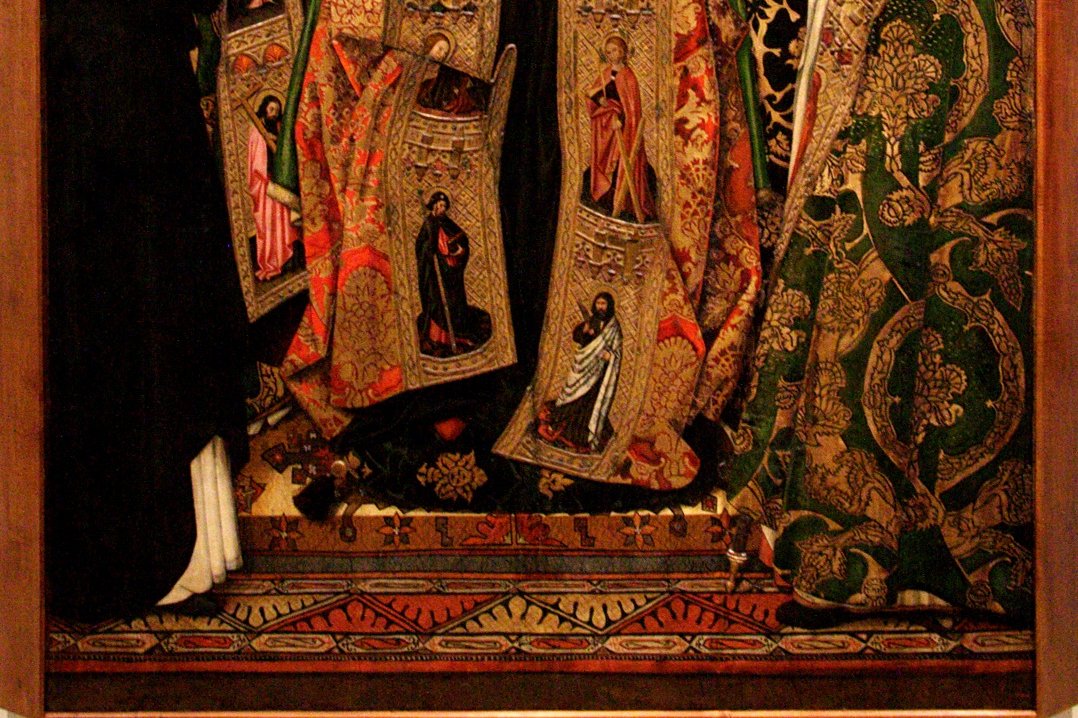
Jaume Huguet, The Consecration of Saint Augustine, c. 1466-1475, tempera on panel — public domain.
Holy Orders, the sacrament conferred at ordination, has three degrees: bishop, priest, and deacon. The Catechism describes the episcopate — the office of bishop — as the fullness of the sacrament, with priests and deacons sharing in it at different levels (CCC 1554). A man is ordained deacon first, then, typically after further formation, ordained a priest; only some priests are later chosen and ordained as bishops.
The Mass leading up to it
An ordination takes place within a full Mass, celebrated by a bishop, and follows the normal structure through the Liturgy of the Word. After the Gospel and homily, the rite proper to ordination begins. The candidates are called forward by name, and each responds "Present" — a small, direct moment that nonetheless marks a formal, public step no one can take on someone else's behalf.
The bishop then questions the candidates on their willingness to fulfill the duties of the order they are about to receive — obedience, celibacy for priests and deacons in the Latin Church, a commitment to prayer and the Liturgy of the Hours — and each candidate responds aloud, in front of the congregation.
Lying face-down: the Litany of the Saints
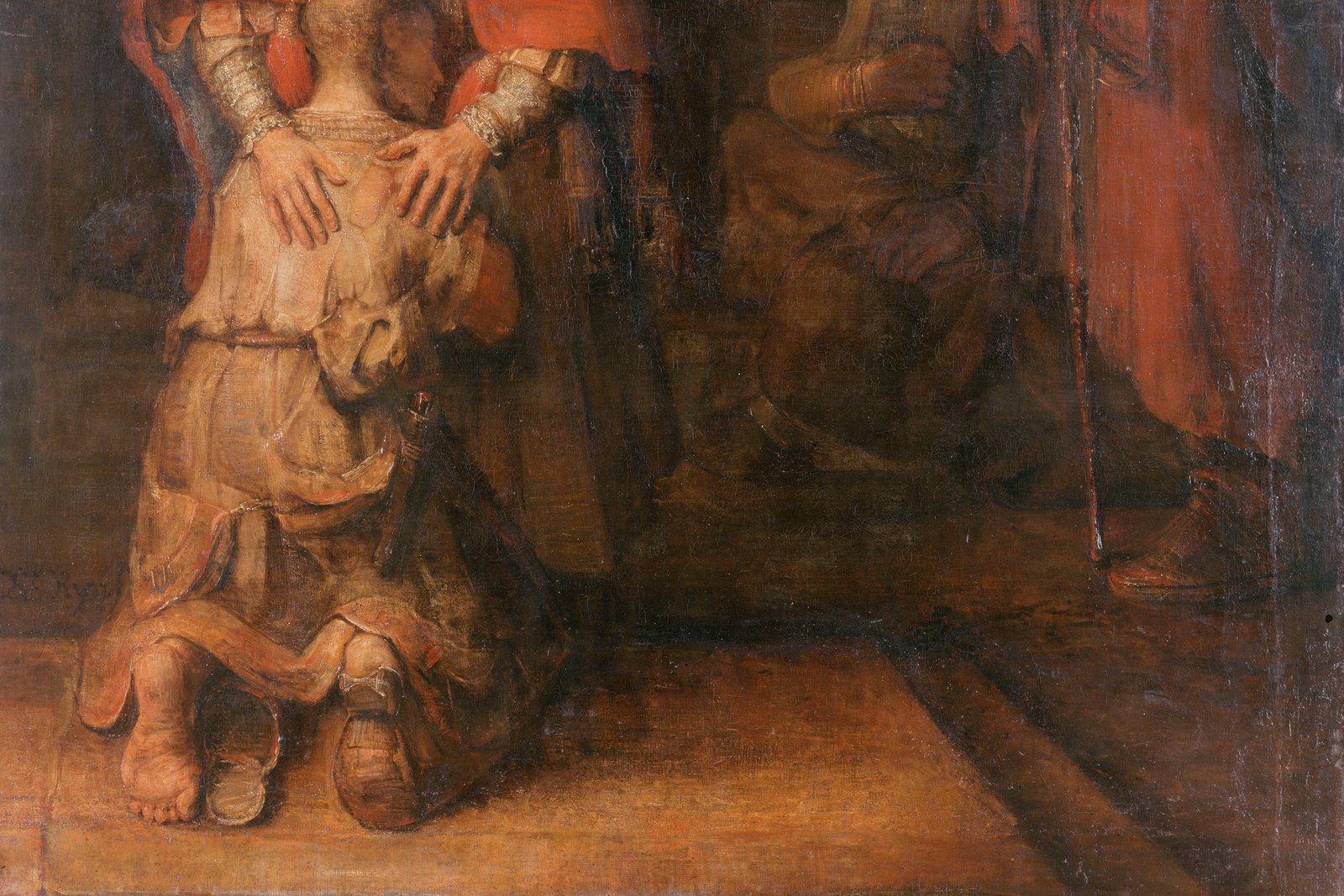
One of the ordination rite's most visually arresting moments comes next: the candidates prostrate themselves, lying face-down on the sanctuary floor, while the whole congregation chants the Litany of the Saints, invoking Mary and a long list of saints by name to intercede for the men about to be ordained. Prostration is reserved in Catholic liturgy for only a handful of especially solemn occasions — ordination is one, along with the beginning of the Good Friday liturgy and the taking of solemn religious vows — and it functions as a bodily expression of total surrender and unworthiness before the gravity of what is about to happen.
The laying on of hands
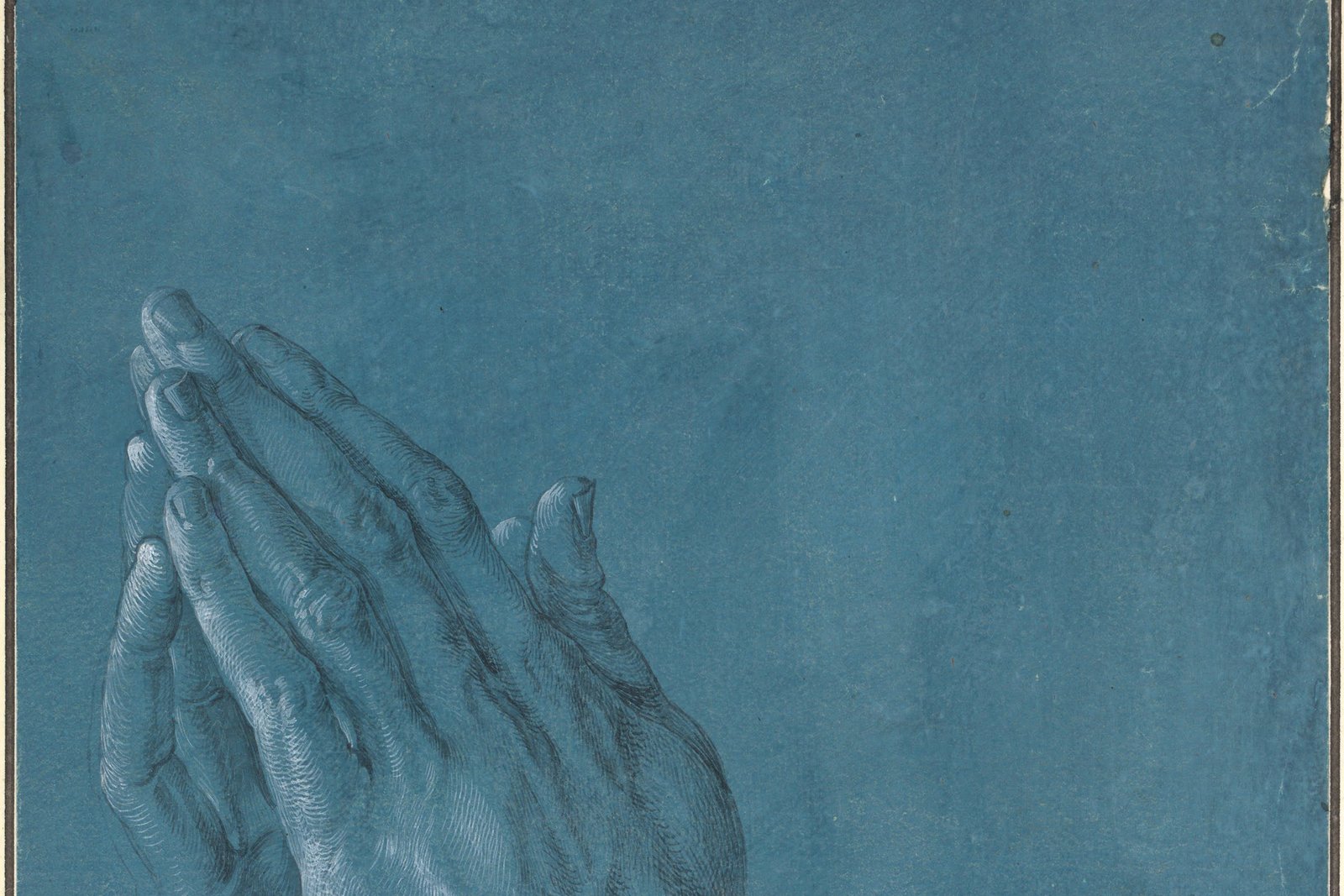
The essential moment of the sacrament follows immediately: the bishop lays his hands silently on the head of each candidate, one at a time. For priestly ordinations, every priest present is then invited to do the same, laying hands on the newly ordained in a visible sign that he is joining their shared order — a striking moment when dozens of priests may file forward to place their hands, briefly, on one man's head.
Immediately after the laying on of hands, the bishop prays the Prayer of Ordination specific to that degree — for priests, a prayer that asks God to "renew within him the Spirit of holiness" and to grant him the dignity of the priesthood. This prayer, prayed aloud over the candidate while the bishop's hands rest on his head, is what Catholic sacramental theology identifies as the sacrament's "form" — paired with the laying on of hands as its "matter" — the two elements together constituting the essential act of ordination itself.
The vesting and anointing
After the prayer of consecration, newly ordained priests are vested in a stole worn priest-style and a chasuble, the outer vestment proper to the priesthood, and their hands are anointed with sacred chrism — perfumed holy oil consecrated by the bishop, the same oil used in Baptism and Confirmation — as a sign of the priest's hands being set apart for consecrating the Eucharist. Newly ordained bishops receive a chrism anointing on the head rather than the hands, along with the presentation of a ring, miter, and crosier, the traditional symbols of episcopal office.
What follows immediately
Each newly ordained priest then concelebrates the remainder of the Mass alongside the ordaining bishop for the first time — his first act as a priest is typically to help consecrate the Eucharist at that same liturgy. It's common practice for a newly ordained priest to give a first blessing to family, friends, and the congregation immediately after Mass, a moment many Catholic families treat with particular significance, sometimes seeking out that first blessing specifically rather than a later one.
Why it can't be undone
Catholic teaching holds that Holy Orders, like Baptism and Confirmation, imprints an indelible spiritual mark on the soul — meaning ordination cannot be repeated and cannot, strictly speaking, be reversed. A priest can be removed from active ministry or, in grave cases, formally laicized (returned to the lay state for the exercise of ministry), but Catholic doctrine holds that the sacramental character received at ordination remains permanently, which is part of why the Church treats the rite itself with such solemnity and rarely repeats or shortens it.
Trivia
What are the three degrees of Holy Orders in the Catholic Church?
What is the essential moment of a Catholic ordination?
Why does the ordination candidate lie face-down on the floor during the ceremony?
Can a married man become a Catholic priest?
Who can ordain a new priest or deacon?
Related Reading