Giotto's Life of Saint Francis Frescoes at Assisi

A saint's life told as a continuous story
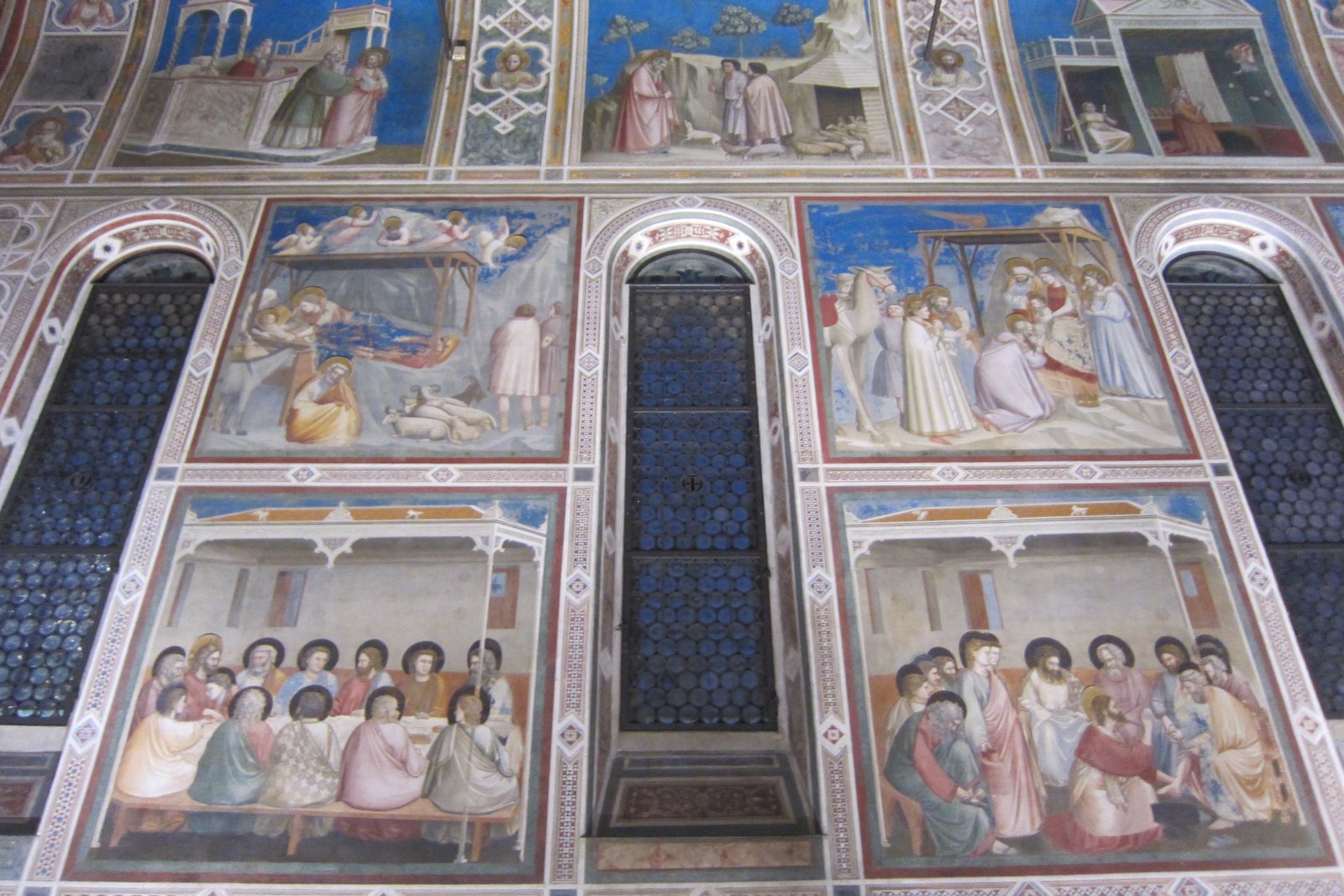
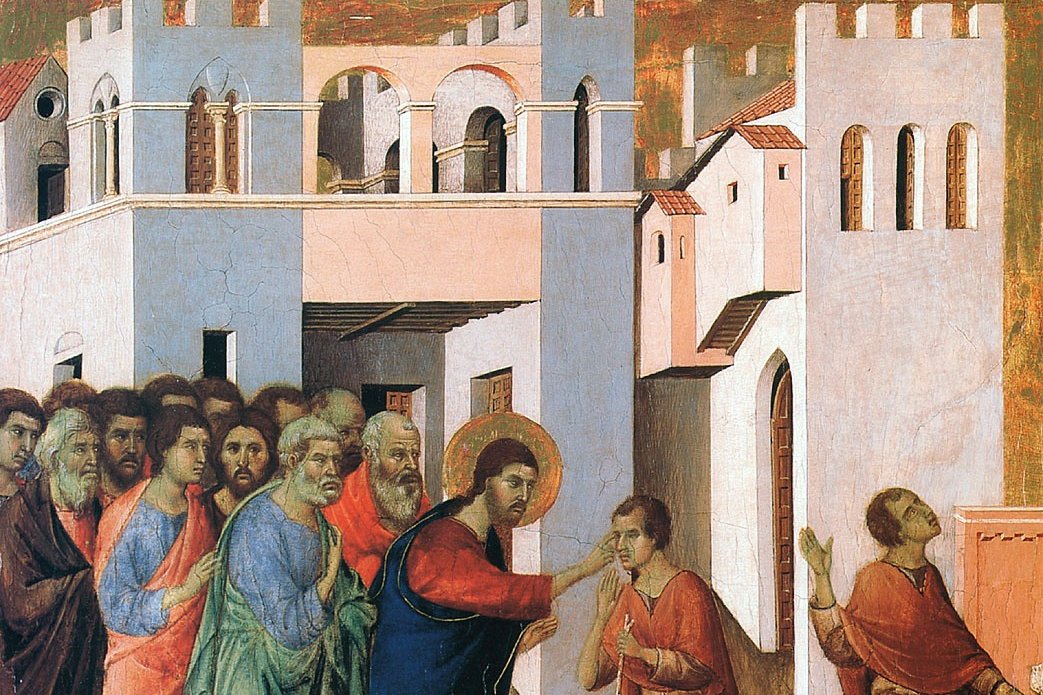
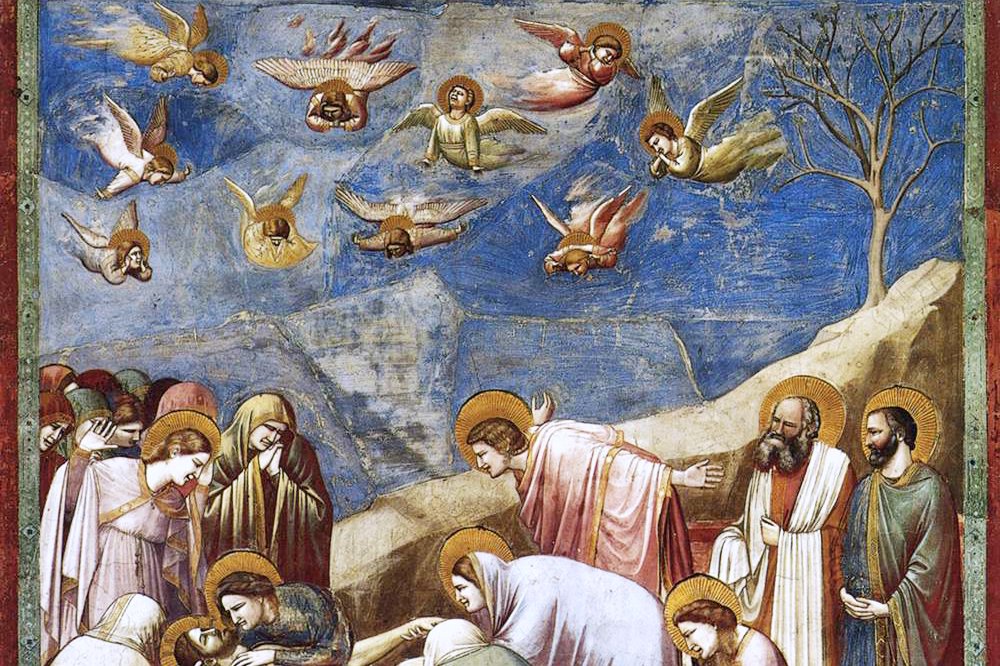
The Upper Basilica's fresco cycle wraps around the nave walls in a continuous horizontal band, twenty-eight individual scenes moving in sequence from Saint Francis's youth through his final years and the miracles reported after his death. A viewer standing in the nave in the late thirteenth century, most of them unable to read, could follow Francis's entire life story simply by walking the length of the church and looking up — a deliberate strategy common in medieval church decoration, where fresco cycles functioned as visual scripture and hagiography for a largely illiterate congregation. What sets this particular cycle apart from countless other medieval narrative fresco programs is the specific quality of how each scene is staged: figures occupy real, legible architectural space, their bodies convey weight and emotion through gesture and posture, and individual scenes read less like flattened symbolic icons and more like specific, physically situated moments an eyewitness might plausibly have observed.
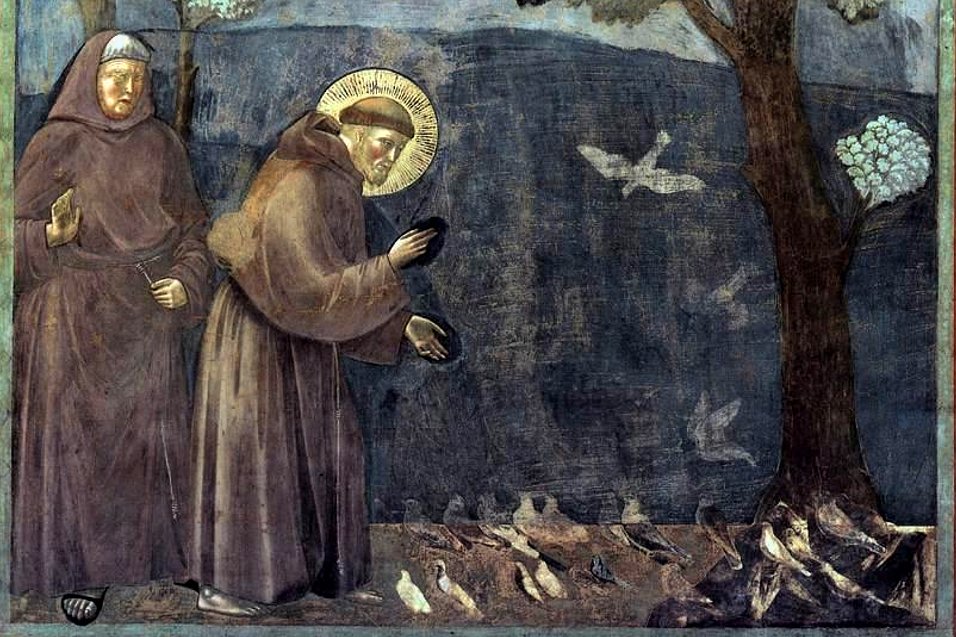
Attributed to Giotto and workshop, "Legend of Saint Francis" fresco cycle, c. 1297-1299, Upper Basilica of San Francesco, Assisi — public domain.
The scenes themselves
The cycle draws largely on Saint Bonaventure's official biography of Francis, moving through episodes including Francis giving his cloak to a poor man, his renunciation of his father's wealth, his approval of the Franciscan Rule by Pope Innocent III, his famous sermon to the birds, his receiving the stigmata on Mount La Verna, his death, and a sequence of posthumous miracles attributed to his intercession. Each scene is framed within its own painted architectural border, giving the whole cycle a rhythm somewhere between a continuous narrative and a series of discrete, carefully composed episodes — an approach that let the artist or artists responsible vary mood and staging scene by scene while keeping the overall sequence coherent for a viewer moving through the nave.
The attribution question that still divides scholars
Whether Giotto himself painted these frescoes remains one of the more persistent open questions in Italian art history. Giorgio Vasari, writing his influential Lives of the Artists in the sixteenth century, credited the cycle to Giotto, and that attribution held as more or less settled fact for centuries afterward. Beginning in the twentieth century, though, a significant body of scholarship has questioned it, pointing to stylistic differences across the cycle and comparisons with Giotto's more securely documented later work — particularly his frescoes at the Scrovegni Chapel in Padua — that some historians argue don't fully match. The most widely held current position treats the cycle as likely the product of several hands, possibly including Giotto in some capacity, working within a shared Roman-influenced style circulating in central Italy at the time, rather than a single, fully attributable Giotto masterpiece. The debate remains unresolved, and readers should treat "Giotto's" Assisi cycle as a traditional attribution carrying real scholarly uncertainty, not settled fact.
Painted in true fresco, scene by scene
Technically, the cycle was executed largely in buon fresco, the demanding method of painting directly onto wet lime plaster so that pigment binds chemically into the wall as it dries, rather than simply sitting on the surface as a later applied layer would. Because that plaster stays workable for only a matter of hours, an artist working this way has to plan each day's painting in advance as a separate, self-contained section — known to conservators as a giornata, literally a "day's work" — and commit to it without much room for revision once the plaster begins to set. Modern conservation study of the Assisi cycle has used the visible seams between these individual plaster patches to map out how the work was actually divided among the painters on site, offering one of the more concrete pieces of physical evidence in the long debate over how many hands, and whose, were involved in the cycle's execution.
Why the style mattered so much, regardless of authorship
Whoever painted them, the frescoes represent an important and influential early step away from the flatter, more symbolic Byzantine-influenced style that dominated Italian religious painting through the thirteenth century. Figures here occupy convincing three-dimensional space, architecture is rendered with a real, if imperfect, sense of depth and perspective, and faces convey specific, individualized emotional states rather than generic formal expressions. That combination of physical believability and emotional directness proved enormously influential on the painters who followed across the fourteenth century, feeding directly into the broader narrative innovations that art historians associate with the beginnings of the Italian Renaissance.
The basilica itself, and its 1997 near-catastrophe
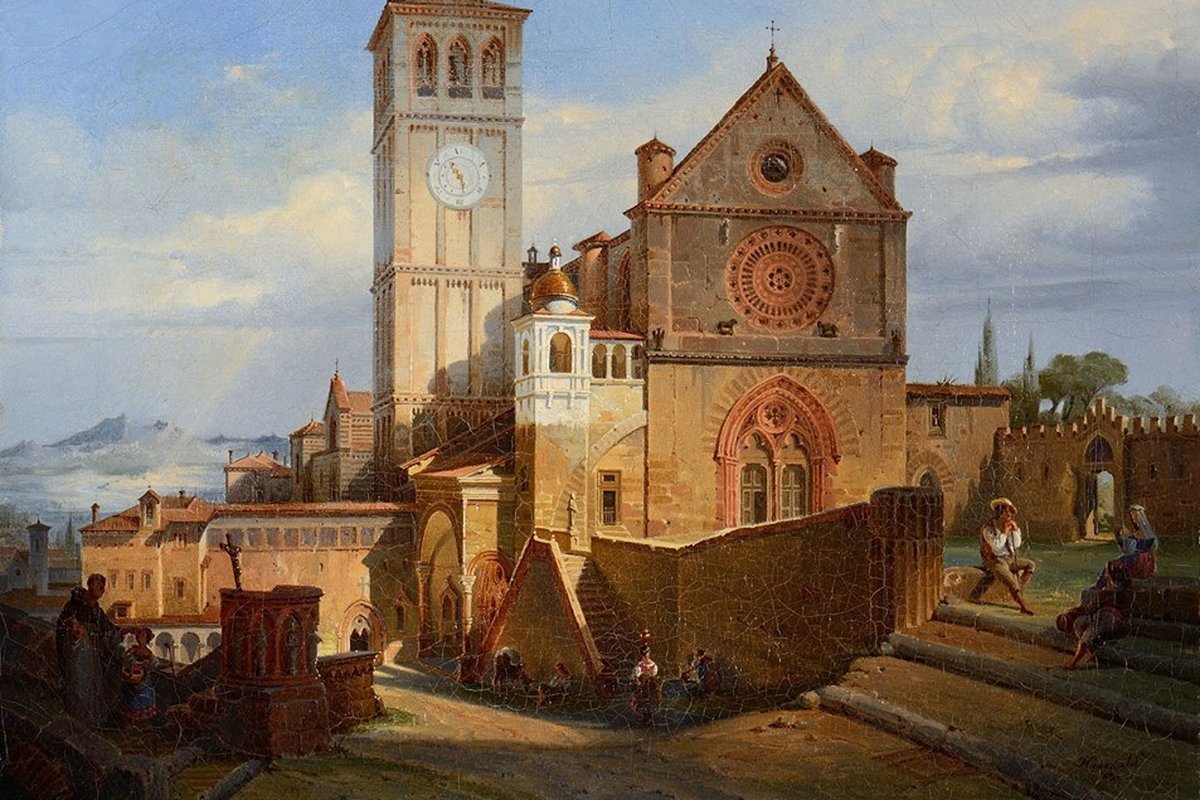
The Upper Basilica of San Francesco was built specifically to house Saint Francis's remains and to serve as the mother church of the Franciscan order, with construction beginning shortly after his 1228 canonization. The fresco cycle came later, generally dated to the final years of the thirteenth century. In September 1997, a powerful earthquake struck the Assisi region, causing sections of the basilica's vaulted ceiling to collapse, destroying some frescoes entirely and killing several people, including two Franciscan friars, who were inside assessing earlier damage at the time. An extensive, painstaking restoration effort followed, piecing surviving fresco fragments back together in some sections, and the basilica reopened to the public in 1999.
A cycle still central to how Francis is remembered
Nearly seven centuries after they were painted, the Assisi frescoes remain the most visually influential single depiction of Saint Francis's life, shaping how countless later artists, and ordinary visitors, have pictured episodes like his sermon to the birds or his receiving the stigmata. They remain a working pilgrimage site as much as an art-historical landmark, still doing precisely what they were built to do: telling one of Christianity's most beloved saints' stories to anyone willing to walk the length of the nave and look up.
Trivia
Where can you see Giotto's Life of Saint Francis fresco cycle?
Is it certain that Giotto himself painted the Assisi Saint Francis cycle?
How many scenes make up the fresco cycle, and what do they depict?
Why is this fresco cycle considered such an important moment in art history?
What happened to the frescoes during the 1997 Assisi earthquake?
Related Reading