Saint Oscar Romero

A cautious churchman by reputation
Oscar Arnulfo Romero y Galdamez was born on August 15, 1917, in Ciudad Barrios, El Salvador, and was ordained a priest in 1942 after seminary studies partly completed in Rome. Over the following decades he built a reputation within the Salvadoran church as a capable, hardworking, and doctrinally conservative churchman — steady rather than radical, more comfortable with traditional pastoral and administrative work than with public political engagement. When he was appointed Archbishop of San Salvador in February 1977, this reputation for caution reportedly reassured El Salvador's government and wealthier classes, who anticipated a bishop unlikely to challenge the country's existing political and economic order directly.
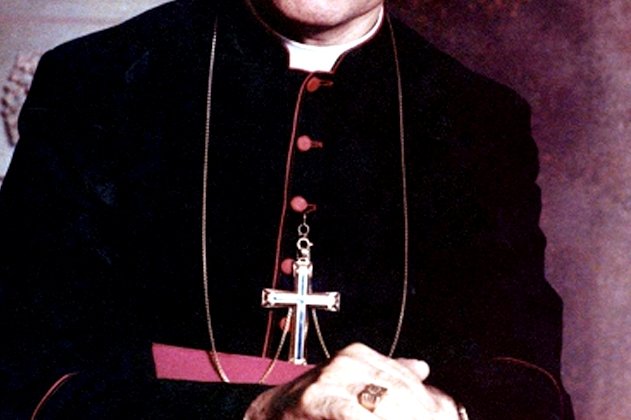
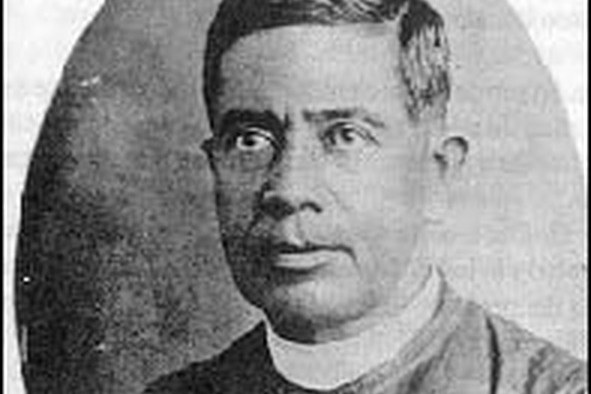
Archdiocese of San Salvador, photograph of Archbishop Óscar Romero during his 1978 stay in Rome — public domain.
El Salvador at the time was moving toward the civil war that would formally break out the following year, a conflict rooted in deep economic inequality, a government increasingly reliant on repression to maintain power, and growing armed opposition movements. Catholic clergy who worked closely with the rural poor, including priests influenced by liberation theology's emphasis on social justice as central to the Gospel, were increasingly targeted by state and paramilitary violence even before Romero's appointment.
A turning point: the murder of Rutilio Grande
Just weeks after Romero became archbishop, on March 12, 1977, his close friend Father Rutilio Grande, a Jesuit priest known for organizing rural poor communities, was assassinated along with two companions while driving to celebrate Mass. Romero, by his own later account and that of those close to him, experienced this murder as a profound turning point. He suspended Masses across the archdiocese except for a single unified funeral Mass, demanding a government investigation that was never seriously pursued, and from that point forward began using his position with an assertiveness that surprised many who had expected a cautious tenure.
Public denunciation of state violence
Over the following three years, Romero became one of the most prominent public voices in Latin America documenting and condemning human rights abuses by the Salvadoran government and allied paramilitary and death squad violence. His weekly homilies, broadcast by radio across the country, regularly detailed specific instances of killings, disappearances, and torture, read aloud the names of victims, and directly called on the country's political and military establishment to end the violence — extraordinarily direct public speech for a sitting archbishop, and speech that made him an increasingly clear target.
He also wrote directly to the government of U.S. President Jimmy Carter in February 1980, asking the United States to halt military aid to the Salvadoran government, on the grounds that such aid would be used to intensify repression rather than reduce it — a request that was not granted, and that placed Romero in direct opposition to both his own country's government and a major foreign power's foreign policy.
The assassination
On March 23, 1980, in his Sunday radio homily, Romero addressed Salvadoran soldiers directly, telling them that no soldier is obligated to obey an order that violates the law of God, and appealing to them, "in the name of God, and in the name of this suffering people," to stop the repression — language widely understood, then and since, as a direct call for soldiers to refuse orders to kill civilians. The following evening, March 24, 1980, while celebrating Mass in the chapel of the Hospital of Divine Providence in San Salvador, Romero was shot once through the heart by a single gunman firing from the chapel entrance and died within minutes.
Investigations conducted by a United Nations-backed truth commission after the Salvadoran civil war ended in 1992 concluded that the assassination had been organized by a right-wing death squad connected to Roberto D'Aubuisson, a former Salvadoran army major and prominent right-wing political figure; no one was ever successfully prosecuted for the killing during the following decades.
From political caution to formal martyrdom
Romero's canonization cause opened in 1990 but moved slowly for years, in part because of continuing institutional wariness within parts of the Vatican about associating too closely with a figure whose public statements had been claimed, by supporters and critics alike, as aligned with liberation theology, a movement viewed with real caution by Church authorities during the 1980s and 1990s. Pope Francis moved the cause forward decisively, formally declaring in 2015 that Romero had been killed "in hatred of the faith" — the specific canonical finding required to recognize a martyr — and beatified him later that year. Pope Francis canonized Romero on October 14, 2018.
Feast day
Saint Oscar Romero's feast is celebrated on March 24, the anniversary of his assassination.
Related reading
Romero's martyrdom sits within a broader modern history of clergy killed for confronting political violence and injustice — readers may also want to read about Saint Toribio Romo, a priest executed decades earlier during Mexico's Cristero War, or Blessed Miguel Pro, another Latin American priest killed by his own government for continuing his ministry.
Trivia
Who was Saint Oscar Romero?
Why was Oscar Romero assassinated?
Was Oscar Romero always seen as a champion of the poor?
Did the Church initially hesitate to advance Oscar Romero's canonization cause?
When is Saint Oscar Romero's feast day?
You May Also Like
Related Reading