Elisha: The Double Portion of Elijah's Spirit

An Unusual Request
Elisha's introduction to Scripture is almost comically ordinary: he's plowing a field with twelve yoke of oxen when Elijah walks past and throws his cloak over him — a wordless summons (1 Kings 19:19-21). Elisha slaughters his oxen, burns the plowing equipment for fuel, and follows. There is no vision, no burning bush, just an abrupt change of direction and total commitment.
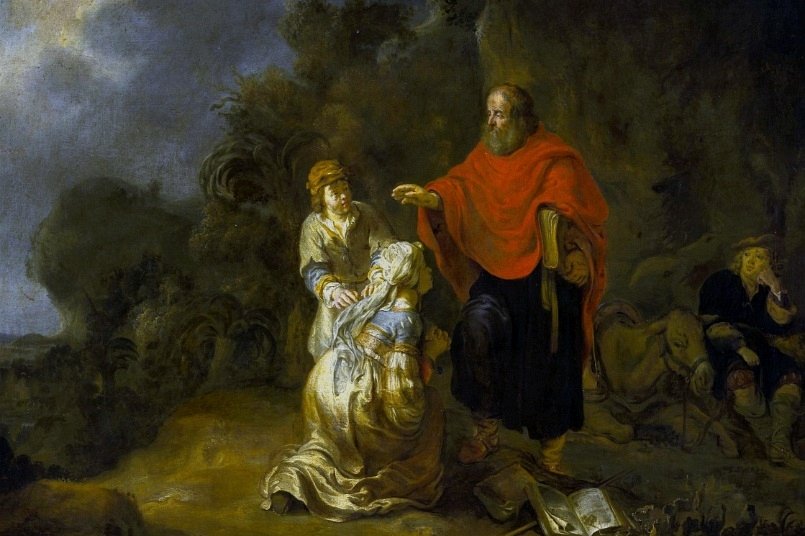
Gerbrand van den Eeckhout, "Elisha and the Shunammite Woman," 1649 — public domain.
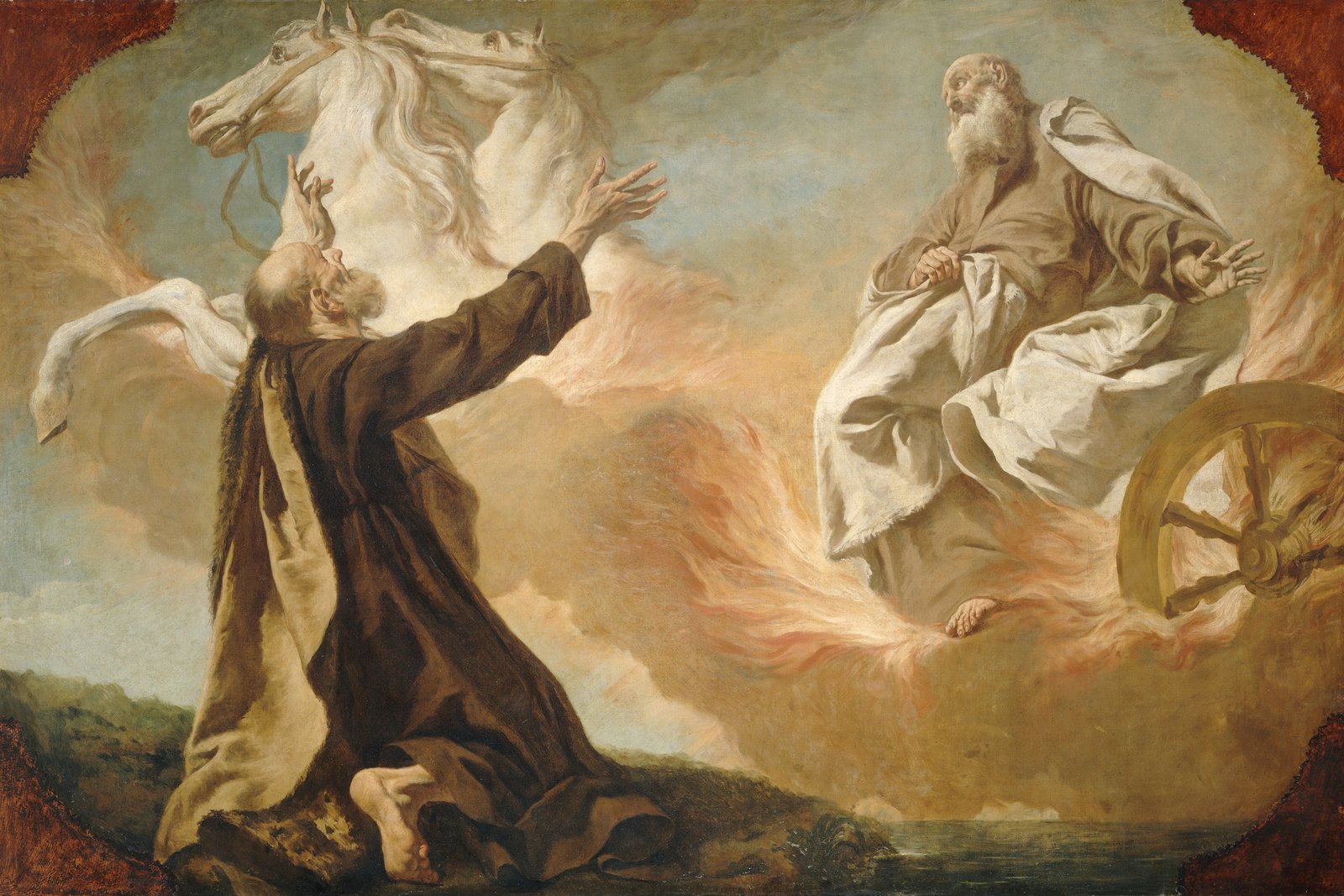
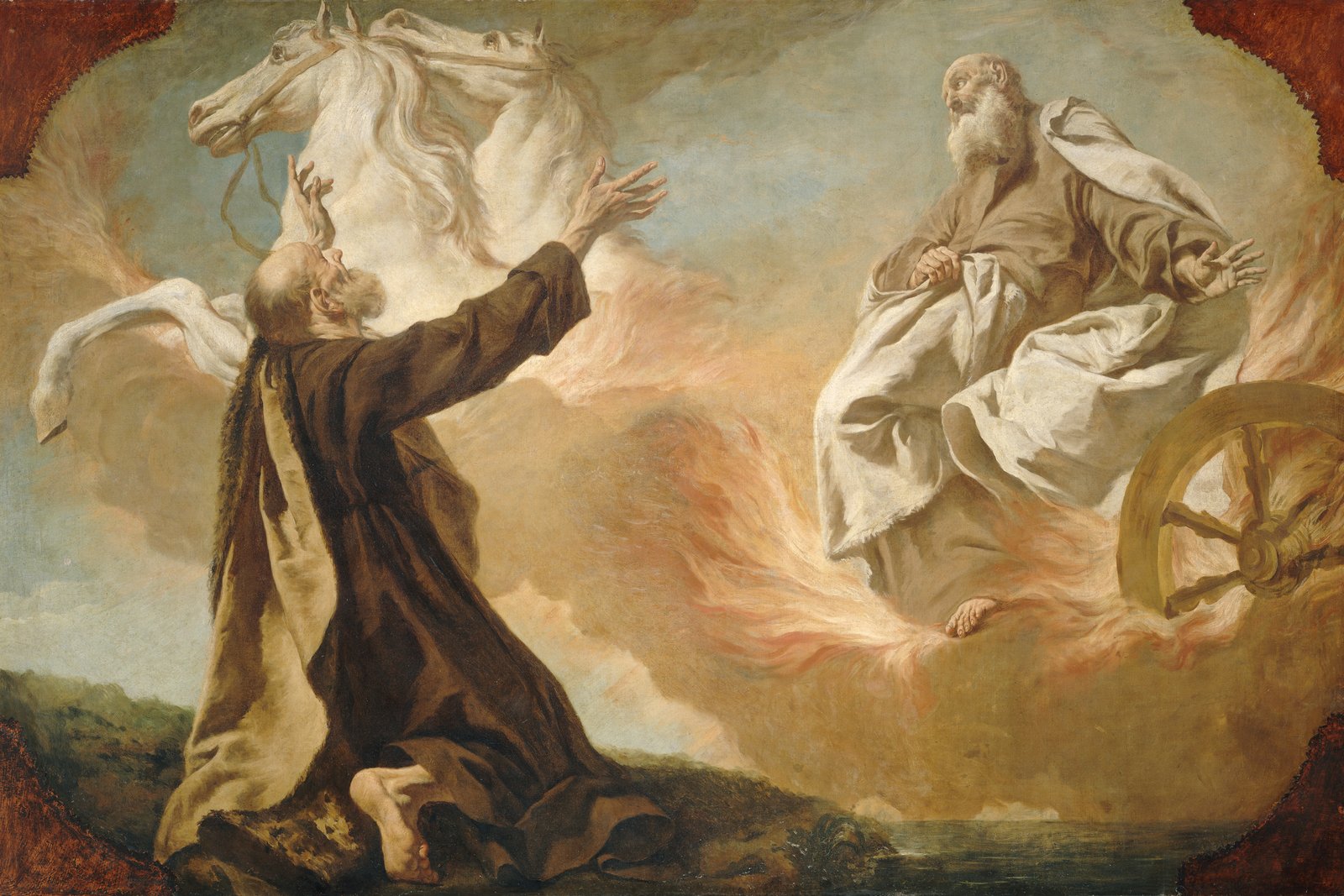
Years later, as Elijah's ministry is ending, he offers his protégé one last request. Elisha's answer is bold: "May I receive a double portion of your spirit" (NABRE, 2 Kings 2:9) — the inheritance customarily reserved for a firstborn son, doubling the share given to other heirs. Elijah warns him it is "not easy," conditioned on Elisha witnessing his departure. He does: Elijah is swept up in "a fiery chariot and fiery horses" (NABRE, 2 Kings 2:11), and Elisha, left alone, picks up the fallen mantle, strikes the Jordan River with it as Elijah once did, and crosses on dry ground. The watching prophets recognize immediately what has happened: "The spirit of Elijah rests on Elisha" (NABRE, 2 Kings 2:15).
Miracles of Ordinary Need
What follows in 2 Kings is a long string of miracles, and what stands out about most of them is how domestic they are. Elisha's power shows up not in national confrontations with kings, but in the small emergencies of ordinary households.
A widow of one of the "guild prophets" — a member of the prophetic communities that clustered around figures like Elijah and Elisha — comes to him in desperation: her husband is dead, and his creditor is about to seize her two sons as slaves for the debt. Elisha asks what she has in the house. "Nothing," she says, "but a jug of oil" (NABRE, 2 Kings 4:2). He tells her to borrow every empty vessel she can find from her neighbors, shut the door, and start pouring. The oil does not stop until the last borrowed jar is full. "Go sell the oil to pay off your creditor; with what remains, you and your children can live" (NABRE, 2 Kings 4:7). It's a miracle scaled precisely to the size of her faith and her willingness to go collect enough containers — no more oil appears than she has vessels to hold it.
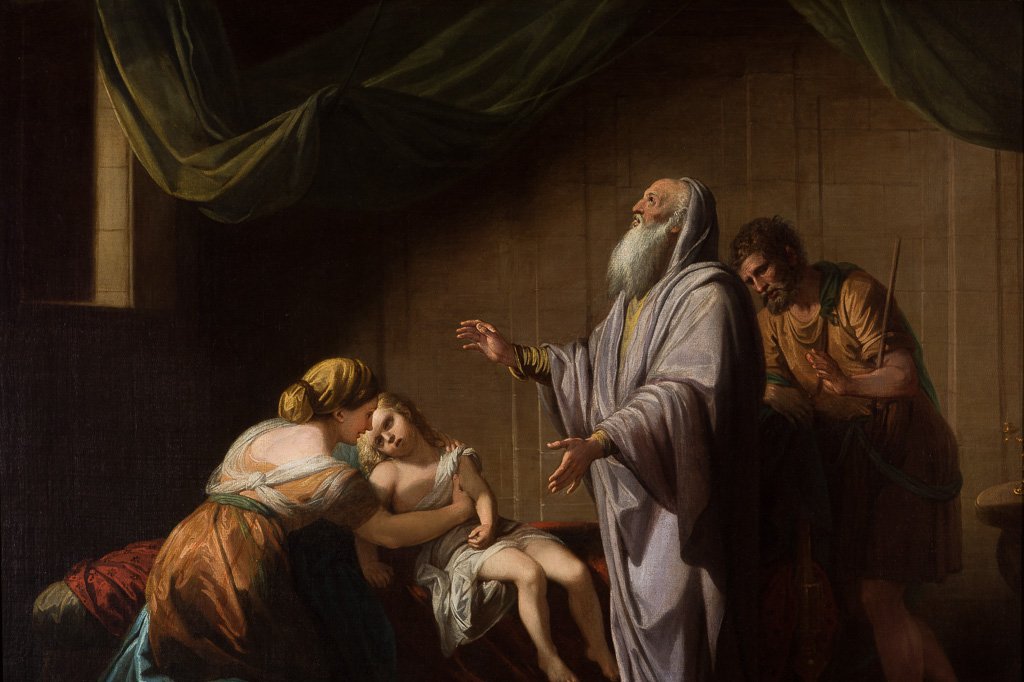
A similar pattern shows up when Elisha revives the son of a woman from Shunem who had shown him hospitality. The boy dies suddenly of what sounds like heatstroke; Elisha shuts himself in the room with the body, stretches himself over the child, and after some effort, "the boy sneezed seven times and opened his eyes" (NABRE, 2 Kings 4:35). Even here the miracle takes physical, sustained effort rather than a single word of command — a detail that keeps Elisha's ministry grounded in something recognizably human rather than magical.
Naaman: Mercy for an Outsider
The most theologically significant of Elisha's miracles involves someone who isn't even Israelite. Naaman, commander of the army of Aram — a nation frequently at war with Israel — suffers from leprosy. On the tip of a captured Israelite servant girl, he travels to Elisha's house loaded with silver, gold, and fine garments, expecting an impressive cure.
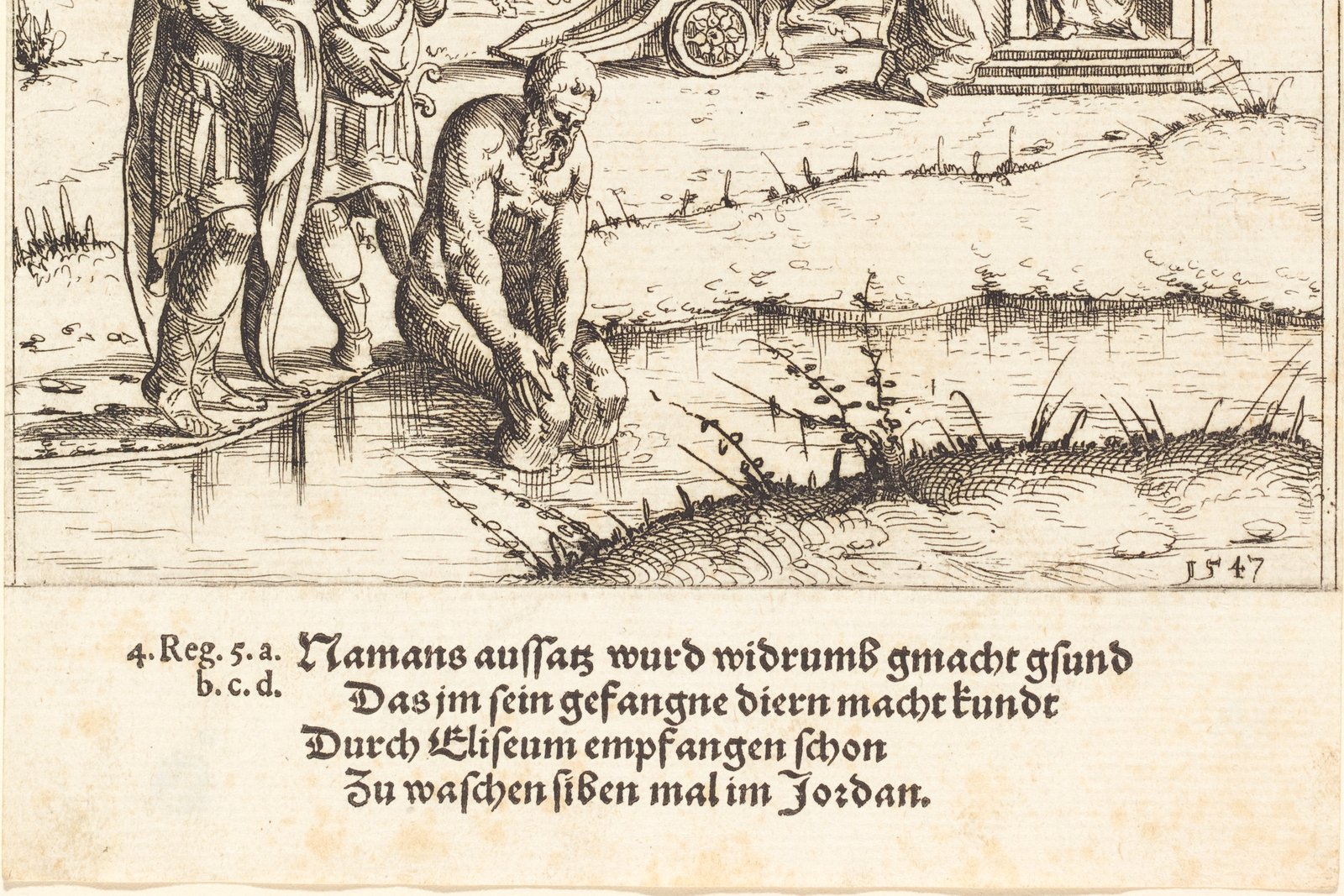
Elisha doesn't even come to the door. He sends a messenger with strange, unglamorous instructions: "Go and wash seven times in the Jordan, and your flesh will heal, and you will be clean" (NABRE, 2 Kings 5:10). Naaman is furious. "Are not the rivers of Damascus, the Abana and the Pharpar, better than all the waters of Israel? Could I not wash in them and be cleansed?" (NABRE, 2 Kings 5:12). It takes his own servants talking him down — "if the prophet told you to do something extraordinary, would you not do it?" (NABRE, 2 Kings 5:13) — before he finally submits to the simple, humbling instruction. He washes seven times and is healed, his skin restored "like the flesh of a little child" (NABRE, 2 Kings 5:14).
Naaman's response is the real point of the story: "Now I know that there is no God in all the earth, except in Israel" (NABRE, 2 Kings 5:15). A foreign general, an enemy commander, becomes a worshiper of the God of Israel — not through conquest, but through an act of obedience to something that looked beneath him. Centuries later, Jesus would cite this exact episode in his hometown synagogue in Nazareth, reminding his listeners that "Again, there were many lepers in Israel during the time of Elisha the prophet; yet not one of them was cleansed, but only Naaman the Syrian." (Luke 4:27) — a pointed reminder that God's mercy was never confined to the people who assumed they owned it, a comment that reportedly enraged the crowd enough to try to throw him off a cliff.
Elisha's story, taken as a whole, insists that the "double portion" he inherited was not spent on displays of power for their own sake. It went, again and again, toward widows, grieving mothers, and a foreign soldier nobody in Israel had any reason to help.
Trivia
Who was the prophet Elisha?
What does the 'double portion' of Elijah's spirit mean?
How did Elisha heal Naaman?
What was the miracle of the widow's oil?
Is Elisha mentioned in the New Testament?
You May Also Like

Related Reading