Saint Frideswide, the Princess Who Founded Oxford's First Church

A princess whose story survives mostly through legend
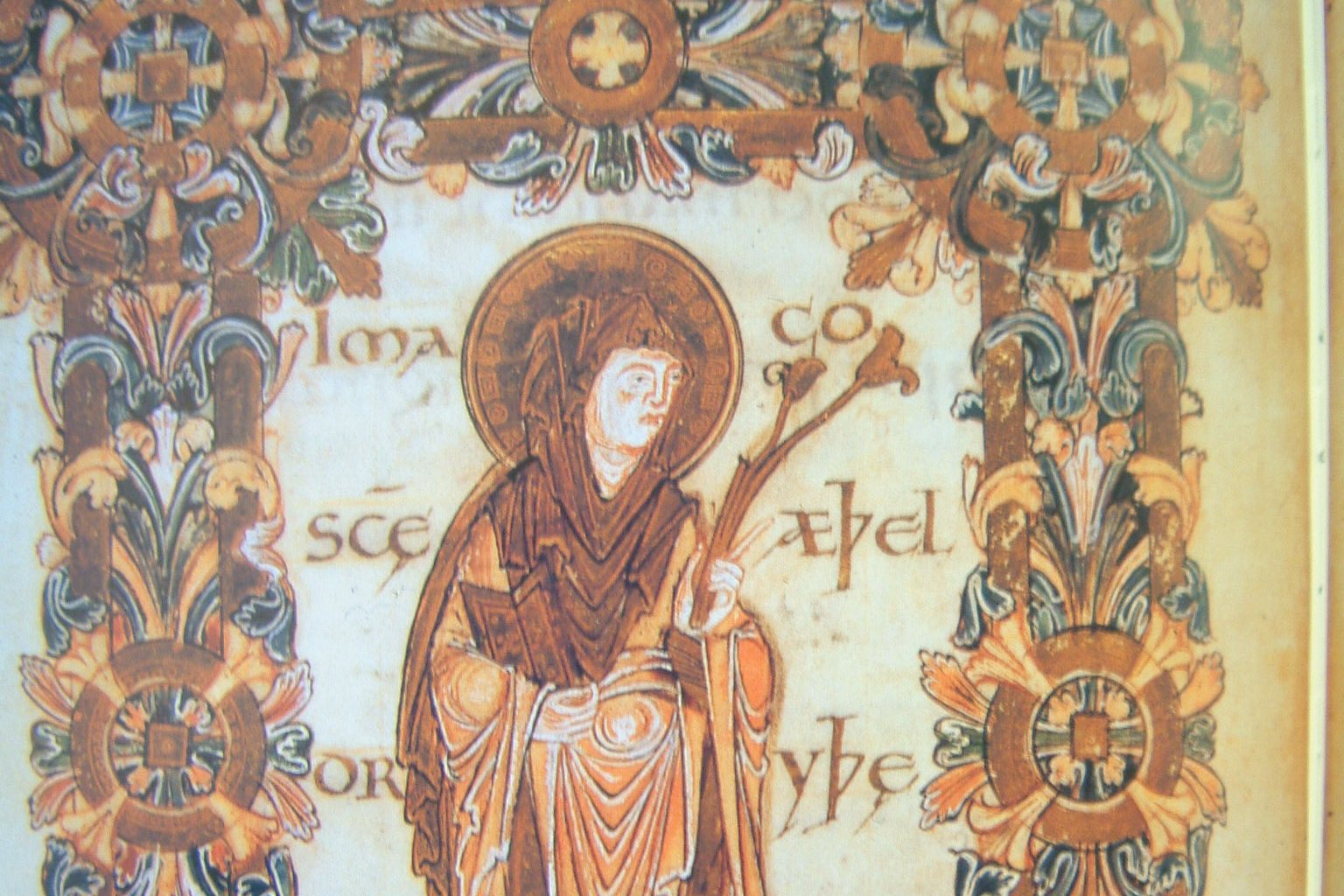
Frideswide is traditionally dated to around 650–727, said to be the daughter of Didan, a local Mercian sub-king or nobleman, and she is described in later tradition as having consecrated herself to religious life from a young age rather than accept the ordinary expectations placed on a woman of her rank. The fullest account of her life, and the source of nearly every specific narrative detail told about her today, comes from a Life written in the twelfth century — roughly four to five centuries after she is said to have lived — meaning modern readers should treat its more dramatic episodes as devotional legend built up around a genuine early founder rather than as reliable contemporary biography, much as with many early Anglo-Saxon women saints whose historical record is thin.
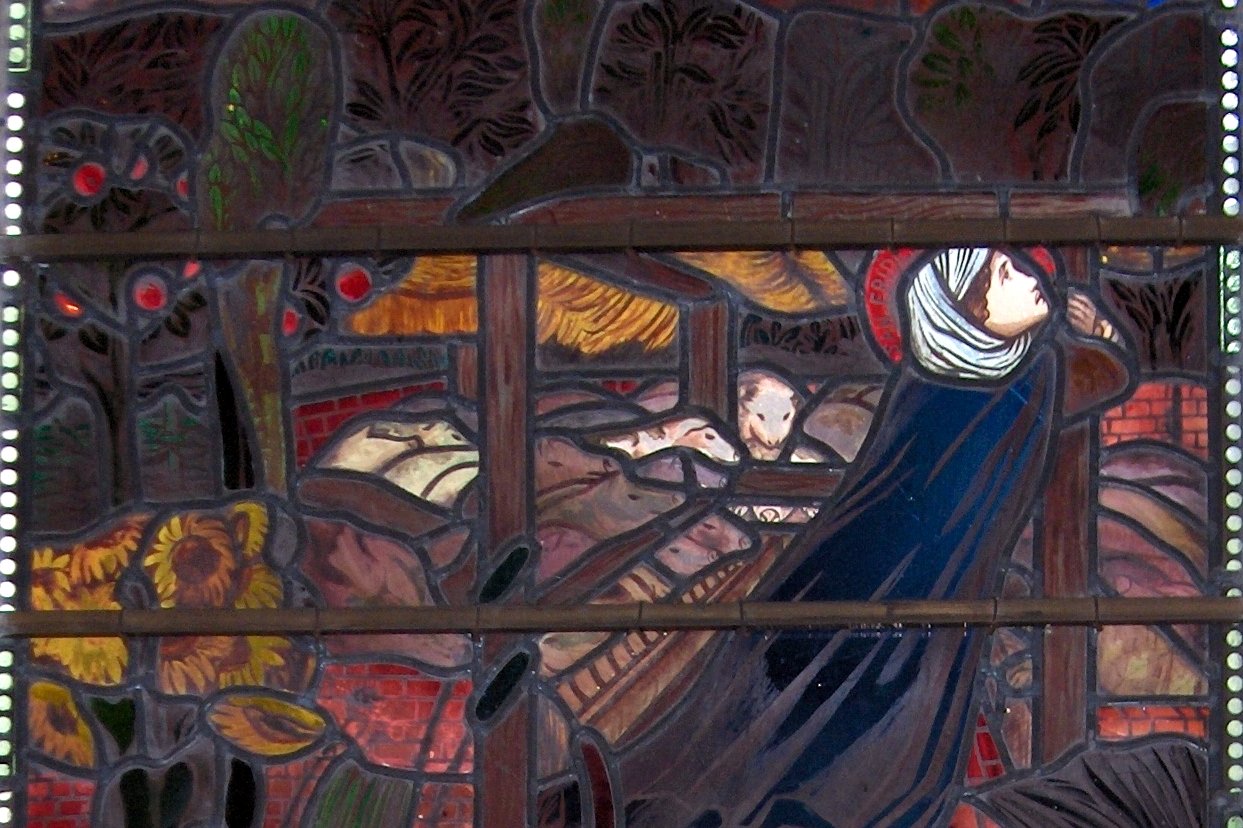
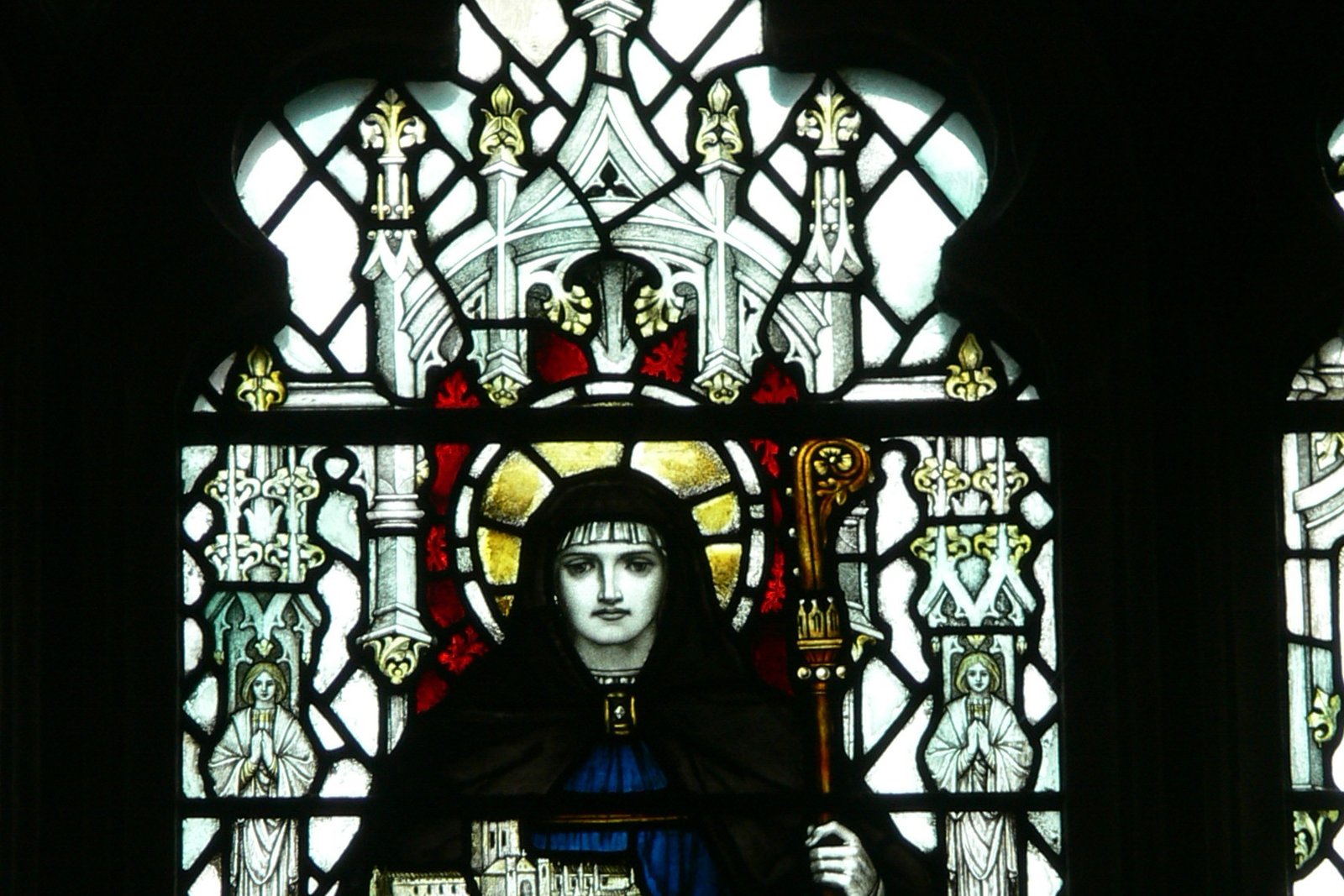
Sir Edward Burne-Jones, St Frideswide window, 1858, Christ Church Cathedral, Oxford — public domain.
The legend of the pursuing prince
The best-known story attached to Frideswide's name tells of a Mercian prince, usually called Algar, who sought her hand in marriage and, according to the legend, refused to accept her determination to remain unmarried and consecrated to religious life. Frideswide, the story goes, fled Oxford to escape the marriage, hiding in the countryside — later tradition places her refuge variously at Binsey, a village just outside Oxford, where a holy well associated with her still draws visitors today. Algar, pursuing her, was struck blind as he approached, a sign in the story of divine protection over her vow; later, moved by mercy, Frideswide prayed for his sight to be restored, and the legend has it that it was. It's a vivid, morally tidy story typical of medieval hagiography built around royal women who chose religious life over marriage, and it should be read exactly that way — as a legend illustrating the community's memory of her determination and holiness, not as a documented historical event.
What the historical and archaeological record actually supports
Stripped of the legendary detail, what can be said with more confidence is that a genuine early religious community existed at Oxford associated with Frideswide's name and memory, on the site now occupied by Christ Church Cathedral, and that she is consistently credited across the surviving tradition as its founder and first abbess. Archaeological and documentary evidence for Anglo-Saxon Oxford is admittedly limited compared to better-recorded centers of the period, but the priory associated with Frideswide's name is well attested from the tenth century onward, and its continuous presence on the same site through the medieval period into the modern cathedral is not seriously disputed by historians, whatever uncertainty remains around the precise founding details centuries earlier.
From a small priory to a university city
The religious community Frideswide is credited with founding grew over the following centuries into St Frideswide's Priory, an Augustinian house that became one of the central institutions of the growing town of Oxford, well before the university that would eventually make the city famous had taken shape around it. When Cardinal Wolsey suppressed the priory in the 1520s to found what became Christ Church college, the priory church itself was preserved and eventually became Christ Church Cathedral — meaning the site associated with Frideswide's original foundation has functioned as a place of continuous Christian worship for well over a thousand years, an unusually long, unbroken thread connecting a legendary Anglo-Saxon princess to a working Church of England cathedral still active today.
A shrine restored after the Reformation
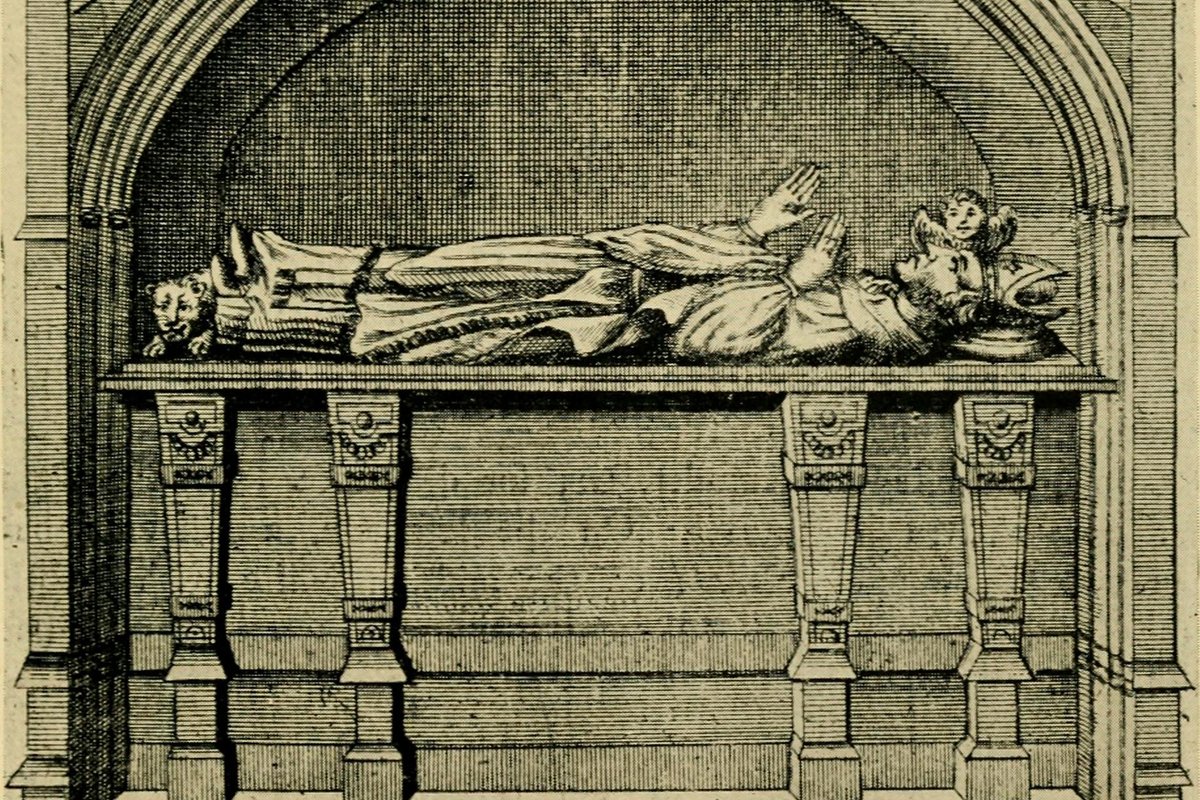
Like the shrines of most English saints, Frideswide's tomb at Oxford was destroyed during the Reformation-era campaign against relics and pilgrimage sites in the sixteenth century, its physical remains scattered or lost. In the twentieth and twenty-first centuries, surviving fragments of the medieval shrine base were painstakingly pieced back together and rededicated within Christ Church Cathedral, where it again functions today as a quiet focus of prayer, its modern restoration deliberately left visibly incomplete — a reminder of the destruction it survived rather than an attempt to erase that history. The cathedral's famous nineteenth-century stained glass window depicting scenes from Frideswide's legend, designed by the Pre-Raphaelite artist Edward Burne-Jones in 1858, remains one of Oxford's best-known works of Victorian religious art and a vivid visual record of exactly how the legend was being told and remembered eight centuries after her traditional lifetime. Her feast is kept on October 19, and she remains the patron saint of both the city of Oxford and Oxford University — a fitting legacy for a princess remembered, above all, for refusing to let others decide the shape of her own life.
Her continued patronage of the university is more than a ceremonial title, too: the university and city of Oxford still mark her feast day with services at Christ Church Cathedral each October, a tradition of local civic and academic observance that has quietly outlasted the Reformation, the dissolution of her original priory, and thirteen centuries of Oxford's own transformation from a small Anglo-Saxon river crossing into one of the world's most recognized centers of learning.
Trivia
Who was Saint Frideswide?
How reliable is the famous story about the prince who pursued her?
What did Frideswide actually found at Oxford?
Where are Frideswide's relics today?
When is Saint Frideswide's feast day?
You May Also Like

Related Reading