Saint Etheldreda of Ely: the Queen Who Chose the Convent Twice

A princess promised twice, married twice
Etheldreda — her Old English name, Æthelthryth, is more accurate but rarely used today outside academic writing — was born around 636, one of several daughters of King Anna of East Anglia who would go on to be venerated as saints in their own right. Like many women of her rank, she had little say in her first marriage, contracted for political reasons to Tondberct, a nobleman who ruled the South Gyrwas, a fenland people in what is now Cambridgeshire. According to the historian Bede, writing in the following century, the marriage was never consummated, and Tondberct died only a few years in, leaving Etheldreda a widow still committed to a vow of perpetual virginity she had made even before that marriage. As part of her widow's settlement, she received the Isle of Ely, land that would matter enormously to the rest of her story.
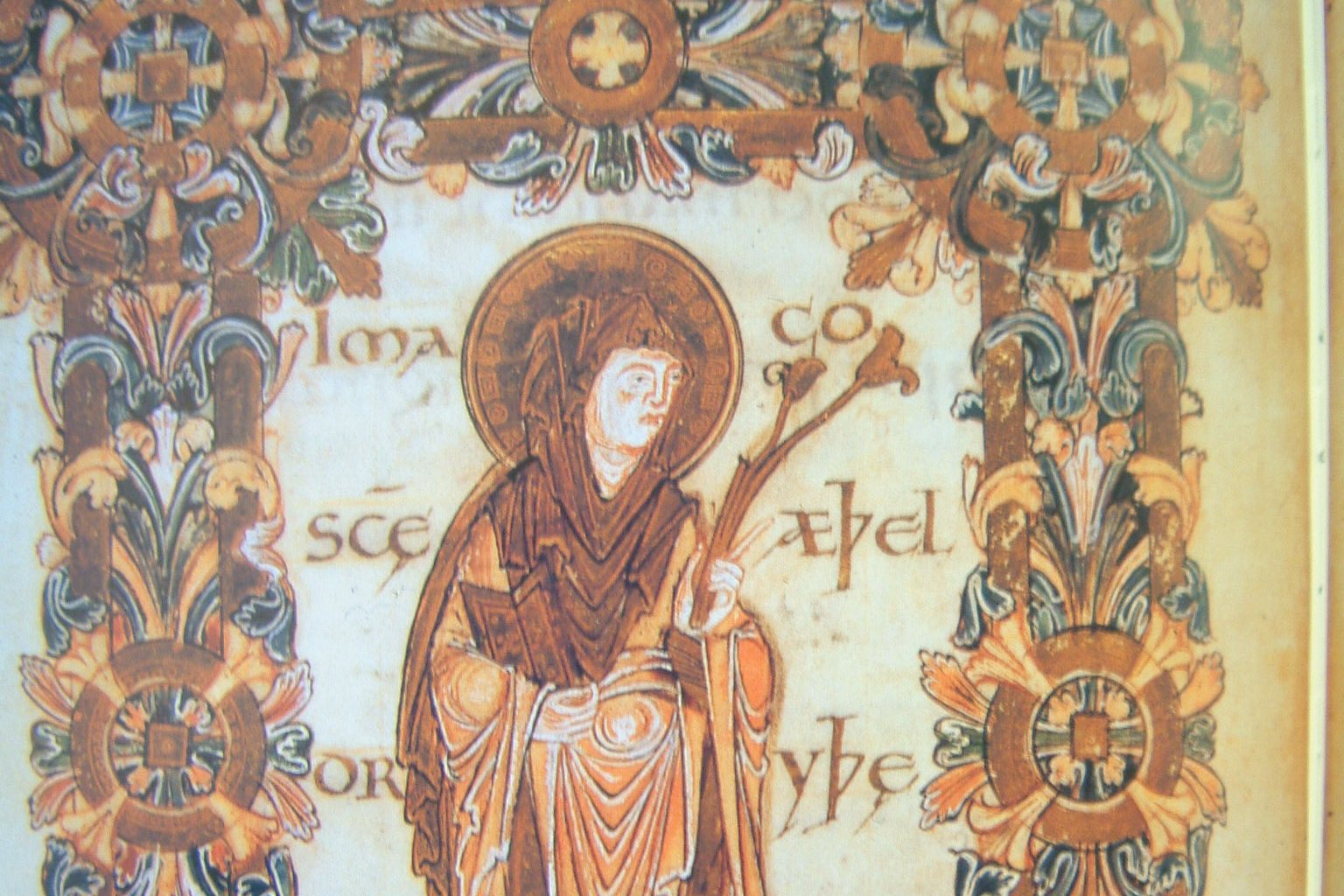
Anonymous English illuminator, portrait of Saint Æthelthryth (Etheldreda), 10th-century manuscript — public domain.
A twelve-year standoff with a king
Her second marriage was harder to navigate. Around 660, political necessity married her to Ecgfrith, heir to the powerful kingdom of Northumbria and still a boy at the time, roughly fifteen years younger than Etheldreda herself. Bede reports that she held Ecgfrith to a promise of continued chastity within the marriage for some twelve years — an arrangement Ecgfrith apparently accepted at first, whether out of genuine respect for her vow or simple youth, but grew less willing to tolerate as he matured into his own reign as king. He eventually tried to pressure Bishop Wilfrid of York, Etheldreda's spiritual advisor, into persuading her to relent, offering land and money in exchange for his help; Wilfrid refused and instead helped Etheldreda escape the court entirely. She fled first to Coldingham, to the monastery of her aunt Æbbe, before Ecgfrith pursued her there as well — at which point, according to the account, she and two companions withdrew further, eventually reaching the safety of her own lands at Ely.
Founding an abbey on an island of eels
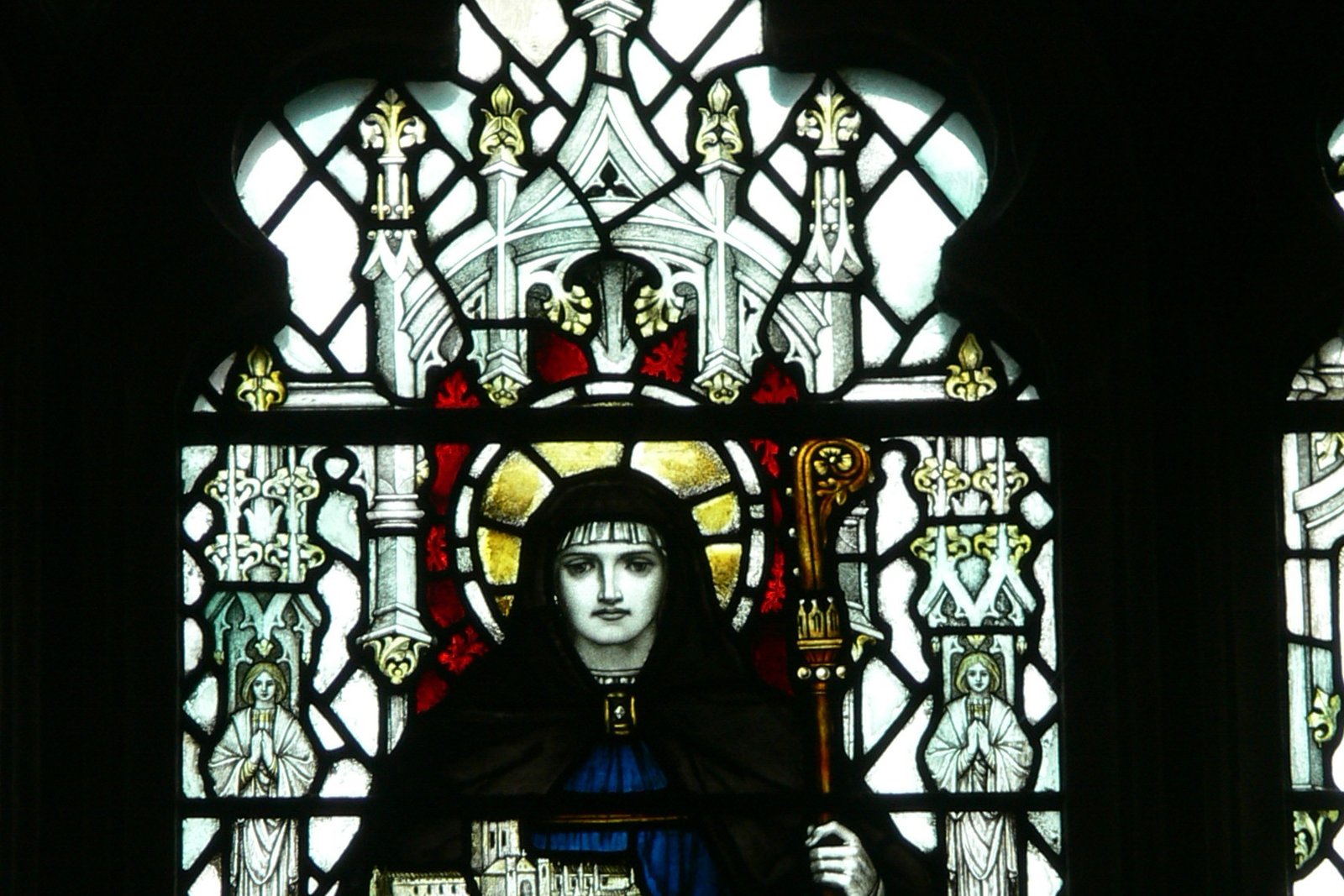
In 673, on the isle her first husband had left her, Etheldreda founded a double monastery — a community housing both monks and nuns under a single abbess's authority, a common arrangement in Anglo-Saxon England — and became its first abbess. Ely at the time was a genuinely remote, marshy island in the fens, reachable only with difficulty, its name traditionally connected to the eels that filled its waterways. That isolation suited a community meant for prayer and discipline rather than court politics, and under Etheldreda's leadership Ely quickly became one of the most respected religious houses in Anglo-Saxon England. Bede, who had access to testimony from people who had known her, describes her as living an austere life even as abbess — wearing wool rather than linen, eating sparingly, and rising for prayer through the night, discipline uncommon even among the religious of her own community.
A death she read as her own judgment
Etheldreda governed Ely for only about seven years before her death in 679, during an epidemic that struck the abbey. She died from a growth or tumor on her neck, which Bede records she interpreted, in her own words as reported to him, as a just penalty for having loved wearing elaborate necklaces as a young woman at court — the kind of specific, self-aware detail that gives Bede's account an unusual texture of authenticity rather than generic hagiography. She was buried initially in a plain wooden coffin among the rest of her community, as she had requested. Sixteen years later, her sister and successor as abbess, Seaxburh, had her grave opened so her remains could be moved into a more fitting stone sarcophagus inside the church — and Bede reports that her body was found undecayed, with even the neck wound that had killed her fully healed. That claim of incorruption is presented by Bede as established local testimony from witnesses, and later medieval tradition treated it as one of the most striking of English saints' stories, though modern readers should hold it as historical tradition rather than something independently verifiable today.
From Æthelthryth to Audrey, and the word "tawdry"
Ely Abbey grew into one of medieval England's great pilgrimage sites, and its church was eventually rebuilt into what is now Ely Cathedral, still standing over the fens she once fled into. Her name softened over centuries of everyday speech from Æthelthryth into "Audrey," and an annual fair held at Ely on her feast day became famous for selling cheap, showy lace necklaces sold as "St. Audrey's lace" — merchandise whose declining quality over the centuries eventually gave English the word "tawdry," a linguistic footnote that carries a genuinely fitting irony given how she reportedly understood her own final illness. Her feast is kept on June 23, with a second feast on October 17 marking the later translation of her relics, and she remains one of the most enduringly popular Anglo-Saxon saints in England, venerated as a model of a woman who held firmly to a vow the powerful men around her repeatedly tried to overturn.
Trivia
Who was Saint Etheldreda?
How did Etheldreda stay unmarried in practice while married twice?
Why is Etheldreda associated with the word tawdry?
What happened to Etheldreda's body after her death?
When is Saint Etheldreda's feast day, and what is she a patron of?
You May Also Like
Related Reading