Saint Oswald of Northumbria

Exile among the monks of Iona
Oswald was born around 604, a son of Æthelfrith, king of Northumbria — a kingdom formed from the union of two smaller Anglo-Saxon territories, Bernicia and Deira, in what's now northern England and southeastern Scotland. When Oswald was still a boy, Æthelfrith was killed in battle by Edwin, a rival claimant who then took the Northumbrian throne for himself. Oswald and a number of his siblings fled into exile rather than risk execution as potential rivals — a standard, brutal calculation in Anglo-Saxon dynastic politics of the period, where a defeated king's surviving sons were a live threat to whoever held the throne next.
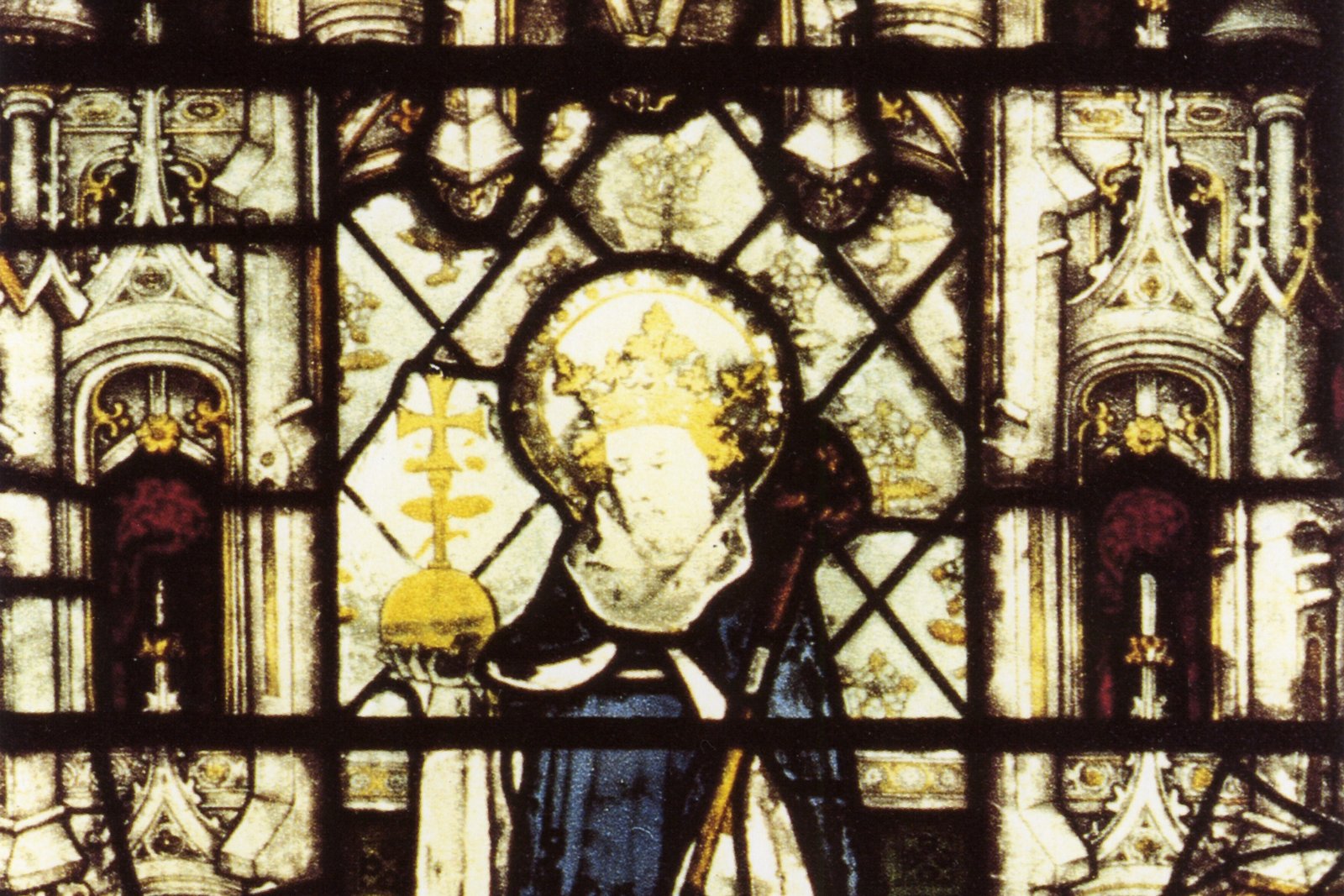
Oswald, King of Northumbria, stained glass window, All Souls College Chapel, Oxford — public domain.
The exile took Oswald to Dál Riata and, specifically, to the monastic community on the island of Iona, founded decades earlier by the Irish monk Columba off Scotland's western coast. It's here that the shape of Oswald's later reign was set, long before he had any throne to rule. Iona operated within the Celtic Christian tradition, distinct in various customs and practices (though not in core doctrine) from the Roman Christianity more familiar in southern England, and the young exiled prince was raised within that tradition, learning to read, to pray, and — significantly for what came later — to speak Irish fluently alongside his native Old English.
Reclaiming a fractured kingdom
Edwin's own reign ended in 633, when he was killed in battle against an alliance of the British king Cadwallon of Gwynedd and the pagan Mercian king Penda — a defeat that plunged Northumbria into a brief, chaotic period sometimes described in the sources as something close to a return to paganism and internal fragmentation, as Cadwallon's forces occupied and ravaged the kingdom. It was into this unstable situation that Oswald returned from exile in 634, gathering what allies and forces he could to challenge Cadwallon directly.
The decisive engagement, remembered as the Battle of Heavenfield, took place near Hadrian's Wall. Bede — the Anglo-Saxon monk and historian whose Ecclesiastical History of the English People, completed around 731, remains the single most important surviving source for Oswald's life — records that on the night before the battle, Oswald had a wooden cross raised, and personally helped hold it steady in the ground while his soldiers fixed it in place, then led his small force in prayer, asking that God grant them victory given the righteousness of their cause. Whatever the precise historical accuracy of the details Bede records (writing roughly a century after the events, drawing on both earlier written sources and oral tradition), the battle itself was a real and decisive Northumbrian victory — Cadwallon was killed, and Oswald took the Northumbrian throne reunified under his own rule for the first time since his father's death.
Restoring the Church with Irish help
Once established as king, Oswald moved quickly to restore Christianity across Northumbria, and the way he did it directly reflected his own formation in exile. Rather than seeking missionaries from the Roman-aligned Christian establishment in southern England, Oswald sent to Iona specifically, requesting a bishop to lead the mission. The community sent Aidan, an Irish monk who would go on to found the monastery at Lindisfarne — later one of the most important religious and cultural centers in early medieval Britain — as his episcopal seat.
What makes this partnership between king and bishop unusually well documented, even by the standards of a period generally thin on personal detail, is a specific claim Bede records: that in Aidan's early years in Northumbria, before he'd fully mastered Old English, Oswald himself sometimes acted as interpreter, translating Aidan's preaching for his own assembled nobles and people. It's a striking image — a reigning king serving, in effect, as translator for his own missionary bishop — and it captures something distinctive about Oswald's reign: Christianity in Northumbria under Oswald wasn't simply royally sponsored from a comfortable distance, it was something the king was personally, directly, and visibly invested in propagating among his own people.
Death, dismemberment, and a martyr's cultus
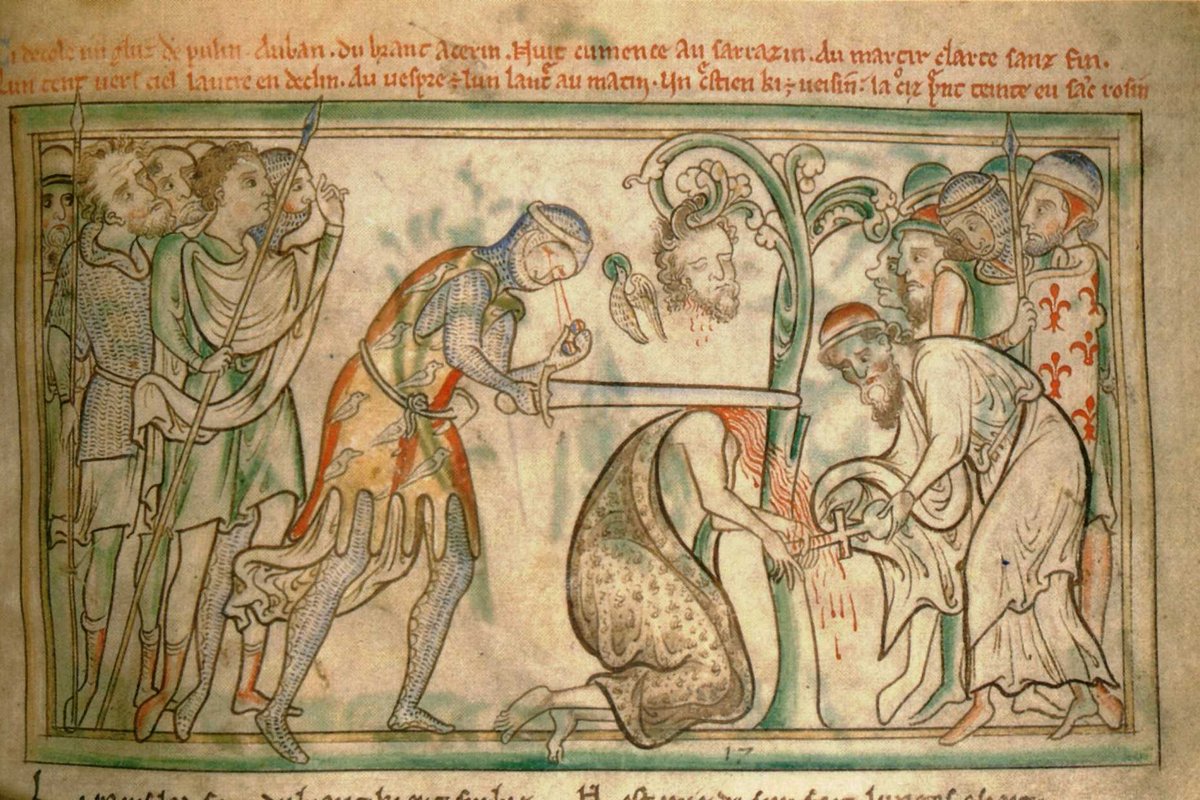
Oswald's reign, like his father's before him, ended in battle. In 642, he was killed at Maserfield (the precise location has never been conclusively identified by modern historians, though several sites in the English Midlands have been proposed) fighting Penda of Mercia, the same pagan king whose earlier alliance with Cadwallon had helped destabilize Northumbria years before. Bede records that Oswald's body was dismembered on the battlefield after his death — his head and arms severed and displayed, a treatment consistent with pagan practices of the period intended to deny an enemy king honorable burial or, in some interpretations, intended to neutralize any perceived spiritual power attached to his remains.
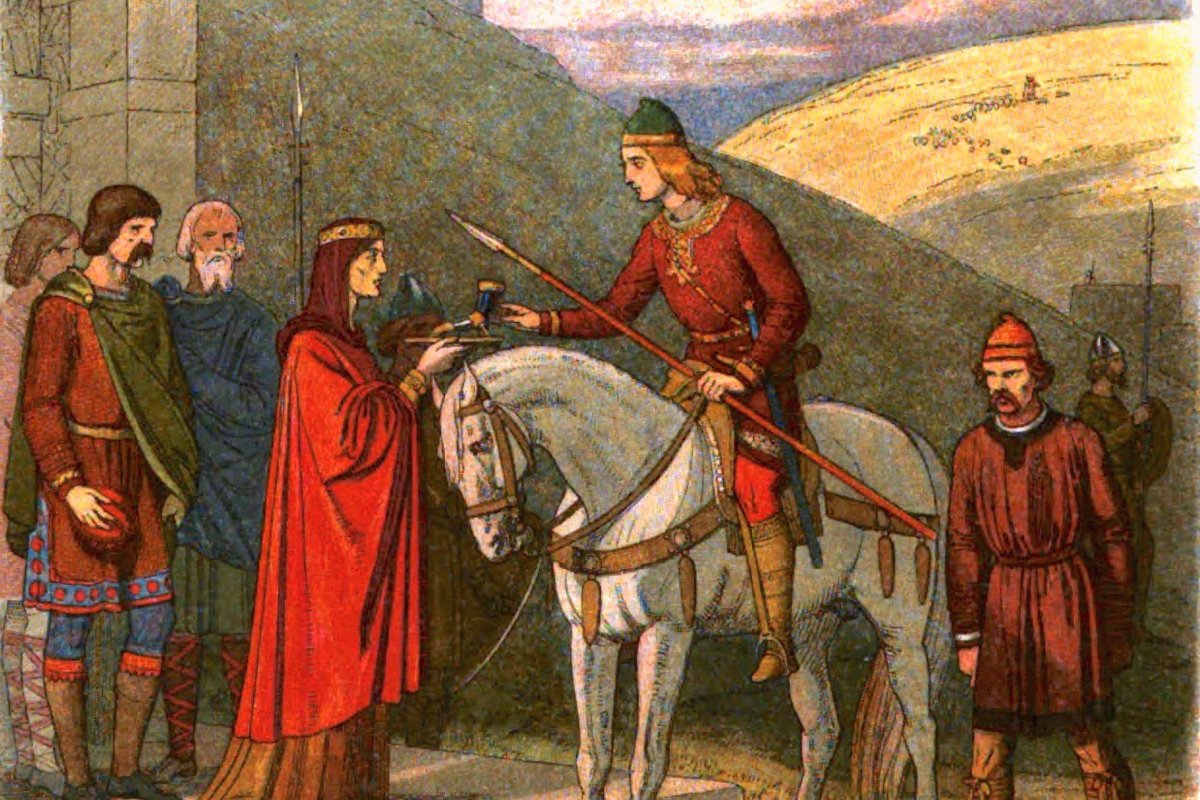
That violent end, combined with his reputation for personal piety and generosity toward the poor (Bede records a specific story of Oswald ordering a silver dish of food broken up and distributed to beggars at his own table), was enough for his own era to venerate him as a martyr — not in the strict later theological sense of dying explicitly for refusing to renounce the faith, but in the broader early medieval pattern that recognized a genuinely Christian king killed by a pagan enemy as a martyr for the faith he'd worked to establish. His remains were subsequently divided among several sites of major religious significance, including Bardney Abbey in Lincolnshire and, eventually, Durham, where tradition holds his head was buried alongside the body of Saint Cuthbert — a detail still commemorated in Durham Cathedral's medieval iconography today.
Not to be confused with Oswald of Worcester
It's worth being explicit about a genuine, easy point of confusion: this Oswald — the 7th-century warrior-king of Northumbria — is a completely different person from Saint Oswald of Worcester, the 10th-century bishop and monastic reformer who worked alongside Dunstan of Canterbury and Æthelwold of Winchester to rebuild English monastic life more than three hundred years later. They share a name, a country, and sainthood, but nothing else — different centuries, different vocations (warrior-king versus career bishop), and entirely different deaths (violent battlefield death versus a peaceful collapse while washing the feet of the poor during Lenten devotion). English hagiography has more than one Oswald, and given how often the name recurs across Anglo-Saxon royal and ecclesiastical history, it's a distinction genuinely worth keeping straight rather than assuming there's only one.
Oswald of Northumbria's feast is kept on August 5, and his cultus, like Oswald of Worcester's, followed the informal, ancient pattern of recognition typical of saints from this period rather than a later formal canonization process — one of the earliest and most widely venerated royal martyr-cults in Anglo-Saxon England, still commemorated at Heavenfield today with a modern wooden cross marking the traditional site of his prayer before battle.
Trivia
Who was Saint Oswald of Northumbria?
Is this the same Saint Oswald as Saint Oswald of Worcester?
How did Oswald become a Christian king?
What is the story of Oswald's cross at the Battle of Heavenfield?
How did Saint Oswald die, and what happened to his remains?
You May Also Like
Related Reading