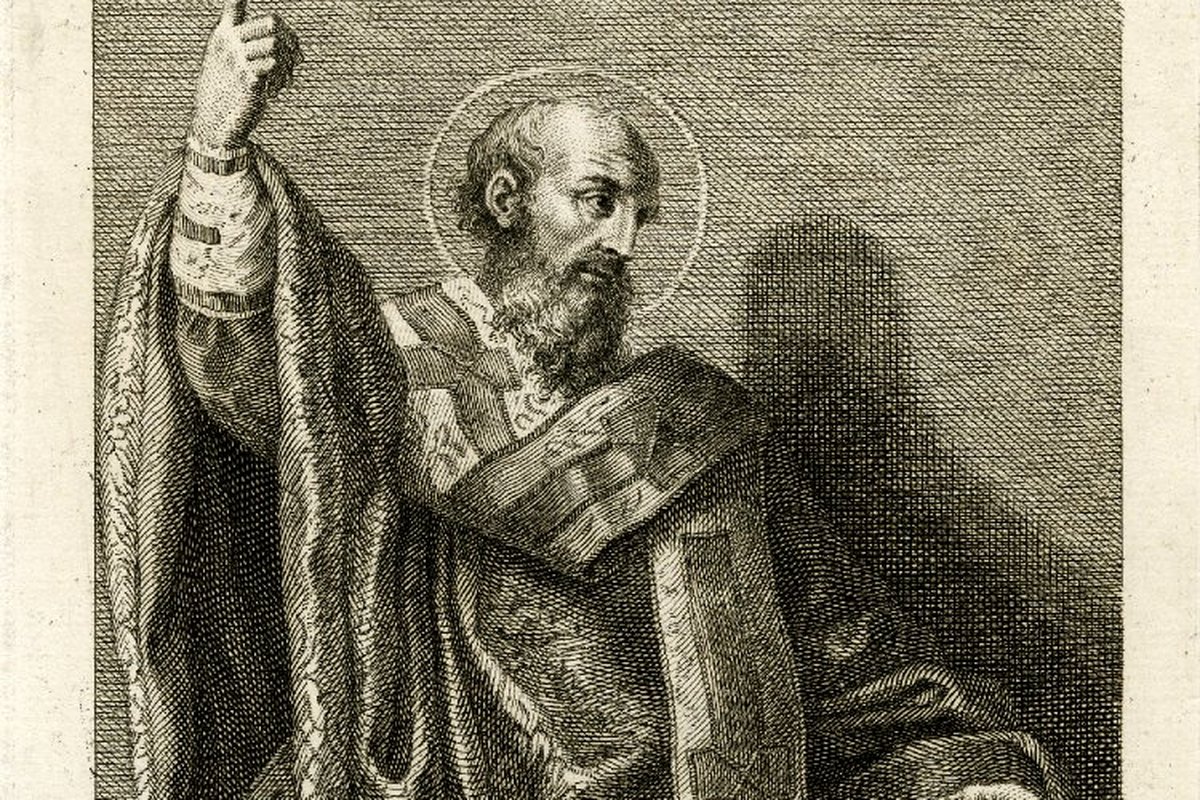
Saint Leander of Seville

A family that shaped the Spanish Church
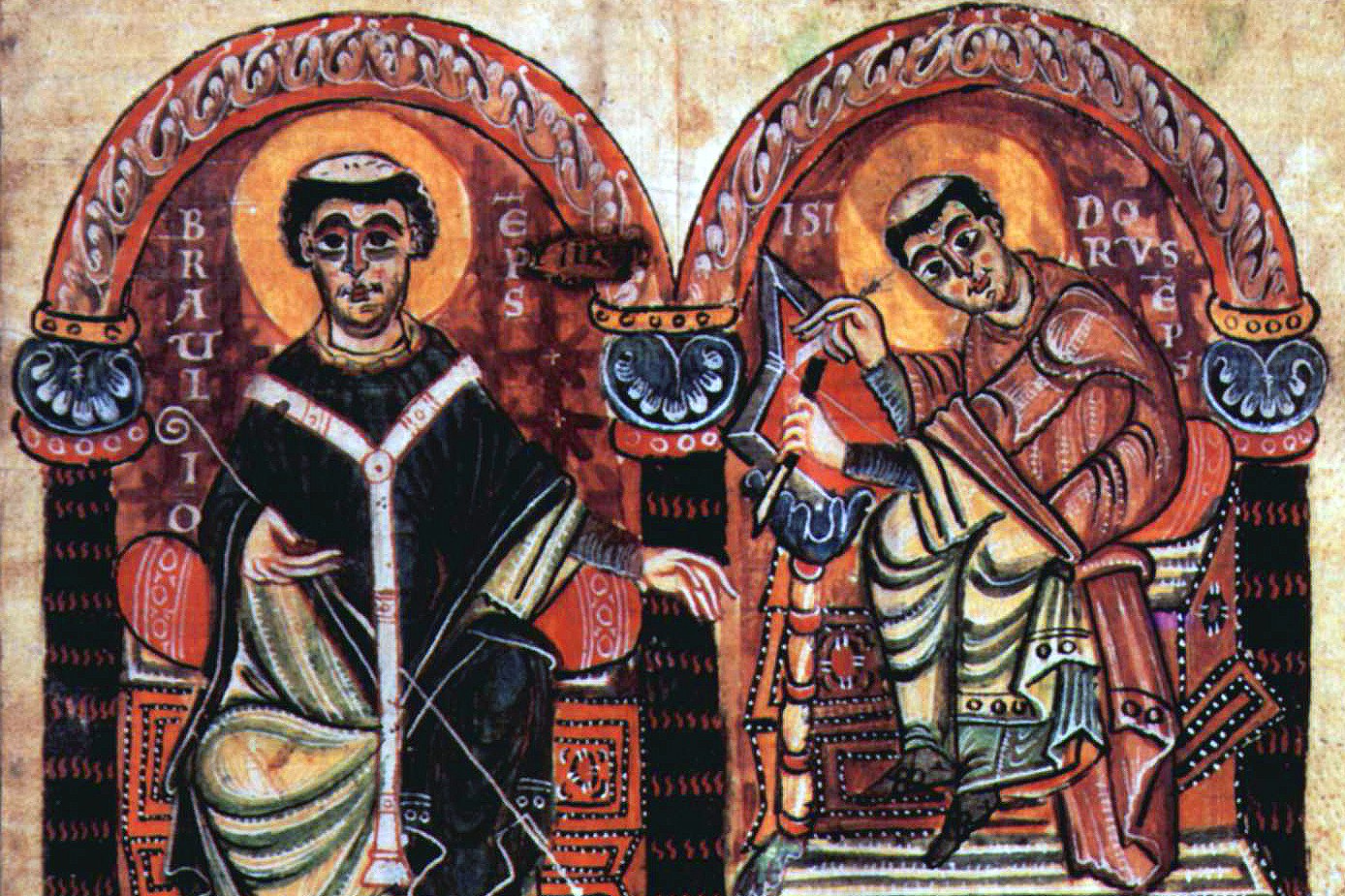
Leander was born around 534 in Cartagena, in southeastern Spain, into a family that would produce an extraordinary run of influential churchmen: his younger brother Isidore became bishop of Seville after him and one of the most important scholars of the early medieval Latin West, while two more siblings, Fulgentius and Florentina, were also later venerated as saints. Leander himself entered monastic life before becoming bishop of Seville around 579, stepping into leadership of one of the most important sees in Visigothic Spain at a genuinely difficult religious moment for the kingdom.
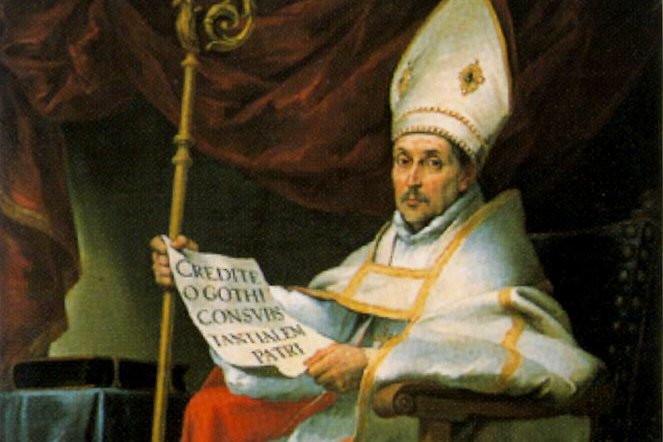
Bartolomé Esteban Murillo, Saint Leander of Seville, 1655, oil on canvas — public domain.
Spain at the time was ruled by Visigoths who had settled the peninsula generations earlier, bringing with them an Arian form of Christianity — a teaching, condemned as heresy at the Council of Nicaea in 325, that held Christ was a created being rather than co-eternal and equal with God the Father. The ruling Visigothic class remained largely Arian even as the majority Hispano-Roman population under their rule remained Catholic, creating a durable religious and political divide that shaped Spanish court life throughout the sixth century. Leander, as bishop of one of the kingdom's leading cities, was positioned at the center of that divide from the moment he took office.
A prince converted, and a prince executed
Leander's most consequential personal relationship during this period was with Hermenegild, son of the Arian Visigothic king Leovigild. Hermenegild converted to Catholicism, reportedly under Leander's direct religious influence, and the conversion had real political consequences: Hermenegild later rebelled against his father, a revolt that combined religious conviction with the messier realities of Visigothic royal politics, in which succession disputes between a king and his sons were not uncommon. The rebellion failed, and Hermenegild was captured and imprisoned by his own father.
According to the account given by Pope Gregory the Great — who knew Leander personally and drew on his testimony — Hermenegild was killed in 585 after refusing to receive communion from an Arian bishop sent to him in prison, choosing death over compromising the Catholic faith he had adopted. The Church came to regard this as a genuine martyrdom, and Hermenegild was later venerated as a saint himself, a rare case of a medieval royal rebellion producing a recognized martyr on the losing side. It's worth noting, in the way any serious account of this period should, that the political and religious dimensions of Hermenegild's revolt are difficult to separate cleanly with the sources available — but the core fact of his death for refusing to abandon Catholic communion is well attested independently of the more complicated political backstory.
Constantinople, Gregory the Great, and exile
At some point before or during these events, Leander traveled to Constantinople on a diplomatic mission connected to Visigothic-Byzantine relations, and it was there that he formed a lasting friendship with Gregory the Great, then serving as papal representative to the Byzantine court before his own election as pope. The two men remained in close contact for the rest of their lives; Gregory later dedicated his major work, the Moralia in Job, to Leander at his request, and their correspondence is one of the more valuable surviving windows into the religious politics of the period. Leander is also reported to have spent time in exile from Spain during the years of tension with Leovigild, though the sources for the precise circumstances are thinner than for the more prominent events of Hermenegild's story.
The council that ended Visigothic Arianism
Leovigild died in 586, and his surviving son, Reccared, succeeded him — and, unlike his brother Hermenegild, did so without provoking civil war, instead working within the existing structure of Visigothic rule to bring about the same religious change Hermenegild had died pursuing. Reccared converted to Catholicism himself and, in 589, presided over the Third Council of Toledo, one of the genuinely pivotal events in Spanish religious history: the Visigothic kingdom formally and publicly renounced Arianism, with the Arian bishops present converting alongside their king, ending generations of religious division between the ruling class and the Catholic majority.
Leander addressed the council directly, and historians treat his decades of work — through his relationship with Hermenegild, his influence at court, and his sustained theological engagement with the Arian question — as one of the central reasons the council succeeded as smoothly as it did. He died around 600, having lived to see the goal he had pursued through personal tragedy, exile, and years of patient work finally achieved at a national level. His brother Isidore, who succeeded him as bishop of Seville, went on to even wider fame as a scholar, and the family's combined legacy in shaping the early medieval Spanish Church remains one of the more remarkable runs of related saints in Church history. His feast is kept on February 27.
Trivia
Who was Saint Leander of Seville?
What is Arianism, and why did it matter in Visigothic Spain?
What happened to Leander's convert, Prince Hermenegild?
How did Visigothic Spain officially become Catholic?
When is Saint Leander's feast day?
You May Also Like
Related Reading