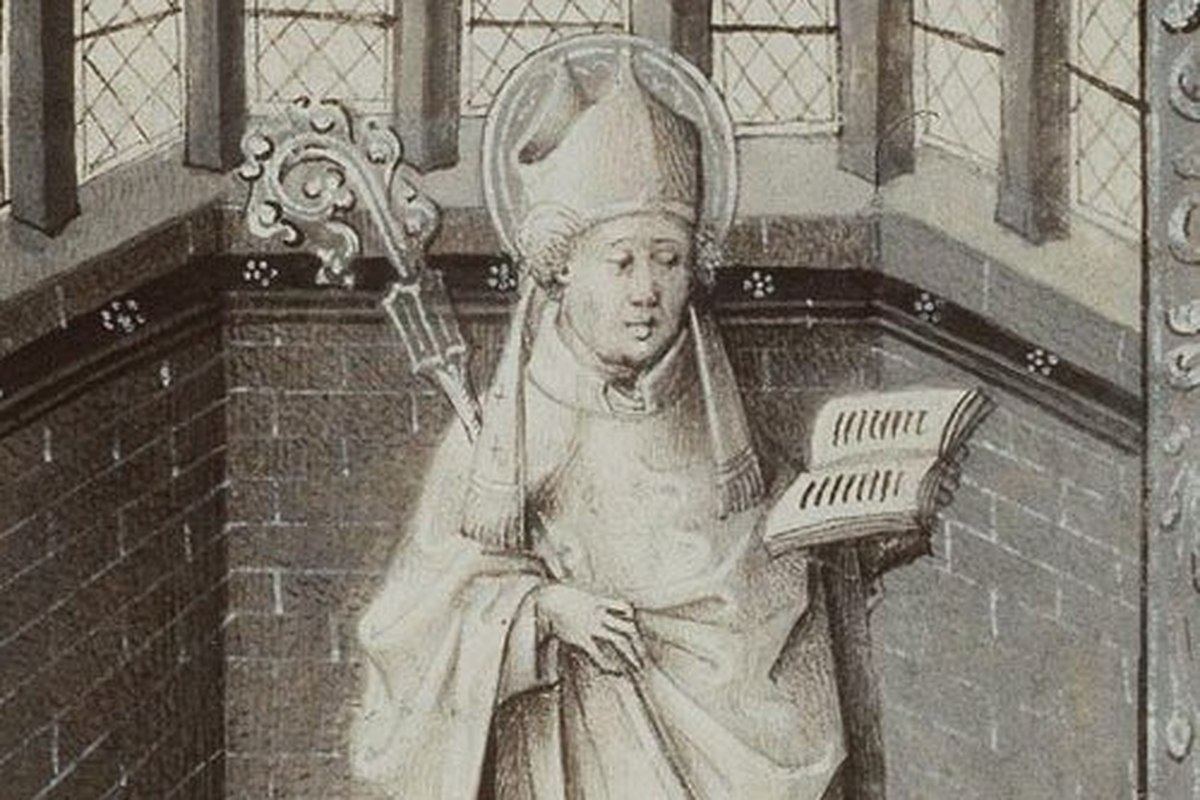
Saint Eusebius of Vercelli, Bishop

A bishop for a new see
Eusebius was born around the year 283, most likely on the island of Sardinia, into a Christian family; later tradition holds that his father died a martyr, though details of this early period of his life are thin and rely heavily on accounts written after his death. He is recorded as a member of the Roman clergy under Pope Julius I before being chosen, around the year 345, as the first bishop of Vercelli, a town in the Piedmont region of what is now northern Italy. His election marked the formal establishment of Vercelli as an episcopal see, and Eusebius set about organizing it during a period when the Western Church was still working out many basic structures of local governance and clerical life.
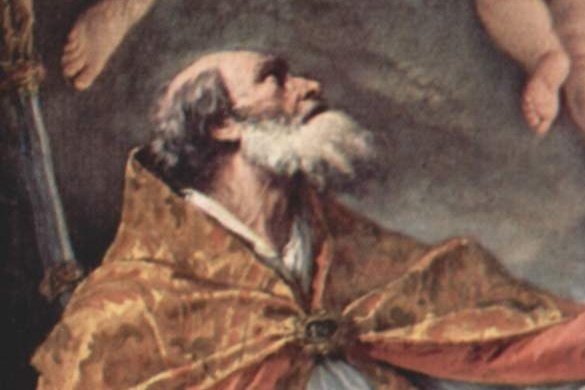
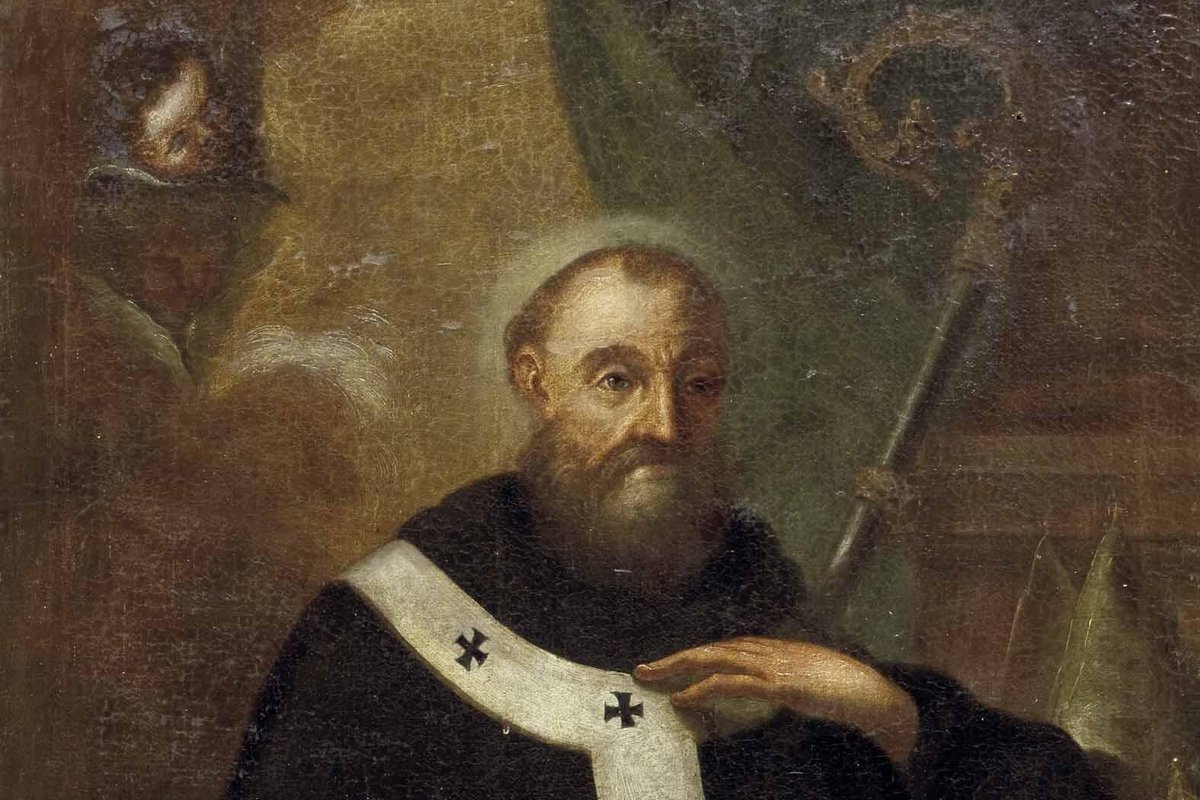
Sebastiano Ricci, detail from Virgin Mary in Glory with Saints Eusebius, Sebastian, and Roch, 1724-25 — public domain
What set Eusebius apart almost immediately was his approach to his own clergy. Rather than allowing the priests attached to his cathedral to live independently in their own households, as was common practice, Eusebius gathered them into a shared communal life — common prayer, common meals, and a simplicity of living modeled loosely on the monastic communities that were, at the same period, beginning to spread from the Egyptian desert into the wider Christian world. Historical sources describe this as among the earliest known instances of a Western bishop organizing his diocesan clergy in this way, a model that would echo for centuries afterward in later movements toward common clerical life and the eventual development of canons regular.
A theological fight with an emperor behind it
Eusebius's episcopate coincided with the height of the Arian controversy, the most consequential doctrinal dispute of the fourth-century Church. The Council of Nicaea had condemned the teaching of the priest Arius in 325, affirming that the Son is "consubstantial" — of the same substance, homoousios in the original Greek — with the Father, rather than a created being subordinate to him. But Nicaea's ruling did not settle the matter politically or ecclesiastically. Arian and semi-Arian positions retained substantial support for decades afterward, including, crucially, the backing of Emperor Constantius II, who favored a more moderate anti-Nicene formula and was willing to use imperial power to enforce it across the bishops of the empire.
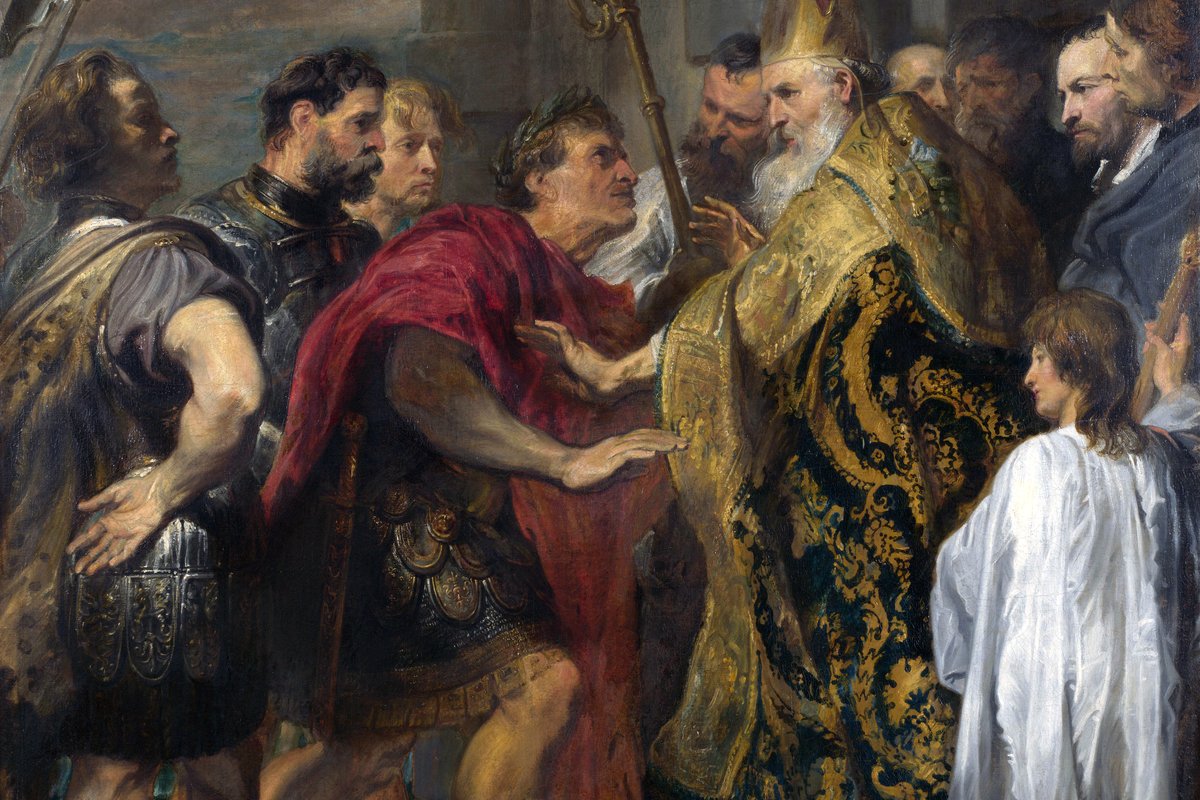
That pressure came to a head at a council convened in Milan in 355. The emperor's central demand was that the assembled bishops sign a condemnation of Athanasius of Alexandria, the Nicene faith's most determined and prolific defender, who had already been exiled multiple times for his refusal to compromise on Christ's full divinity. Under considerable pressure, the great majority of bishops present signed. Eusebius, along with a small handful of others including Lucifer of Cagliari and Dionysius of Milan, refused. Later accounts describe Eusebius responding to the emperor's demand by producing a copy of the Nicene Creed and insisting that the council first examine and affirm that document before it moved on to condemning anyone — a challenge that, whether or not every detail of the scene survived accurately in later retellings, captures accurately the substance of his position: no compromise on Nicene orthodoxy, regardless of imperial pressure.
Exile, hardship, and return
The consequence was swift. Constantius had Eusebius exiled, first to Scythopolis in Palestine, where he was placed under the authority of an Arian bishop and, according to surviving letters attributed to Eusebius himself, subjected to considerable mistreatment and confinement. He was later moved further still, to Cappadocia in Asia Minor and then to the Thebaid region of Upper Egypt, spending roughly six years displaced from his own diocese for refusing to sign a document he believed compromised the Church's core teaching about Christ.
Eusebius's exile ended only with a shift in imperial policy after Constantius's death in 361. The new emperor, Julian — who, notably, would soon reveal his own hostility to Christianity generally as "Julian the Apostate" — permitted exiled Nicene bishops, Eusebius among them, to return to their sees. Eusebius made his way back to Vercelli by way of Alexandria, where he met personally with Athanasius, the very bishop he had refused to condemn six years earlier, and the two collaborated on efforts to help reconcile clergy who had wavered or compromised under Arian pressure back into full communion with Nicene orthodoxy.
A quiet final chapter and a lasting model
Eusebius spent his remaining years back in Vercelli, continuing to strengthen his diocese and its communal clergy, and working alongside other Nicene bishops, including Hilary of Poitiers, to consolidate the recovery of orthodox teaching across northern Italy and Gaul after decades of Arian ascendancy. He died around the year 371, having lived to see the Nicene position begin its slow return to dominance in the Western Church, a process that would culminate formally at the Council of Constantinople in 381.
Tradition also credits Eusebius, on less certain historical footing, with producing an early Latin manuscript of the Gospels, a copy of which — known as the Codex Vercellensis — is still preserved in Vercelli and remains one of the oldest surviving Latin Gospel manuscripts, giving the city a further claim to a place in the early history of biblical transmission in the West. Readers interested in other bishops who resisted Arianism during the same turbulent century may also want to read about Saint Basil the Great, whose defense of Nicene orthodoxy in the Greek East paralleled Eusebius's stand in the Latin West, and about Saint George and other early martyr-bishops whose witness helped shape how the fourth-century Church remembered courage under imperial pressure.
Eusebius's feast, August 2, honors a bishop whose most visible act of holiness was, in the end, a refusal — a willingness to lose his diocese, his comfort, and years of his life rather than sign a single document he believed untrue.
Trivia
Who was Saint Eusebius of Vercelli?
What is Arianism, and why did Eusebius oppose it so strongly?
Why was Eusebius exiled, and where was he sent?
What was unusual about how Eusebius organized his clergy?
What is Saint Eusebius of Vercelli's feast day?
You May Also Like
Related Reading