Saint Ludger of Münster

Born into a mission field still in progress
Ludger was born around 742 near Utrecht, into a Frisian noble family that had already converted to Christianity — itself a sign of how far the missionary work begun by earlier figures had progressed by the time of his birth, even though large parts of Frisia and neighboring Saxony remained stubbornly pagan. He was educated first under Saint Gregory of Utrecht, a monk who had himself been a close disciple of Saint Boniface, the English missionary bishop martyred in Frisia only a few years before Ludger's birth. That connection placed Ludger within a direct missionary lineage — trained by a student of Boniface, in a region where Boniface's own violent death was still recent memory.
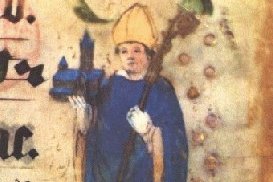
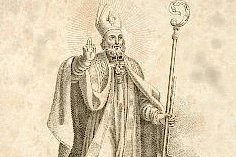
Anonymous, traditional portrait of Saint Ludger, first bishop of Münster — public domain.
Seeking further education, Ludger traveled to England and studied at York under Alcuin, one of the most celebrated scholars of the entire Carolingian period and later a key advisor to Charlemagne on matters of education and church reform. The journey wasn't without incident: tradition records that his return voyage involved a shipwreck, one of several hazards — political as well as maritime — that punctuated Ludger's career as he moved between mission fields, courts, and centers of learning across northwestern Europe.
Missionary work and forced exile
Back on the Continent, Ludger threw himself into missionary work across Frisia, preaching, destroying pagan shrines, and — in a detail that has stuck in the historical record — reportedly purchasing the freedom of a blind Frisian singer named Bernlef, who had earlier been a source of local folk memory and song, and keeping him as a companion during his travels. It's a small but telling detail about the kind of missionary Ludger seems to have been: attentive to local culture even while working to displace its older religious content.
His work in Frisia was interrupted for several years by political upheaval. When the Saxon leader Widukind led a major uprising against Frankish rule in the early 780s, the resulting instability and Saxon resistance to Frankish-backed Christianity made it unsafe for Ludger to continue his mission, and he withdrew — traveling to Rome and then spending a period at the monastery of Monte Cassino, living under the Benedictine Rule, before conditions in Frisia stabilized enough for him to return around 787.
Founding Münster and becoming its first bishop
Once conditions allowed, Charlemagne entrusted Ludger with missionary responsibility over a broader territory, including parts of Frisia and neighboring Saxon lands recently brought under Frankish control following the long and often brutal Saxon Wars. Around 793, Ludger founded a monastery at a site that would take the name Mimigernaford, later known simply by the Latin-derived term for the monastery itself: Monasterium — which became, in German, Münster.
The monastery grew into the seat of a new diocese, and around 805 Ludger was consecrated its first bishop, a position he held until his death. Unusually for a bishop of his era, he is remembered as having continued living a notably ascetic, monastic style of life even after his elevation, resisting some of the more elaborate trappings that often came with episcopal office in the Carolingian church.
Mission work under the shadow of conquest
It is worth pausing on the political backdrop against which Ludger's later missionary career unfolded, because it was considerably harsher than the picture of a lone preacher moving peacefully among willing converts might suggest. The Saxon Wars, fought intermittently by Charlemagne against the pagan Saxon tribes from 772 to 804, were among the longest and most brutal campaigns of his reign, and Frankish policy in the conquered Saxon territories explicitly tied conversion to political submission — refusal of baptism was, under Charlemagne's harsh 782 capitulary for Saxony, treated as a capital offense. Ludger's mission territory bordered directly on these contested Saxon lands, and his work benefited, whether he was entirely comfortable with it or not, from Frankish military power clearing the way for missionary access that earlier generations of preachers, including Boniface himself, had lacked. Historians generally credit Ludger with a more patient, locally attentive missionary style than the campaign's coercive edges might suggest — the Bernlef episode is often cited as evidence of that approach — but the broader context of forced conversion under threat of Frankish arms shaped everything about how Christianity took root in Saxony during this period.
Werden Abbey and the diocese of Münster
Beyond his cathedral foundation at Münster, Ludger founded a second, arguably even more personally significant monastery at Werden on the Ruhr, where he was eventually buried and where his relics remained an object of local veneration for centuries. Werden Abbey developed into an important center of learning and manuscript production in its own right during the Carolingian and Ottonian periods, and the abbey's continued existence — it survived, in various institutional forms, into the modern era — helped keep Ludger's memory alive independently of the diocese of Münster itself. The diocese he founded, meanwhile, grew over the following centuries into one of the larger and more historically significant bishoprics of northwestern Germany, and Münster Cathedral today still honors him as its founding bishop, a distinction that gives Ludger an unusually direct and lasting institutional legacy compared to many missionary saints of his era whose foundations did not survive so continuously.
Death and legacy
Ludger died on March 26, 809, reportedly while traveling, still engaged in the pastoral visitation work that had defined his career. He was buried at Werden, another monastery he had founded along the Ruhr river, which became an important pilgrimage site in its own right alongside Münster. His feast is kept on March 26.
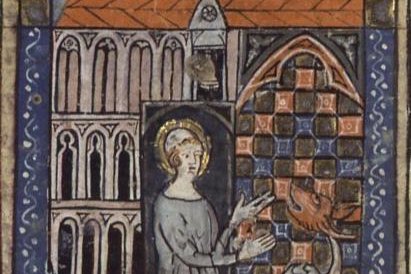
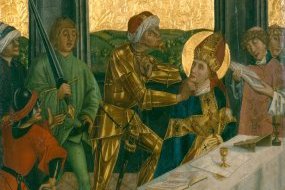
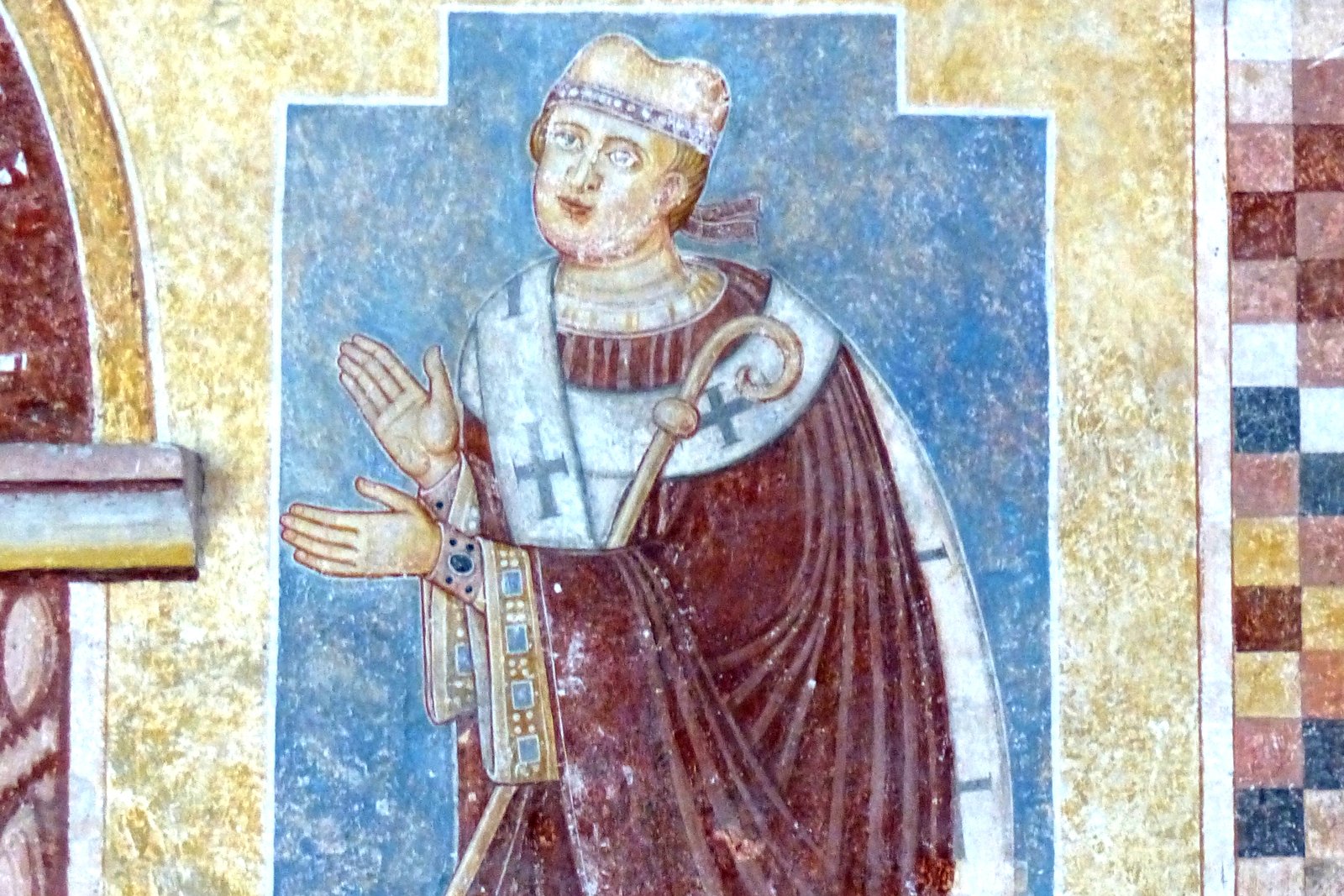
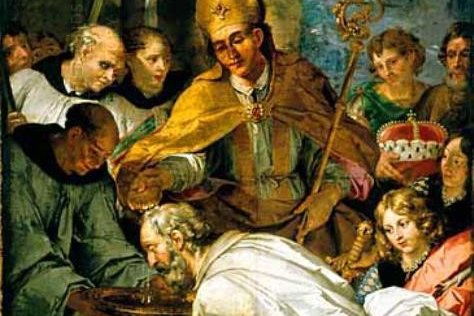
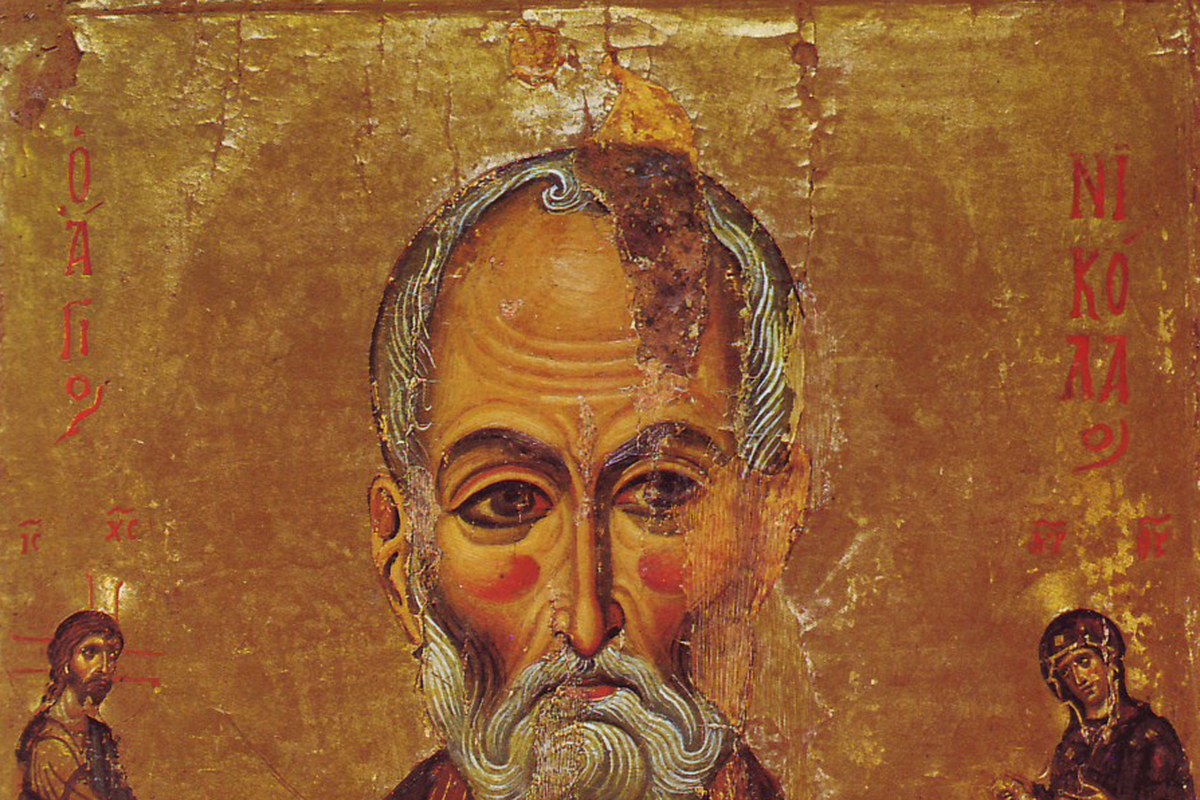
In art, Ludger is typically depicted as a bishop in full vestments, sometimes holding a small model of a church building — a common visual convention for founder-saints — occasionally shown alongside a goose, tied to a regional legend about miraculous provision during a famine.
A missionary lineage worth tracing
Ludger's career connects several of the major threads running through early medieval Christian missionary history in Germanic Europe: educated in the Boniface tradition, trained in Northumbrian scholarship at York, and active during the Frankish conquest and forced Christianization of Saxony under Charlemagne. Readers interested in this wider missionary network may also want to read about Saint Willibrord, the earlier Northumbrian missionary whose foundational work in Frisia helped set the stage for everything Ludger accomplished there a couple of generations later.
Trivia
Who was Saint Ludger?
What is Saint Ludger's connection to Saint Boniface?
Why is the city of Münster named after Saint Ludger's foundation?
Did Saint Ludger study in England?
When is the feast of Saint Ludger?
You May Also Like
Related Reading