Saint Otto of Bamberg

From court chaplain to prince-bishop
Otto was born around 1060 or 1061 in Swabia, in southwestern Germany, and rose through a fairly conventional path for an ambitious cleric of his era: education, service as a court chaplain, and eventually appointment in 1102 as bishop of Bamberg, one of the richest and most politically significant dioceses in the Holy Roman Empire. Bamberg had been founded by Emperor Henry II less than a century earlier specifically as an imperial power base, and its bishops carried substantial temporal authority alongside their spiritual role. Otto proved himself an able administrator during a genuinely difficult period — the Investiture Controversy, a decades-long power struggle between popes and emperors over who had the right to appoint bishops, put German prelates in a constant, dangerous balancing act between Rome and the imperial court. Otto managed to stay on reasonably good terms with both sides, no small achievement for a bishop of his standing.
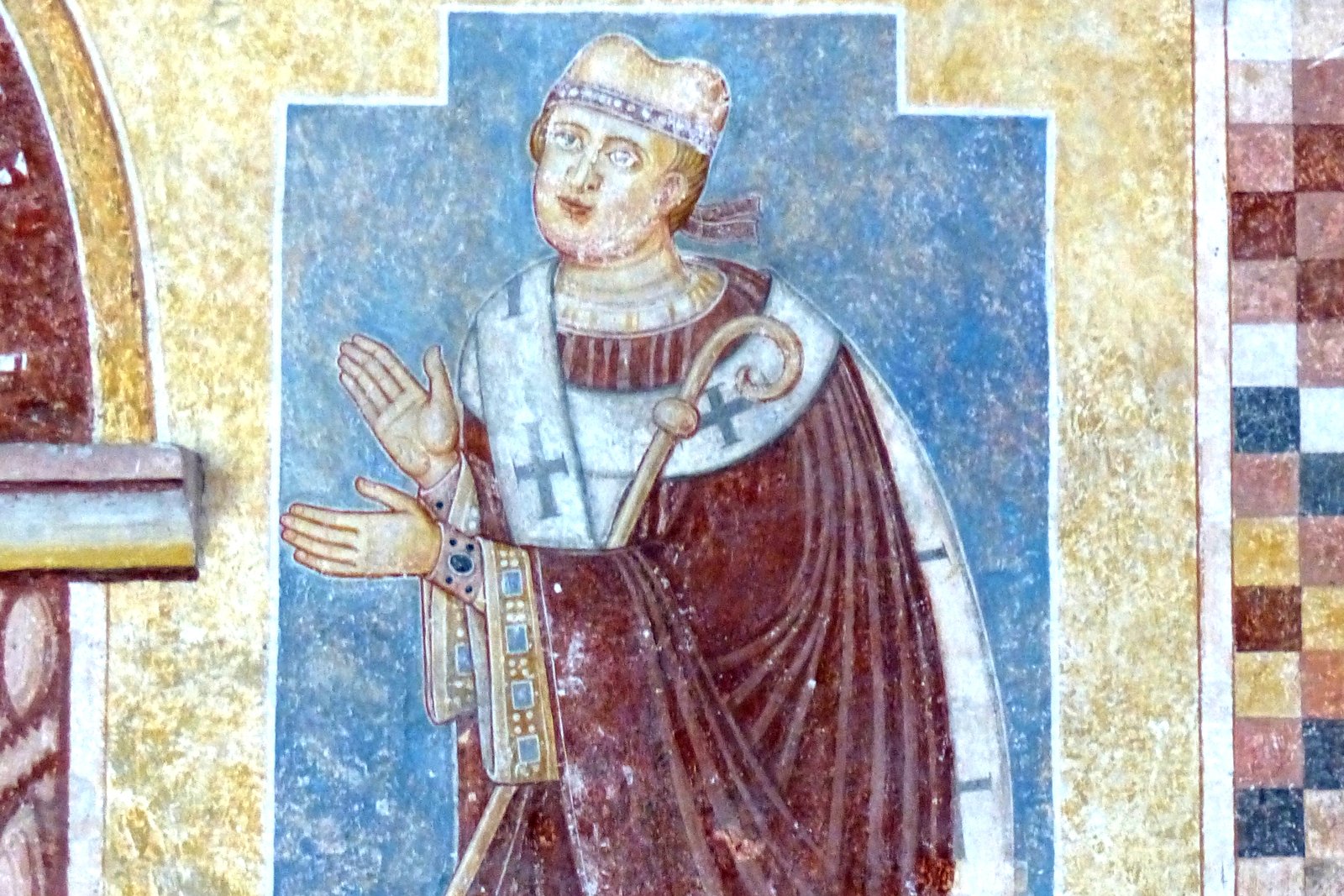
Romanesque fresco of Otto von Bamberg, 12th century, Prüfening Abbey church, Regensburg — public domain.
It's this administrative skill, as much as personal piety, that made Otto such an effective missionary when he eventually turned his attention to Pomerania, the pagan Slavic territory along the southern Baltic coast, in the 1120s.
Learning from a failed mission
Pomerania had a complicated recent history with Christianity by the time Otto arrived. An earlier missionary, Bishop Bernard, had gone in around 1122 and accomplished almost nothing — Pomerania had only recently been forcibly Christianized at the point of Polish military conquest and had thrown off both Polish control and the imposed religion together once that military pressure eased. Bernard's mission arrived poor, unarmed, and preaching austerity in a warrior culture that read poverty as weakness rather than holiness, and it was essentially laughed out of the region.
Otto, invited by the Polish duke Bolesław III — who had his own political reasons for wanting a stable, Christian Pomerania on his northern border — took the opposite approach. He arrived in 1124 with a large, well-provisioned retinue, brought expensive gifts for local nobles, took time to understand regional customs and power structures before preaching, and deliberately avoided the appearance of conquest that had doomed Bernard's effort. The strategy worked on a scale that surprised even his own supporters: cities including Pyritz, Kammin, Wolgast, and Stettin saw mass baptisms, and Otto is credited with converting tens of thousands of Pomeranians during this first expedition alone.
A second mission and a lasting church
The conversions didn't hold everywhere without reinforcement. When a rebellion and a political crisis in the late 1120s threatened to undo much of the earlier progress — including a serious pagan uprising around Stettin — Otto returned to Pomerania in 1128 for a second expedition, again navigating carefully between competing political interests, this time including tension with Denmark as well as Poland. He succeeded a second time in stabilizing and expanding the Christian presence he had helped establish, working to organize functioning church structures — parishes, clergy, and eventually a diocese — rather than leaving behind converts with no lasting institutional support.
This is the pattern that runs through Otto's whole career and distinguishes him from missionaries remembered primarily for dramatic, singular acts of confrontation: he built things meant to last. Alongside the Pomeranian mission, he founded or substantially reformed around twenty monasteries during his time as bishop of Bamberg, channeling the diocese's wealth into institutions that would keep functioning long after his own lifetime.
Feast day and canonization
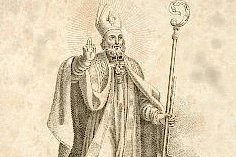
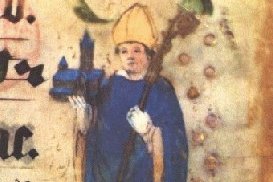
Otto died on July 2, 1139, and was canonized in 1189 by Pope Clement III, within roughly two generations of his death — relatively swift by medieval standards, reflecting how widely and quickly his missionary achievement in Pomerania came to be recognized across the German and Polish churches. His feast is kept on July 2. In art, he's typically shown as a bishop in full vestments, sometimes holding a small model of a church in reference to his extensive building and monastic foundation work, a detail that captures the institutional, structural side of his legacy alongside the missionary one.
Navigating an empire in crisis
Otto's decades as bishop coincided with some of the most turbulent politics the medieval empire produced. The Investiture Controversy pitted Emperor Henry IV against a succession of reforming popes over who held the right to appoint bishops and abbots, a dispute so bitter it produced excommunications, a famous imperial penance at Canossa, and years of open civil war among German princes. Bishops across the empire were repeatedly forced to choose sides, often at real personal and institutional risk. Otto's evident skill at maintaining workable relationships with both emperor and pope through this period, without appearing to abandon either, is itself a mark of exceptional political judgment — the same steady, careful diplomacy that later made the wary, distrustful population of Pomerania willing to hear him out at all.
Part of a wider missionary tradition
Otto's Pomeranian mission belongs to a long line of medieval efforts to bring Christianity to the pagan peoples along Europe's eastern and northern frontiers, a project that continued for centuries after his death. Readers interested in this broader missionary movement may also want to read about Saints Cyril and Methodius, who carried Christianity to Slavic peoples further south roughly two and a half centuries earlier, or Saint Boniface, whose reforms among the Germanic peoples further west established many of the institutional patterns — dioceses, monasteries, resident clergy — that Otto would later apply to his own mission on the Baltic coast.
Trivia
Who was Saint Otto of Bamberg?
Why did earlier missions to Pomerania fail before Otto's?
What made Otto of Bamberg's missionary approach different?
When is the feast of Saint Otto of Bamberg?
What is Otto of Bamberg remembered for besides his missionary work?
You May Also Like
Related Reading