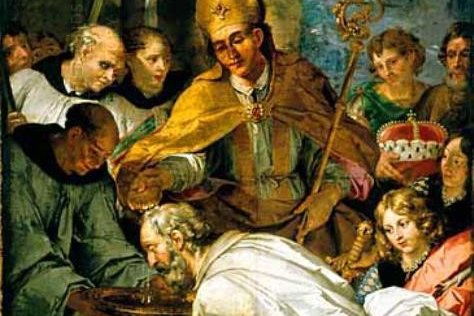
Saint Amand of Maastricht

From hermit to royal missionary
Amand was born around 584 near Nantes, in western Francia, and by his early twenties had already committed himself to a monastic and ascetic life, spending time as a hermit before undertaking a pilgrimage to Rome. According to tradition, it was during or shortly after this pilgrimage that he received a vision or calling directing him toward active missionary work rather than continued solitary withdrawal — a turning point that set the course for the rest of his long and restless career.
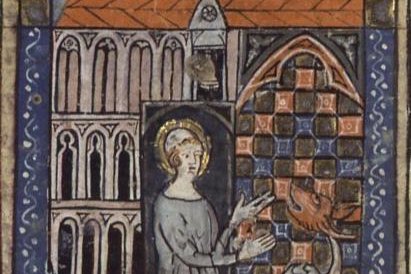
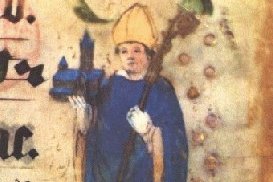
Richard de Montbaston and collaborators, miniature of Saint Amand, 14th-century French manuscript — public domain.
He was consecrated a bishop without a fixed territorial see, a so-called "regionary" or missionary bishop, and received his assignment from King Clotaire II and later King Dagobert I: the Scheldt valley region, in what is now Flanders and northern France, where the population remained largely pagan despite the wider spread of Christianity across neighboring Frankish territory.
A mission met with open hostility
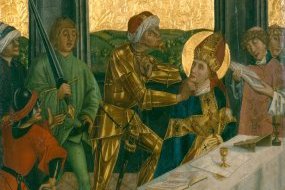
The Scheldt mission did not go well at first. Amand preached with considerable intensity — later accounts describe him as blunt and uncompromising in confronting local pagan practice — and the population responded with open resistance rather than the peaceful, if gradual, acceptance that had greeted some other missionaries of the period. Tradition holds that he was physically attacked on more than one occasion, including a widely repeated episode in which hostile locals threw him into a river, from which he survived and, without apparent hesitation, resumed his preaching campaign in the same territory.
Progress remained slow until King Dagobert I lent the mission direct royal authority and material support, a combination that proved far more persuasive to the local population than preaching alone had been — a pattern common across early medieval missionary efforts, in which royal backing and the practical advantages of alliance with a Christian king often did as much to encourage conversion as theological argument.
A wider mission field
Amand's restlessness carried him well beyond Flanders over the course of his career. He undertook a missionary journey along the Danube, preaching among Slavic peoples in territory that had seen little or no earlier Christian missionary activity, and later served for a time as tutor to the young Frankish prince Sigebert III, a role that briefly tied him closely to the royal court before he returned again to more active pastoral and missionary work.
He was also appointed bishop of Maastricht for a period, though he appears to have found the settled administrative demands of a fixed diocese less suited to his temperament than the itinerant missionary work he had spent most of his life pursuing, and he eventually resigned the see to return to monastic and missionary activity.
A monastic network across Francia
Alongside his preaching, Amand became one of the most prolific monastic founders of his generation. His most significant foundation was the abbey of Elnone, on the Scheldt, which grew over the following centuries into a major center of learning and religious life and was eventually renamed Saint-Amand in his honor — a name the surrounding town in northern France still carries today. He is also associated with the founding or support of religious houses at Ghent and several other sites across the Scheldt valley, part of a broader Frankish pattern in which successful missionary bishops used monastic foundations to anchor and sustain the conversions their preaching had achieved.
This monastic network placed Amand within the same broadly interconnected world of seventh-century Frankish religious life that also produced Saint Gertrude of Nivelles and the monastery her mother Itta founded — a generation of Frankish nobility and clergy who, working sometimes independently and sometimes in direct cooperation, reshaped the religious landscape of the Frankish kingdom within the span of a few decades.
Guiding a nobleman's dramatic conversion
Among the individuals Amand's ministry touched most directly was Saint Bavo of Ghent, a wealthy Frankish nobleman whose life changed course after the death of his wife. Tradition holds that Amand received Bavo into religious life following his conversion, guiding a man used to considerable worldly comfort and power into a life of penance and eventual monastic withdrawal, and that Amand was the one who ransomed Bavo after his extraordinary offer to be sold into servitude as restitution for old wrongs. The episode is a useful illustration of the kind of pastoral work a missionary bishop like Amand did alongside his more famous public preaching campaigns — quietly forming and directing the individual conversions his broader mission produced, one person at a time, even as he continued founding institutions meant to outlast any single convert's story.
A voice at church councils
Amand's career was not limited to the mission field. He is recorded as having taken part in Frankish church councils during his lifetime, including gatherings that addressed matters of clerical discipline and organization within the Frankish church more broadly — a reminder that even the most restless missionary bishops of this era were still embedded within the Church's wider institutional structures, expected to weigh in on matters of governance and doctrine well beyond their own immediate mission territory. This dual identity, as both a hands-on evangelist willing to be thrown into a river for his preaching and an established churchman with a voice in councils and at the royal court, captures something distinctive about the seventh-century Frankish episcopate: bishops of this era routinely combined roles that later centuries would treat as far more separate.
Feast day and legacy
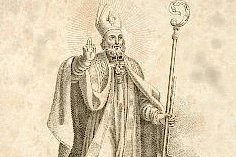
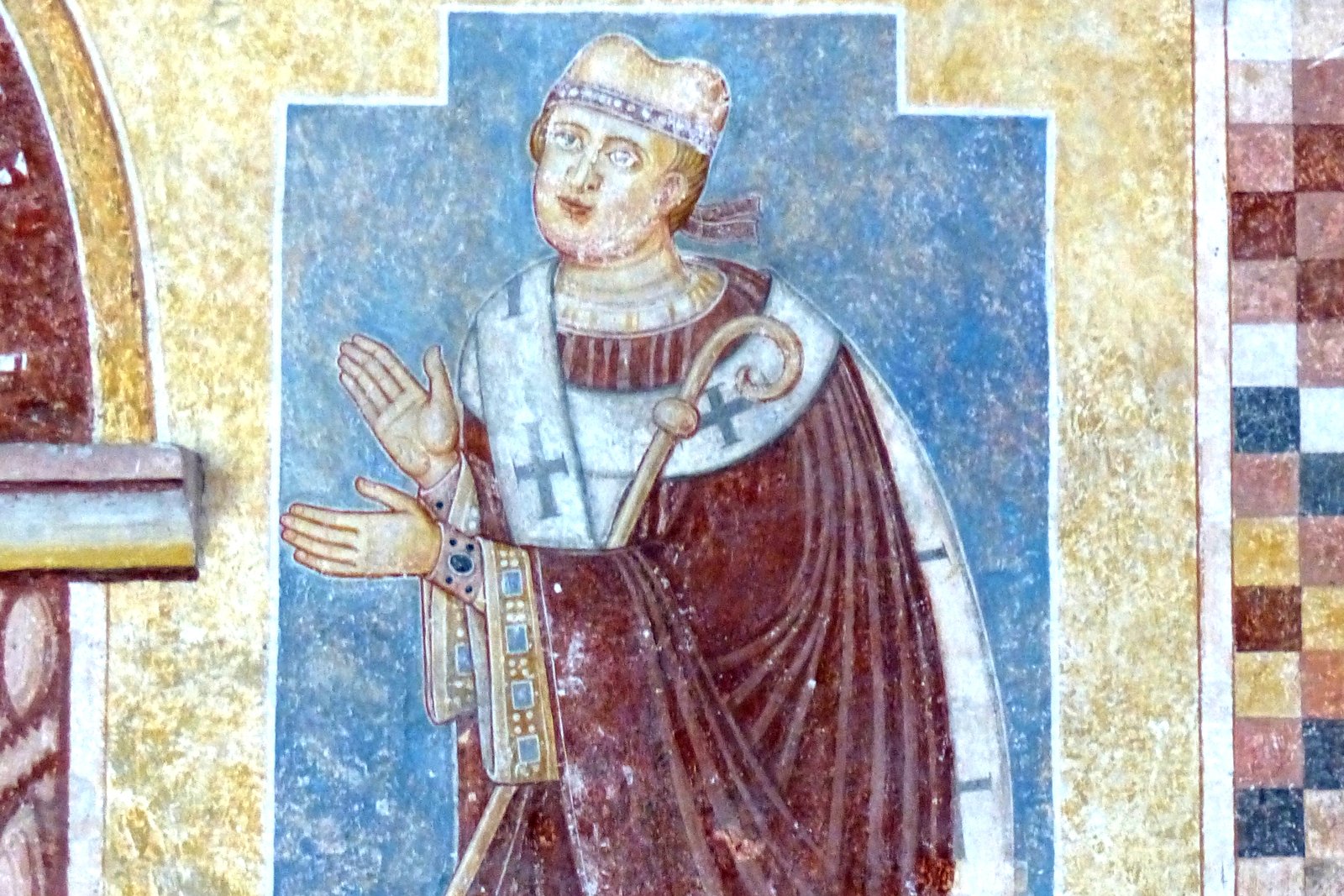
Amand died around 675 or 679, reportedly at an advanced age after decades of active missionary work that would have exhausted a far younger man. His feast is celebrated on February 6. In art, he is typically shown as a bishop in full vestments, sometimes holding a book or a model of a church in reference to his extensive monastic foundations.
Readers interested in the broader missionary landscape of seventh- and eighth-century Frankish and Germanic Europe may also want to read about Saint Willibrord, whose own mission to Frisia a generation after Amand's death continued the same pattern of persistent, often initially unsuccessful preaching eventually reinforced by political backing and anchored by lasting monastic foundations.
Trivia
Who was Saint Amand of Maastricht?
Why did Saint Amand's early missionary work in Flanders fail so badly?
What role did Saint Amand play in the life of Saint Gertrude of Nivelles?
How many monasteries did Saint Amand found?
When is the feast of Saint Amand?
You May Also Like
Related Reading