Saint Ninian, the Bishop Who Brought Christianity North

A single paragraph in Bede, and centuries of silence after
Almost everything modern readers know about Ninian with any real confidence comes from a single short passage in the Ecclesiastical History of the English People, written by the Northumbrian monk Bede around 731 — nearly three centuries after Ninian is traditionally said to have lived. Bede describes Ninian as a bishop of the Britons, trained and consecrated at Rome, who had already brought Christianity to the southern Picts — the peoples living south of the mountain ranges that divided Pictish territory — well before Bede's own time. Bede also records that Ninian's episcopal seat was named Candida Casa, "the White House," because it was built of stone in a style unusual for the region, and that the church was dedicated to Saint Martin of Tours. That's essentially the entirety of the earliest historical record. No writing by Ninian himself survives, and no contemporary account of his life exists at all — a genuine gap that later medieval writers, working with far less reliable material, tried to fill in.
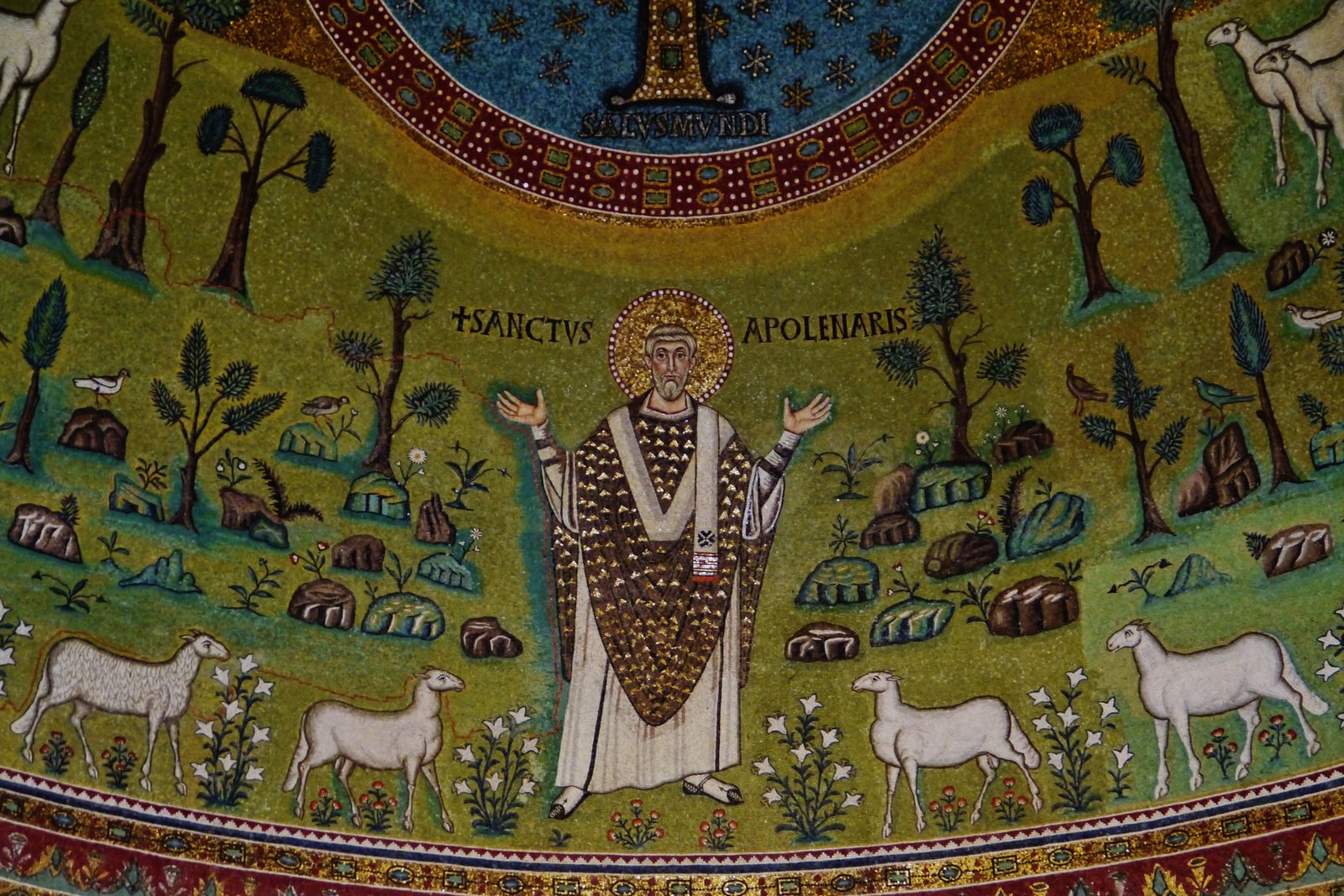
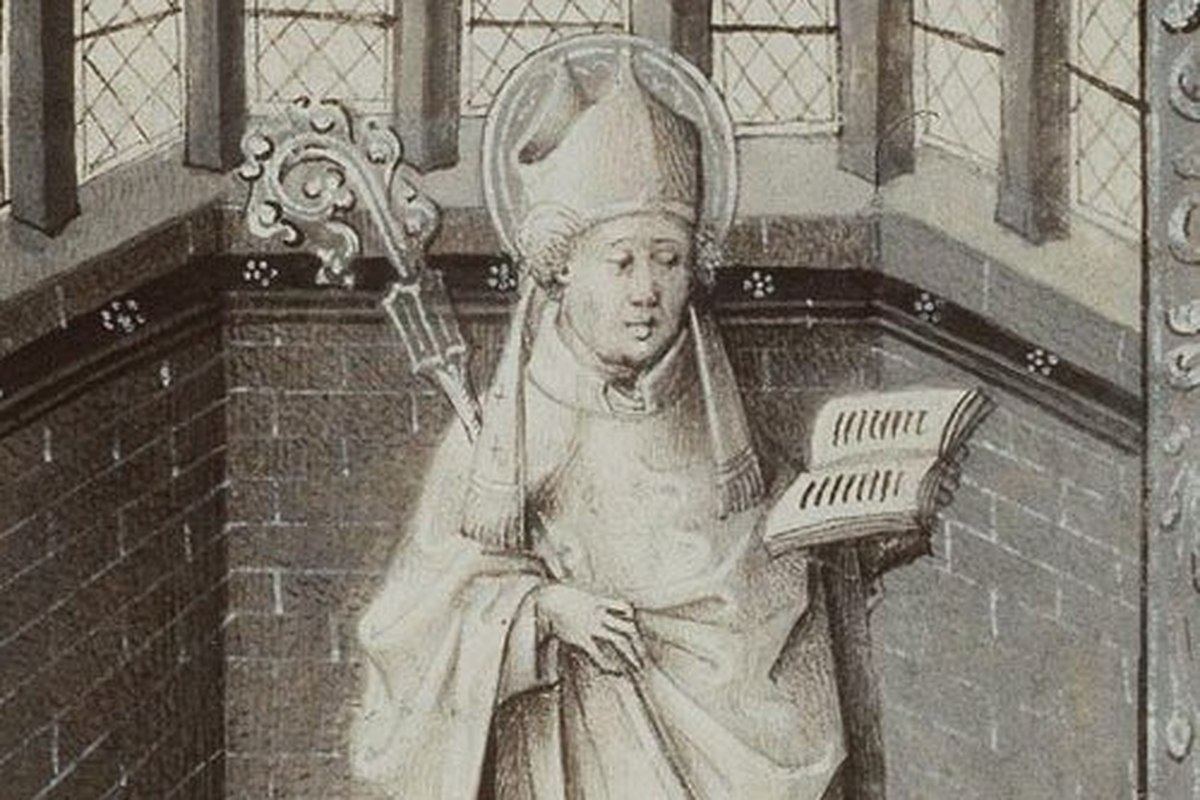
Anonymous illuminator, Saint Ninian, from a medieval book of hours — public domain.
The legend that came seven hundred years later
The fuller, more colorful version of Ninian's life that circulates today — his supposed journey to Rome for training, a personal friendship with Saint Martin of Tours, various miracles attributed to him during his ministry among the Picts — comes almost entirely from a twelfth-century Life of Saint Ninian written by Ailred of Rievaulx, a Cistercian abbot working around 1160, roughly seven centuries after Ninian's traditional dates. Ailred drew on an earlier, now-lost Life along with local oral tradition at Whithorn, but by his own era the historical record had long since blurred into devotional legend, and modern historians treat his account as valuable evidence of later medieval belief about Ninian, rather than a reliable record of Ninian's actual life. This distinction matters: Bede's brief, sober mention should be read as documented history; Ailred's much fuller narrative should be read as pious tradition built up around a real but sparsely documented figure.
A stone church in a land of timber
What can be treated with reasonable confidence is the archaeological and historical picture around Whithorn itself, in Galloway in southwestern Scotland. Excavations at the site have confirmed occupation and Christian burial activity dating to the fifth century, broadly consistent with Bede's account of an early Christian settlement there, even if the precise details of Ninian's own biography remain uncertain. The name Candida Casa reflects a genuinely striking fact about the building: in a region where churches and dwellings alike were typically built of wood and wattle-and-daub, a whitewashed stone church would have stood out sharply enough in the landscape to become the place's defining name for generations — Bede notes the name was still in use in his own time, centuries after the building itself was likely gone or rebuilt.
Missionary work among the southern Picts
Bede credits Ninian specifically with converting the southern Picts to Christianity, a people distinct from the northern Picts whom Saint Columba and his monks at Iona would evangelize more than a century later. This places Ninian's documented missionary work — however thin the surviving detail — genuinely earlier than the more famous Columban mission that later dominated popular memory of how Scotland became Christian. Whithorn's location, on a peninsula in Galloway with strong sea links to Ireland, Wales, and northern England, made it a natural hub for exactly this kind of missionary activity, sitting at a crossroads between several early Christian British and Irish communities rather than isolated at the edge of the world.
A pilgrimage site that outlived the historical uncertainty
Whatever the uncertainties around his biography, Ninian's cult grew into one of the most significant in medieval Scotland. Whithorn became a major pilgrimage destination through the Middle Ages, visited by Scottish kings including James IV, and the priory built around the shrine remained an important religious center until the Scottish Reformation brought an end to Catholic pilgrimage practice there in the sixteenth century. Modern archaeological work at the site, ongoing since the twentieth century, continues to add detail to what can actually be verified about the earliest Christian community at Whithorn, even as it can do little to resolve the specific uncertainties around Ninian's own life. Excavated grave markers and inscribed stones from the surrounding cemetery, some dated to the fifth and sixth centuries, confirm that Whithorn functioned as an organized Christian burial ground remarkably early for the region — evidence that, while it cannot confirm any particular detail of Ninian's biography, does support Bede's basic claim that a real, functioning Christian community existed there far earlier than at most other sites in what is now Scotland. His feast is kept on September 16, and he is honored today as one of the founding figures of Scottish Christianity, alongside Saint Columba and Saint Patrick — three missionary bishops whose work, spread across different generations and regions, together laid the groundwork for Christianity across the British Isles north of Roman Britain's old frontier.
Trivia
Who was Saint Ninian?
How do we know about Ninian's life, and how reliable is it?
What was Candida Casa, and why was the name significant?
Is Ninian connected to Saint Martin of Tours?
When is Saint Ninian's feast day, and what is he a patron of?
You May Also Like
Related Reading