Saint Peter Nolasco and the Order Founded to Buy Back Captives

A merchant turned advocate for the enslaved
Peter Nolasco was born around 1189, likely in southern France, though some accounts place his birth in Catalonia; he settled in Barcelona as a young man, where he made his fortune as a merchant. What sets his life apart from other wealthy laymen of the period is what he chose to do with that fortune and, more importantly, with his time: thirteenth-century Barcelona sat close to the front lines of ongoing conflict between Christian Iberian kingdoms and Muslim states across the western Mediterranean, and Christian captives — sailors, merchants, coastal villagers seized in raids — were routinely sold into slavery in North Africa.
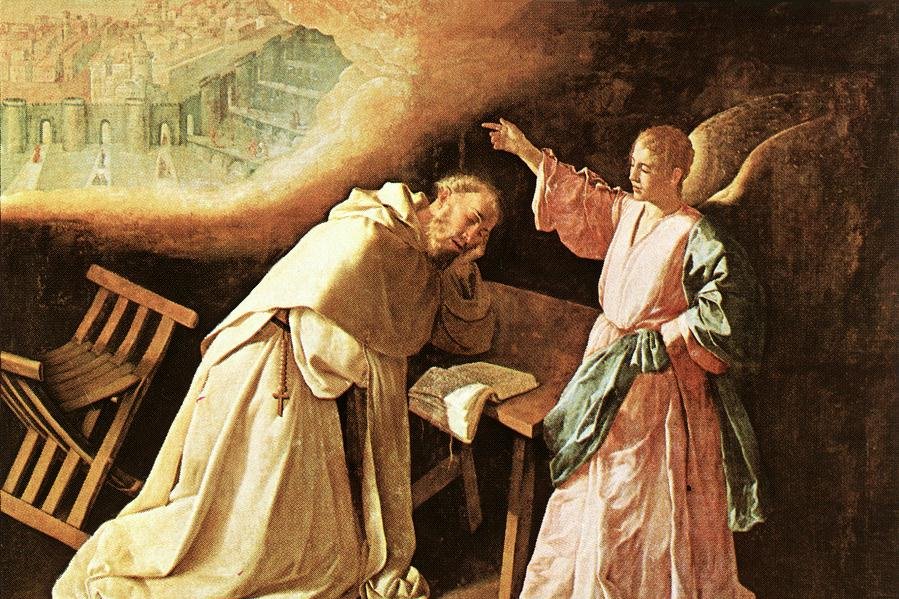
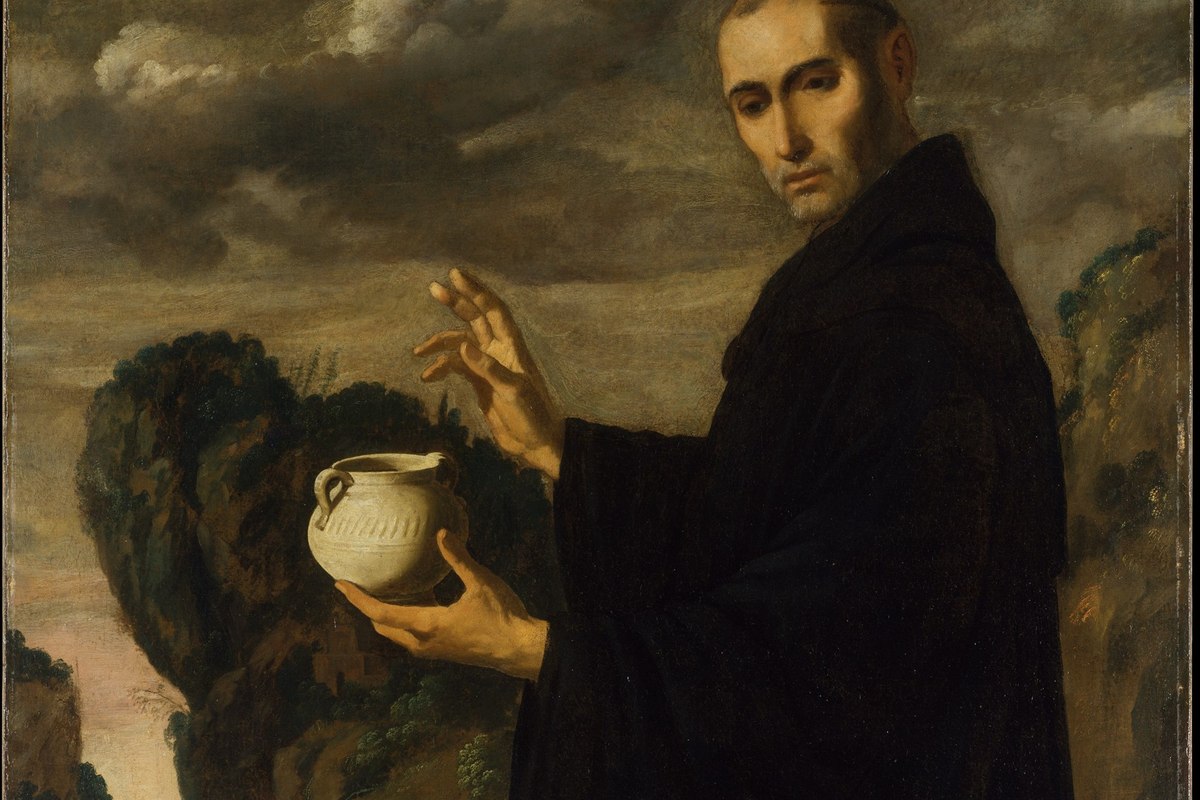
Francisco de Zurbarán, "The Vision of St Peter Nolasco," 1629. Public domain (Wikimedia Commons).
Peter began using his own wealth to buy back captives, but the scale of the problem quickly outstripped what one wealthy individual could do alone. He needed an organized, sustained institution — not a single act of generosity, but a permanent mission.
The scale of the captivity crisis in this period is easy to underestimate from a modern vantage point. Coastal raiding along both sides of the western Mediterranean was routine business, not an occasional atrocity — fishing crews, merchant ships, and entire villages near the shore in Catalonia, Provence, and the Balearic Islands were vulnerable to sudden attack, with survivors marched off to slave markets in cities like Bejaia, Tunis, and Ceuta. For families back home, a captured relative wasn't necessarily lost forever, but freeing them required cash, connections, and someone willing to travel into hostile territory to negotiate — resources far beyond what most households could muster on their own. Peter Nolasco's genius wasn't identifying the problem; plenty of merchants and clergy were aware of it. It was recognizing that solving it at scale required a standing institution rather than individual acts of charity.
Founding the Mercedarians
In 1218, with the support of King James I of Aragon and the guidance of the Dominican theologian Raymond of Penyafort (later canonized himself, and known for his major contributions to canon law), Peter founded the Order of Our Lady of Mercy for the Redemption of Captives — the Mercedarians. Tradition holds that Our Lady appeared to all three men on the same night, urging them to establish the order; this account, recorded in later hagiographical sources rather than contemporary documentation, is held by the Church as devotional tradition rather than settled historical fact, even though the order's actual founding in 1218 is well attested.
Raymond of Penyafort brought something the merchant-founder Peter Nolasco couldn't provide alone: theological and legal weight. As a Dominican friar and one of the era's leading canon lawyers — he would later compile the definitive collection of papal decretals used across the Church for centuries — Raymond helped give the new order a coherent rule and secure its approval from Church authorities, work that mattered as much as the fundraising and negotiating happening on the ground in North Africa.
What made the Mercedarians distinctive among medieval religious orders wasn't just their mission but their method. Friars traveled directly into Muslim territory in North Africa and southern Spain to negotiate ransoms, carrying funds raised through donations and the members' own resources. Unlike cloistered monks who stayed within monastery walls, Mercedarians were active, itinerant negotiators, fluent in the practical business of moving money and people across a hostile frontier. Alongside the traditional vows of poverty, chastity, and obedience, Mercedarian friars took a fourth vow: if the ransom money available wasn't enough to free a captive, particularly one whose faith was in danger of being coerced away under slavery, a friar could offer himself as a substitute hostage in that person's place — accepting the real possibility of enslavement or death himself.
A vow some friars actually fulfilled
This wasn't purely symbolic. Historical accounts of the Mercedarian order describe members who did, in fact, remain behind as hostages when funds ran short, some of whom died in captivity as a result. Peter Nolasco himself is recorded as having traveled to Muslim Spain and North Africa multiple times over the course of his life, personally negotiating and overseeing ransom missions rather than directing the work purely from Barcelona.
Estimates of the total number of captives ransomed by the order during Peter Nolasco's lifetime and in the following centuries vary across historical sources, and precise figures from the thirteenth century are difficult to verify with modern rigor — but the order's continued existence and expansion across Spain, France, and later the Americas over subsequent centuries reflects a mission that remained active and well-supported for generations after its founder's death.
Death and lasting legacy
Peter Nolasco died in Barcelona in 1256, having spent nearly four decades building and personally serving an institution centered entirely on other people's freedom. He was beatified in 1628 and canonized the same year by Pope Urban VIII. His feast is kept on January 28 in the general Roman calendar, with some regional and Mercedarian observances on different dates.
The Mercedarian order still exists today, though its mission has shifted with history — the North African ransom trade that defined its earliest centuries ended long ago, and the order now focuses on prison ministry, education, and advocacy for people who are marginalized, enslaved, or persecuted in various modern forms. Peter Nolasco's original insight, though, remains at the center of the order's identity: that freedom for a stranger could be worth risking one's own.
Zurbarán's 1629 painting used as this article's hero image, showing Nolasco in ecstatic vision, is one of several Baroque works commissioned for Mercedarian houses in Spain during the order's height of prestige, when wealthy patrons and royal courts alike associated the Mercedarians with heroic, almost military virtue rather than quiet monastic withdrawal. That reputation places Peter Nolasco among a handful of medieval founders — alongside figures like the founders of other religious orders built around a single urgent social need rather than a general rule of life — whose institutions were shaped from the outset by one specific, unglamorous, and dangerous form of service.
Trivia
Who was Saint Peter Nolasco?
What is the fourth vow the Mercedarians take?
Why were so many Christians held captive in North Africa during this period?
Is the vision of Our Lady linked to Peter Nolasco's founding of the Mercedarians historically documented?
When is Saint Peter Nolasco's feast day?
You May Also Like
Related Reading