Saint Vincent Ferrer, the Preacher Kings Feared

A Dominican before he was a preacher
Vincent Ferrer was born in Valencia in 1350, and entered the Dominican order — the Order of Preachers, founded specifically around the mission of teaching and preaching — at just seventeen years old. His early years followed a fairly conventional path for a talented friar: years of study in philosophy and theology, a period teaching in Dominican houses in Barcelona and Toulouse, and eventually a position as confessor to Cardinal Pedro de Luna, a connection that would later pull him directly into the greatest crisis facing the Church of his era.
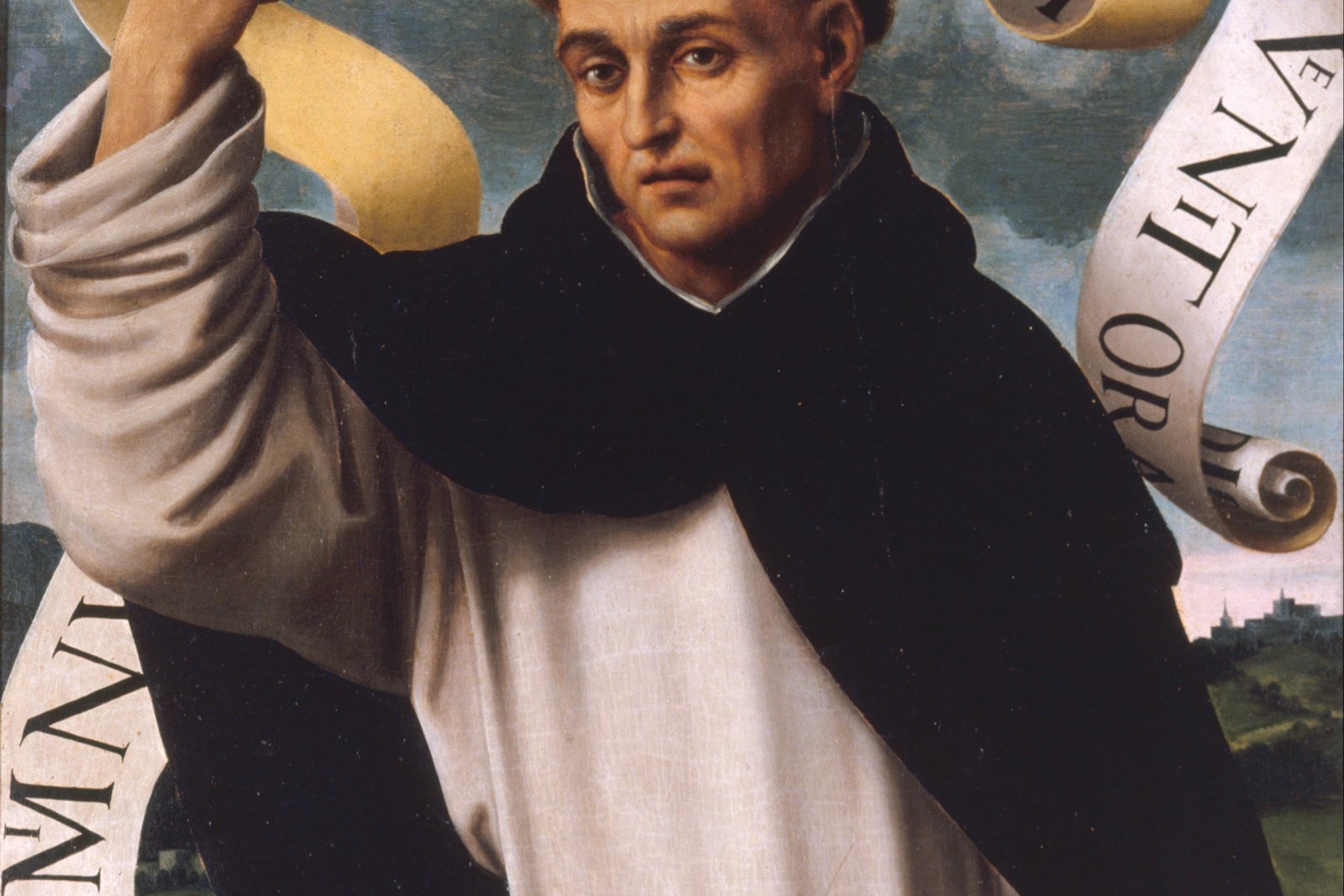
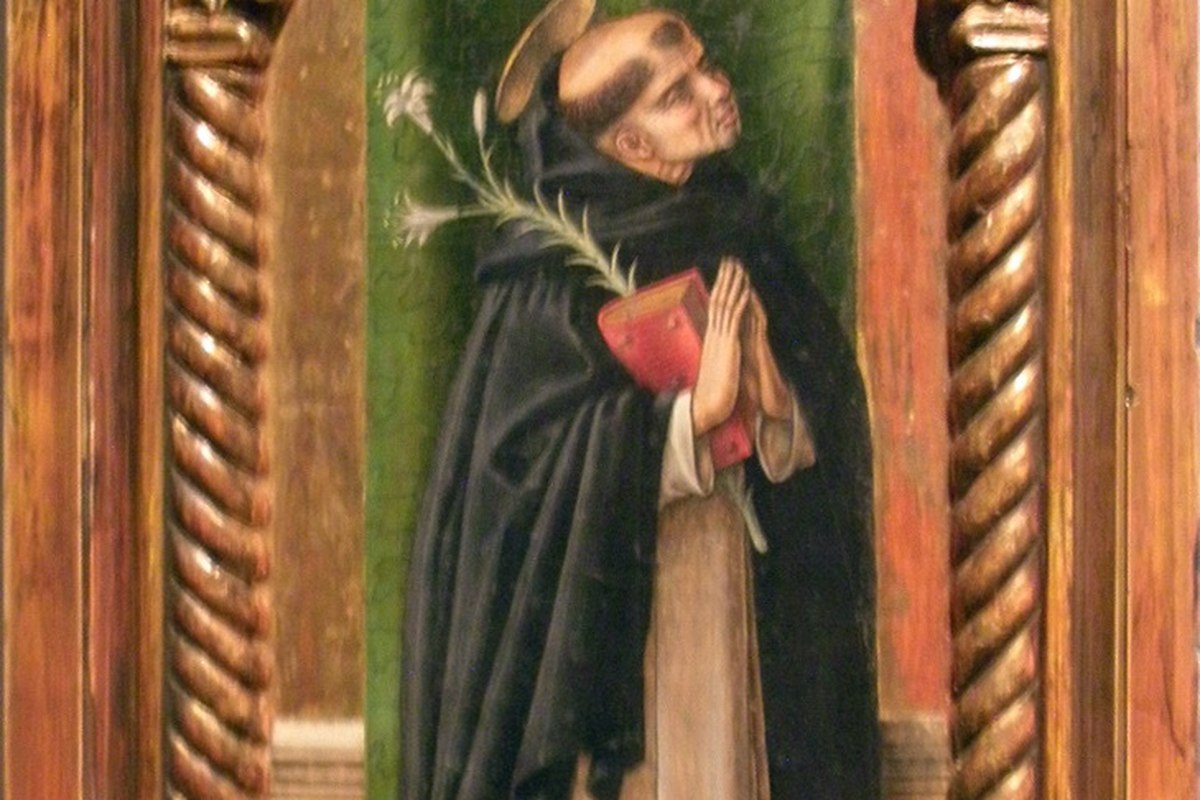
Joan de Joanes (Joan Macip), "Saint Vincent Ferrer," c. 1540-1545. Public domain (Google Art Project / Wikimedia Commons).
That crisis was the Western Schism. Beginning in 1378, rival claimants to the papacy — one based in Rome, one in Avignon, France — split the loyalty of Catholic Europe for nearly forty years, with different kingdoms and even different religious orders backing different popes. When Pedro de Luna was elected as the Avignon claimant, taking the name Benedict XIII, Vincent — who knew him personally and believed him legitimate — became one of his strongest supporters, serving for years at his side.
From court theologian to wandering preacher
Around 1399, Vincent left the relative comfort of court life and took to the road as an itinerant preacher, a decision tradition connects to a serious illness and a vision he experienced, though the precise details are recorded only in later hagiography rather than contemporary sources. What's documented with more confidence is the scale of what followed: for roughly twenty years, Vincent walked across Spain, southern France, Switzerland, and northern Italy, preaching in town squares and open fields to crowds that observers at the time described as numbering in the thousands.
His preaching focused heavily on repentance and the imminence of the Last Judgment — a theme that resonated with a Europe still shaken by the trauma of the Black Death a generation earlier, recurring plague outbreaks, and the ongoing scandal of a divided papacy. Accounts from his own era and later biographies credit him with an extraordinary number of conversions, and he was followed on his travels by penitential processions of flagellants — a common, though controversial, devotional practice of the period.
The friar who broke with his own pope
For years, Vincent remained loyal to Benedict XIII even as pressure mounted across Europe to end the schism through a unified church council. But by 1416, convinced that Benedict was now the primary obstacle to reunifying the papacy rather than its legitimate holder, Vincent made a decisive and politically dangerous break: he publicly withdrew his support. Working alongside King Ferdinand I of Aragon, he helped shift Spanish political backing away from Benedict, a move that significantly weakened the Avignon claimant's remaining support and helped clear the way for the Council of Constance to resolve the schism in 1417 with the election of Pope Martin V, recognized as the legitimate pope by the reunified Church.
It's worth being clear about what belongs to documented history here and what belongs to devotional tradition. Vincent's role in the political resolution of the schism is well attested in historical records of the period. The many healing miracles attributed to him during his lifetime and after his death — the basis for his eventual canonization — rest on testimony gathered for his canonization process, a different category of evidence than a court record or a papal letter, though one the Church took seriously enough to declare him a saint within decades of his death.
A voice several kingdoms claimed to understand
The story of Vincent's supposed gift of tongues is one of the most repeated details in his biography, and it's worth pausing on precisely because it's the kind of claim easy to misread. Vincent preached exclusively in Valencian, the Catalan dialect of his home region, and never learned to deliver sermons in French, German, or Italian. Yet chroniclers writing during and shortly after his life describe crowds from those language groups following him for weeks at a time, insisting they understood his preaching as clearly as if he had addressed them in their own tongue. It's a claim rooted in devotional biography rather than an event anyone recorded with modern documentary rigor, and the Church has never defined it as established fact the way it has, say, a Marian dogma — but the comparison contemporaries reached for was immediate and consistent: the same kind of cross-language understanding described in the Acts of the Apostles at Pentecost (Acts 2:1-11), when the Holy Spirit allowed each listener in a diverse crowd in Jerusalem to hear the apostles' preaching in their own language.
He preached alongside another famous Dominican name from this period, though a generation apart in approach: while Saint Catherine of Siena worked mostly through letters and direct appeals to popes and rulers to end the schism, Vincent worked the opposite way, through sheer public reach — moving the ordinary crowds and, through them, the kings who had to answer to those crowds. Both belonged to the order founded generations earlier by Saint Dominic de Guzman, whose entire vision for his friars centered on exactly this kind of itinerant, public preaching ministry.
Why builders and roof tilers still invoke him
Vincent's patronage of construction trades — builders, plumbers, and roof tilers among them — sounds like an odd fit for a preacher whose real legacy is theological and political, but it traces to a more human detail from his canonization testimony: accounts describe him miraculously saving workers from fatal falls during construction accidents, and parishes that credited him with protecting laborers on dangerous job sites carried that association forward into settled patronage. It's a smaller, quieter thread in his story than the schism or the crowds, but it shows how a saint's popular devotion often grows out of specific, remembered acts of protection rather than out of a person's most famous public achievements.
Feast day and legacy
Vincent died in Vannes, in Brittany, in 1419, during one of his preaching journeys through France — he never returned to Spain. He was canonized by Pope Callixtus III in 1455, and his feast is kept on April 5. He's remembered today as one of the great preachers of the Dominican tradition, a saint whose life bridged the private discipline of monastic study and the public, often chaotic work of trying to hold a fractured Church together through the sheer force of conviction and a willingness to change his mind publicly when he believed the truth required it.
Trivia
Who was Saint Vincent Ferrer?
What role did Vincent Ferrer play in the Western Schism?
What is the story behind Vincent Ferrer's gift of tongues?
What is Saint Vincent Ferrer the patron saint of?
When is Saint Vincent Ferrer's feast day?
You May Also Like
Related Reading