Saints John Fisher and Thomas More

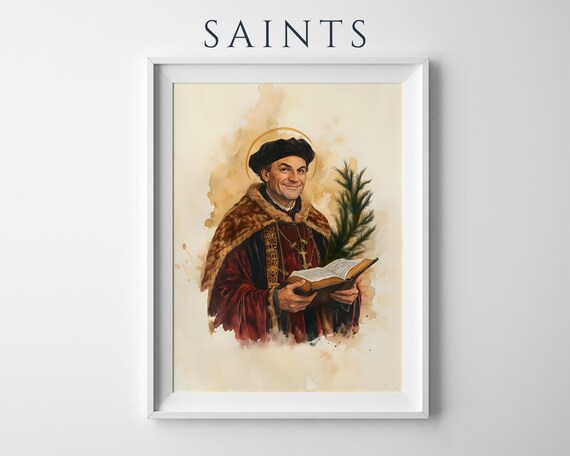
Two executions, two weeks apart
On June 22, 1535, an elderly bishop named John Fisher was led out to Tower Hill in London and beheaded. He had spent more than a year imprisoned in the Tower, his health failing, his diocese stripped from him, offered repeated chances to sign a document he would not sign. Fourteen days later, on July 6, a former Lord Chancellor of England named Thomas More followed him to the same scaffold, for refusing the very same oath.
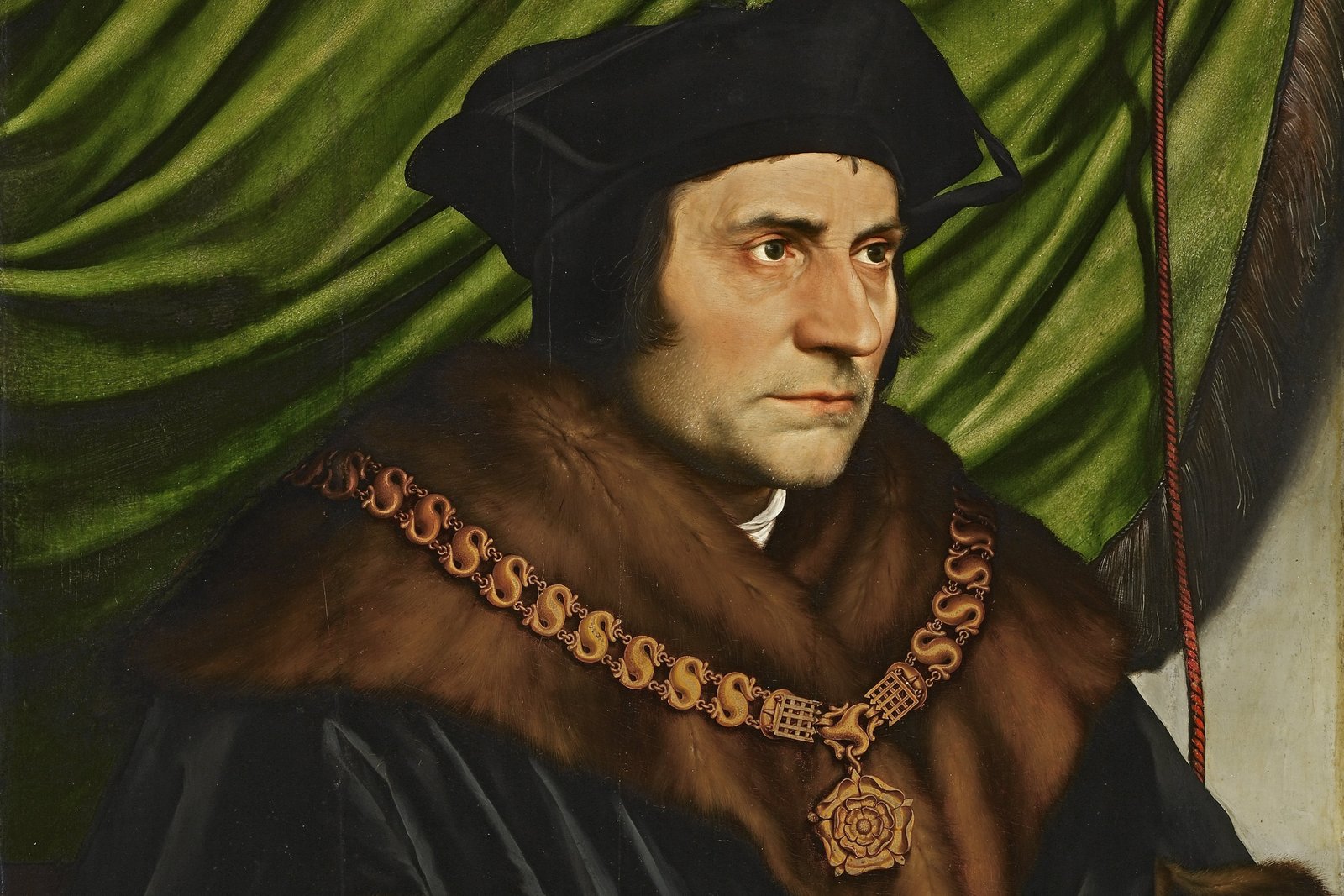
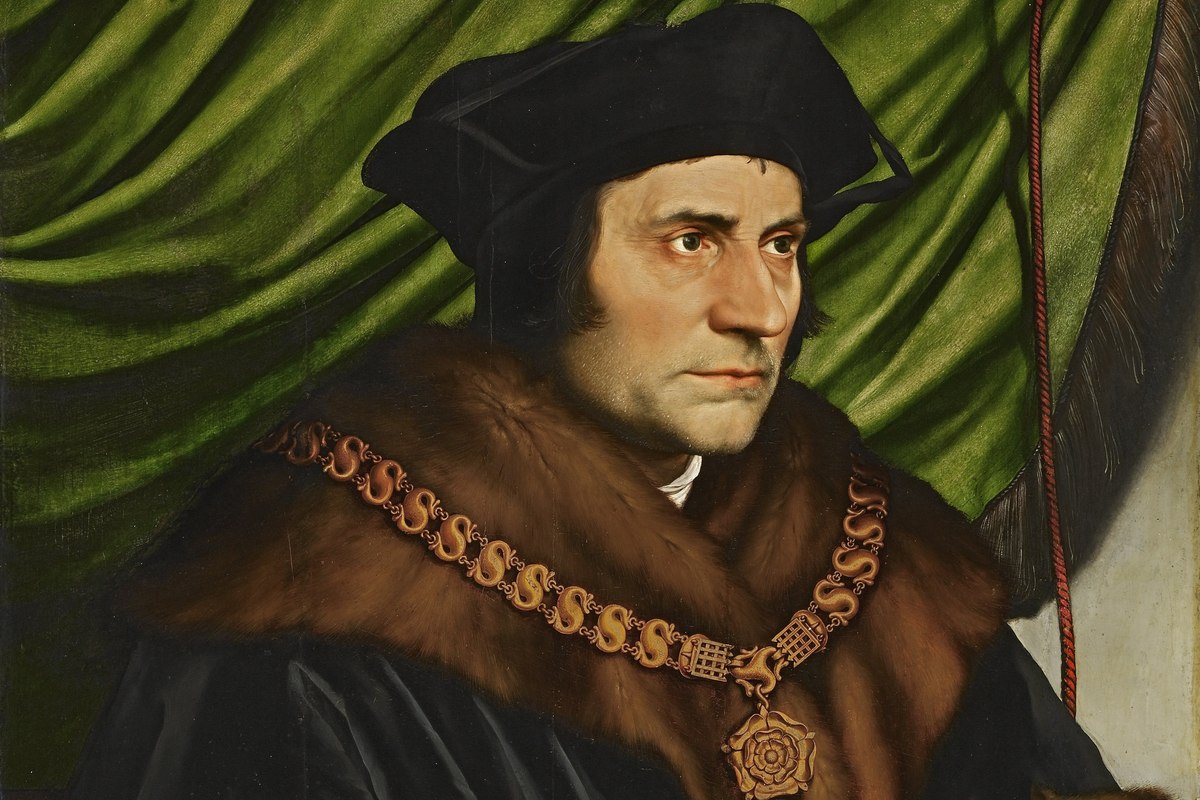
Hans Holbein the Younger, Sir Thomas More, 1527, Frick Collection, New York — public domain.
The two men had known each other for years, moved in overlapping circles of English scholarship and royal service, and, in the final act of their lives, arrived independently at the identical conclusion: that no earthly king, however powerful, held the authority to make himself head of Christ's Church. The Church now commemorates them together, on June 22, recognizing that their stories, though built on different careers, converge at exactly this point.
Who was John Fisher
Born around 1469, John Fisher rose through the ranks of the English Church and academy largely on the strength of genuine scholarship and personal integrity rather than political maneuvering, though his connections were considerable. He became chancellor of the University of Cambridge, a position he held for decades, and tutored the young prince who would later become Henry VIII, giving him a personal relationship with the king that reached back to Henry's childhood. In 1504 he was made Bishop of Rochester, one of the poorer English dioceses, a post he kept for the rest of his life even as more lucrative appointments were available to him, a choice contemporaries noted as characteristic of his personal humility.
Fisher was widely respected across Europe as a theologian, and his writings against the early Protestant reformers, particularly Martin Luther, were read well beyond England's borders. He also served for years as confessor to Henry VIII's grandmother, Lady Margaret Beaufort, and helped establish two Cambridge colleges with funds she provided. When Henry VIII sought an annulment of his marriage to Catherine of Aragon in order to marry Anne Boleyn, Fisher emerged as one of the queen's most outspoken defenders, arguing publicly and repeatedly against the annulment on both legal and theological grounds.
The break with the king
Henry's break with Rome unfolded over several years in the early 1530s, culminating in the Act of Supremacy in 1534, which declared the king, not the pope, the supreme head of the Church in England. Alongside it came the Act of Succession, which required an oath recognizing the legitimacy of Henry's marriage to Anne Boleyn and, implicitly, the rejection of papal authority over the English Church. Fisher refused to swear the oath in the form presented to him and was imprisoned in the Tower of London in 1534.
While imprisoned, Fisher was named a cardinal by Pope Paul III, an honor that, according to widely repeated accounts, only hardened Henry's resolve against him; the king reportedly remarked that he would send Fisher's head to Rome to fetch the cardinal's hat himself, though the exact wording of that remark varies between historical sources and should be treated as popular tradition rather than a verified direct quotation. Fisher was tried for treason on the narrow legal ground of having denied the king's supremacy over the Church, convicted, and executed on June 22, 1535.
Thomas More's parallel refusal
Saint Thomas More, the former Lord Chancellor of England and author of Utopia, followed a closely parallel path. More had resigned his chancellorship in 1532 rather than continue supporting the king's course, retreated into private life, and, like Fisher, refused to sign the Act of Succession in the form that required rejecting the pope's authority. He was imprisoned in the Tower the same year as Fisher and held there for more than a year before his own trial and execution on July 6, 1535, not quite two weeks after Fisher's death. Their shared refusal, their shared imprisonment in the same fortress, and their deaths within days of each other on the same charge bind their stories together in a way that later centuries of the Church would formally recognize.
Canonized together
Both men were beatified in 1886 and then canonized together by Pope Pius XI on May 19, 1935, four hundred years after their deaths, a deliberate pairing that acknowledged what their contemporaries had already understood: that Fisher and More were not two unrelated victims of the same king but two men who reached, from different stations in life, one bishop and one layman, the same conclusion about where ultimate spiritual authority rested. Pope John Paul II later named Thomas More the patron of statesmen and politicians in 2000, a recognition of his particular witness as a layman in public office who chose conscience over career.
Why they are remembered together
Their combined feast is not merely a calendar convenience. It reflects a specific historical moment in which the English Church's break from Rome forced individuals across every level of public life, clergy and laity, scholars and courtiers, to choose between political survival and religious conviction. Fisher and More represent, respectively, the highest ranks of the Church hierarchy and of royal government in England, and both chose the same costly path. Their joint commemoration is a reminder that the crisis of the English Reformation was not an abstract theological dispute confined to bishops and theologians, but a demand that reached into the conscience of anyone entrusted with public responsibility, regardless of whether they wore a mitre or served at a royal court.
Trivia
Why are Saint John Fisher and Saint Thomas More celebrated on the same feast day?
Who was Saint John Fisher?
What was the Act of Supremacy that both men refused to accept?
How are John Fisher and Thomas More connected to Saint Thomas More's own story?
Related Reading