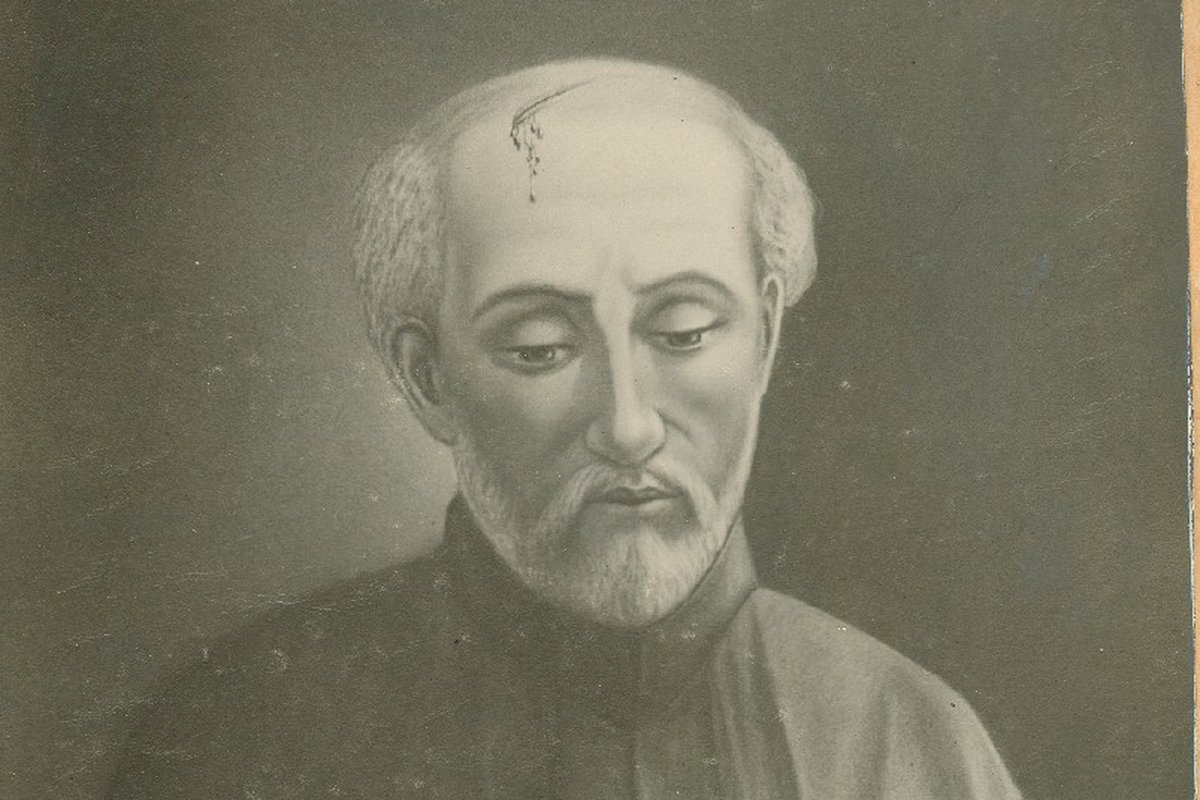
Saint Robert Southwell

A Norfolk family, a Jesuit education abroad
Robert Southwell was born around 1561 at Horsham St. Faith in Norfolk, into a gentry family that had conformed outwardly to the new Church of England while some of its members kept older Catholic sympathies. At fifteen, he was sent to the Continent for his education, since English law by then barred Catholic schooling at home. He studied at Douai and Paris before entering the Society of Jesus in Rome in 1578, was ordained a priest in 1584, and volunteered almost immediately for the English mission — a posting nearly everyone involved understood as a probable death sentence. English law had made it treason for anyone ordained a priest abroad simply to set foot in the country, and by the 1580s the government was executing missionary priests with some regularity.
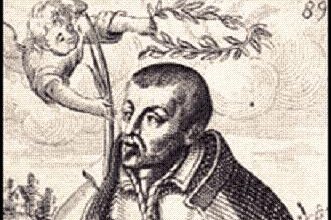
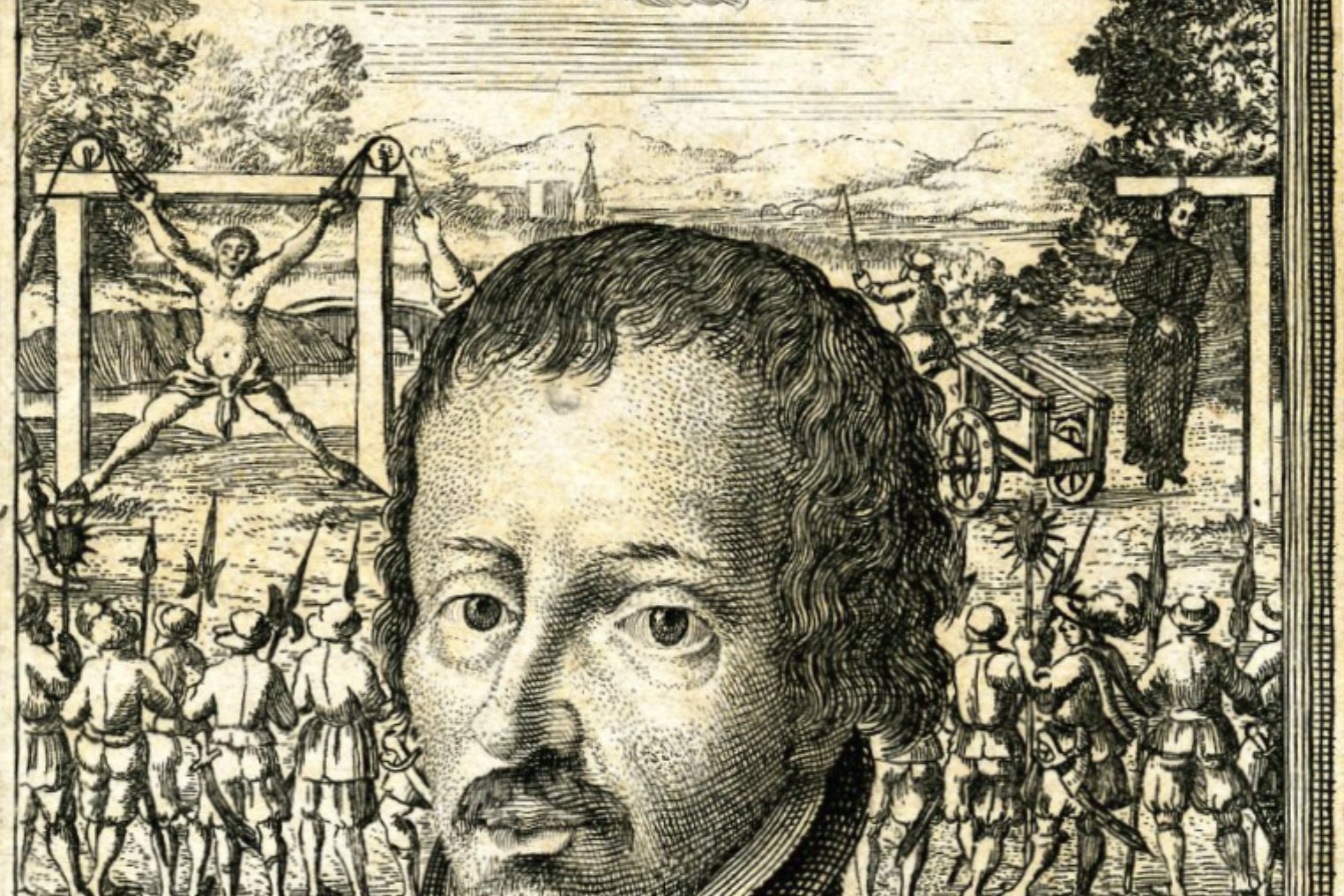
Unknown engraver, portrait of Robert Southwell, 16th–17th century — public domain.
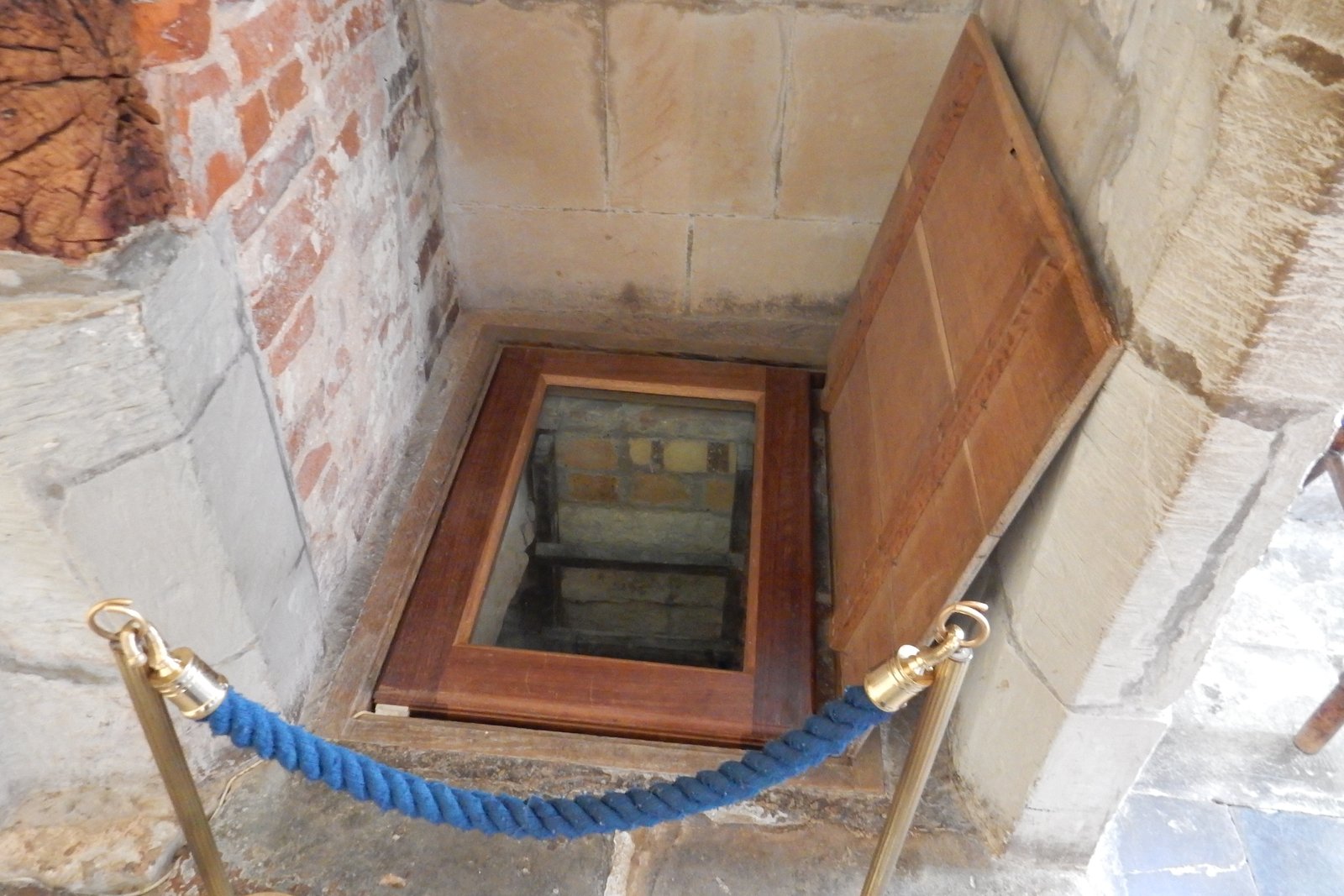
Southwell landed back in England in 1586 alongside fellow Jesuit Henry Garnet, and for the next six years worked the underground network that kept Catholic sacramental life alive in a country where practicing the faith openly could mean prison, fines, or worse. He said Mass in the homes of Catholic gentry, heard confessions, and moved constantly to avoid the government's priest-hunters — pursuivants who raided suspected houses looking for exactly the kind of hidden compartments, known as priest holes, that Southwell and men like him depended on to survive a search. He served for a time as chaplain to Anne Howard, Countess of Arundel, whose husband was already imprisoned in the Tower for his faith, and it was during these years, snatched between disguises and near-captures, that Southwell produced most of the poetry he's remembered for today.
Poetry written for the persecuted
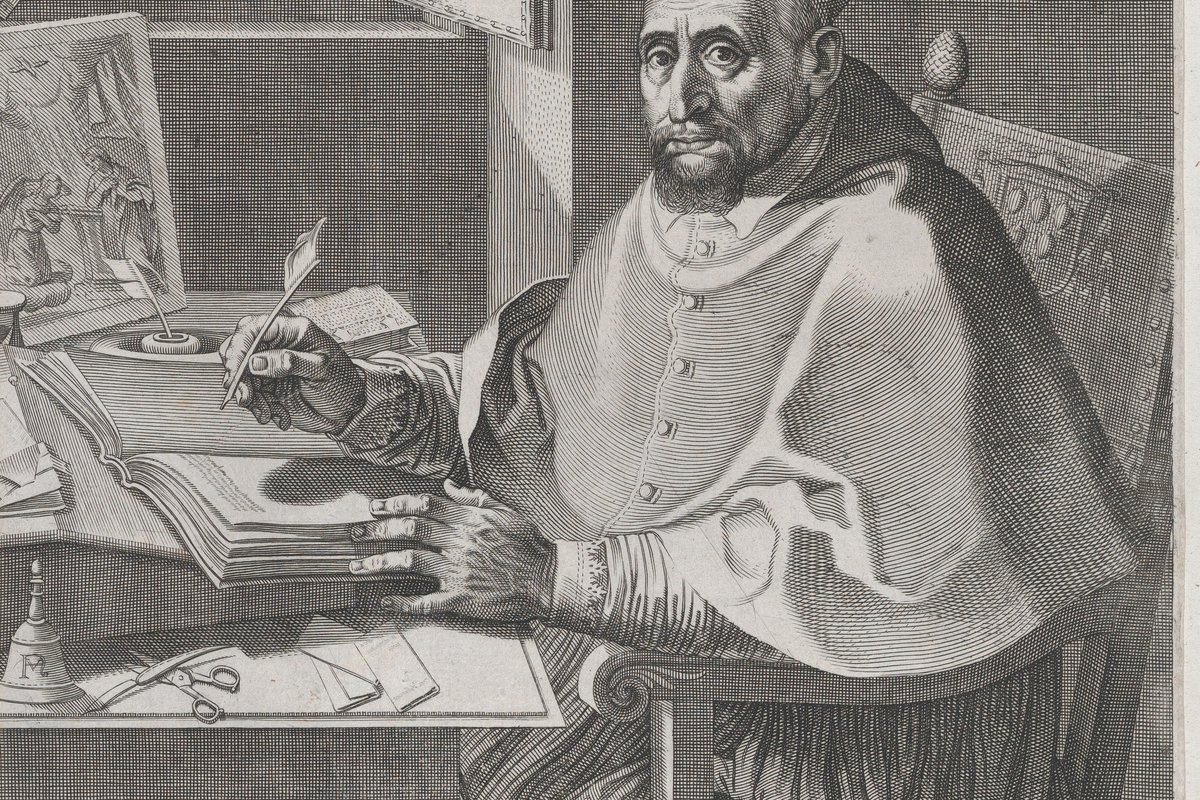
Southwell's verse wasn't devotional writing for its own sake — he explicitly meant it as an alternative to the secular love poetry fashionable at Elizabeth's court, offering readers religious subjects treated with the same craft poets were lavishing on romantic themes. His best-known poem, "The Burning Babe," imagines the infant Christ appearing to the poet on a winter night as a figure wreathed in flame, explaining his own coming Passion in the language of that fire — a compact, startling image that later poets studied closely. His longer prose work, An Epistle of Comfort, was written to console imprisoned and persecuted Catholics directly, addressing people in exactly the situation Southwell himself was risking every day he stayed in England.
None of Southwell's poetry was published under his own name while he lived — it circulated in manuscript among Catholic readers, and only reached print after his death, when Saint Peter's Complaint and Other Poems appeared in 1595, the same year he was executed. It went through multiple editions quickly. Literary historians have traced its influence into the work of major contemporaries, most persistently in connection with Shakespeare: several scholars point to verbal parallels between Southwell's poems and passages in Hamlet and King John, and a prefatory poem sometimes attributed to Southwell, addressed "to my worthy good cousin Master W.S.," reads to some as an appeal to a particular poet to turn his talent toward graver subjects — though the identification with Shakespeare remains debated rather than settled fact.
Capture, torture, and trial
In June 1592, Southwell was betrayed by Anne Bellamy, a young Catholic woman he had once helped, who was pressured by the priest-hunter Richard Topcliffe while in prison herself. Topcliffe took Southwell's capture personally and tortured him repeatedly and brutally over the following weeks, hoping to extract information about the wider Catholic underground and the households sheltering priests. Southwell gave nothing up. His own father, Richard Southwell, petitioned Queen Elizabeth directly, asking that his son either be tried properly under law or, if no charge could be brought, treated humanely — a request that went largely unanswered. Robert Southwell spent close to three years in prison, much of it in solitary confinement in the Tower of London, before he was finally brought to trial in February 1595.
The trial itself was brief, because the law made it so: under the Act of 1585, simply being a priest ordained abroad and present in England was itself the crime, and Southwell did not deny it. He was convicted of treason on that basis and sentenced to the standard punishment for the offense — hanging, drawing, and quartering. On February 21, 1595, he was taken to Tyburn, the public execution site outside London (near where the Saint Edward the Confessor's Westminster still stood as the city's ancient religious heart). Witnesses recorded that Southwell used his final moments to pray aloud and recite Psalm 31 — "In te, Domine, speravi," In you, Lord, I have put my trust — before the sentence was carried out. Even hostile observers in the crowd were reportedly struck by his composure.
A martyr among the Forty
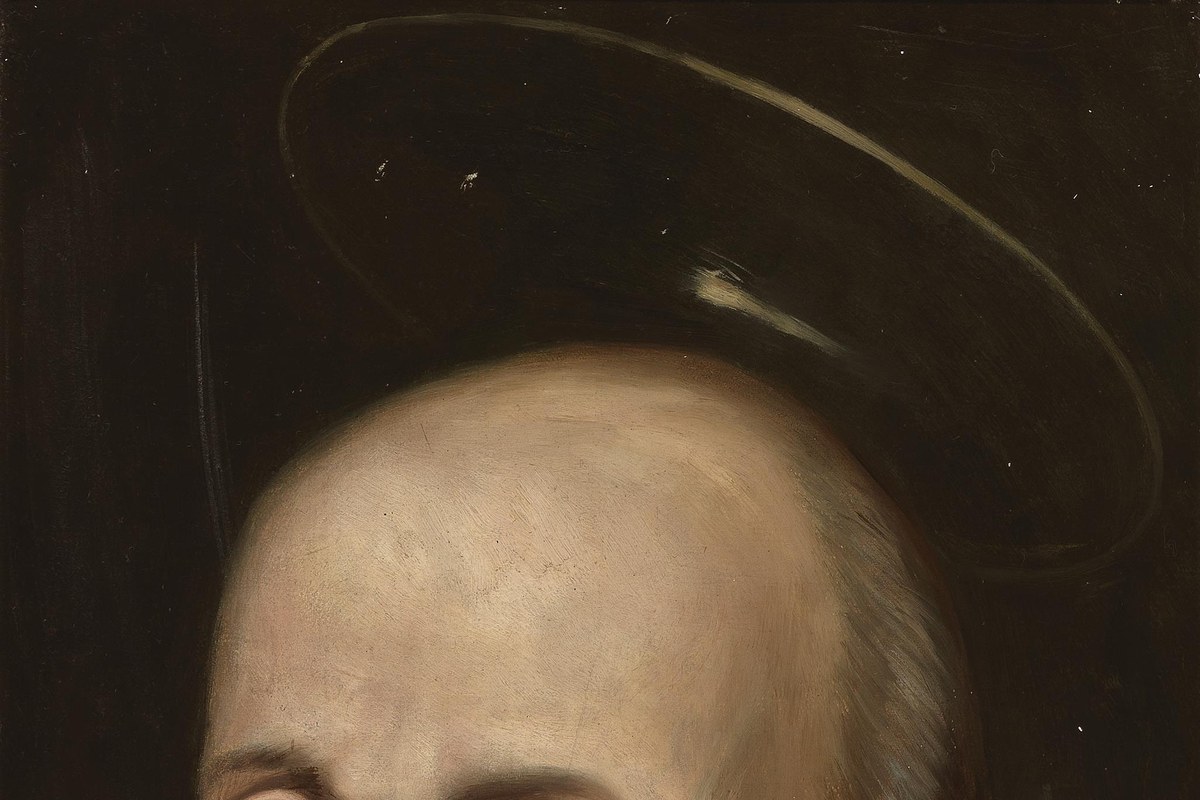
Southwell was one of well over a hundred Catholics executed in England between the 1530s and 1680s for reasons connected to their faith, a group the Church later drew on to name the Forty Martyrs of England and Wales, canonized together by Pope Paul VI in 1970 as representative figures of that longer persecution. Southwell himself was beatified in 1929 and canonized in 1970. His feast is kept on February 21, the date of his execution, and again on October 25 with the shared feast of the Forty Martyrs. What distinguishes his story within that larger group of English martyrs is the double record he left behind — not only the fact of a priest's death under a law that made his ordination itself a capital offense, but a body of poetry, written in hiding and read for centuries since, that turned the years he spent evading capture into some of the most quietly forceful religious verse of the English Renaissance.
Trivia
Who was Saint Robert Southwell?
Why was Robert Southwell executed?
Is Robert Southwell connected to Shakespeare?
What happened during Southwell's imprisonment?
When is Robert Southwell's feast day, and is he canonized?
You May Also Like
Related Reading