The 14 Stations of the Cross, Explained

Walking the road without leaving the church
The devotion has an unusual origin story for something so common in parish life today: it began as a substitute for a pilgrimage most people could never make. In medieval Jerusalem, pilgrims walked the Via Dolorosa — the traditional route Christ took from his trial to Calvary — pausing at particular points along the way to pray. Franciscan friars, given custody of the Holy Land's shrines, helped spread a version of that walk that any parish, anywhere, could reproduce on its own walls: fourteen images or crosses, spaced around the nave, each marking one moment of the Passion. Walk from one to the next, praying at each, and you retrace Christ's final journey without ever leaving the building.
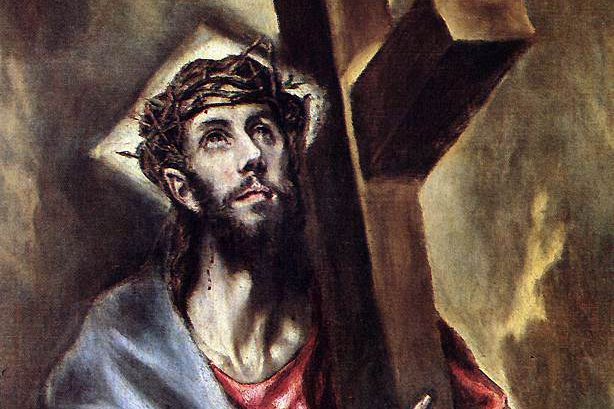
El Greco, Christ Carrying the Cross, c. 1602 (public domain)
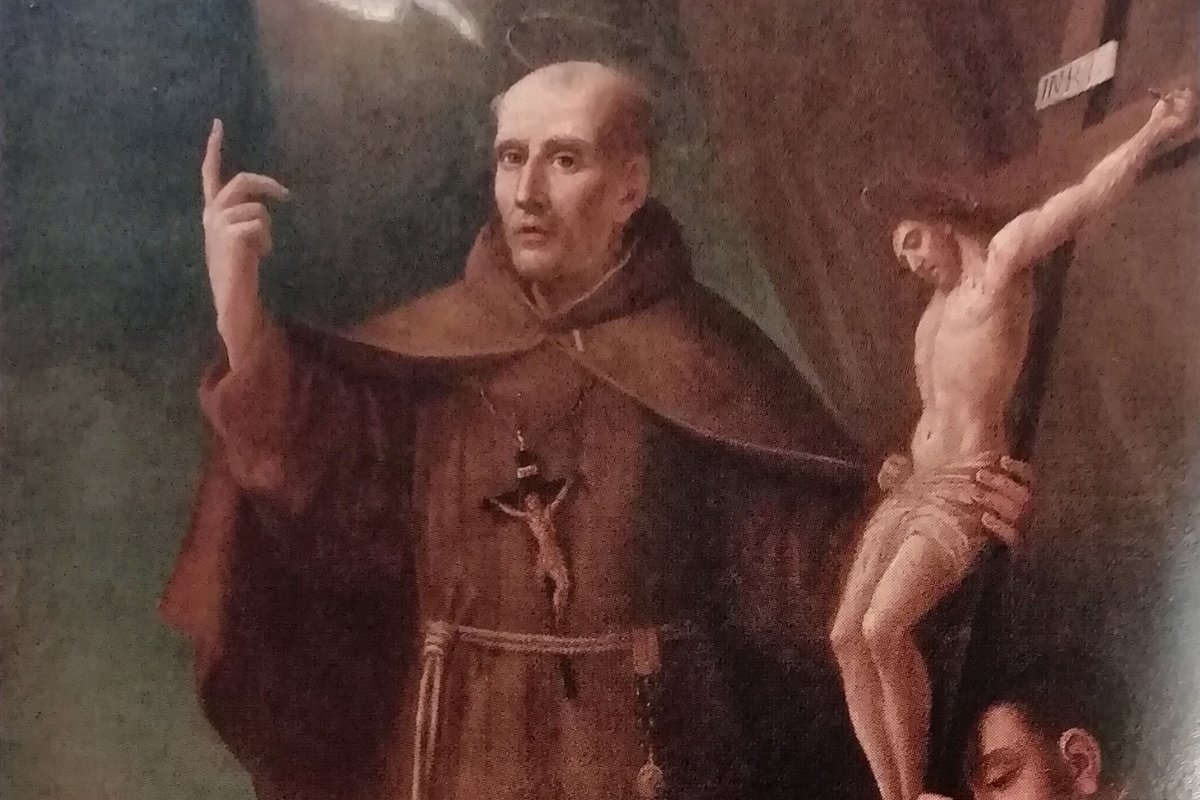
The number and order of the stations weren't fixed all at once. Earlier forms of the devotion circulated with different counts — sometimes seven stops, sometimes more than twenty — before the fourteen-station version settled into place as the standard by the eighteenth century. Franciscan preachers, particularly Saint Leonard of Port Maurice in Italy, did much of the work of standardizing the set and spreading it into parishes far from Rome or Jerusalem, to the point that installing the fourteen stations became something close to routine for a new Catholic church being built anywhere in the world.
The fourteen traditional stations
The classic set runs: Jesus is condemned to death; he takes up his cross; he falls the first time; he meets his mother; Simon of Cyrene helps carry the cross; Veronica wipes the face of Jesus; he falls a second time; he meets the women of Jerusalem; he falls a third time; he is stripped of his garments; he is nailed to the cross; he dies on the cross; his body is taken down; and he is laid in the tomb.
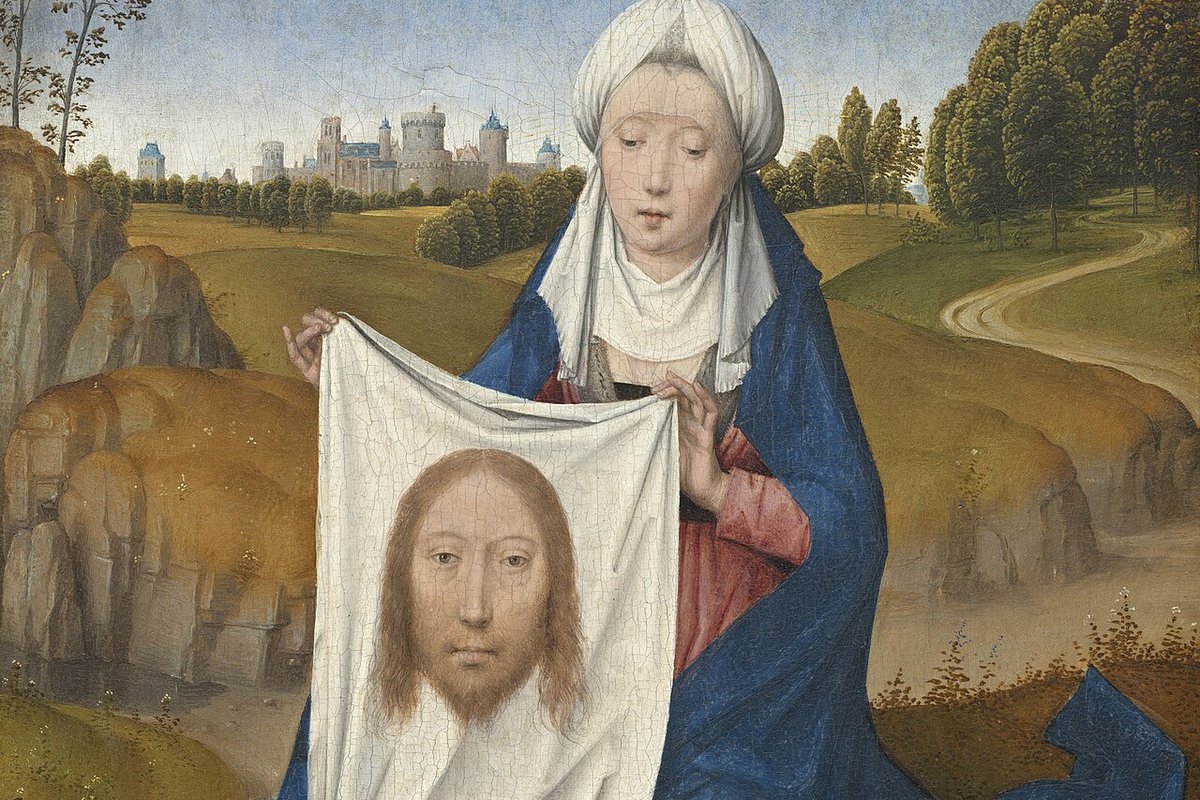
Nine of these fourteen have a clear basis in the Gospel texts — the condemnation, Simon of Cyrene carrying the cross (Mark 15:21), the crucifixion and death, the women weeping along the road (Luke 23:27-28), the removal from the cross, and the burial. The other five — the three falls, the meeting with Mary, and Veronica's veil — come from centuries of pious tradition and popular devotion rather than direct scriptural narration. That doesn't make them less meaningful to generations of the faithful who have prayed them, but it's worth knowing which is which. The Veronica station in particular has its own rich legend, explored at length in our piece on Saint Veronica and the Veil of Christ's Face.
Praying the stations typically follows a set rhythm: at each one, the leader announces the station, a short prayer or reading follows, and the group responds with a versicle traditionally rendered as "We adore you, O Christ, and we bless you, because by your holy cross you have redeemed the world" before moving on. In many parishes, especially during Lent, parishioners walk the stations together on Friday evenings, pausing in silence in front of each image — a devotion that engages the body as much as the mind, since it asks the faithful to physically move from scene to scene rather than simply read or listen from a pew.
A scriptural alternative from Pope John Paul II
In 1991, Pope John Paul II led a new version of the devotion at the Colosseum in Rome on Good Friday — the Scriptural Way of the Cross, or Via Crucis. Rather than dropping the non-biblical stations quietly, he replaced them outright with fourteen scenes drawn directly from the Gospel Passion narratives: the Agony in the Garden, the betrayal by Judas, Jesus's condemnation by the Sanhedrin, his denial by Peter, his judgment by Pilate, his scourging and crowning with thorns, his carrying of the cross, Simon of Cyrene's help, the words to the women of Jerusalem, the crucifixion, Christ's promise to the good thief, his words to Mary and John from the cross, his death, and his burial. The pope continued praying this scriptural form of the Way of the Cross at the Colosseum in later years, and it's now used widely alongside — not instead of — the traditional fourteen.
Pope John Paul II's choice to lead this version publicly, year after year, at one of Christianity's most historically loaded sites — the Colosseum, where early Christians are traditionally, if not always historically precisely, remembered as having been martyred — gave the Scriptural Way of the Cross an unusually visible launch for a devotional innovation. It wasn't imposed as a replacement anywhere; rather, it offered parishes and individual worshippers a second, Gospel-anchored option that sidesteps the historical question of which non-biblical scenes actually happened, without disputing their devotional value to those who continue praying them.
Why both versions endure
The two forms serve slightly different purposes. The traditional set carries the weight of centuries of devotional art, hymnody, and parish memory — generations of Catholics have prayed exactly these fourteen scenes, falls and veil included. The scriptural version answers a more historical-critical instinct, anchoring every station directly in the Gospel text. Most parishes still display the traditional fourteen on their walls, and many use the Scriptural Way of the Cross for at least one Friday of Lent, especially Good Friday itself — two roads to the same destination, the tomb outside Jerusalem, and beyond it, though the Stations themselves stop short of saying so, the empty tomb of Easter morning.
That deliberate stopping point is worth noticing. The Stations end at the tomb, not the Resurrection, holding the faithful in the weight of Christ's death rather than rushing past it toward Easter joy — a devotion built for Lent and Good Friday specifically, not for the season that follows. Some modern parishes add a fifteenth station depicting the Resurrection as a bridge toward that joy, but this remains a local custom rather than part of the classic set, and most guides to the devotion still present it as a meditation that ends, deliberately, in silence at a sealed tomb. Readers who want to follow the story forward from there may want to read about the Risen Christ or the Road to Emmaus, the Gospel accounts of what came next.
Trivia
How many Stations of the Cross are there?
Are all the Stations of the Cross based on the Bible?
What is the Scriptural Way of the Cross?
Where does the devotion of the Stations of the Cross come from?
Is Saint Veronica a real historical figure?
You May Also Like
Related Reading