The Apostles' Creed — Origins, Meaning, and Its Place in Catholic Prayer

A legend about its writing, and a quieter truth
The story of twelve apostles each contributing a line was told widely in the early medieval Church and gave the creed its name, but it isn't history — it's a pious legend that emerged centuries after the apostolic age itself, meant to underline the creed's apostolic authority rather than describe its literal drafting. One popular version of the legend even assigned a specific clause to each apostle by name — Peter supposedly speaking the opening line about God the Father, Andrew adding the line on Christ, and so on down the list — a level of specificity that made the story memorable and easy to preach, even though no historical record supports it.
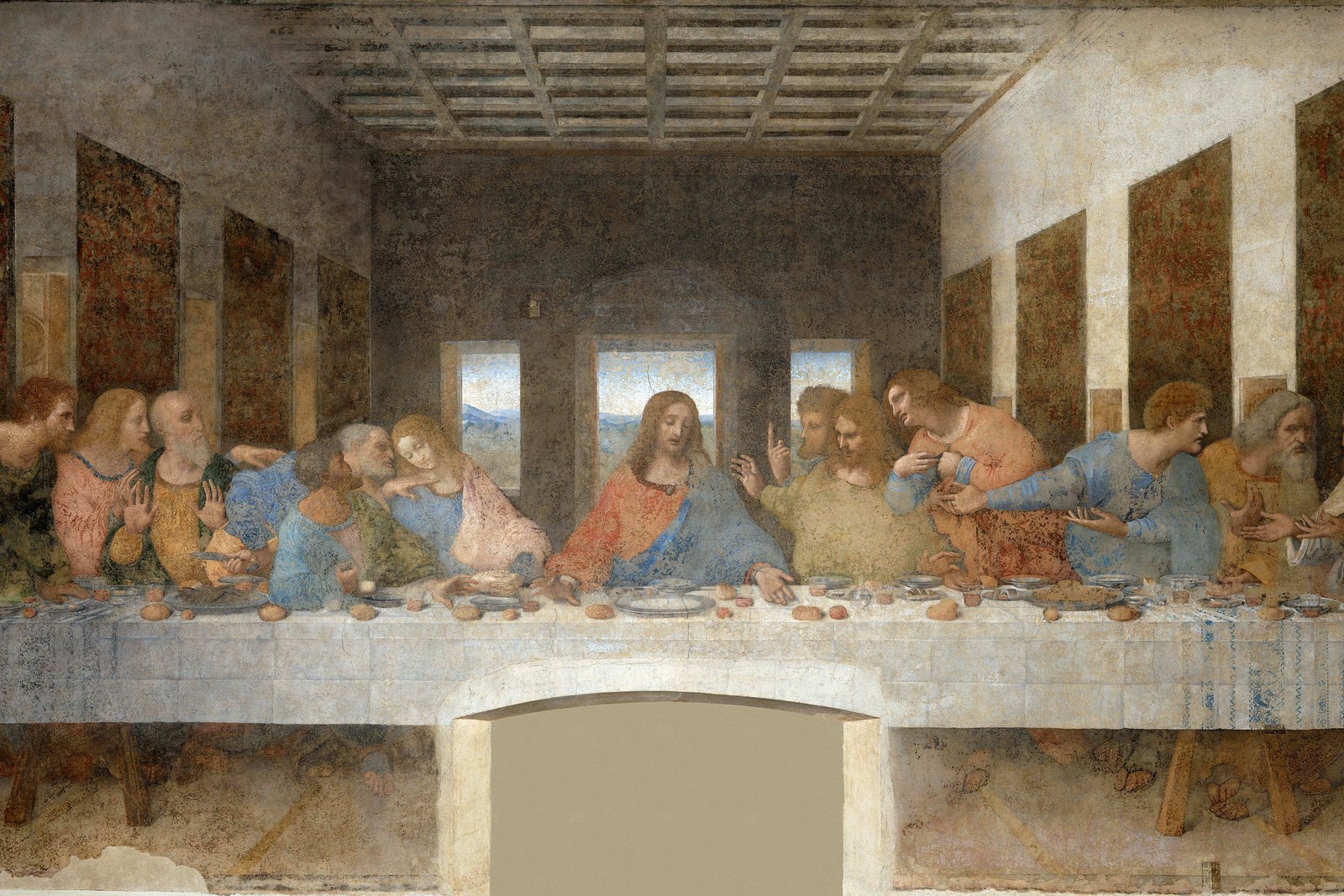
Leonardo da Vinci, The Last Supper, 1495–1498 (public domain)
The real origin is more gradual: the Apostles' Creed grew out of an old baptismal formula used in the Church of Rome, known to scholars as the Old Roman Creed, in use by at least the second century in a shorter form. Candidates preparing for baptism in the early Church memorized this kind of formula as part of a lengthy catechumenate — the period of instruction and preparation that could last months or even years before someone was received into the Christian community — and recited it aloud as their personal profession of faith at the font itself. Over the following centuries the formula was expanded and standardized, reaching close to the wording used today by around the eighth century in Gaul, from where it spread back through the wider Western Church, eventually displacing regional variants and settling into the fixed text used ever since. The name stuck not because the Twelve wrote it, but because the Church has always recognized it as a faithful summary of exactly what the apostles themselves proclaimed.
What the creed professes
The text moves in three movements, following the persons of the Trinity. It opens with belief "in God, the Father almighty, Creator of heaven and earth." It then turns to Jesus Christ at greater length — "conceived by the Holy Spirit, born of the Virgin Mary," his suffering "under Pontius Pilate," crucifixion, death, burial, and descent "into hell," his resurrection "on the third day," his ascension, and his seat "at the right hand of God the Father almighty," from where he will come "to judge the living and the dead." It closes with belief "in the Holy Spirit, the holy catholic Church, the communion of saints, the forgiveness of sins, the resurrection of the body, and life everlasting."
That line about Christ's descent "into hell" often needs a word of explanation: it doesn't mean Christ suffered damnation. The Catechism reads it as Christ's saving mission reaching even the dead who came before him — traditionally pictured as Christ opening the gates for the righteous of the Old Testament, sometimes called the "harrowing of hell."
Where it's prayed today
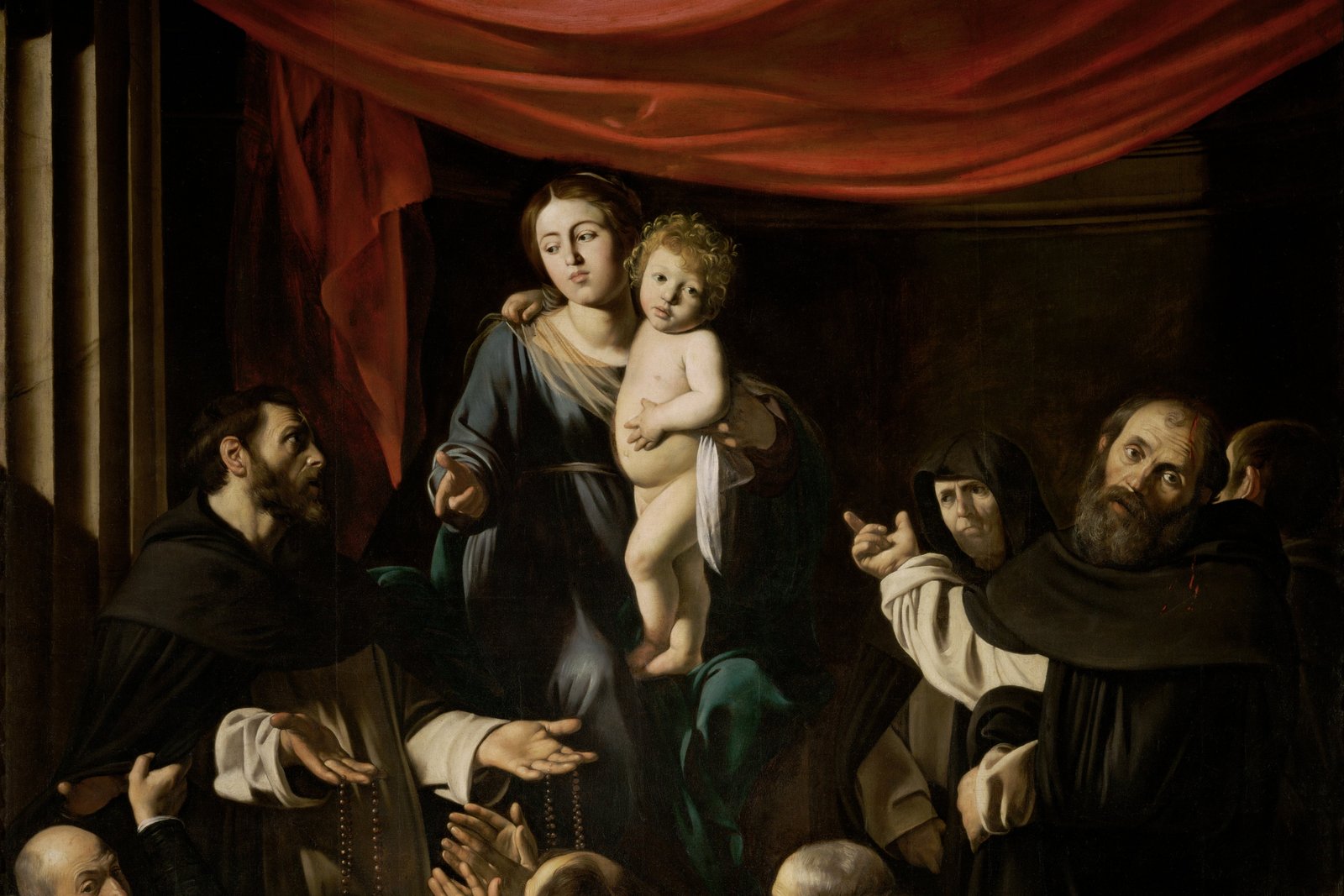
Unlike the Nicene Creed, which was hammered out at two great ecumenical councils and is the creed ordinarily recited at Sunday Mass, the Apostles' Creed lives mainly in two other settings. It's the creed used at baptism, where the celebrant puts its statements to the parents and godparents (or the adult candidate) as a series of questions — "Do you believe in God, the Father almighty..." — answered "I do" at each step, turning the creed into a living exchange rather than a recited text. And it's the prayer that opens the Rosary, said on the crucifix before the first bead is even reached, setting the whole devotion within the frame of basic Christian belief before moving into its twenty mysteries of Christ's life.
The Catechism of the Catholic Church draws on the Apostles' Creed as its own organizing framework, structuring its entire first section around the creed's twelve articles one by one — a sign of how thoroughly the Church still treats this short text as the backbone of Catholic teaching, not just a historical artifact from the early centuries of the faith. Parish RCIA programs (the process by which adults enter the Catholic Church) still use the creed's structure to organize months of instruction, moving article by article through the same territory the ancient catechumens once covered.
The communion of saints and the resurrection of the body
Two of the creed's closing phrases reward a slower look, because both compress a lot of meaning into just a few words. "The communion of saints" affirms that all believers — the living faithful still on their earthly journey, the souls being purified in purgatory, and the saints already enjoying the vision of God in heaven — remain bound together in one spiritual body through Christ, able to pray for and support one another across that boundary. It's the doctrinal foundation underneath two very ordinary Catholic habits: praying for deceased relatives, and asking a particular saint to intercede for a specific need, the same impulse behind so many of the saints venerated for centuries as patrons and protectors.
"The resurrection of the body" makes an equally specific claim, and one easy to misread. It isn't simply a promise that the soul survives death — most ancient philosophies, pagan and Christian alike, already assumed some form of that. It's the much stranger, more physical claim that the body itself will be raised and reunited with the soul at the end of time, following the pattern of Christ's own bodily resurrection on Easter morning. That belief is part of why the Catholic Church has historically preferred burial over cremation, and why, even where cremation is now permitted, it asks that the ashes be buried or entombed rather than scattered or kept at home.
A short creed carrying long history
For something so brief — it takes under a minute to recite — the Apostles' Creed carries an enormous amount of doctrinal ground: the Trinity, the Incarnation, the Passion, the Resurrection, the Church, and the hope of eternal life, all compressed into a dozen short clauses. That density, combined with its association (however legendary in its literal telling) with the apostles themselves, is exactly why it became the Church's default text for the moment a person is first initiated into the faith at the baptismal font, and why generations of Catholic children have learned it by heart before they learn much else about their faith at all.
Trivia
Did the twelve apostles literally write the Apostles' Creed?
What is the difference between the Apostles' Creed and the Nicene Creed?
When is the Apostles' Creed used in Catholic worship?
What does the Apostles' Creed say about the 'communion of saints'?
What does 'he descended into hell' mean in the Apostles' Creed?
You May Also Like
Related Reading