The Commemoration of all the Faithful Departed (All Souls' Day)


Praying for the dead is an old instinct
The practice of praying for the deceased did not originate with the specific November 2 feast; it is far older, rooted in Jewish tradition that predates Christianity itself. The Second Book of Maccabees, part of the Old Testament in the Catholic canon, describes the Jewish military leader Judas Maccabeus taking up a collection to offer a sin offering on behalf of soldiers who had died in battle, so that they might be delivered from their sin, a passage Catholic tradition has long cited as early scriptural support for the practice of praying and offering sacrifice for the dead. Early Christian communities inherited and continued this instinct, and inscriptions in the Roman catacombs and references in patristic writings show that prayer for deceased Christians was a regular part of Christian devotional life from the earliest centuries of the Church.
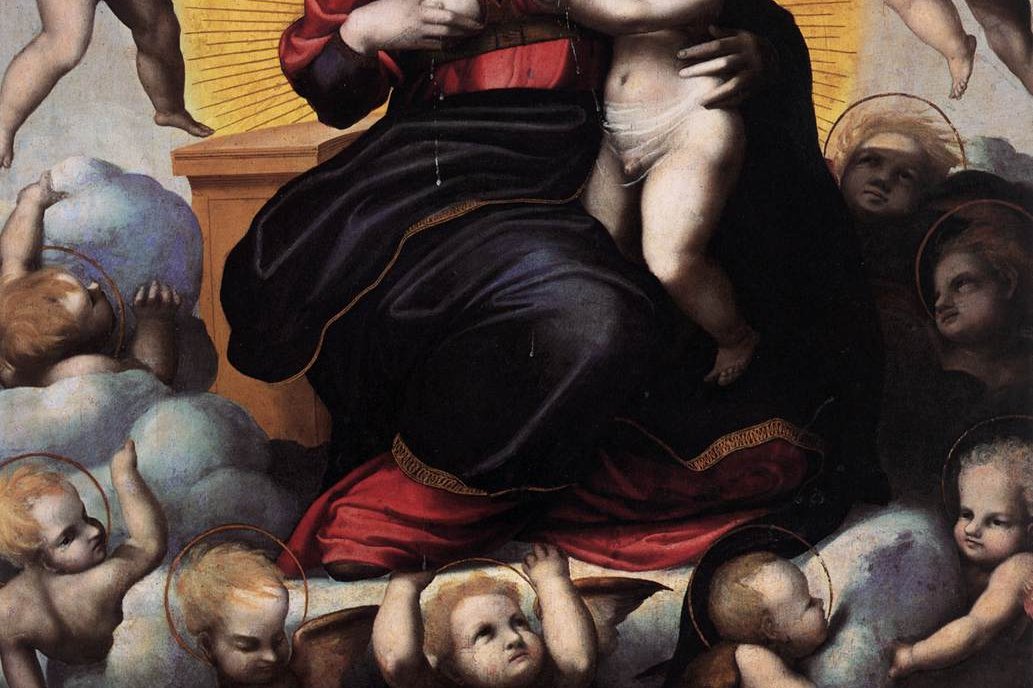
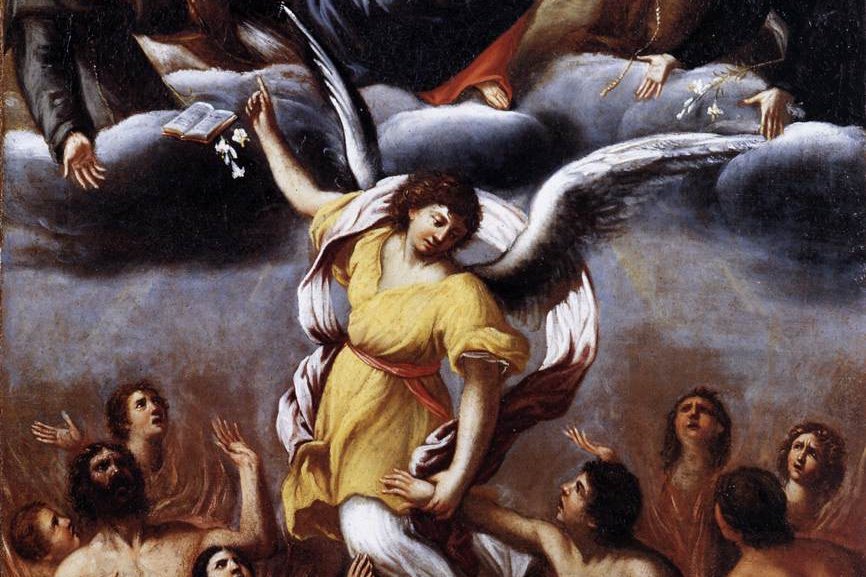
Pedro Machuca, The Virgin and Souls in Purgatory (c. 1517) - Wikimedia Commons, public domain
What the November 2 feast eventually provided was not the invention of this practice but its formal, universal, annual expression, a single day each year on which the whole Church would turn its attention collectively toward praying for all the faithful departed rather than relying solely on private devotion or scattered local customs.
Saint Odilo and the monks of Cluny
The specific origin of All Souls' Day as an annual observance is generally credited to Saint Odilo, the abbot of the great Benedictine monastery of Cluny in Burgundy, France, around the year 998. According to tradition, Odilo instituted an annual commemoration for the souls of all the monks of Cluny's affiliated houses and their benefactors, to be observed each year on November 2, the day immediately following the Feast of All Saints. Cluny was, at the time, one of the most influential monastic centers in Western Europe, with a wide network of dependent priories and considerable prestige, and the practice Odilo established there spread relatively quickly through the broader Benedictine world and, over the following two centuries, into the general liturgical calendar of the Western Church.
By placing the new commemoration immediately after All Saints Day, Odilo and the tradition that followed him created a deliberate pairing: one day honoring the dead already believed to be enjoying the fullness of heaven, followed immediately by a day devoted to prayer for those still, in Catholic understanding, on the way there.
What the Church teaches about purgatory
All Souls' Day rests on the Catholic doctrine of purgatory, the belief that many souls who die in a state of grace, meaning in fundamental friendship with God rather than in a state of unrepented mortal sin, are nonetheless not yet perfectly purified of the effects of sin and therefore not yet ready to enter directly into the full presence of God. The Catechism of the Catholic Church describes this as a process of final purification, distinct in kind from the eternal punishment of hell, and explicitly framed around hope rather than despair, since every soul undergoing it is understood to be assured of eventually reaching heaven.
Central to Catholic teaching on purgatory is the conviction that the prayers, sacrifices, and good works of the living can genuinely assist souls undergoing this purification, a belief grounded in the doctrine of the communion of saints, which holds that death does not sever the spiritual bonds linking all members of the Church, whether living, being purified, or already glorified in heaven. This is the theological foundation beneath the visible, often quite public devotional practices associated with All Souls' Day: the Mass offered specifically for the dead, private prayers such as the Eternal Rest prayer, and the widespread custom of visiting and tending family graves.
Indulgences and the customs of November 2
Catholic tradition connects the observance of All Souls' Day, and the days immediately surrounding it, to the practice of gaining indulgences on behalf of the souls in purgatory. An indulgence, in Catholic teaching, is the remission before God of temporal punishment still due for sins already forgiven, and the Church has traditionally granted the possibility of a plenary indulgence, meaning a full remission under the proper conditions, to those who visit a cemetery and pray for the dead during the days around November 2, or who visit a church on All Souls' Day itself and pray for the pope's intentions, alongside the usual conditions of sacramental confession, reception of the Eucharist, and freedom from attachment to sin.
These practices help explain the striking visual customs associated with the feast in heavily Catholic countries. In Spain, Italy, France, and across much of Latin America, families gather at cemeteries on or around November 2 to clean and decorate the graves of relatives with flowers, particularly marigolds in Mexican tradition, and candles, often staying for extended periods of prayer and quiet remembrance. In Mexico in particular, All Souls' Day intersects with the broader cultural observance of Día de los Muertos, the Day of the Dead, which blends indigenous traditions of ancestor remembrance with the Catholic liturgical calendar surrounding All Saints and All Souls, producing one of the most visually distinctive expressions of this feast found anywhere in the Catholic world.
A theology of hope rather than fear
Despite its subject matter, Catholic teaching consistently frames All Souls' Day and the doctrine of purgatory behind it as fundamentally oriented toward hope rather than dread. The souls being prayed for are, by definition, already assured of heaven; purgatory in Catholic theology is not a second chance for the damned but a final stage of healing for those already saved. The feast, observed the day after the Church celebrates the saints already in glory, invites the living to extend that same communion of prayer to those still on the final leg of the journey, treating death not as a wall separating the living from the dead but as one more stage within a relationship that prayer can still meaningfully cross.
Trivia
What is All Souls' Day?
What does the Catholic Church teach about purgatory?
How did All Souls' Day originate?
Why is All Souls' Day observed the day after All Saints Day?
What is a plenary indulgence, and how does it relate to All Souls' Day?
Related Reading