Blessed Virgin Mary, Mother of the Church

A title with roots at the foot of the cross
Catholic devotion has honored Mary under hundreds of titles over two thousand years — Our Lady of Guadalupe, Our Lady of Lourdes, Our Lady of Fatima — most of them tied to a particular apparition, place, or moment of intercession. "Mother of the Church" is different: it is not connected to any single vision or shrine, but to a theological claim about Mary's relationship to every Christian everywhere, rooted directly in two moments recorded in the New Testament itself.
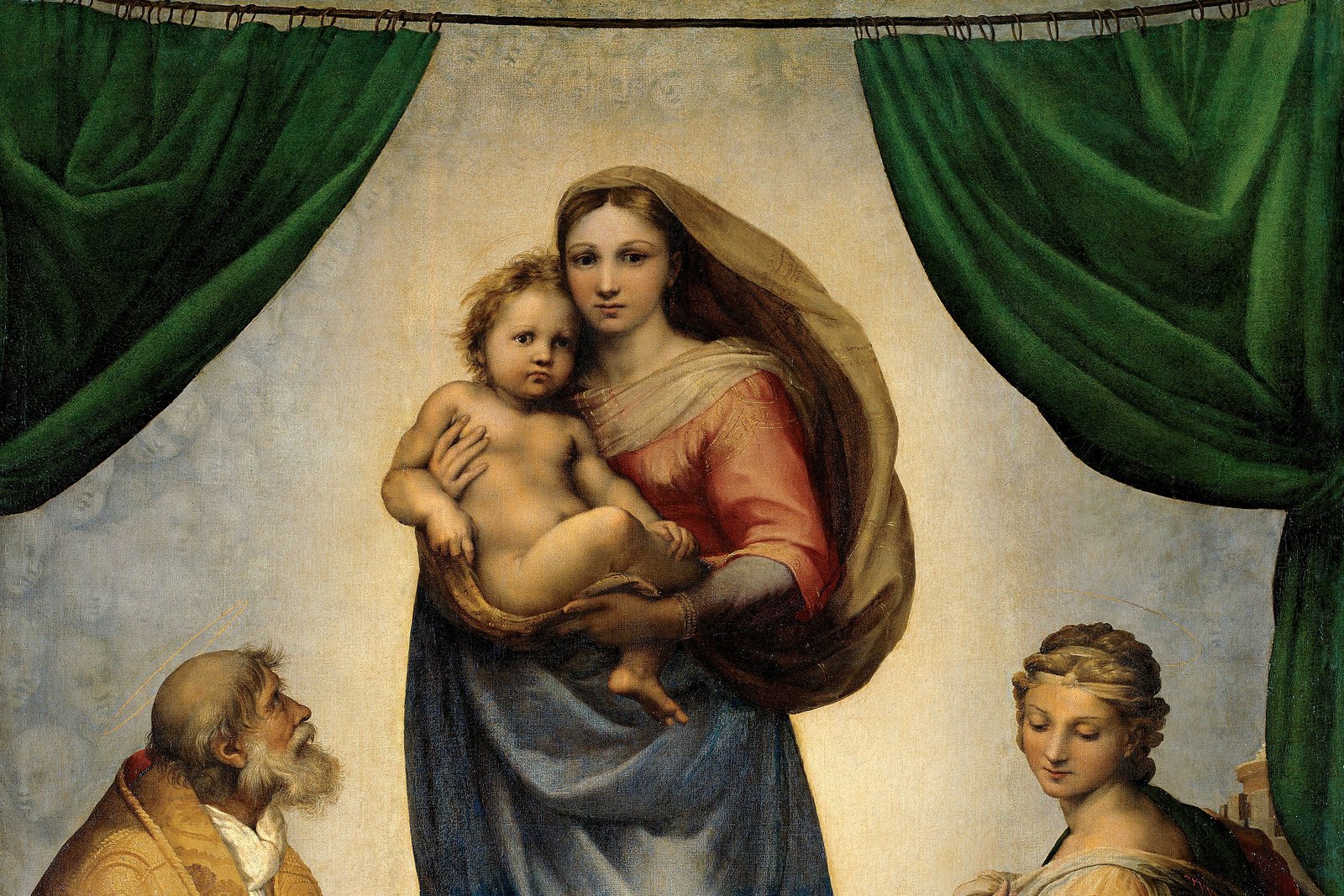
Raphael, The Sistine Madonna, 1512, Gemäldegalerie Alte Meister, Dresden — public domain.
The first is the scene at Calvary in the Gospel of John. As Jesus hung dying, he saw his mother and "the disciple whom he loved" standing together, and said to her, "Woman, behold your son," and to the disciple, "Behold your mother" (John 19:26-27, RSV-CE). Read on its own, the passage is a son's final act of care, arranging for his mother to be looked after after his death. Catholic tradition, however, has long read it as carrying a second, deeper meaning as well: because the beloved disciple has traditionally been understood not just as an individual but as a representative of every believer, Mary's new motherhood over "your son" is read as extending, in a spiritual sense, to the whole community of Christ's followers.
The second moment comes just before Pentecost. The Acts of the Apostles records that after the Ascension, the apostles "All these devoted themselves with one accord to prayer, together with some women, and Mary the mother of Jesus, and his brothers." (Acts 1:14, RSV-CE), waiting in the upper room for the Holy Spirit. Mary is present, praying alongside the apostles, at the very moment tradition regards as the Church's birth — a detail that has shaped centuries of Catholic reflection on her as present not just at the beginning of Christ's earthly life but at the beginning of the Church's life as well.
Hagiography and dogma: two different kinds of authority
It is worth being precise about what kind of teaching "Mother of the Church" actually is, because Marian titles carry different levels of authority within Catholic tradition. Some, like the Immaculate Conception and the Assumption, are formally defined dogmas — teachings the Church holds must be believed by all the faithful. "Mother of the Church" has never been defined as a separate dogma of that kind. It is, instead, an official liturgical title and a well-established doctrinal teaching flowing out of Mary's broader spiritual motherhood, which the Catechism describes this way: "Mary's motherhood in the order of grace... began with the consent which she gave in faith at the Annunciation and which she sustained without wavering beneath the cross" (CCC 964) and continues "until the eternal fulfillment of all the elect" (CCC 965). The title is a summary and a celebration of that teaching, not a new doctrine invented separately from it.
From the Council floor to the universal calendar
The modern history of the title begins at the Second Vatican Council. The Council's central document on the Church, Lumen Gentium, devotes its entire eighth and final chapter to Mary, teaching extensively on her role in the mystery of Christ and of the Church, including her ongoing intercession for believers (Lumen Gentium, 61-63) — though the document itself does not use the exact phrase "Mother of the Church" in its text. That title was instead spoken aloud, deliberately and publicly, by Pope Paul VI in his closing address to the Council's third session on November 21, 1964, the same day Lumen Gentium was formally promulgated. Paul VI declared that, "for the glory of the Virgin Mary and for our own consolation," he was proclaiming "Mary Most Holy, Mother of the Church" — a moment some Council fathers reportedly received with a standing ovation on the floor of St. Peter's Basilica.
For more than five decades afterward, the title remained widely used in Catholic devotion and papal teaching without a fixed place of its own on the universal liturgical calendar. That changed in 2018, when Pope Francis issued a decree establishing the Memorial of the Blessed Virgin Mary, Mother of the Church, as an obligatory feast for the entire Latin Church, to be observed every year on the Monday following Pentecost Sunday. The timing was deliberate: placing the memorial immediately after Pentecost — the feast marking the Church's founding — reinforces the connection between Mary's presence in the upper room in Acts 1 and the Church's own birth as a community gathered in the Spirit.
A title that shapes how Mary is understood today
Because "Mother of the Church" describes a relationship rather than commemorating a single historical event or apparition, it functions differently in Catholic life than titles like Our Lady of Guadalupe or Our Lady of Fatima, which are tied to specific places and appearances. It is, instead, a lens through which Catholics are invited to understand every other Marian devotion: whatever shrine or apparition a particular devotion is rooted in, the underlying relationship it expresses — a mother's continuing care for her children — is understood to be the same one first spoken into being at the foot of the cross.
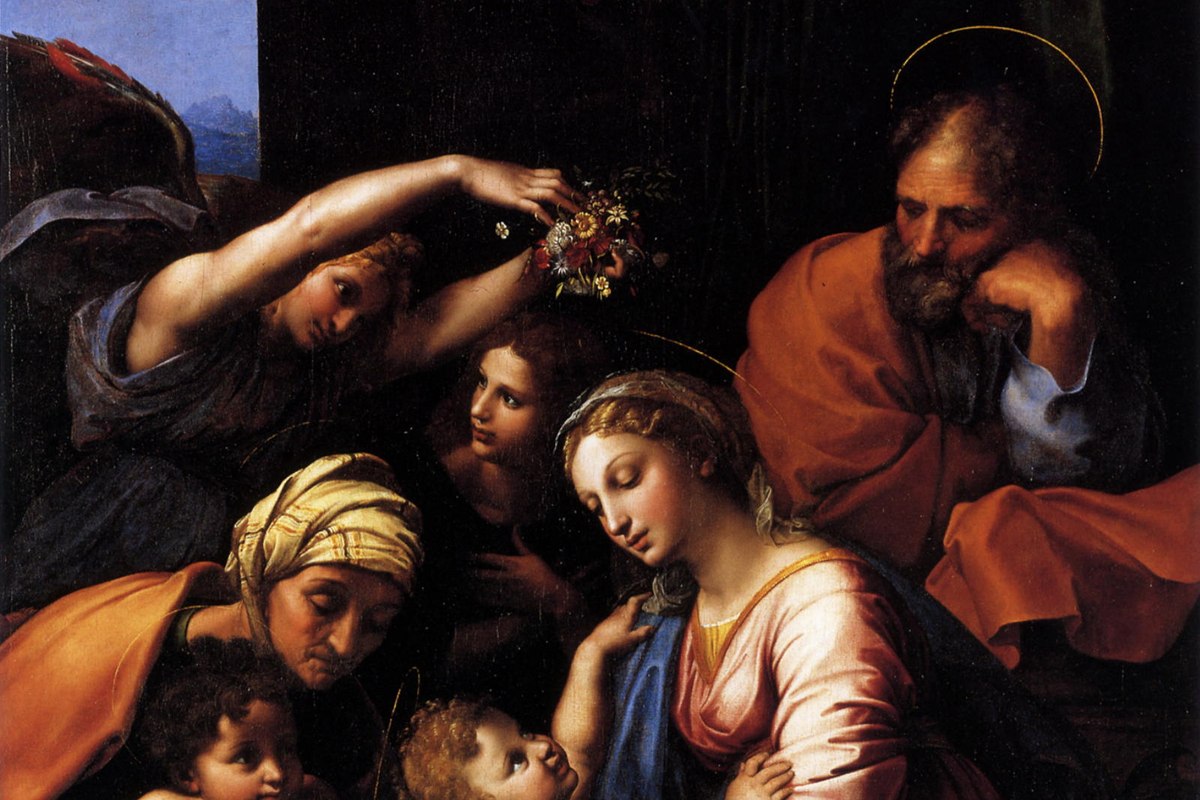
The feast also sits naturally alongside the Holy Family in the broader arc of how Scripture and tradition present Mary's motherhood: first as mother of the child Jesus within an ordinary household in Nazareth, and then, after the cross and Pentecost, as mother in a wider and more spiritual sense to the community of believers that grew out of that same household of faith. For many Catholics, the memorial observed each year on the Monday after Pentecost offers a quiet moment to reflect on both meanings of Mary's motherhood together — not as separate ideas, but as one story that begins in Bethlehem and does not end at the cross.
Trivia
Why is Mary called the Mother of the Church?
When did Mother of the Church become an official feast day?
Did the Second Vatican Council use the title Mother of the Church?
Is Mother of the Church a dogma or a title of devotion?
How is Mother of the Church different from other Marian titles like Our Lady of Guadalupe?
You May Also Like
Related Reading