The Life of Mary — A Complete Timeline

A life told mostly in gaps
Anyone who tries to read Mary's story straight through the New Testament runs into the same problem almost immediately: she is central to the story of salvation and almost entirely absent from its page count. Luke gives her a handful of vivid, detailed scenes early on. John gives her two brief, weighty appearances — at Cana and at the cross. Then the record simply stops, aside from one line in Acts placing her in the upper room with the apostles after the Ascension. Everything else — her birth, her childhood, the years of Jesus's adulthood before his public ministry, her final years — comes from a separate stream of tradition that developed alongside Scripture, not from the Gospels themselves.
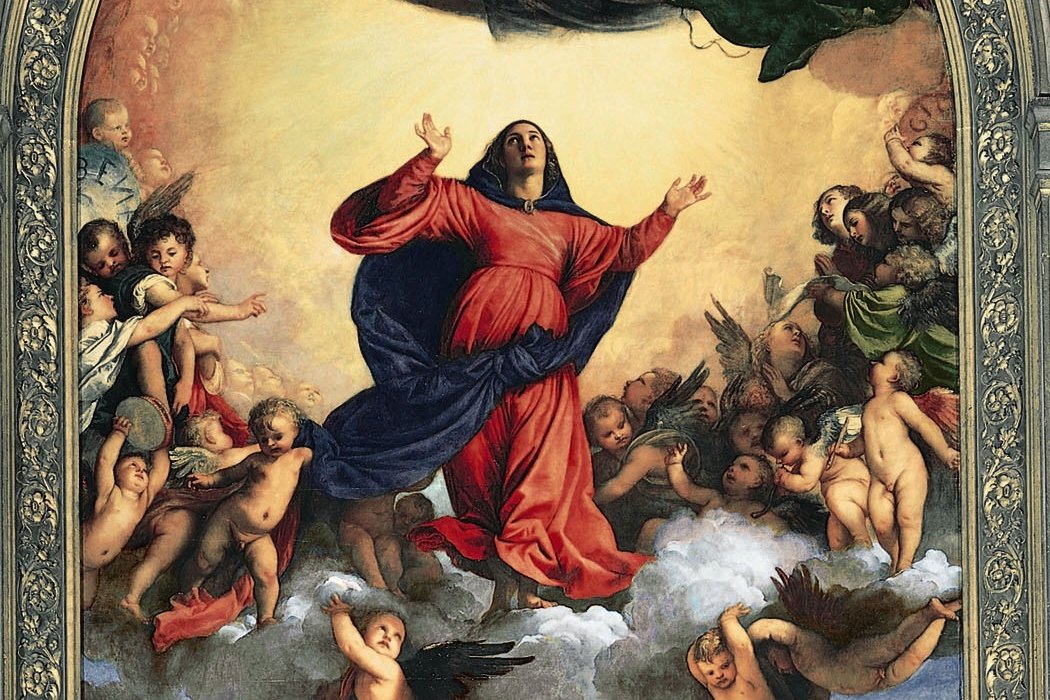
Titian, Assumption of the Virgin, 1516-1518, Basilica di Santa Maria Gloriosa dei Frari, Venice — public domain.
That's not a flaw in the record so much as a reflection of what the Gospels were written to do: proclaim the identity and mission of Jesus, not chronicle the life of his mother. But the Church, from a very early date, wanted to know more, and out of that hunger grew the ordered sequence of events — part biblical, part traditional — that shapes how Marian feasts are arranged across the liturgical calendar to this day.
Birth, childhood, and a betrothal (extra-biblical tradition)
The timeline opens with the Nativity of Mary, a feast built entirely on tradition rather than Gospel text — specifically the second-century Protoevangelium of James, which names her parents Joachim and Anne and describes a childless couple's prayer answered late in life. The Church has never treated these details as confirmed history, but the feast itself, kept every September 8, has been part of the calendar since at least the sixth century.
The same extra-biblical source supplies the Presentation of Mary, the tradition that her parents brought her to the Temple as a small child to be raised in its precincts — a story that, again, sits outside Scripture but shaped centuries of Christian art and devotion. From there tradition moves to the Betrothal of Mary and Joseph, the arrangement that placed her, by the time Luke's Gospel opens its narrative in earnest, already promised in marriage to a carpenter from Nazareth.
The Annunciation and the Visitation
Here the timeline finally meets the Gospel text directly. Luke records that "the angel Gabriel was sent from God to a town of Galilee called Nazareth, to a virgin betrothed to a man named Joseph" (Luke 1:26-27, NABRE), and what follows — Gabriel's announcement, Mary's question about how such a thing could happen, and her answer, "Behold, I am the handmaid of the Lord. May it be done to me according to your word" (Luke 1:38, NABRE) — is covered in full in The Annunciation. Catholic tradition treats this consent, freely given, as the moment the Incarnation begins.
Luke moves immediately from there to The Visitation, Mary's journey to see her relative Elizabeth, pregnant in her old age with the future John the Baptist. It's here that Elizabeth greets her as "the mother of my Lord" (Luke 1:43, NABRE) and Mary responds with the Magnificat, her canticle of praise that the Church still prays daily in the Liturgy of the Hours.
Bethlehem, the Temple, and a twelve-year-old lost in Jerusalem
The Nativity of Jesus follows — the birth in Bethlehem that Luke sets against the backdrop of a Roman census, with Mary "She wrapped him in swaddling clothes and laid him in a manger, because there was no room for them in the inn." (Luke 2:7, NABRE). Soon after comes the Presentation of Jesus at the Temple, the ritual dedication of the firstborn son under Jewish law, where the elderly Simeon warns Mary that "(and you yourself a sword will pierce) so that the thoughts of many hearts may be revealed." (Luke 2:35, NABRE) — a line the Church has long read as pointing forward to Calvary.
Scripture then goes almost entirely silent on Mary's life for roughly a decade, broken only by the Finding of Jesus in the Temple, the episode in which a twelve-year-old Jesus stays behind in Jerusalem debating with the Temple teachers while his parents search for him for three anxious days. It's the last Gospel scene from Jesus's childhood, and the last extended appearance of Mary before his adult ministry begins.
Cana, the cross, and Pentecost
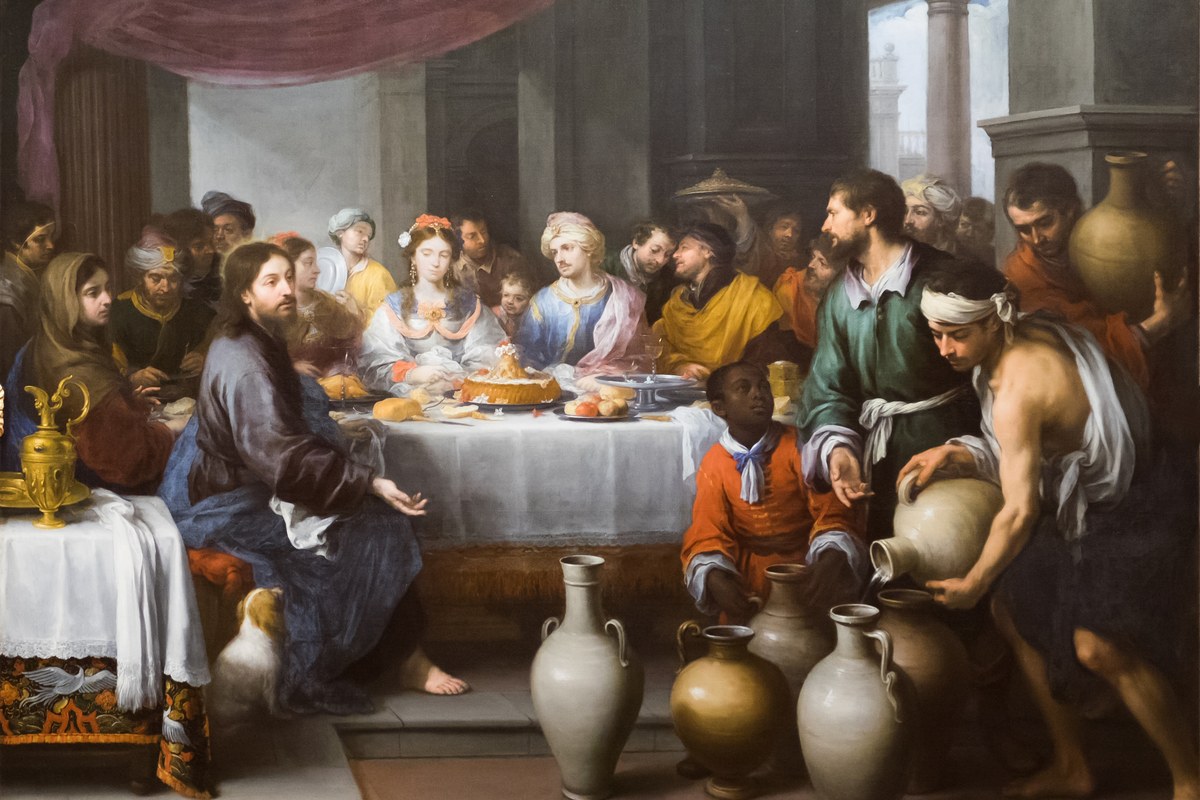
When Mary reappears in the Gospel of John, it's at the Wedding at Cana, where her simple instruction to the servants — "Do whatever he tells you" (John 2:5, NABRE) — precedes the first sign of Jesus's public ministry. She does not appear again in a major recorded scene until the crucifixion, where John places her at the foot of the cross, entrusted to the beloved disciple: "Woman, behold, your son... Behold, your mother" (John 19:26-27, NABRE). After the Resurrection and Ascension, Acts places her once more, briefly, among the apostles "devoting themselves with one accord to prayer" in the days before Pentecost (Acts 1:14, NABRE) — her final confirmed appearance in the New Testament text.
Dormition, Assumption, and Queenship
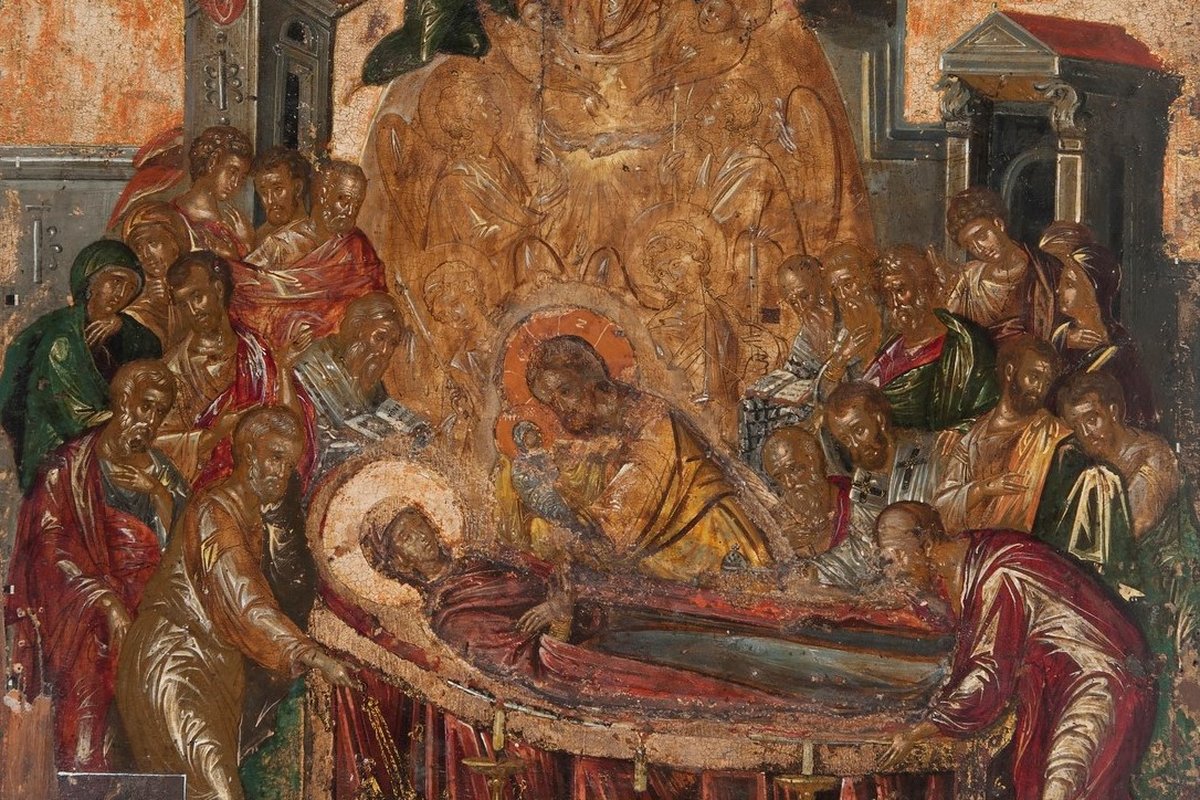
The rest of the timeline belongs to tradition and dogma rather than narrative Scripture. The Dormition of the Virgin Mary — an Eastern term meaning her "falling asleep" at the end of her earthly life — and the Assumption of Mary, the Catholic dogma defined by Pope Pius XII in 1950 holding that she was taken body and soul into heavenly glory, describe the same closing event from two angles: one emphasizing her peaceful death, the other her bodily glorification. The Catechism states that "the Assumption of the Blessed Virgin is a singular participation in her Son's Resurrection" (CCC 966).
The timeline's final chapter is the Queenship of Mary, a feast honoring her as queen of heaven — not a biographical event so much as the Church's theological conclusion to the whole story, the recognition of the role tradition holds she now occupies alongside her Son. Read start to finish, the sequence is less a biography in the modern sense than a devotional map: sparse where Scripture is sparse, richly elaborated where tradition had centuries to fill in the silence, and always circling back to the same handful of Gospel scenes that anchor everything else.
Trivia
Does the Bible tell the full story of Mary's life?
What is the correct order of events in Mary's life?
What is the difference between the Dormition and the Assumption of Mary?
How old was Mary when the angel Gabriel appeared to her?
Where did Mary live after the Ascension of Jesus?
Related Reading