Saul and the Witch of Endor

Silence Where There Had Once Been a Voice
By the time Saul stood facing the Philistine army camped at Shunem, the man who had once been chosen and anointed king of Israel had lost nearly everything that made that anointing meaningful. Samuel, the prophet who anointed him, had died. David, the man Saul knew was destined to replace him, was in exile from Saul's own murderous jealousy. And now, with a massive enemy army arrayed against him, Saul sought the Lord's guidance and found nothing: "the Lord did not answer him, not by dreams, or by Urim, or by prophets" (1 Samuel 28:6). Every normal channel of divine communication had gone silent.
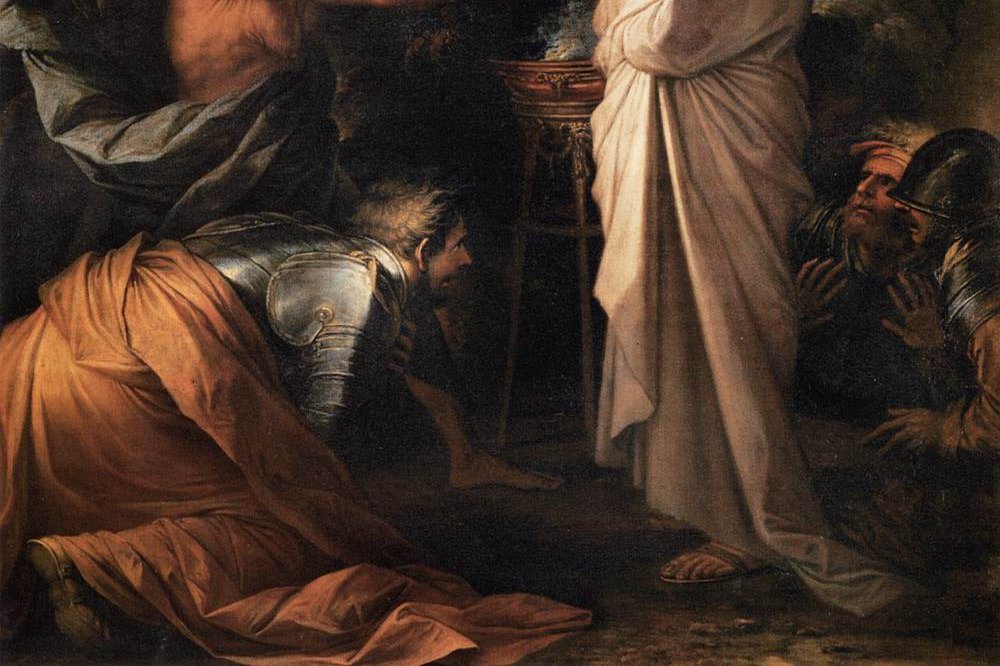
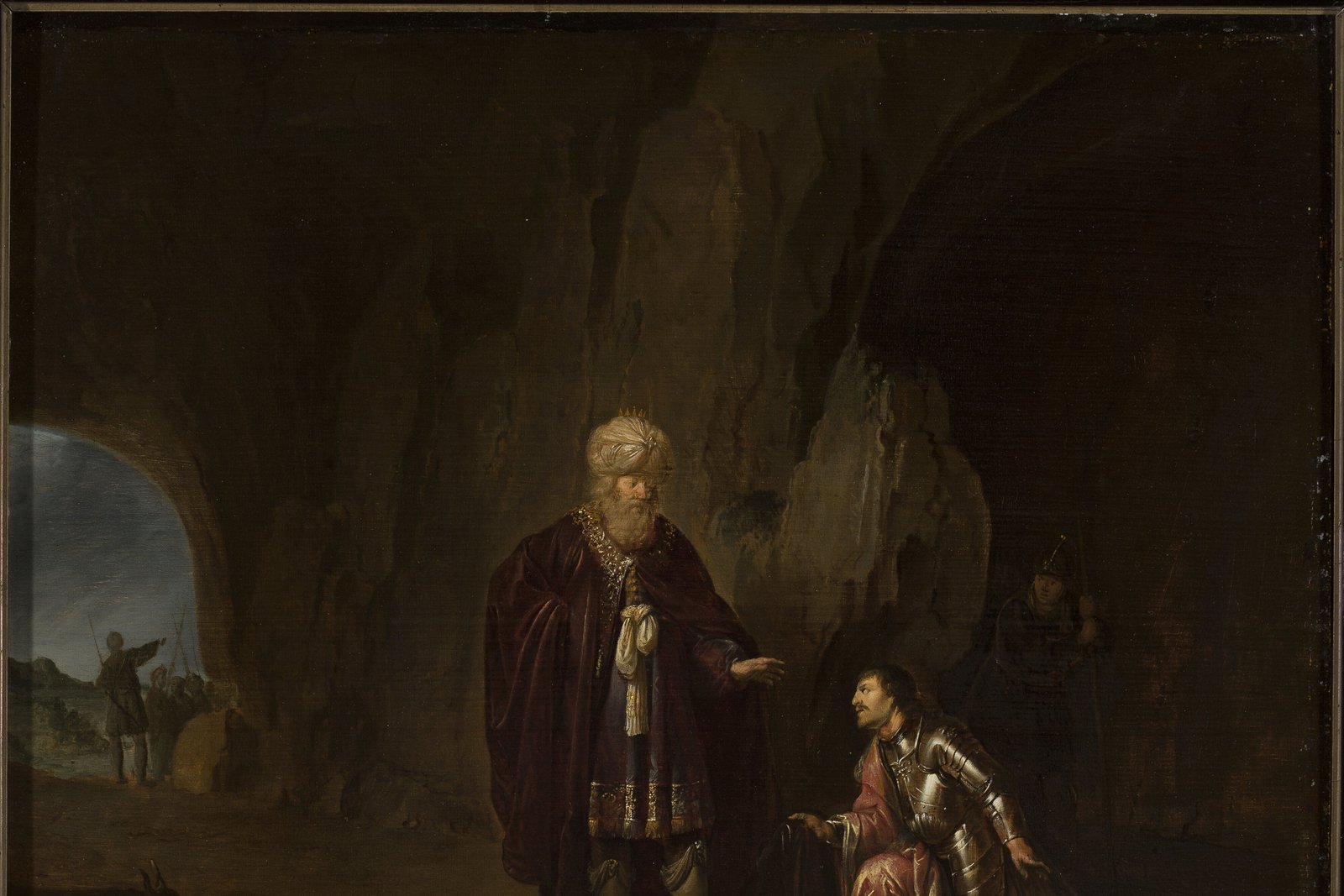
Salvator Rosa, Saul and the Witch of Endor, 1668 — public domain.
A King Defying His Own Law
Earlier in his reign, Saul had expelled mediums and those who divined by spirits from the land, in keeping with the Law's own prohibition of necromancy (1 Samuel 28:3; see also Leviticus 19:31, 20:6). Desperate now, he did the very thing he had once outlawed — he disguised himself in ordinary clothes and, under cover of night, went with two servants to find a woman at Endor known to be a medium.
The woman, wary, reminded her disguised visitor of the king's own decree and asked why he would try to trap her into a capital offense. Saul swore an oath that no harm would come to her, then made his request plain: "Conjure up Samuel for me" (28:11).
The Ghost of Samuel
What follows is one of the eeriest scenes in the Old Testament. The woman, seeing something rise, "shrieked at the top of her voice" and immediately recognized her disguised visitor: "Why have you deceived me? You are Saul!" (28:12). Saul reassured her and asked what she saw. "I see a god rising from the earth," she said, and then described "an old man... wrapped in a robe." Saul needed no further description. He "knew that it was Samuel, and so he bowed his face to the ground in homage" (28:13-14).
Samuel's spirit — the text does not linger on explaining the mechanism, only reporting the encounter — asks with evident irritation why he has been disturbed. Saul's answer is a confession of total desperation: "I am in great distress, for the Philistines are waging war against me and God has turned away from me. Since God no longer answers me through prophets or in dreams, I have called upon you to tell me what I should do" (28:15).
A Prophecy With No Comfort in It
Samuel offers no rescue, only confirmation of what Saul already fears. He reminds Saul that the Lord had already torn the kingdom from his hand and given it to David because of Saul's earlier disobedience regarding the Amalekites. Then comes the final word: the Philistines would defeat Israel, and "tomorrow you and your sons will be with me" (28:19) — meaning Saul and his sons would die in the coming battle. Saul, already weakened by fasting and now hearing his own death foretold, collapsed to the ground in terror.
The narrative's grim symmetry closes the next day: Saul's sons, including Jonathan, are killed in battle, and Saul, badly wounded and unwilling to be captured, takes his own life by falling on his sword (1 Samuel 31).
Catholic Reading: A Warning, Not a Manual
The Catechism of the Catholic Church is direct about practices like the one Saul turns to here: "All forms of divination are to be rejected... contradicting the honor, respect, and loving fear that we owe to God alone" (CCC §2116). Saul's visit to the medium at Endor is not presented in Scripture as a legitimate means of gaining insight into the future — it is presented as the last, desperate act of a king who had already forfeited access to legitimate revelation through years of disobedience, and who compounds that failure by seeking illegitimate access instead.
What makes the episode theologically striking rather than merely eerie is its total absence of comfort. The message Saul receives through forbidden means brings him no help and no reprieve — only confirmation of a judgment already passed. Catholic commentary has long read this as underscoring the futility, not the power, of divination: even granting the reality of what Saul witnesses, it changes nothing about the outcome he is trying to avoid. The story functions less as evidence that necromancy "works" and more as a portrait of a man so cut off from grace that he will risk everything, including his own decree, chasing an answer that only confirms his ruin.
Related reading: see The Kings of Israel: Saul, David, and Solomon for the fuller arc of Saul's rise and fall, and David and Goliath for the young rival whose ascent Saul spent his reign trying, and failing, to prevent.
Trivia
Why did Saul go to a medium at Endor?
Had Saul outlawed this kind of divination himself?
What happened when the medium summoned Samuel?
What did Samuel's spirit tell Saul?
How does Catholic tradition understand this episode?
Related Reading