The Holy Name of the Blessed Virgin Mary

A name whose meaning is still debated
Unlike many Marian feasts that commemorate a specific event, whether biblical, legendary, or historical, the feast of the Holy Name of Mary honors something more abstract: the name itself, and the reverence Christian devotion has long attached to it. That makes the question of what the name actually means more than a passing linguistic curiosity, since the feast's entire premise rests on the name carrying real spiritual significance.
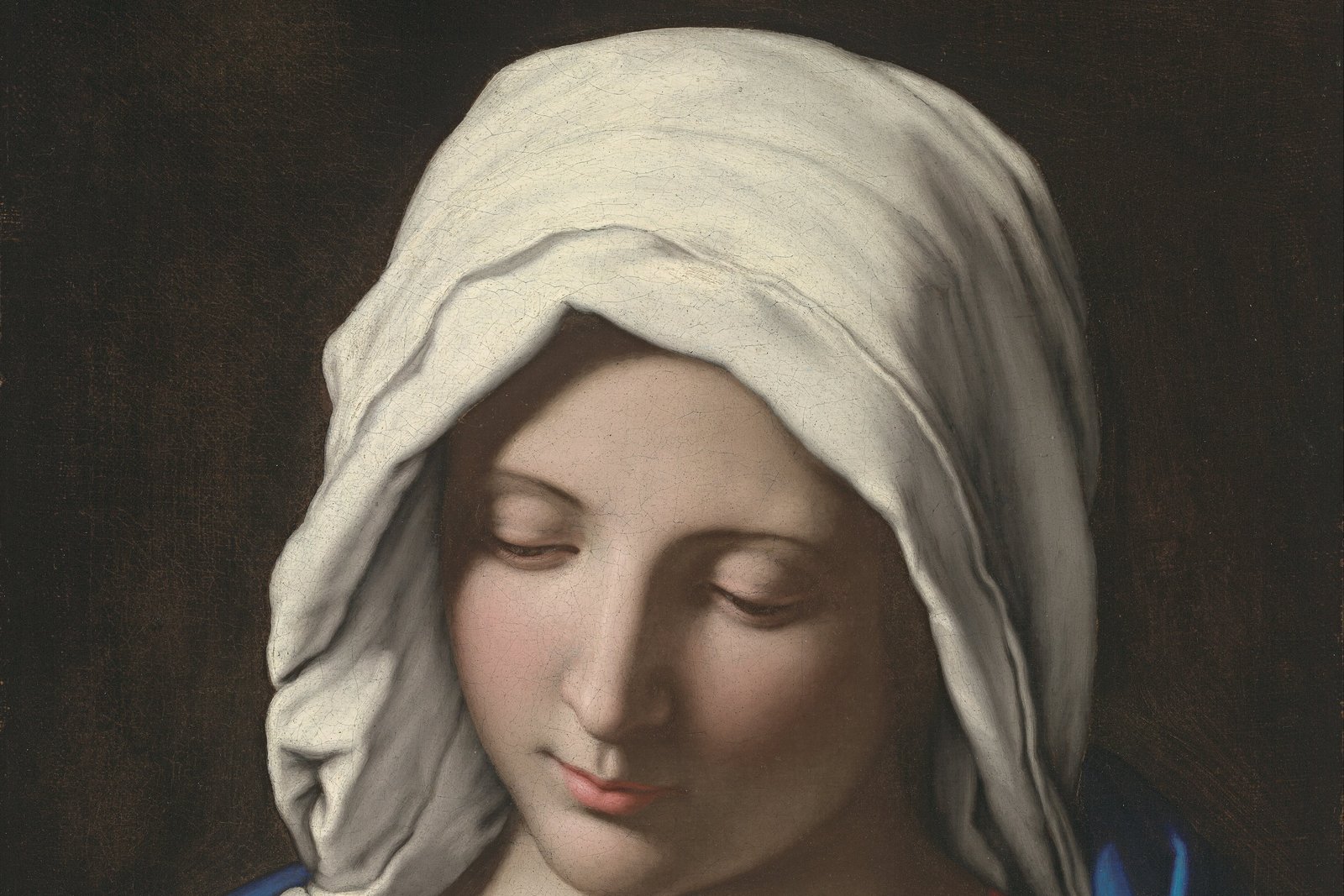
Sassoferrato, Madonna in Prayer, c. 1638–1652 — public domain.
The consensus starting point among scholars is that "Mary" descends from the Hebrew name Miriam, the same name borne by the sister of Moses and Aaron in the Book of Exodus, but from that shared root, scholarly opinion diverges considerably. Some derive the name from a Hebrew or Egyptian root suggesting "bitterness," possibly connected to the hardship of Israel's bondage in Egypt at the time of the biblical Miriam's birth. Others propose meanings closer to "beloved" or "wished-for child." A particularly influential reading, associated with Saint Jerome, the fourth-century translator of the Latin Vulgate Bible, rendered the name's significance as something like "star of the sea," an interpretation that, whatever its precise linguistic merits, took deep and lasting root in later Christian devotional poetry and hymnody, including the ancient hymn Ave Maris Stella, "Hail, Star of the Sea," still sung in the Church's liturgy today. Modern biblical scholars generally treat Jerome's specific etymology with some skepticism on linguistic grounds, while acknowledging its enormous devotional influence regardless of its technical accuracy.
Devotion to the name predates the feast
Long before any formal liturgical feast existed, Christian devotional writers had already spent centuries reflecting on the spiritual weight carried by Mary's name itself, treating it as worthy of special reverence in much the same way medieval and early modern piety treated the Holy Name of Jesus, a related but separate devotional tradition promoted especially by figures such as Saint Bernardine of Siena in the fifteenth century. Sermons, hymns, and private prayers invoking Mary's name specifically, rather than any particular title or event associated with her, became a recognizable strand of late medieval and early modern Catholic devotion well before Rome ever established a formal feast day to mark it.
Local celebration of a specific feast honoring the Holy Name of Mary is documented in Spain by the mid-sixteenth century, receiving papal approval for the diocese of Cuenca in 1513 and gradually spreading to other Spanish dioceses over the following decades, part of a broader pattern in which regional devotional feasts, often originating in a particular diocese or religious order, would sometimes go on to gain wider recognition across the universal Church calendar over time.
The siege of Vienna
The event that carried the feast from a regional Spanish observance to the universal calendar of the Catholic Church was a dramatic military crisis far from Spain: the Ottoman siege of Vienna in the summer of 1683. Ottoman forces under Kara Mustafa Pasha had surrounded the city for roughly two months, and its fall seemed a genuine and immediate possibility, with the potential to open central Europe to further Ottoman advance at a moment of considerable anxiety across Christian Europe.
A relief force gathered under the command of the Polish king John III Sobieski, combined with imperial and German troops, broke the siege on September 12, 1683, in a decisive battle credited by contemporaries with saving the city and turning back what many at the time understood as an existential threat to Christian central Europe. The coalition forces marched to battle under religious invocations that included Mary's name and protection, and in the aftermath of the victory, Pope Innocent XI, in thanksgiving, extended the previously regional feast of the Holy Name of Mary to the universal Church calendar that same year, fixing its observance on the anniversary of the battle itself, September 12.
A feast removed, then restored
The feast remained on the universal calendar for nearly three centuries following its 1683 extension, but it was removed during the broader liturgical calendar reforms that followed the Second Vatican Council in the late 1960s, part of a larger effort during that period to streamline the calendar and reduce the number of feasts commemorating closely related or overlapping Marian themes. For several decades afterward, the feast largely disappeared from official liturgical observance, even as devotion to Mary's name persisted in less formal ways among the faithful.
Pope John Paul II restored the feast to the general Roman calendar in 2002, reinstating September 12 as an optional memorial, meaning its celebration is not obligatory in the way a solemnity or major feast would be, but individual parishes, dioceses, and religious communities are free to observe it. Its restoration reflected, in part, a broader renewed interest during John Paul II's pontificate in reviving devotional traditions that had fallen out of common practice in the decades following the Council, without reversing the Council's own emphasis on a more streamlined general calendar overall. Today the feast stands as a quieter companion to the far more solemn Marian feasts surrounding it on the calendar, the Nativity of Mary on September 8 and the Exaltation of the Holy Cross on September 14, a modest but persistent thread of devotion running through the very name believers have invoked in prayer for the better part of two thousand years.
Trivia
What is the feast of the Holy Name of Mary?
What does the name Mary actually mean?
Why was the feast connected to the Battle of Vienna in 1683?
Has the feast of the Holy Name of Mary always been on the Church calendar?
Is the Holy Name of Mary related to the separate feast of the Holy Name of Jesus?
Related Reading