The Presentation of the Blessed Virgin Mary

A story from outside the Gospels
Unlike most events commemorated on the Christian liturgical calendar, the Presentation of Mary has no basis in the canonical New Testament whatsoever. The four Gospels say almost nothing about Mary's childhood or early life before the Annunciation, when the angel Gabriel announces to her that she will conceive and bear a son who is the Son of God. That scriptural silence left a considerable gap that early Christian communities, eager to know more about the mother of Jesus, filled with various non-canonical writings composed in the decades and centuries following the apostolic age.
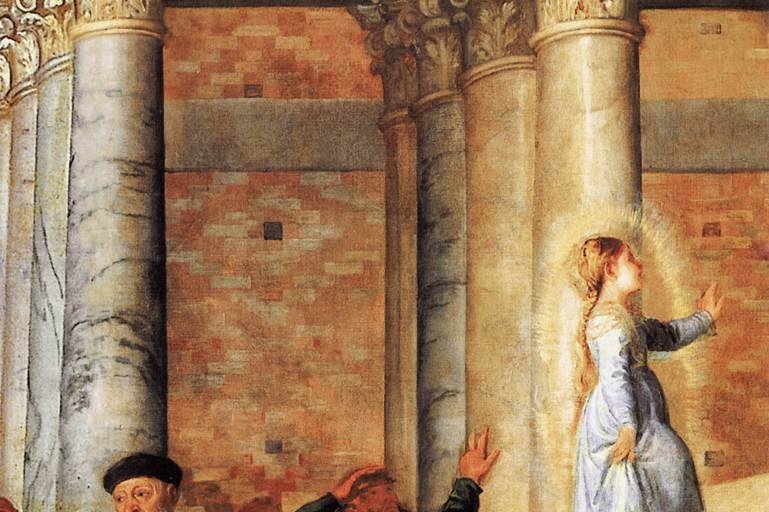
Titian, Presentation of the Virgin at the Temple (detail), Gallerie dell'Accademia — public domain.
The most influential of these texts, by far, is the Protoevangelium of James, an early Christian document likely composed in the second century and attributed, almost certainly falsely, to James, understood in the text as a relative of Jesus. Though never accepted into the biblical canon by either the Western or Eastern Church, and explicitly excluded from Scripture by early Church authorities who recognized its legendary character, the Protoevangelium circulated extremely widely throughout the ancient and medieval Christian world and had an outsized influence on Christian devotional imagination, supplying names, details, and entire narrative episodes involving Mary's parents and childhood that never appear anywhere in the canonical Gospels.
Joachim, Anne, and a vow fulfilled in gratitude
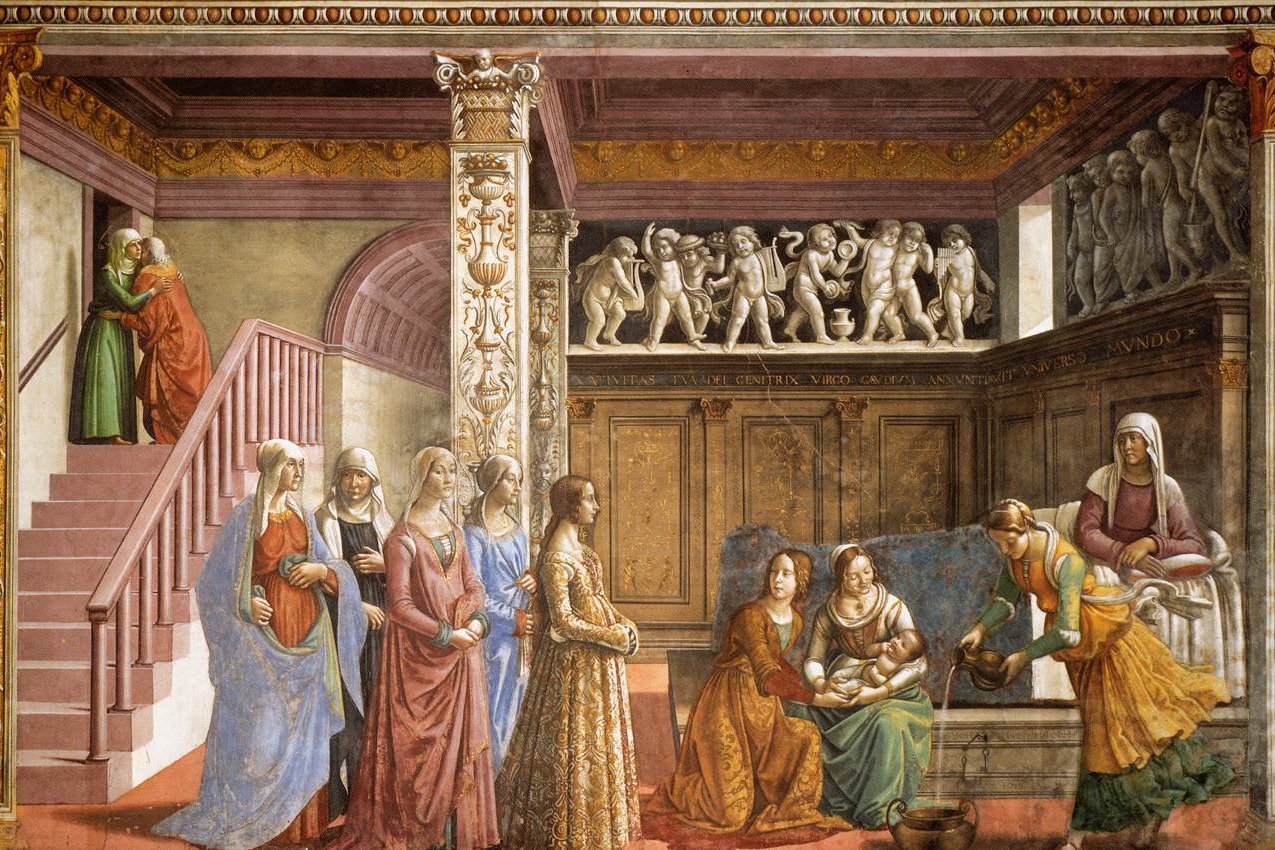
According to the Protoevangelium, Mary's parents, given the names Joachim and Anne in the text, endured years of childlessness, a circumstance regarded in the honor-bound social world the text depicts as a source of considerable shame and social difficulty. Following fervent prayer and, in some versions of the story, angelic announcements to each of them separately promising a child, Anne conceived and bore a daughter, Mary, whose own nativity the Church commemorates as a separate feast. In gratitude for this long-desired birth, the couple is said to have vowed to dedicate their daughter to service at the Jerusalem Temple, and when Mary reached the age of three, according to the tradition, they brought her to the Temple and presented her there, where she was received by the priests and remained, in the traditional account, living and serving within the Temple precincts until she reached an age suitable for marriage.
The scene of the young child Mary climbing the Temple steps alone, often depicted as a determined toddler ascending a long staircase toward a waiting high priest while her parents watch from below, became one of the most beloved and frequently painted subjects in the entire history of Christian devotional art, appearing in the work of major artists including Titian and Giotto, whose fresco of the scene in the Scrovegni Chapel in Padua remains among the most celebrated depictions.
A tradition rather than a doctrine
The Catholic Church draws a clear and important distinction between formally defined doctrine, truths the Church teaches as part of the essential deposit of revealed faith, and pious tradition, devotional beliefs and practices that have grown up over the centuries without carrying that same doctrinal weight. The Presentation of Mary belongs firmly to the latter category. The Church does not require Catholics to believe that the specific events described in the Protoevangelium of James occurred as narrated, and modern biblical scholarship generally regards the text as a work of pious legend, composed generations after Mary's actual lifetime, meant to satisfy popular curiosity about her origins and to reinforce theological themes, chiefly her lifelong purity and consecration to God, that the early Christian community wished to emphasize.
Historians have also noted that there is no solid independent evidence supporting the specific claim that young girls were regularly housed and raised within the Jerusalem Temple precincts during the first century, a detail that appears to reflect the narrative needs of the Protoevangelium rather than a documented feature of actual Second Temple Jewish religious practice.
The theological point behind the legend
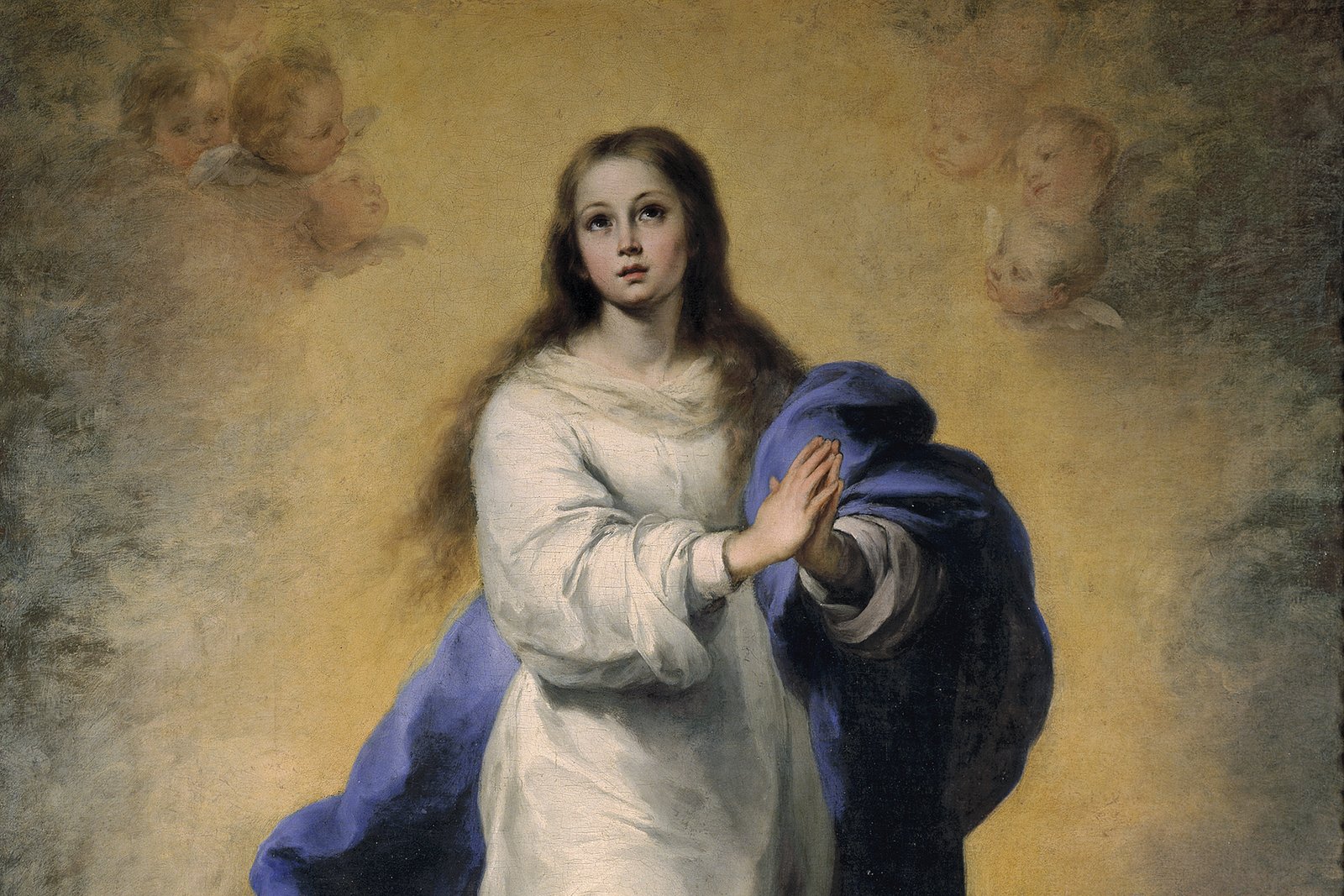
Despite its uncertain historical basis, the tradition of Mary's presentation carries a theological point that the Church has long found devotionally valuable, independent of whether the specific narrative details are historically accurate. The story presents Mary as consecrated to God from her earliest childhood, entirely set apart for divine purposes long before the angel Gabriel's announcement to her as a young woman, a narrative emphasis that reinforces Catholic and Orthodox theological reflection on Mary's singular, lifelong holiness and her total, uninterrupted openness to God's will, themes that connect naturally to the later Catholic dogma of the Immaculate Conception, which holds that Mary was preserved free from original sin from the very moment of her own conception, a distinct doctrine formally defined by the Church, unlike the presentation story itself.
How the feast developed and is observed today
The feast has ancient roots in the Eastern Christian tradition, where churches in Jerusalem were already commemorating the event by the sixth or seventh century, and it holds particularly high liturgical rank within Eastern Orthodox and Eastern Catholic practice, counted among the twelve Great Feasts of the liturgical year in the Byzantine tradition, a level of prominence considerably greater than it holds in the Western Church. The observance spread to the West more gradually, gaining wider acceptance across the Latin Church particularly from the fourteenth century onward, and it is observed today in the Roman Catholic calendar as an optional memorial on November 21, inviting reflection on Mary's complete, lifelong consecration to God even as the Church continues to treat the specific historical narrative behind the feast as a matter of ancient tradition rather than settled fact.
Trivia
What does the Feast of the Presentation of the Blessed Virgin Mary commemorate?
Where does the story of Mary's presentation at the Temple come from?
Is the Presentation of Mary an official teaching of the Catholic Church?
Did young girls actually live at the Jerusalem Temple in Mary's era?
How is the feast observed liturgically?
Related Reading