The Parable of the Talents

A Fortune Left in Trust
Jesus tells this parable as part of a longer sequence of teaching in Matthew 25 about vigilance and judgment before his return. "It will be as when a man who was going on a journey called in his servants and entrusted his possessions to them" (Matthew 25:14). The master distributes his wealth unevenly but deliberately: "to one he gave five talents; to another, two; to a third, one — to each according to his ability" (25:15). A talent was not a small sum — roughly twenty years of a common laborer's wages — meaning even the servant given the smallest amount was entrusted with a genuinely enormous responsibility. Then the master leaves, offering no instructions on exactly what to do with the money, only the implicit expectation that something productive will happen with it.
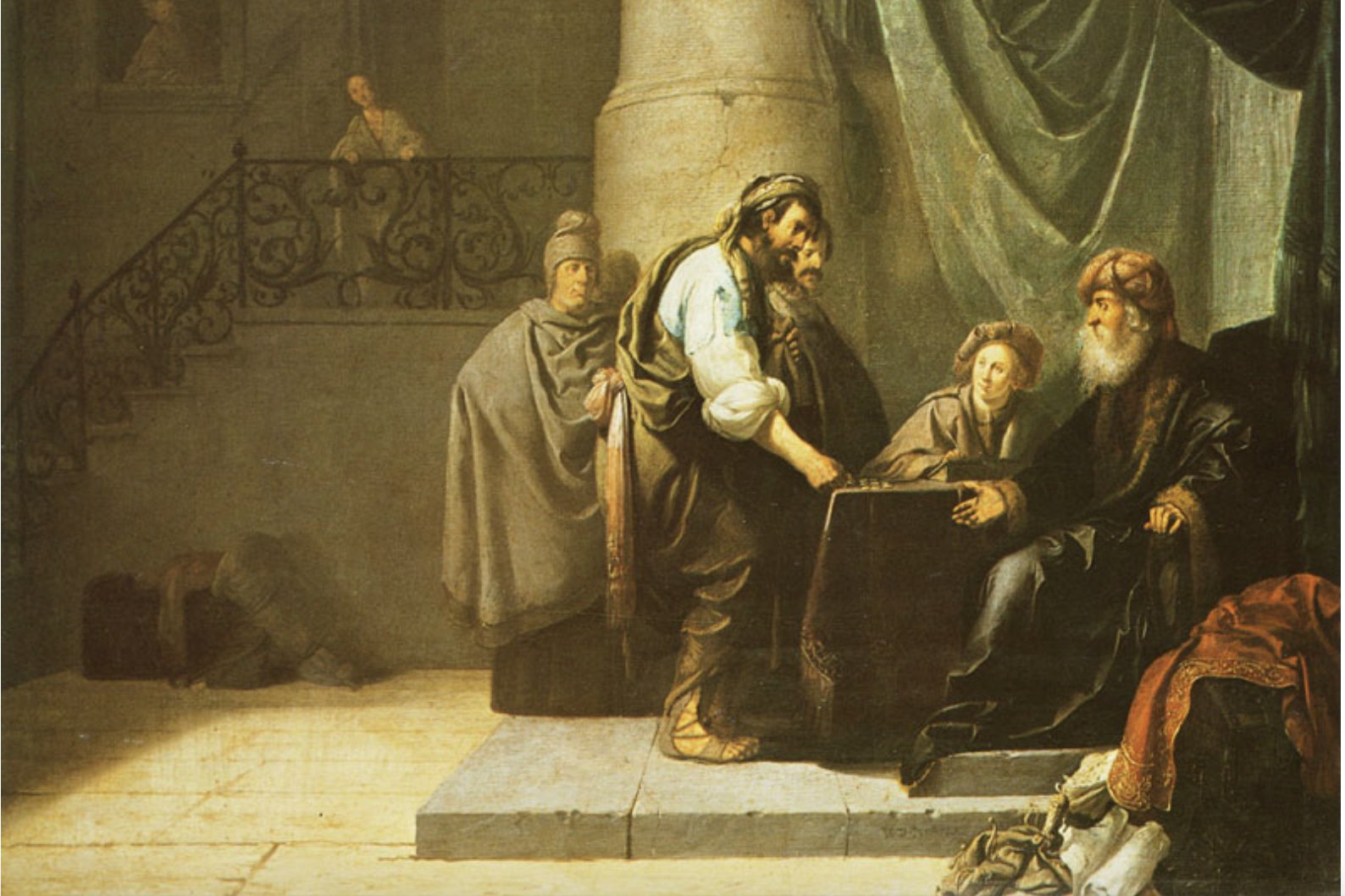
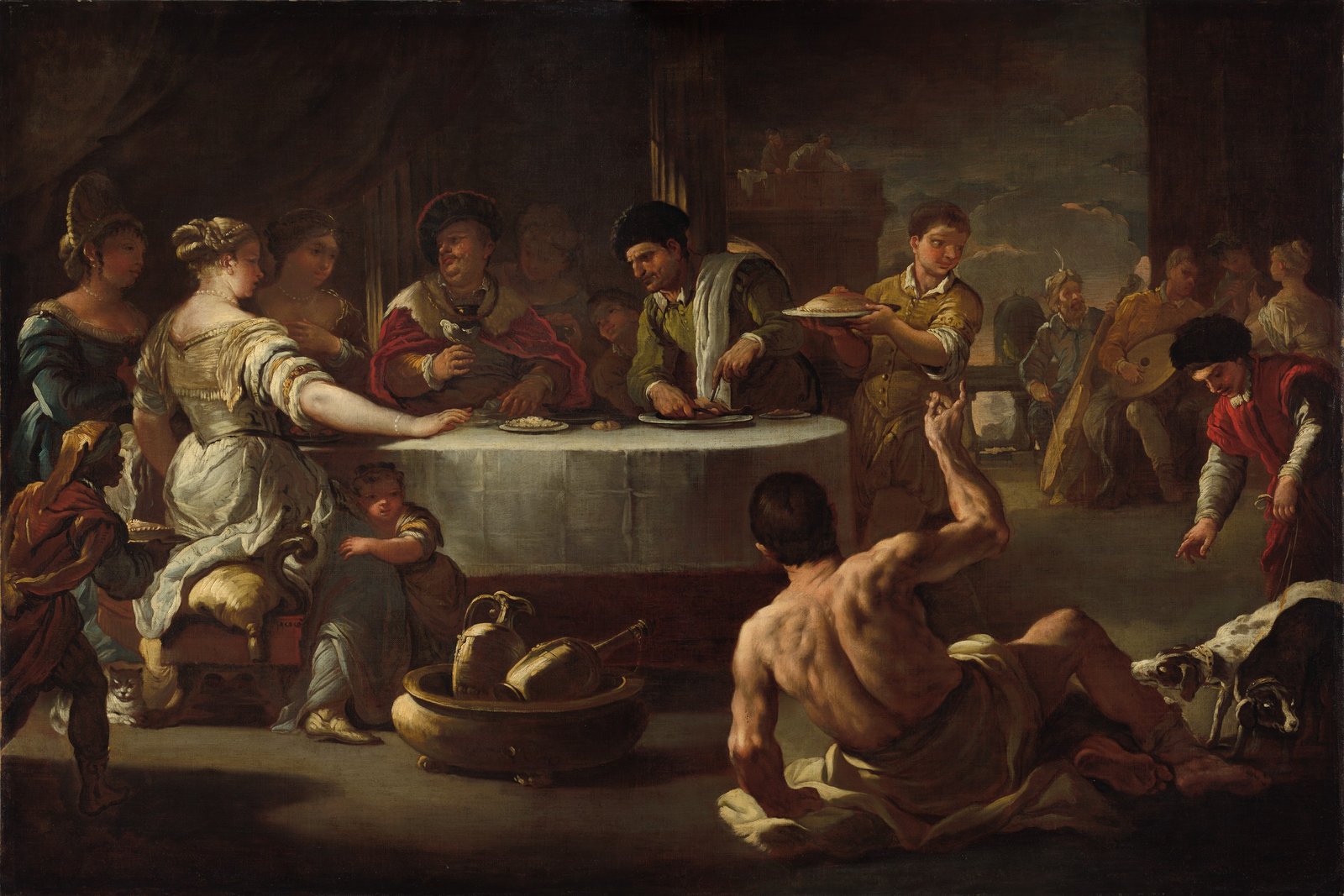
Willem de Poorter, The Parable of the Talents (or Minas), 17th century — public domain.
Two Servants Who Put the Money to Work
While the master is away, the first two servants act. The text moves quickly past the mechanics — Scripture doesn't dwell on how they invested or traded, only the outcome: each doubles what he was given. When the master returns and settles accounts, his response to both is identical in substance, regardless of the different amounts involved: "Well done, my good and faithful servant. Since you were faithful in small matters, I will give you great responsibilities. Come, share your master's joy" (25:21, repeated at 25:23 for the servant with two talents). What is rewarded is not the size of the return but the faithfulness demonstrated in using what was given.
The Servant Who Buried His
The third servant took a different approach entirely. Rather than risk the money, he dug a hole and buried it — the safest possible option, guaranteeing he could return exactly what he had received, no more and no less. When the master returns, this servant explains his reasoning candidly: "Master, I knew you were a demanding person, harvesting where you did not plant and gathering where you did not scatter; so out of fear I went off and buried your talent in the ground. Here it is back" (25:24-25). He frames his caution almost as a virtue — he lost nothing, after all.
A Harsh Verdict
The master's response reframes the servant's fear as failure, not prudence: "You wicked, lazy servant! So you knew that I harvest where I did not plant and gather where I did not scatter? Should you not then have put my money in the bank so that I could have got it back with interest on my return?" (25:26-27). Even the minimal, risk-free option of a bank deposit would have satisfied the master's expectation of productivity; total inaction did not. The talent is taken from him and given to the servant who already has ten, with the parable's famous, unsettling principle attached: "to everyone who has, more will be given and he will grow rich; but from the one who has not, even what he has will be taken away" (25:29). The servant himself is "thrown into the darkness outside, where there will be wailing and grinding of teeth" (25:30) — language Matthew uses elsewhere for final judgment.
A Parallel Version in Luke
Luke's Gospel contains a related but distinct parable, often called the Parable of the Minas, that scholars generally treat as either a separate teaching Jesus gave on another occasion or a variant version of the same core story adapted for a different audience. There, "a nobleman went off to a distant country to obtain the kingship for himself and then to return. He called ten of his servants and gave them ten gold coins and told them, 'Engage in trade with these until I return'" (Luke 19:12-13). Unlike Matthew's version, every servant in Luke receives the identical amount, removing the "to each according to his ability" element entirely, and the story is folded into a larger political subplot about citizens who reject the nobleman's authority and are punished on his return. The differences between the two versions — unequal versus equal amounts, a household setting versus a political one — have led commentators to read them as two related but independently shaped teachings rather than two accounts of a single historical telling, both converging nonetheless on the same central demand: that what is entrusted must be put to active use, not simply preserved untouched until the owner returns.
Catholic Reading: Gifts Given for Use, Not Storage
The parable of the talents has become foundational to Catholic teaching on stewardship — the conviction that every gift a person receives, whether material wealth, natural ability, time, or grace itself, is entrusted by God for active, fruitful use, not passive preservation. The word "talent," now used in English to mean a natural ability or skill, owes its modern sense directly to this parable's long influence on Christian moral vocabulary.
What distinguishes the third servant is not malice but fear — he does not squander or steal the money, he simply refuses to risk using it at all, and the parable treats that refusal as a genuine moral failure rather than a neutral or cautious choice. Catholic commentary reads this as a warning against a spirituality of minimal compliance: doing nothing wrong is not the same as doing what one was given the capacity to do. The parable sits within Jesus's broader teaching in Matthew 25 on readiness for judgment, placed alongside the parable of the ten virgins and the sheep and the goats, all built around the same theme — that faithfulness is demonstrated in action taken before the master's return, not merely in avoiding open failure.
Related reading: see The Parable of the Ten Virgins for the parable Jesus tells immediately before this one in the same discourse, and The Widow's Mite for another Gospel teaching on what God considers a faithful offering.
Trivia
What is a 'talent' in this parable?
What did the first two servants do with their talents?
Why did the third servant bury his talent?
How did the master respond to the buried talent?
What is the theological point of the parable?
Related Reading