Novena to Saint Jude: Prayer for Desperate, Impossible Situations

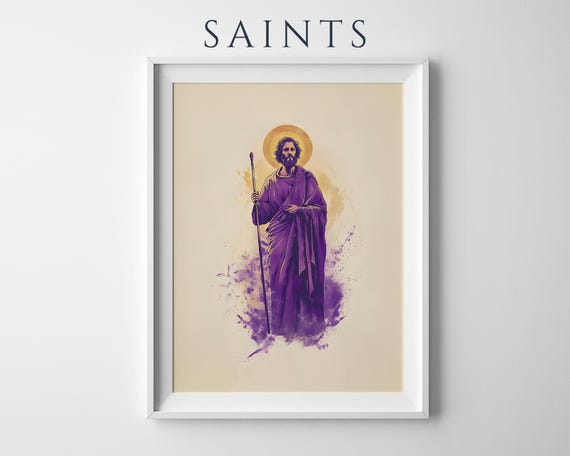
Who Saint Jude was
The New Testament gives Jude Thaddeus only a handful of lines. He appears in the lists of the Twelve Apostles in Matthew and Mark under the name Thaddeus, and in Luke and Acts as "Jude son of James" — Scripture itself seems uncertain what to call him, which is part of why he's so easy to confuse with his infamous near-namesake, Judas Iscariot. His one recorded moment of dialogue comes at the Last Supper, in the Gospel of John, when he asks Jesus a pointed question: "Master, [then] what happened that you will reveal yourself to us and not to the world?" (NABRE, John 14:22). It's a small but telling detail — even one of the Twelve wanted to understand why God's presence wasn't more obvious, a question that anyone praying a novena in a hard season can probably relate to.
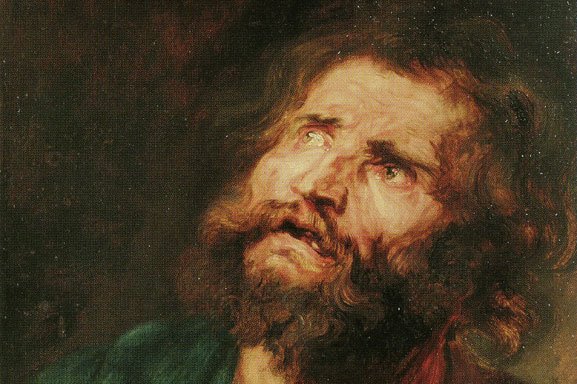
Anthony van Dyck, The Apostle Judas Thaddeus, c. 1618-1620 — public domain.
Tradition, distinct from the biblical record itself, holds that Jude preached the Gospel in Mesopotamia and Persia, often paired with the apostle Simon the Zealot, and that both were martyred there. Butler's Lives of the Saints and Eastern Christian tradition alike remember him as a missionary who died for his preaching rather than in old age — a detail that later devotional writers connected to his reputation for taking on causes other people had already given up on.
Why he became the patron of impossible causes
The devotional logic behind Jude's patronage is almost entirely about his name, not a documented episode from his life. Because "Jude" is so close to "Judas," medieval and early modern Christians largely avoided invoking him, wary of confusing the two — and prayers to Jude thinned out for centuries as a result. Popular piety eventually turned that neglect into the very reason to trust him: a saint whose intercession went almost unasked, the reasoning went, would be unusually eager to help the rare person who did ask, especially in situations too dire or embarrassing to bring anywhere else. That's the origin of his title "patron of hopeless cases" and "cases despaired of" — not a biblical claim, but a long-standing pious tradition, distinct from Church dogma.
Devotion to Jude as the patron of desperate causes grew rapidly in the United States in the early-to-mid 20th century, particularly during the Great Depression, when hardship gave the devotion new relevance. Shrines dedicated to him — including the Claretian-run National Shrine of St. Jude in Chicago, founded in 1929 — became major centers of the devotion, and the newspaper "thank you" notices that once ran in classified sections trace directly back to this period. For more on Jude's biblical role and the apostles who shared his mission, see Saint Jude Thaddaeus.
How to pray the novena
A novena, from the Latin novem, meaning nine, is simply nine days of sustained prayer for a specific intention. The pattern traces back to the apostles themselves, who spent nine days in prayer between the Ascension and Pentecost, awaiting the Holy Spirit — the origin point for every Catholic novena, explained in more detail in What Is a Novena?. Praying the Saint Jude Novena simply means repeating the prayer below, or a version like it, once a day for nine consecutive days, ideally at a set time and in a quiet moment rather than rushed.
There's no requirement to pray it in a church or with anyone else present; it can be prayed silently at a kitchen table, in a car during a lunch break, or beside a small devotional image of Jude at home. What matters, according to the tradition surrounding the prayer, is persistence and sincerity rather than any particular setting.
The traditional prayer
O Holy Saint Jude, Apostle and Martyr, great in virtue and rich in miracles, near kinsman of Jesus Christ, faithful intercessor of all who invoke your special patronage in time of need. To you I have recourse from the depth of my heart, and humbly beg to whom God has given such great power to come to my assistance. Help me in my present and urgent petition. In return I promise to make your name known and cause you to be invoked. Saint Jude, pray for us and all who invoke your aid. Amen.
This is one widely circulated traditional version of the prayer; wording varies somewhat between parishes and printed novena booklets, since no single text has been formally mandated. Many versions close with a request to say the prayer nine times a day for nine days, or with the promise to publish the petitioner's gratitude — the custom behind those newspaper notices.
What the novena is and isn't
It's worth being clear about what Catholic teaching actually claims here. The Catechism describes the saints' intercession as real but entirely dependent on the mediation of Christ himself — the saints do not act as independent sources of grace, but as fellow members of the Body of Christ whose prayers on our behalf join with Christ's own intercession (CCC 956). Praying to Jude isn't a bypass around God; it's asking a friend in heaven to pray alongside you.
Nor does Catholic tradition treat the novena as a guarantee. Jude is called the patron of "hopeless" or "impossible" cases specifically because his intercession is sought precisely when outcomes are uncertain — the prayer asks for help, trust, and peace in the waiting, not a scripted result. Those newspaper thank-you notices, read carefully, are usually phrased as gratitude for having been heard and helped through a difficulty, not proof that every request was granted exactly as asked.
A prayer still being prayed
What's remarkable about the Saint Jude Novena isn't its age — plenty of Catholic devotions are older — but how continuously it has stayed in use by people in genuinely hard circumstances: serious illness, financial ruin, family estrangement, addiction, legal trouble. It has none of the elaborate ritual of some older devotions; it's nine days, one prayer, and an obscure apostle whose entire New Testament dialogue is a single question about why God doesn't make himself more obvious to everyone. For many who pray it, that's part of the appeal — a saint who once asked his own version of "why is this so hard to see," now the one people turn to when they can't see a way through at all.
Trivia
Why is Saint Jude the patron saint of desperate and impossible cases?
How many days does the Saint Jude Novena take, and can it be prayed at any time?
Do I have to finish all nine days for the novena to count?
Is there an official, Church-approved text of the Saint Jude Novena?
What is the difference between the Saint Jude Novena and simply asking Saint Jude for help?
Related Reading