The Novena to the Holy Spirit: The Original Nine Days

Nine days that came before every other novena
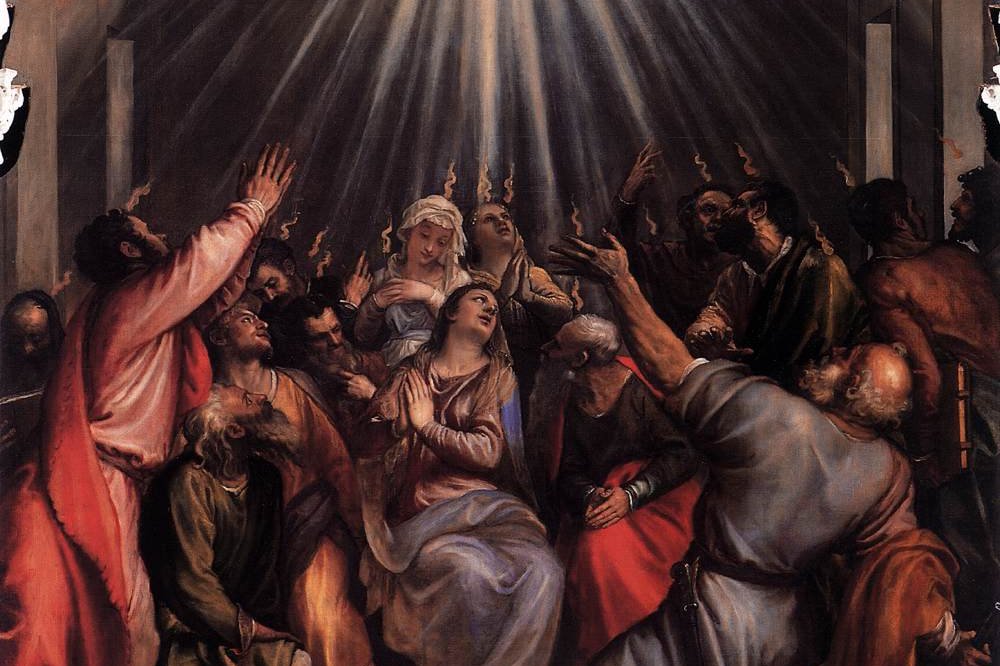
The word "novena" comes from the Latin novem, nine, and every Catholic novena — to Saint Jude, to the Sacred Heart, to any saint or cause — takes its basic shape from a single stretch of days recorded in Acts. After Jesus ascended into heaven, he had told the apostles to wait in Jerusalem "for the promise of the Father," without yet explaining fully what that meant. Acts records what they did in the meantime: they returned to the city, went to "the upper room where they were staying," and there, along with Mary and other women, "devoted themselves with one accord to prayer" (NABRE, Acts 1:13-14). Nine days later — the interval between the Ascension, forty days after Easter, and Pentecost, fifty days after Easter — the Holy Spirit came upon them with "a noise like a strong driving wind" and "tongues as of fire" resting on each of them (Acts 2:2-3, NABRE). The full account of what happened next is told in Pentecost, and a broader introduction to how novenas developed out of this moment is in What Is a Novena?.
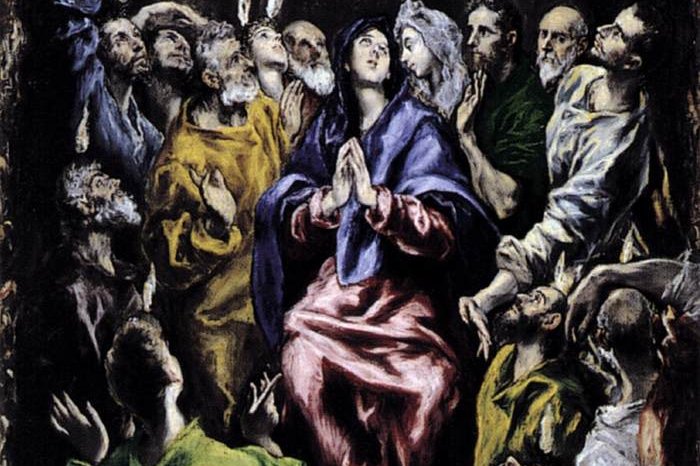
El Greco, The Pentecost, c. 1600, Museo del Prado — public domain.
Nothing in Acts describes this waiting period using the word "novena" or frames it as a devotional formula to be repeated — it's simply what the apostles did, once, in a specific historical moment. But later Christian piety recognized in it a template: nine days of sustained, expectant prayer preceding a gift from God, imitated ever since in one novena after another.
When it's prayed
Because this novena is the original nine days, not a later devotion retrofitted onto that number, it's tied to an actual fixed span on the Church's calendar: it begins the day after the Feast of the Ascension and runs through the Saturday before Pentecost Sunday. Since both the Ascension and Pentecost are moveable feasts, calculated from Easter, the novena's exact calendar dates shift from year to year along with Easter itself, but its length — the same nine days Luke describes in Acts — never changes.
This makes the Novena to the Holy Spirit unusual among Catholic novenas. Most are prayed leading up to an individual saint's feast day, chosen by tradition or personal devotion, and can be started on nearly any date of the year. This one is anchored to the liturgical calendar itself, observed by the whole Church during the exact interval it commemorates.
A novena the Church formally instituted
Devotion to the Holy Spirit grew significantly under Pope Leo XIII, who wrote extensively on the subject in the final years of the nineteenth century. In his 1897 encyclical Divinum Illud Munus ("That Divine Office"), Leo XIII addressed the Holy Spirit's action within the Church and in individual souls, and — building on an earlier 1895 letter — formally instituted a novena to the Holy Spirit to be observed before Pentecost in parish churches throughout the universal Church, attaching indulgences to encourage participation. It's one of the few instances in Catholic history of a novena being organized from the top down by papal decree, rather than spreading upward from popular devotion the way most novenas — including this one's own more informal earlier observance — actually developed.
How to pray it
The structure is simple: nine consecutive days of prayer to the Holy Spirit, ideally at the same time each day, asking for the Spirit's presence and gifts. No single prayer text is mandated, but a version widely used opens with an ancient invocation still recited today at confirmations and similar occasions:
V. Come, O Holy Spirit, fill the hearts of Your faithful, and kindle in them the fire of Your love.
R. Send forth Your Spirit, and they shall be created. And You shall renew the face of the earth.
Let us pray: O God, who did instruct the hearts of the faithful by the light of the Holy Spirit, grant us in the same Spirit to be truly wise and ever to rejoice in His consolation, through Jesus Christ Our Lord. Amen.
Many versions of the novena add a request for one of the seven traditional gifts of the Holy Spirit — wisdom, understanding, counsel, fortitude, knowledge, piety, and fear of the Lord — on each of the nine days, though the pairing of gifts to specific days varies between printed sources and isn't itself part of the biblical account.
Waiting as the whole point
What distinguishes this novena from nearly every other is what it asks the person praying to actually do: wait. The apostles in Acts didn't know in advance what form the Holy Spirit's coming would take, or precisely when it would arrive within those nine days — they simply stayed together and prayed, trusting a promise they didn't yet fully understand. Praying the Novena to the Holy Spirit today means entering that same posture deliberately: nine days of asking, without controlling the outcome or the timing, for a gift that, according to the account it's modeled on, arrived suddenly, unmistakably, and only after the waiting was allowed to run its full course.
Trivia
Why is the Novena to the Holy Spirit considered the first novena?
When is the Novena to the Holy Spirit traditionally prayed?
Did the Pope ever formally encourage this novena for the whole Church?
What did the apostles and Mary actually do during those nine days, according to Acts?
How is this novena different from praying for the Holy Spirit at any other time?
Related Reading