What Is a Novena? The Nine-Day Prayer, Explained

Nine days, one waiting room
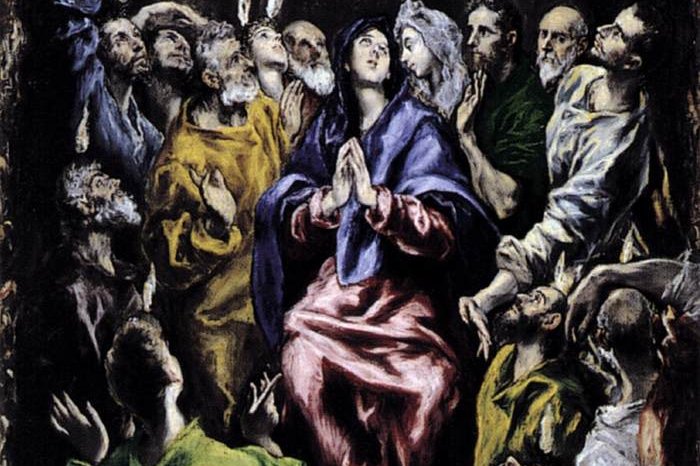
The Acts of the Apostles doesn't dwell long on the scene, but it's the origin point of every novena Catholics pray today. After watching Christ ascend into heaven, the apostles "returned to Jerusalem from the mount called Olivet," went to "the upper room where they were staying," and were joined there by a small group that included "some women, and Mary the mother of Jesus, and his brothers" (NABRE, Acts 1:12-14). Scripture records what they did next in a single, simple line: "All these devoted themselves with one accord to prayer" (NABRE, Acts 1:14).
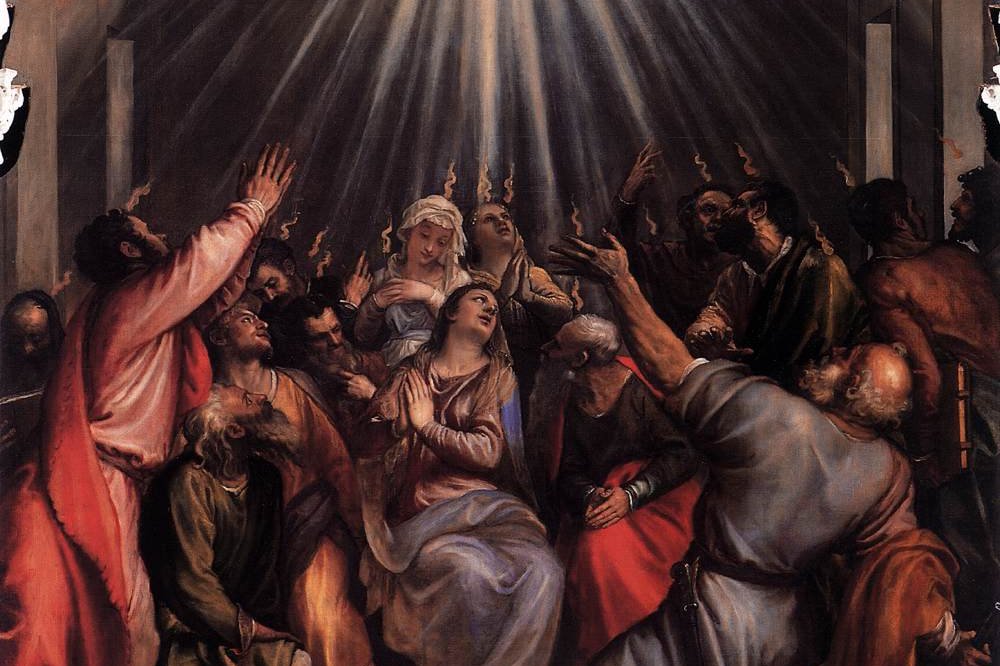
Titian, The Descent of the Holy Ghost, c. 1545, Santa Maria della Salute, Venice — public domain.
They didn't know, in any concrete sense, what they were waiting for. Christ had told them to remain in Jerusalem until they received "power from on high," but the specifics of what that would look like weren't spelled out in advance. Nine days later, on the Jewish feast of Pentecost, it arrived: "there came from the sky a noise like a strong driving wind," Scripture says, and "tongues as of fire... parted and came to rest on each one of them," filling the apostles with the Holy Spirit and sending them out to preach in languages they hadn't previously spoken (NABRE, Acts 2:2-4). That nine-day stretch between the Ascension and Pentecost — expectant, sustained, communal prayer with no guaranteed timeline — is the historical seed of the novena as Catholics practice it now.
From one event to a devotional pattern
It took centuries for that single Scriptural episode to become the formal, repeatable devotional structure Catholics now recognize. The word "novena" itself, from the Latin novem ("nine"), entered common Catholic usage well after the early Church, as popular piety gradually adapted the apostles' nine-day wait into a template that could be applied to any intention — not just awaiting the Holy Spirit, but asking a particular saint's intercession, preparing for a specific feast, or praying through a personal crisis.
By the medieval and early modern periods, novenas tied to particular saints, shrines, and feast days had become widespread throughout Catholic Europe, and the Church at times formally organized and encouraged them. Pope Leo XIII, for example, instituted an official novena to the Holy Spirit to be prayed in parishes before Pentecost each year, attaching indulgences to the practice in the 1890s — a rare case of a novena being organized at the level of the universal Church rather than growing purely from local or personal devotion. For the fullest version of this original novena, prayed during the actual nine days between Ascension and Pentecost each year, see The Novena to the Holy Spirit.
Why nine days, specifically
The number nine carries no independent magical significance in Catholic theology — its importance comes entirely from its association with that first Scriptural novena. Catholic teaching doesn't hold that prayer becomes more effective on some fixed schedule, or that God requires a specific quota of repetition before answering a request. What the nine-day structure offers instead is a discipline: a sustained, deliberate return to the same intention over a meaningful stretch of time, mirroring the apostles' own posture of watchful, patient waiting rather than a single request made once and set aside.
That's also why Catholic devotional guidance treats an interrupted novena gently. There's no teaching that a missed day invalidates the whole nine days; the point of the structure is the discipline of persistence itself, not a transactional count that resets to zero on a skipped morning.
How to pray a novena
Praying a novena requires very little in the way of formal setup. Choose an intention — a specific need, a saint's feast approaching, or simply a season like Advent — and a set of prayers to use, whether a single prayer repeated daily or nine distinct daily meditations tied to a theme. Then pray it at roughly the same time each day, for nine consecutive days, ideally in a quiet moment rather than rushed between other tasks. It can be prayed alone, at a kitchen table or in a car, or together with family or a parish group; nothing in Catholic teaching requires a particular setting.
Some novenas are tied to fixed dates on the liturgical calendar, prayed during the same nine days every year — the Novena to the Holy Spirit before Pentecost, or the Christmas Novena in the nine days before December 25, rooted in a much later Neapolitan custom but built on the same nine-day logic. Others can be started on any day at all, whenever the need arises.
The many novenas Catholics pray today
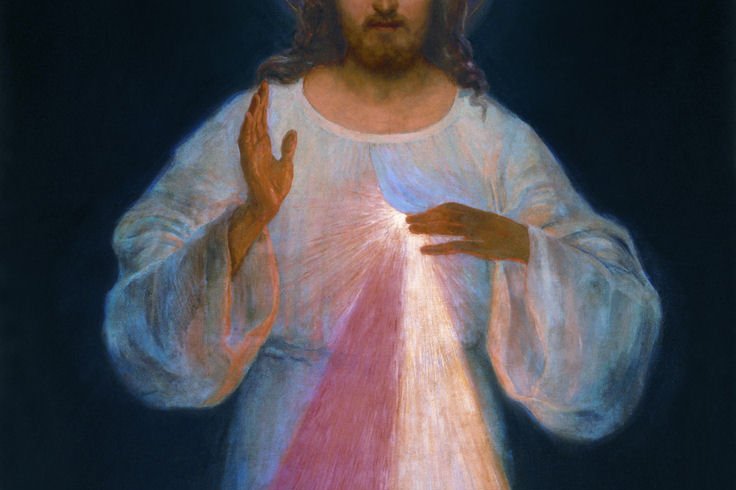
What began as a single nine-day wait in an upper room has grown into a wide and varied devotional landscape. Some novenas ask a particular saint's intercession for a specific kind of need, like the Novena to Saint Jude, prayed for situations that feel beyond hope. Others center on a particular image or devotion to Christ, such as the Divine Mercy Novena, prayed in the nine days before Divine Mercy Sunday, or the Sacred Heart Novena and the Miraculous Medal Novena, tied to specific Marian and Christological devotions with their own histories.
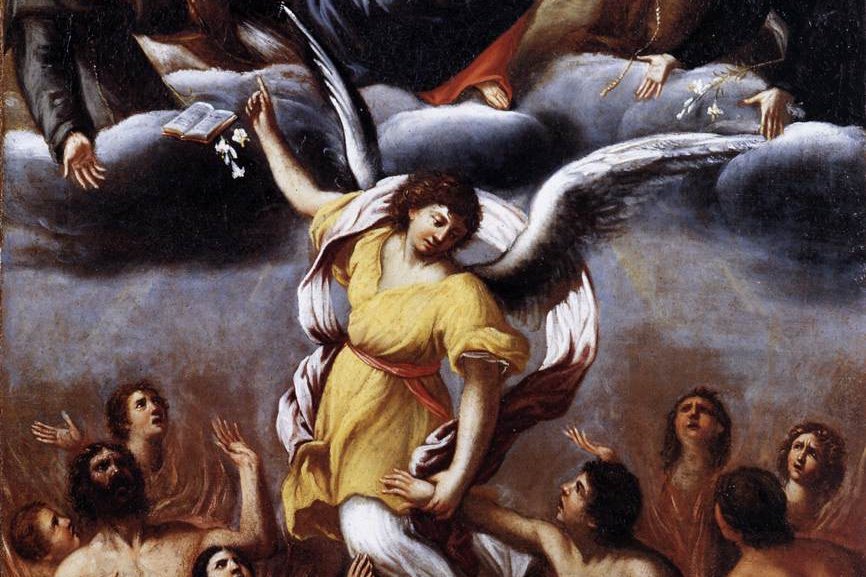
Some novenas are built around an act of trust rather than a fixed prayer text, like The Surrender Novena, based on the writings of an Italian priest reflecting on total abandonment to God's will. Others honor a specific modern figure, such as the Padre Pio Novena, prayed for the intercession of the 20th-century Capuchin friar known for the stigmata. And some are prayed not for the living at all, but for the dead, like the Novena for the Souls in Purgatory, which traces its own roots to an even older Old Testament tradition of praying for the deceased.
What unites all of these — different saints, different centuries, different specific words — is the same nine-day shape, borrowed, however distantly, from a small group of apostles who didn't yet know what they were waiting for, but stayed together in prayer until it came.
Not a formula, a discipline
It's worth being clear about what Catholic teaching does and doesn't claim for the novena. It is not a spiritual transaction, where nine days of the correct words guarantees a particular outcome, and it is not a requirement of the faith the way attending Sunday Mass is. It's a form of popular devotion — one the Church has, at points, formally encouraged, but always as an aid to prayer rather than a substitute for it.
What the novena asks of the person praying is patience: nine days of returning to the same intention, the same words, the same quiet moment, in imitation of a small group in Jerusalem who had no way of knowing, on any given one of those nine days, exactly when their waiting would end — only that it was worth staying together in prayer until it did.
Trivia
What is a novena, exactly?
Where does the nine-day structure of a novena come from?
Is a novena the same as saying the same prayer nine times?
Does the Catholic Church require novenas, or are they optional?
What happens if I miss a day during a novena?
Related Reading