Heaven, Hell, and Purgatory: What the Church Actually Teaches

A diary a Vatican office once tried to ban
It's an unusual detail to sit alongside a saint's canonization: for nearly twenty years, from 1959 to 1978, the Vatican's Holy Office formally prohibited the spread of the devotion connected to Saint Faustina Kowalska, over concerns about doctrinal imprecision in early, poorly translated editions of her diary. The ban was lifted once better translations and theological review cleared the concerns, and in 2000 Pope John Paul II canonized her, timing the ceremony deliberately to the Church's first universal Divine Mercy Sunday. That history is worth knowing before diving into her visions of judgment and mercy, because it shows the Church doing exactly what it does with every reported private revelation: taking it seriously, scrutinizing it carefully, and drawing a firm line between "worthy of belief" and "binding on every Catholic."
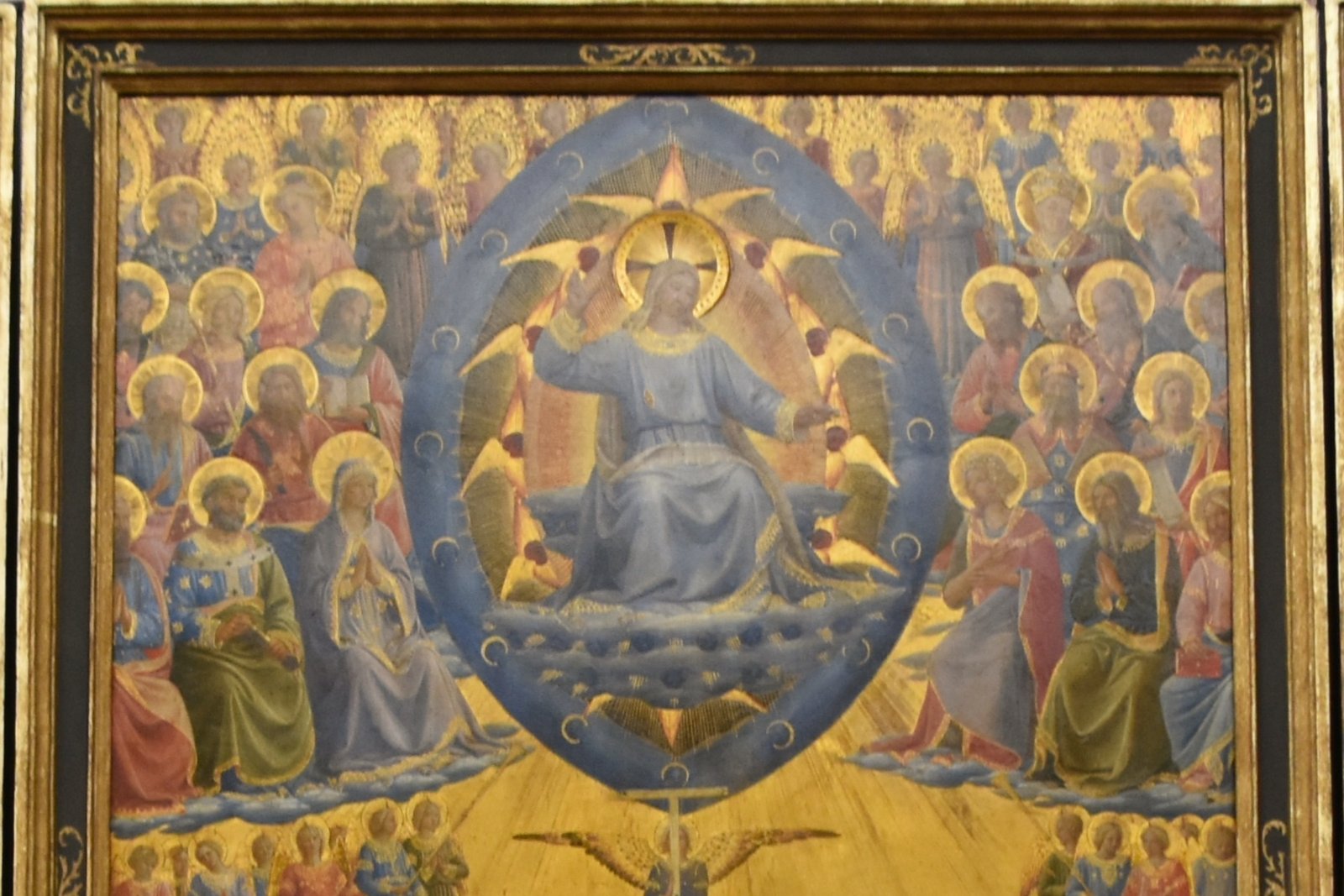
Fra Angelico, The Last Judgment (detail), 1429, Gemaldegalerie, Berlin, CC BY 2.0 (Wikimedia Commons, photo by Sailko/Flickr).
The Four Last Things, as actual doctrine
Underneath any particular visionary's account, Catholic teaching on death, judgment, heaven, hell, and purgatory — traditionally called the Four Last Things — is old, stable, and defined, resting on Scripture and centuries of the Church's teaching authority rather than on any single mystic's testimony.
Heaven is described as the state of perfect life with the Blessed Trinity, communion of life and love with God, the angels, and all the blessed — "the ultimate end and fulfillment of the deepest human aspirations, the state of supreme, definitive happiness" (CCC 1024). It's not primarily imagined by the Church as a place with physical geography so much as a state of complete union with God.
Hell is the possibility, which the Church takes with full seriousness, of a soul definitively excluding itself from that communion by dying unrepentant in a state of mortal sin. The Catechism calls this state of "eternal separation from God" hell, and is careful to describe it as self-chosen rather than an arbitrary sentence handed down by an angry judge: "God predestines no one to go to hell; for this, a willful turning away from God ... and persisting in it until the end is necessary" (CCC 1037). Importantly, while the Church affirms hell as a real possibility and canonizes saints as confidently in heaven, it has never taught, formally, that any specific individual is definitely there — a distinction worth holding onto carefully.
Purgatory is neither heaven nor hell, but a final state of purification for those who die in God's friendship, already destined for eternal life, but "still imperfectly purified" (CCC 1030). It is not a second chance for the unrepentant and not a mild form of punishment matched to sin; it's closer to a preparation, freeing a soul that already belongs to God from what the Catechism calls attachment to sin, so that it can enter God's presence fully.
What Faustina's visions add, and what they don't
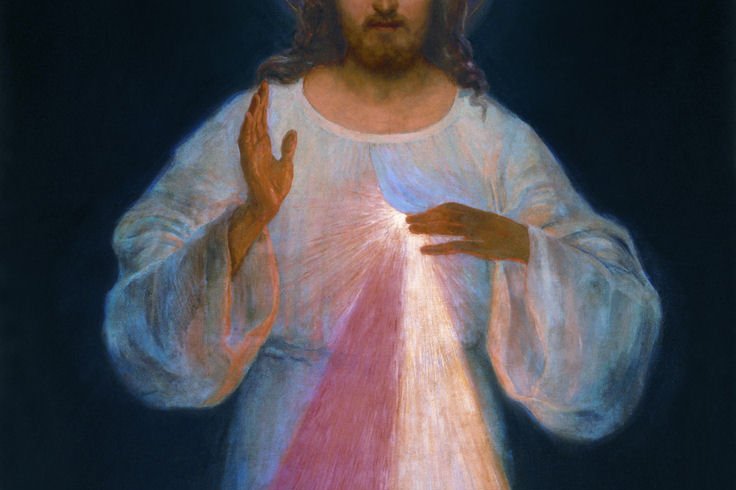
Against that settled doctrinal backdrop, Faustina's diary offers something genuinely different in kind: not new doctrine, but a particular, vivid, personal account of encountering Christ's mercy, recorded at her confessor's direction rather than for publication. Among its most consequential contributions was the Divine Mercy image itself — Christ with rays of light streaming from his heart, commissioned by an artist working from Faustina's own description — along with the Chaplet of Divine Mercy and devotional language emphasizing trust in God's mercy even for the gravest sinners, captured in the phrase she made famous: "Jesus, I trust in You."
None of that is dogma, and the Church has never asked Catholics to treat it as such. Private revelation, even when formally approved as "worthy of belief" — the Church's technical category for visions like Faustina's, or those at Fatima and Lourdes — occupies a different tier of authority than the deposit of faith itself. Catholics may find real spiritual value in the Divine Mercy devotion, as millions clearly have, without being obligated to accept every specific detail of what Faustina reported seeing or hearing. That's not a demotion of her witness; it's the same careful category the Church applies to every approved mystic across its history, protecting both the mystic's genuine contribution and the integrity of doctrine that rests on Scripture and Tradition rather than on any one person's private experience.
Holding mercy and justice together
What makes this area of teaching genuinely hard to caricature in either direction is that the Church refuses to resolve the tension between mercy and justice by discarding either side. Faustina's visions lean hard into mercy — Christ, in her account, repeatedly emphasizing that no sin is too great for his mercy, that the greatest sinners have the greatest claim on it. The Catechism's sober teaching on hell as a real, self-chosen possibility leans into the seriousness of human freedom and its consequences. Held together rather than played off against each other, they describe a coherent picture: mercy that is genuinely boundless and always available, offered to a freedom real enough that it can, in the end, refuse it.
Living with what's settled and what isn't
A Catholic can hold Faustina's diary close, pray the Chaplet, trust the Divine Mercy image on the wall, and still know that none of it stands or falls on the same ground as the Resurrection or the doctrine of the Trinity. That distinction isn't a way of diminishing her witness — it's what let the Church, after two decades of caution, ultimately embrace it fully, confident that mercy this vividly described and doctrine this carefully defined were never actually in competition to begin with.
Trivia
What does the Catholic Church actually teach about heaven, hell, and purgatory?
Does the Catholic Church teach that anyone is definitely in hell?
Are Saint Faustina's Divine Mercy visions official Catholic doctrine?
What is purgatory, and is it a 'second chance' for people who rejected God?
Why does the Church teach both about God's mercy and the real possibility of hell at the same time?
You May Also Like
Related Reading